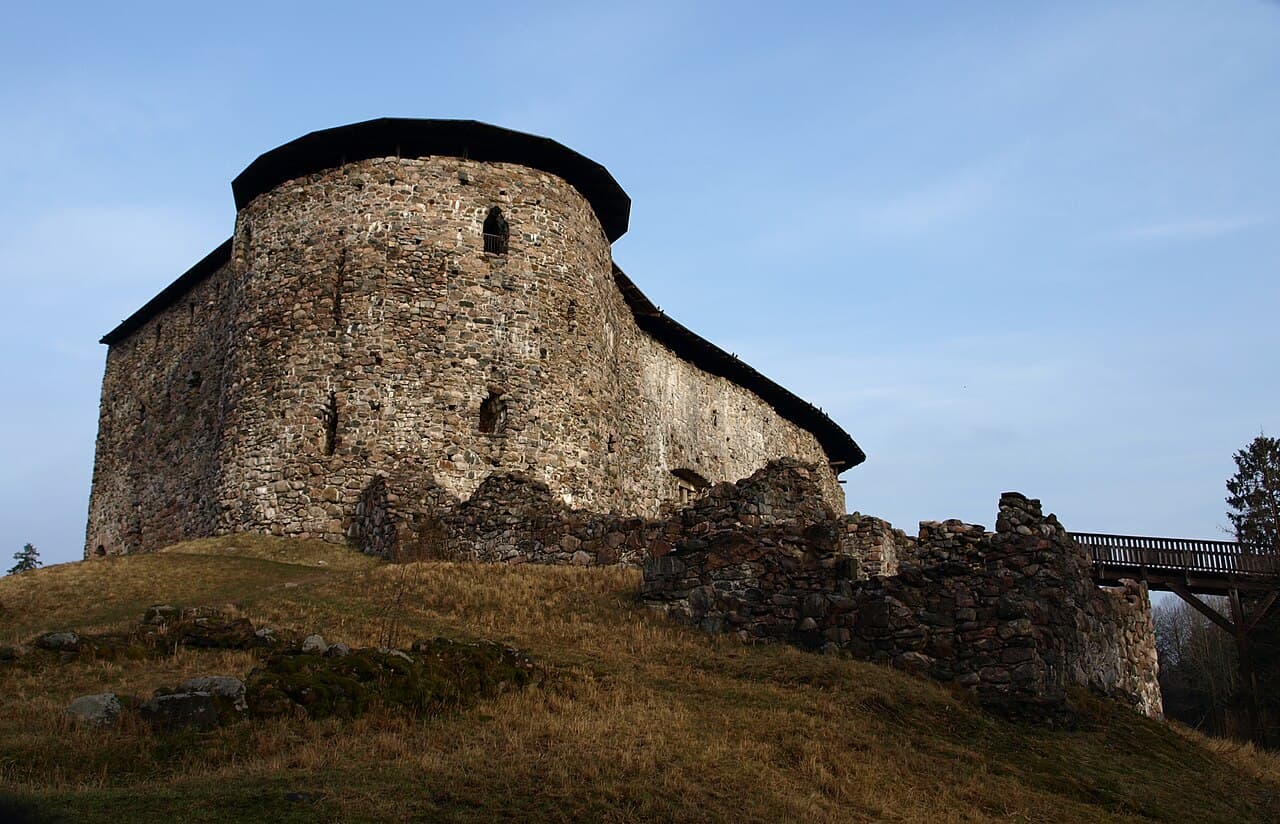
Raasepori Castle
Raasepori Castle, also known as Raseborg Castle, stands as one of the five surviving medieval castles in Finland, embodying centuries of military, political, and architectural history. Founded in the late 14th century by the influential Swedish nobleman Bo Jonsson Grip, its first construction phase was completed between 1373 and 1378. The castle's earliest recorded mention dates back to 1378, marking its significance as a strategic stronghold designed to protect Swedish interests in southern Finland against rival powers, particularly the Hanseatic city of Tallinn.
Originally constructed on a small rocky island at the northern end of a sea bay, Raasepori Castle was built in multiple stages from the 14th to the 16th century. Its location on a hill castle site took advantage of natural defenses, including cliffs rising 4 to 5 meters high on the northern and western sides, which reduced the need for extensive fortifications on those fronts. The castle's design is often described as resembling a horseshoe or the uppercase letter 'D', with the curved side facing north, utilizing the natural cliff edges as formidable barriers.
Early history and strategic importance
The castle was established amid the complex political landscape of the late medieval period, serving as a military bastion and administrative center for Swedish settlers in the region. Its primary purpose was to secure control over vital trade routes along the Gulf of Finland and to defend Swedish territories from competing powers, including the Russians to the east and Danish and German forces based around Tallinn to the south.
Throughout the 15th century, Raasepori Castle underwent significant expansions and fortifications. Under the leadership of royal captain Otto Pogswisch, the garrison adapted to the evolving nature of warfare by incorporating artillery defenses, reflecting broader European military innovations. The castle’s outer bailey, a fortified courtyard added in the mid-15th century, enhanced its defensive capabilities alongside the main fortress.
Notable historical events and figures
The castle is notable for hosting King Charles VIII of Sweden (Karl Knutsson) during his exile between 1457 and 1467, a period during which the fortress was expanded to include a round residential tower that improved both defense and living quarters. Another remarkable historical figure associated with Raasepori is Christina Eriksdotter, a female commander who led the castle’s defense during a siege in 1487 by forces loyal to the Swedish statesman Sten Sture. Despite her determined resistance, the castle eventually surrendered.
In the early 16th century, the castle became a contested site during the ongoing struggle between Sweden and Denmark for dominance in the region. Danish forces captured it in 1520, the same year King Christian II ordered the execution of Bishop Hemming Gadh and the castle’s lord Nils Eskilsson nearby. The castle was reclaimed by Gustav Vasa in 1523 during his rebellion, but its strategic importance waned in the following decades.
Architectural features and defensive structures
Raasepori Castle was originally surrounded by an outer stone wall, remnants of which still exist today. This wall was constructed to protect the castle's foundational structures, especially as the use of artillery became more widespread. Beyond the stone walls, a wooden barrier surrounded the castle, designed to prevent enemy ships from approaching the harbor. Some fragments of this wooden palisade remain visible, now located on the mainland due to postglacial rebound that lowered the sea level over centuries.
The castle’s layout included a long, narrow rectangular courtyard enclosed by stone foundations of residential and service buildings that housed guards and higher-ranking servants. The outer bailey, added in the 15th century, was defended by thick stone walls and a wide moat approximately 300 meters long and 12 to 18 meters wide. The moat was filled with water, enhancing the castle’s defenses against land-based attacks.
One of the castle’s distinctive architectural features is the round residential tower, a multi-story stone structure with thick walls serving both defensive and residential functions. This tower, partially restored today, offers valuable insight into late medieval castle architecture and living conditions.
Natural defenses and changes over time
The rocky island on which the castle was built rose about 14 meters above the river, with steep cliffs providing natural protection. Originally, the castle was accessible by boat via the Raseborg River, which connected to the Gulf of Finland. However, due to postglacial rebound, the land gradually rose, causing the river to recede and the castle to become situated farther from navigable water. This geological change diminished the castle's strategic value and contributed to its eventual abandonment.
Decline and restoration
By the mid-16th century, the founding of Helsinki in 1550 shifted regional strategic priorities, leading to Raasepori Castle's abandonment in 1553. Structural issues, such as the collapse of the beer cellar in 1558, further signaled the fortress’s decline. Despite this, the castle saw brief reuse during the late 17th century Russo-Swedish wars as a supply depot.
Restoration efforts began in the 19th century, notably under the direction of Magnus Schjerfbeck in 1839, and have continued intermittently into the 20th century. Today, the castle ruins are well-preserved and open to the public, serving as a cultural venue for events such as summer theater performances since 1966.
Archaeological significance and visitor experience
The ruins of Raasepori Castle offer a compelling glimpse into medieval fortification techniques and the socio-political dynamics of the Baltic region. Visitors can explore the remains of the stone walls, the courtyard foundations, the round tower, and the moat. Wooden stairs and terraces have been reconstructed to approximate the original height of the castle walls, which stood around 15 meters tall during its peak.
Surrounding the castle are archaeological traces of peasant villages and settlements that supported the fortress, illustrating the broader community that sustained its operation. The site’s unique history, combined with its dramatic natural setting on a rocky hill, makes Raasepori Castle a significant heritage landmark in Finland.
In summary, Raasepori Castle is an exemplary late-medieval hill castle that reflects the complex history of Swedish-Finnish relations, medieval military architecture, and the evolving geopolitical landscape of the Baltic Sea region. Its well-preserved ruins continue to attract scholars, tourists, and cultural enthusiasts alike.
Frequently asked questions (FAQ)
- How do I get to Raasepori Castle?
- Raasepori Castle is located in Raasepori, Finland, and can be easily reached by car or public transportation. The nearest train station is in Karjaa, approximately 10 kilometers away, and local buses connect to the castle. Ample parking is available for those driving to the site.
- What is the historical significance of Raasepori Castle?
- Raasepori Castle, built in the 14th century, played a crucial role in the defense of Finland during the medieval period. It served as a royal residence and a strategic stronghold against invasions. Today, the castle stands as a symbol of Finnish heritage and attracts history enthusiasts from around the world.
- When was Raasepori Castle constructed?
- Raasepori Castle was constructed in the 14th century, with its foundations laid around 1370. The castle was expanded and modified over the years, reflecting the architectural styles of various periods. Its ruins today offer a glimpse into the medieval past of Finland.
- Can I visit Raasepori Castle year-round?
- Yes, Raasepori Castle is open to visitors year-round, although specific areas may have restricted access during the winter months. The best time to visit is during the summer when guided tours and events are more frequent. Always check the official website for the latest information on opening hours and seasonal activities.
- Why is Raasepori Castle a popular tourist attraction?
- Raasepori Castle is popular for its rich history, stunning architecture, and beautiful surroundings. Visitors can explore the castle ruins, enjoy panoramic views of the landscape, and learn about its historical significance through informative displays. The site also hosts various cultural events throughout the year, making it a vibrant destination.
- Is it possible to take guided tours of Raasepori Castle?
- Yes, guided tours of Raasepori Castle are available and highly recommended for those interested in learning more about its history and architecture. Knowledgeable guides provide insights into the castle's past and its role in Finnish history. Check the schedule in advance, as tours may vary seasonally.
- What are the ticket prices for Raasepori Castle?
- Tickets for Raasepori Castle are reasonably priced, with discounts available for students and seniors. Children under a certain age may enter for free. It's a good idea to purchase tickets in advance during peak seasons to ensure availability.
- What are the opening hours of Raasepori Castle?
- Raasepori Castle typically opens daily from late spring through early autumn, with reduced hours during the winter months. Specific opening hours can vary, so it's best to check the castle's official website for the most current information before your visit. Special events may also affect regular hours.
- Are there any nearby attractions to visit along with Raasepori Castle?
- Yes, there are several nearby attractions, including the charming town of Raasepori and the picturesque Ruins of the Old Raasepori Church. Outdoor activities such as hiking and nature walks are abundant in the surrounding area, making it a great place for a full day of exploration. Don't forget to check local eateries for a taste of Finnish cuisine.
Photo gallery

Information
Website
Visit websiteSources & official resources
Verify the information above using these authoritative references.
Loading map...
Visitor reviews
No reviews yet. Been here? Write the first review and help other travelers!
Write the first reviewVisited this castle? Share your experience
Your review helps other travelers and adds first-hand knowledge to our encyclopedia.


