Quermançó Castle
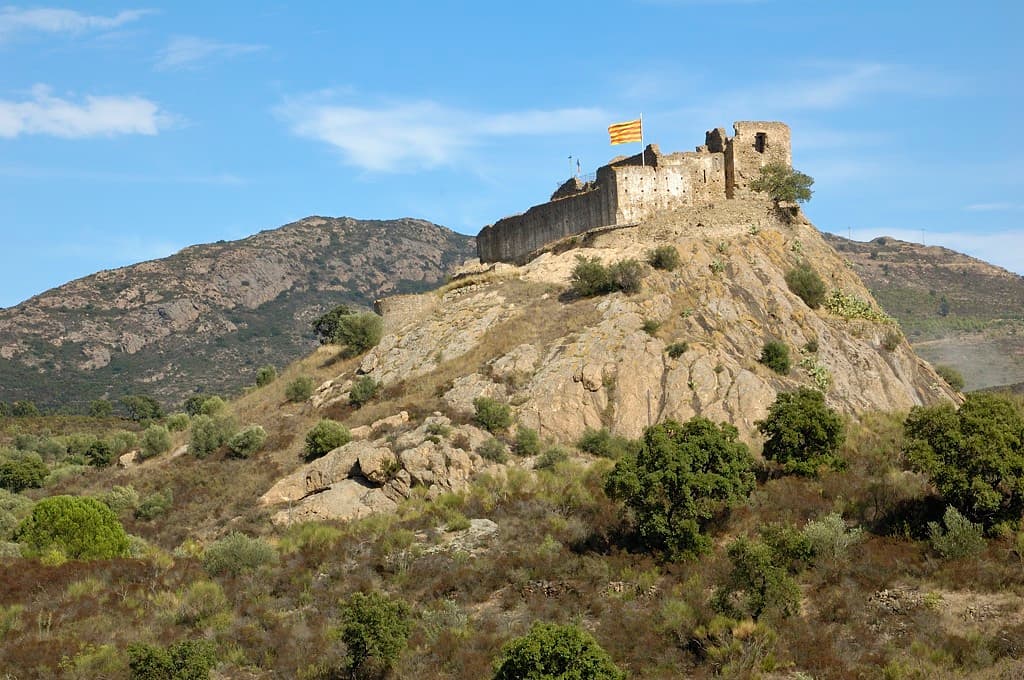
Quermançó Castle stands as a significant medieval fortress located in the municipality of Vilajuïga, Spain. Perched on a steep hilltop approximately 120 meters above sea level, this hill castle occupies a naturally defensible rocky outcrop. Its strategic position on the rugged terrain made it a formidable stronghold throughout its long history. The castle's name derives from the Catalan word "quer," meaning stone or rock, aptly describing the stony landscape that surrounds it.
The origins of Quermançó Castle trace back to the 10th century, during the early medieval period, when it was initially constructed by the local ruling powers to serve as a fortified residence and military post. Archaeological evidence reveals that the site had been occupied even earlier, with remains from pre-Roman and Roman eras indicating its longstanding significance in the region.
Historical significance and medieval development
The first documented mention of Quermançó Castle appears in 1078, within the will of Count Ponç I of Empúries. This important record established the castle as the seat for the county’s diplomatic archive and confirmed its role as a center of regional power. Count Ponç I bequeathed the castle to his sons, Hug and Berenguer, marking the beginning of its association with the noble lineage of Empúries.
Between the 11th and 15th centuries, the castle underwent successive expansions and renovations that reflected the evolving military and domestic needs of its occupants. Notably, a circular tower was added during the 13th or 14th century, featuring a battered base and loopholes for defense. These enhancements improved the fortress's ability to withstand sieges and attacks during a turbulent period marked by frequent border conflicts.
Conflicts and sieges
Throughout the 12th and 13th centuries, Quermançó Castle played a role in regional disputes. A notable conflict occurred between Ponç Hug II and the Counts of Barcelona from 1128 to 1138, highlighting the complex political landscape of medieval Catalonia. The castle's military importance was further underscored during the late 13th century when it was besieged and captured by Crusader forces led by Philip III in 1285. A subsequent assault by French troops in 1288 inflicted damage on the fortress, emphasizing its strategic value in border struggles.
Architectural features and layout
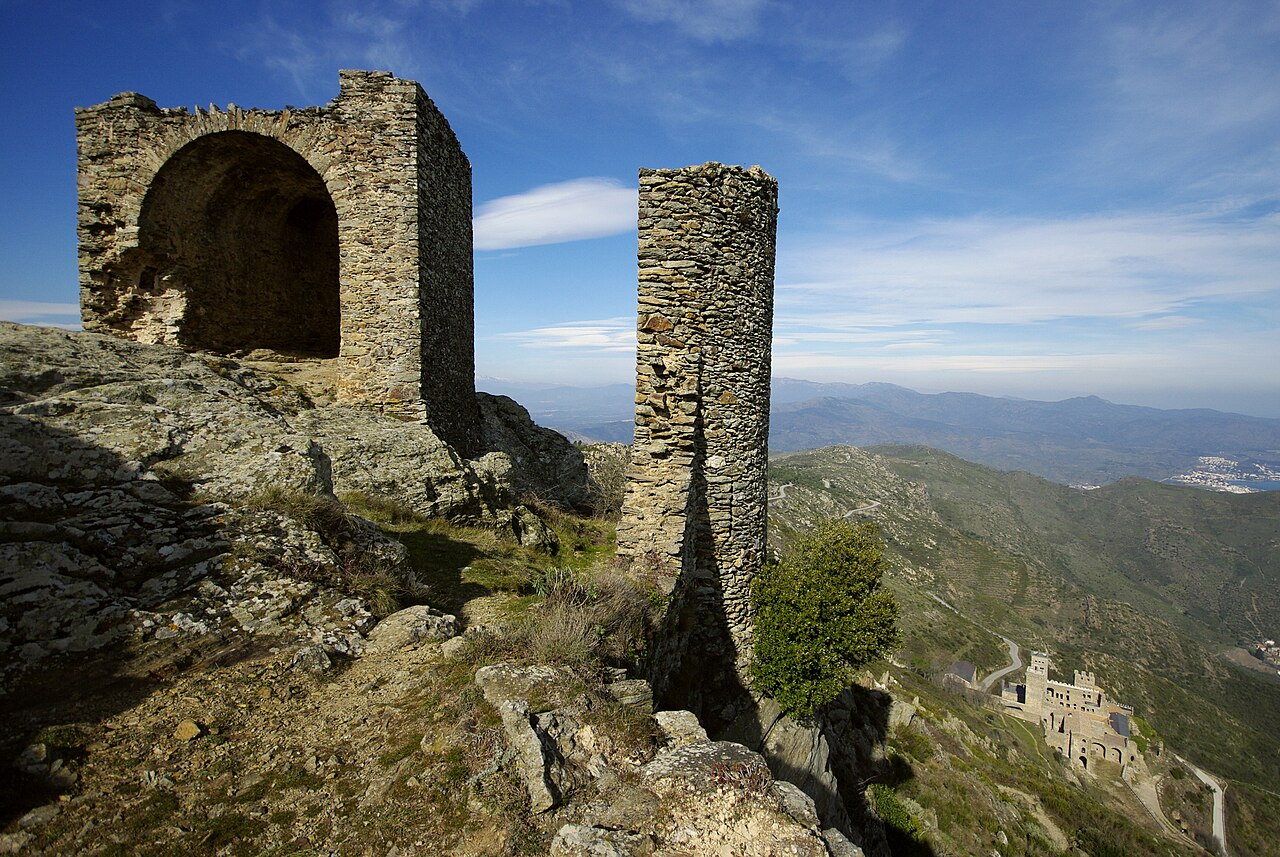
Quermançó Castle is enclosed by a large 15th-century curtain wall shaped in an oval that conforms to the hill's contours. This defensive wall incorporates multiple towers, including a prominent circular tower on the northern side constructed from roughly hewn stones bonded with mortar. The tower stands about seven meters tall and includes loopholes on two levels, allowing defenders to observe and repel attackers effectively.
Another similar circular tower lies approximately 50 meters outside the main walls, serving as an outwork or albarrana tower, a detached defensive structure designed to bolster the castle's perimeter defenses. These albarranas are characteristic of medieval fortifications in the region, enhancing protection by creating additional obstacles for besieging forces.
Interior structures
Inside the castle, the northern section preserves a large rectangular hall dating to the 15th century. Its walls, composed of roughly hewn stones, remain moderately well preserved. Architectural details include a large loophole and remnants of diaphragm arches, which would have supported a double-pitched roof to shed rainwater efficiently. Adjacent to this hall, the central hall area retains only its perimeter walls but features traces of a small late bell-gable (espadaña) on the eastern wall, a simple bell tower element typical in medieval fortresses.
At the hill's summit stands the castle's main tower, known as the torre mestra. This two-story watchtower, built from rough stone and mortar, underwent modifications during the early 19th century, including internal wall divisions, roofing repairs, and the addition of battlements. These changes reflect the castle's reuse during the Napoleonic Wars when it served as a military stronghold.
Between the main tower and the northern and central halls lie ruins corresponding to the original 10th-century enclosure. Nearby, a late cistern dating from the 16th to 17th centuries features a barrel vault roof and a small chamber adjoining the main tower. Later renovations transformed this area into an inner courtyard, partially obscuring the earliest medieval structures.
Later history and modern era
By the 17th century, Quermançó Castle had fallen into disuse and was recorded as a ruin. However, it briefly regained military significance during the Napoleonic Wars (1808–1814) when French forces occupied and fortified the site. Marshal Louis Gabriel Suchet ordered the castle's deliberate demolition during the French withdrawal in 1814, leaving it in a ruined state that largely persists today.
In the 20th century, the castle served as a Republican resistance point during the Spanish Civil War, as evidenced by archaeological findings of ammunition remains. The site remains privately owned, with some preservation efforts focused on stabilizing existing ruins and adapting the terrain for limited access.
Salvador dalí's connection
The renowned surrealist artist Salvador Dalí had a personal affection for Quermançó Castle, which lies near the road connecting his hometown of Figueres and his coastal residence in Cadaqués. Dalí envisioned creative projects for the castle, including a natural pipe organ played by the tramuntana wind and housing a rhinoceros in the basement as a tourist attraction. He also considered transforming the ruins into a residence for his wife, Gala, reflecting his deep interest in the site.
Current condition and visitor information
Today, Quermançó Castle remains a ruined hill castle with fragments of walls and towers still standing. The site has been landscaped by its private owner, who has partially adapted it for visitor access. However, the interior areas are closed to the public to prevent vandalism, so visitors can only view the castle's exterior.
The castle is accessible on foot from a small road branching off the N-260, located about 2 kilometers north of Vilajuïga. Its remote location and rugged terrain contribute to its preserved atmosphere, offering visitors a glimpse into the region's medieval military architecture and turbulent history.
Frequently asked questions (FAQ)
- How do I access Quermançó Castle?
- Quermançó Castle is accessible on foot from a small road that turns off the N-260, about 2 kilometers north of Vilajuïga. Visitors should be prepared for a hike as the castle sits on a steep hilltop with rugged terrain.
- What is the historical significance of Quermançó Castle?
- Quermançó Castle dates back to the 10th century and played a key role in medieval regional conflicts, including sieges during the Crusades and Napoleonic Wars. It was also a Republican resistance point during the Spanish Civil War.
- Can I enter the interior of Quermançó Castle?
- The interior of Quermançó Castle is currently closed to the public to prevent vandalism. Visitors can view the exterior ruins and surrounding landscape but cannot access inside the structures.
- What are the notable architectural features of Quermançó Castle?
- The castle features a 15th-century oval curtain wall, circular towers with loopholes, a large rectangular hall with diaphragm arches, and the main torre mestra watchtower with battlements from the Napoleonic era.
- Is there a connection between Salvador Dalí and Quermançó Castle?
- Yes, Salvador Dalí had a personal connection with Quermançó Castle and proposed imaginative projects such as a natural pipe organ powered by wind and transforming the ruins into a residence for his wife Gala.
Photo gallery

Information
Sources & official resources
Verify the information above using these authoritative references.
Loading map...
Visitor reviews
No reviews yet. Been here? Write the first review and help other travelers!
Write the first reviewVisited this castle? Share your experience
Your review helps other travelers and adds first-hand knowledge to our encyclopedia.