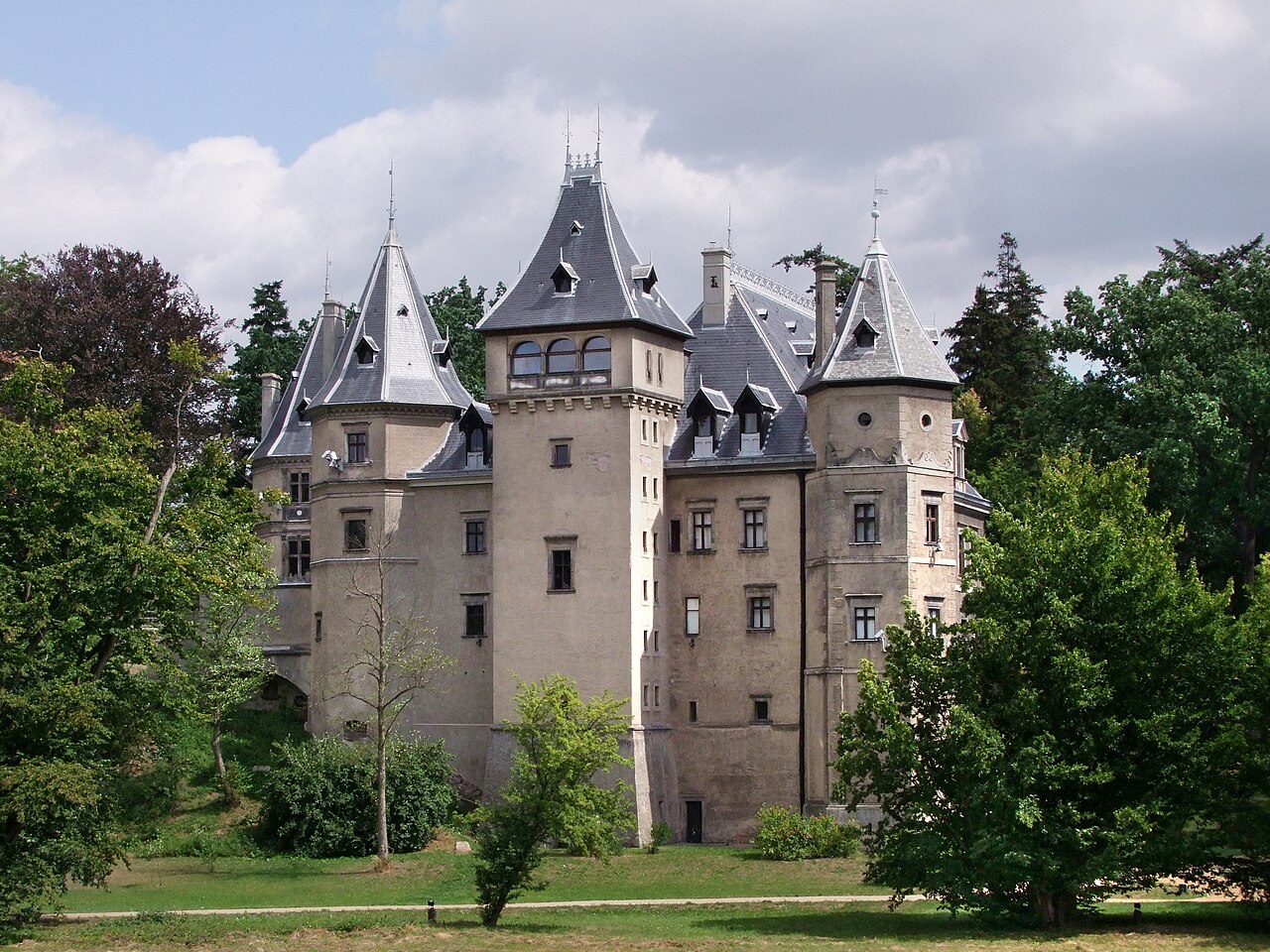
Pyzdry Castle
Pyzdry Castle stands as a testament to medieval military architecture and royal power in Poland. Located in the town of Pyzdry, this hill castle was constructed in the 14th century under the reign of King Casimir III the Great. Perched strategically overlooking the Warta River valley, the castle was designed to serve both defensive and residential purposes, reflecting the multifaceted role of fortresses in the medieval Polish kingdom.
Historical significance and royal connections
The castle's origins date back to the mid-1300s, when King Casimir III initiated the construction of a substantial fortress to secure the region and assert royal authority. Throughout its history, Pyzdry Castle played a pivotal role in the political and military struggles of Poland and its neighboring realms. In the late 14th century, during the reign of Louis I of Hungary, the castle was occupied by Hungarian forces in 1382 as a pledge for Sigismund of Luxembourg, a claimant to the Kraków throne through marriage alliances.
In 1383, the castle was the site of a notable siege during an internal conflict between the noble factions of Grzymalit and Nałęcz. Duke Siemowit IV of Masovia led the assault, marking the earliest recorded use of firearms on Polish soil. Despite the technological novelty of firearms, the Hungarian defenders held out honorably before ultimately surrendering. This event underscores the castle's strategic importance and its place in the evolution of military technology in Poland.
Pyzdry Castle also served as a favored royal residence for several Polish monarchs. King Casimir III the Great is documented to have stayed there eleven times, while King Władysław II Jagiełło visited eighteen times. The castle was frequently visited by King Casimir IV Jagiellon as well. From the mid-15th century to the early 16th century, it functioned as a dower residence for queens such as Sophia of Halshany, Elizabeth of Austria, and Bona Sforza. During this period, royal officials known as starosts administered the estate, highlighting the castle's role in the governance and royal household management.
Architectural features and layout
Originally designed as a large Gothic fortress, Pyzdry Castle featured a rectangular plan measuring approximately 49.5 meters by 60.5 meters, enclosing nearly 3,000 square meters. It was integrated into the town's defensive walls, reinforcing the urban fortifications. The castle's layout comprised four main buildings arranged around a central courtyard, a typical configuration for medieval castles aimed at balancing defense and residential comfort.
The eastern side housed the largest structure, a royal palace with two wings extending about 49.75 meters in length and 15 meters in width. Including a gallery facing the courtyard, the building reached 18.4 meters in width. The northern and southern wings were long buildings approximately 9.5 meters wide and 34.75 meters long, enclosing the courtyard on two sides. The western wing measured around 39.25 by 11 meters externally.
Each corner of the castle was fortified with towers, enhancing its defensive capabilities. Notably, a latrine tower was positioned between the eastern palace and the northern building, reflecting medieval attention to sanitation within fortifications. The northwestern corner featured a large quadrangular tower with sides roughly 10 meters long, serving as a prominent defensive and residential element.
The castle's exterior walls were reinforced with evenly spaced buttresses, vertical supports that strengthened the masonry and added to the Gothic architectural character. These features linked Pyzdry Castle to other significant Polish fortresses such as Gniew, Człuchów, and the high castle in Malbork, situating it within a broader tradition of Gothic military architecture in Poland.
Modifications, decline, and later use
In the early 16th century, the castle underwent partial dismantling. The southern building and the wall adjoining the nearby Franciscan monastery were removed, leaving the northern main wall to serve as the southern boundary of the complex. This adaptation reflects changing defensive needs and urban development pressures.
Between 1628 and 1632, renovation efforts were led by Adam Sędziwój Czarnkowski, the voivode of Łęczyca and starost of Pyzdry, indicating continued strategic and residential importance during the early modern period.
The castle's decline accelerated after a devastating fire in 1676. Subsequently, in 1768, Prussian authorities dismantled most of the fortress while establishing a prison on the site of the former eastern royal palace. Over the centuries, various utilitarian buildings replaced parts of the castle: a granary occupied the northern residential wing's location; an electric mill utilized sections of the northern house and eastern palace in the 20th century; and after 1959, a warehouse for a textile factory was built on the western house's site. These changes illustrate the castle's transformation from a royal fortress to industrial and commercial uses.
Archaeological research and preservation
Archaeological investigations have been conducted at Pyzdry Castle over several decades. Initial work in 1959 by the Conservation Workshops in Poznań was followed by excavations in the early 1980s led by the Regional Museum in Konin. More recent and extensive research took place between 2007 and 2009 under the direction of Tomasz Olszacki from the University of Łódź. These studies have significantly enhanced understanding of the castle's historical development, architectural features, and its role within the medieval Polish kingdom.
The archaeological findings confirm that Pyzdry Castle ranks among the largest medieval fortresses built within the United Kingdom of Poland. The research also highlights its architectural similarities with other major Gothic castles in the region, reinforcing its importance as a center of royal power and military defense.
Today, the castle remains are classified as partially preserved, with visible foundations and some structural elements providing insight into its former grandeur. The site offers valuable opportunities for historical education and cultural tourism, connecting visitors with Poland's rich medieval heritage.
Cultural and historical legacy
Pyzdry Castle embodies the complex history of medieval Poland, reflecting the intersections of military strategy, royal authority, and architectural innovation. Its role in significant historical events, such as the early use of firearms in Polish warfare and its function as a royal residence, underscores its enduring importance.
The castle's evolution from a formidable fortress to a site of industrial adaptation mirrors broader regional and political changes over the centuries. Preservation efforts and archaeological research continue to shed light on its past, ensuring that Pyzdry Castle remains a vital link to Poland's medieval history and architectural heritage.
Frequently asked questions (FAQ)
- How do I get to Pyzdry Castle?
- Pyzdry Castle is located in the town of Pyzdry in the Greater Poland Voivodeship. It is accessible by local roads and public transportation from nearby cities such as Poznań. Visitors can reach the site by car or regional bus services.
- What are the opening hours of Pyzdry Castle?
- The castle ruins are generally open to the public during daylight hours. However, there is no formal visitor center or set opening times, so it is advisable to visit during the day for safety and better visibility.
- Is there an entrance fee to visit Pyzdry Castle?
- Visiting the castle ruins is free of charge. There are no ticketed entry fees, making it accessible for all visitors interested in exploring the historical site.
- What is the historical significance of Pyzdry Castle?
- Pyzdry Castle was a major royal fortress and residence in medieval Poland. It played a key role in political conflicts, hosted Polish kings, and witnessed the earliest recorded use of firearms in Poland during a siege in 1383.
- Can I see the original architectural features at Pyzdry Castle?
- While much of the castle has been dismantled or repurposed, visitors can see the foundations, buttresses, and some tower remains that showcase its Gothic architectural style. Archaeological excavations have revealed important structural details.
- When is the best time to visit Pyzdry Castle?
- The best time to visit is during spring to early autumn when weather conditions are favorable for outdoor exploration. The site is an open ruin, so good weather enhances the experience.
Information
Current owner
Municipality
Loading map...
Visitor reviews
No reviews yet. Been here? Write the first review and help other travelers!
Write the first reviewVisited this castle? Share your experience
Your review helps other travelers and adds first-hand knowledge to our encyclopedia.