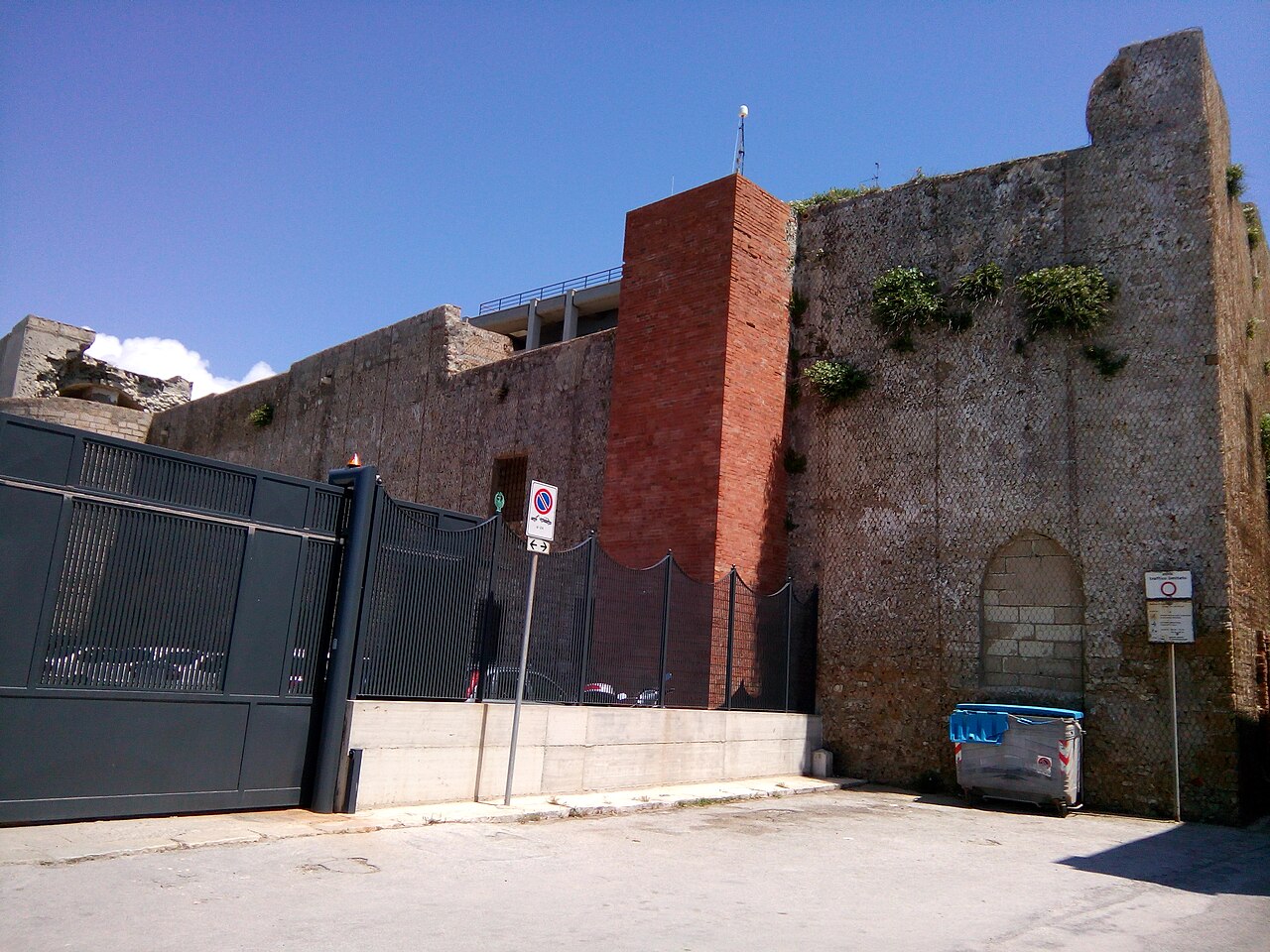
Punta Troia Castle
Punta Troia Castle stands as a prominent historical fortress on Marettimo Island, the westernmost of the Egadi Islands in Italy. Its origins trace back to a Saracen watchtower built around 827 AD, serving as an early defensive post to secure Arab control over this strategic Mediterranean location. The castle's evolution reflects centuries of military, political, and social changes that shaped the region.
By approximately 1140, during the reign of King Roger II of Sicily, the Normans transformed the original Saracen tower into a fortified castle. This development was part of a broader strategy to strengthen the western boundaries of the Kingdom of Sicily, which was then one of the richest and most powerful realms in the Mediterranean. The castle's position on a narrow promontory allowed it to dominate the surrounding sea approaches, serving both defensive and administrative functions.
Medieval origins and strategic significance
The castle’s initial construction as a Saracen watchtower highlights its early importance in regional defense. The Arabs used Marettimo as a base to control maritime routes and protect their interests in the central Mediterranean. When the Normans seized control, they recognized the site's enduring strategic value and expanded the fortifications accordingly.
The Norman enhancements included thickening walls and adding residential and military spaces, adapting the structure to withstand sieges and pirate raids. This period marked the castle’s role as a key military outpost guarding Sicily’s western frontier, an area frequently threatened by rival powers and corsairs.
Spanish era expansion and architectural features
In the 16th century, under the Spanish viceroyalty, the castle underwent significant reconstruction ordered by Viceroy Francesco Ferdinando d’Avalos. This phase introduced the main architectural elements visible today, reflecting Renaissance military engineering adapted to the challenges of artillery warfare. The castle's irregular layout, shaped by the rugged terrain, was fortified with robust walls and defensive bastions.
The structure consists of two main floors: the lower level is a large single chamber, while the upper floor includes an entrance hall, narrow passageways, and several rooms opening onto a terrace. This configuration facilitated both defense and administration. The terrace provided excellent vantage points for monitoring the sea and island approaches.
A notable feature is the deep cistern, originally designed to collect and store rainwater, crucial for sustaining the garrison during sieges. This cistern was later converted into a prison known as "la Fossa" or "the Pit," used to detain serious offenders and political prisoners, particularly during periods of unrest such as the French Revolutionary era.
The castle as a prison and political symbol
During the 18th and early 19th centuries, Punta Troia Castle gained notoriety as a prison, especially for political detainees. In 1793, amid anti-Jacobin repression and famine, it held 52 political prisoners, including notable figures like Guglielmo Pepe, a patriot of the Neapolitan Republic. Pepe’s memoirs describe the harsh, cramped conditions within the cistern-turned-prison, underscoring the castle’s role in the political struggles of the time.
The penal use of the castle ended in 1844 when King Ferdinand II of the Two Sicilies ordered its closure. Afterward, the castle and its associated religious buildings, such as the church dedicated to St. Anne and the chapel of Our Lady, fell into disrepair. Despite abandonment, the castle remained a symbol of authority and control over the island.
Modern history and restoration efforts
Though no longer used as a prison, the castle retained military importance during both World Wars, serving as an observation post and telegraph station. It did not engage in combat but contributed to local defense and communications. Following the wars, neglect threatened the castle’s structural integrity.
Comprehensive restoration efforts culminated in the castle’s reopening in 2011. Today, it functions not only as a historical monument but also as a cultural center. The site includes a Prison Museum that interprets its penal history and a marine observatory named "Foca Monaca" dedicated to monitoring the surrounding Marine Protected Area. These institutions highlight the castle’s enduring connection to Marettimo’s maritime environment and heritage.
Architectural layout and visitor experience
Punta Troia Castle is perched on a narrow promontory, accessible via a steep path or by sea with local guides. Its irregular plan is a direct response to the rugged terrain, incorporating defensive features typical of Renaissance military architecture adapted for island fortifications.
The castle’s two floors are connected by a staircase, with the upper floor designed for both defense and administration. The terrace offers panoramic views of the surrounding sea, essential for early warning against pirate or enemy ships. The cistern remains a poignant reminder of the castle’s dual role as a fortress and prison.
The small church within the castle complex served as the island’s main place of worship until the 19th century, emphasizing the castle’s role as a community hub beyond its military function.
Cultural significance and tourism today
Today, Punta Troia Castle is a significant cultural landmark on Marettimo Island, attracting visitors interested in history, architecture, and natural beauty. Its combination of medieval origins, Renaissance military design, and penal history offers a unique window into the complex history of the Egadi Islands and Mediterranean geopolitics.
The castle’s preservation and adaptive reuse as a museum and observatory contribute to the local economy, which now relies heavily on tourism. Visitors can explore the castle’s fortifications, prison cells, and religious structures while enjoying spectacular views of the surrounding marine landscape.
In sum, Punta Troia Castle embodies the layered history of Marettimo Island—from its early Saracen defenses through Norman and Spanish rule to its modern role as a cultural and environmental beacon in the Mediterranean.
Frequently asked questions (FAQ)
- What is the historical significance of Punta Troia Castle?
- Punta Troia Castle, built in the late 15th century, served as a strategic lookout point for defense against pirate attacks in the Mediterranean. Its historical importance is tied to its role in protecting the island of Favignana and its inhabitants, showcasing the military architecture of the era.
- When was Punta Troia Castle constructed?
- Punta Troia Castle was constructed between 1480 and 1490 during the reign of King Ferdinand I of Aragon. The castle was part of a network of coastal fortifications established to safeguard the Sicilian coastline from invaders.
- Can I visit Punta Troia Castle?
- Yes, Punta Troia Castle is open to visitors, allowing them to explore its ruins and enjoy stunning views of the surrounding landscape. It is advisable to check local guidelines and opening times before your visit, as access may vary based on the season.
- What are the opening hours of Punta Troia Castle?
- Punta Troia Castle typically opens to the public from 9 AM to 7 PM during the summer months, with reduced hours in the winter. It's best to confirm the hours closer to your visit, as they may change seasonally or due to special events.
- Is it possible to access Punta Troia Castle by public transport?
- While there is no direct public transport to Punta Troia Castle, visitors can take a bus or taxi from the main town of Favignana to reach the castle. Alternatively, many choose to hike to the castle for a more scenic experience.
- When is the best time to visit Punta Troia Castle?
- The best time to visit Punta Troia Castle is during the spring (April to June) and fall (September to October) when the weather is pleasant, and the tourist crowds are fewer. Visiting during these months allows you to fully enjoy the views and the historical ambiance of the site.
- What are some nearby attractions to Punta Troia Castle?
- Nearby attractions include the beautiful beaches of Favignana, such as Cala Rossa and Cala Azzurra, as well as the town's charming harbor and local seafood restaurants. You can also explore other historical sites on the island, making it a perfect destination for a day trip.
- What are the ticket prices for Punta Troia Castle?
- Entry to Punta Troia Castle is generally free, but some guided tours may charge a small fee. It's recommended to check with local tourism offices for any updates on ticketing or special events that might require a fee.
- Is Punta Troia Castle accessible for people with disabilities?
- Punta Troia Castle is situated on elevated terrain, which may pose challenges for individuals with mobility impairments. While efforts have been made to improve accessibility, it is advisable to contact local authorities for specific information regarding access points and assistance available.
Information
Website
Visit websiteSources & official resources
Verify the information above using these authoritative references.
Loading map...
Visitor reviews
No reviews yet. Been here? Write the first review and help other travelers!
Write the first reviewVisited this castle? Share your experience
Your review helps other travelers and adds first-hand knowledge to our encyclopedia.