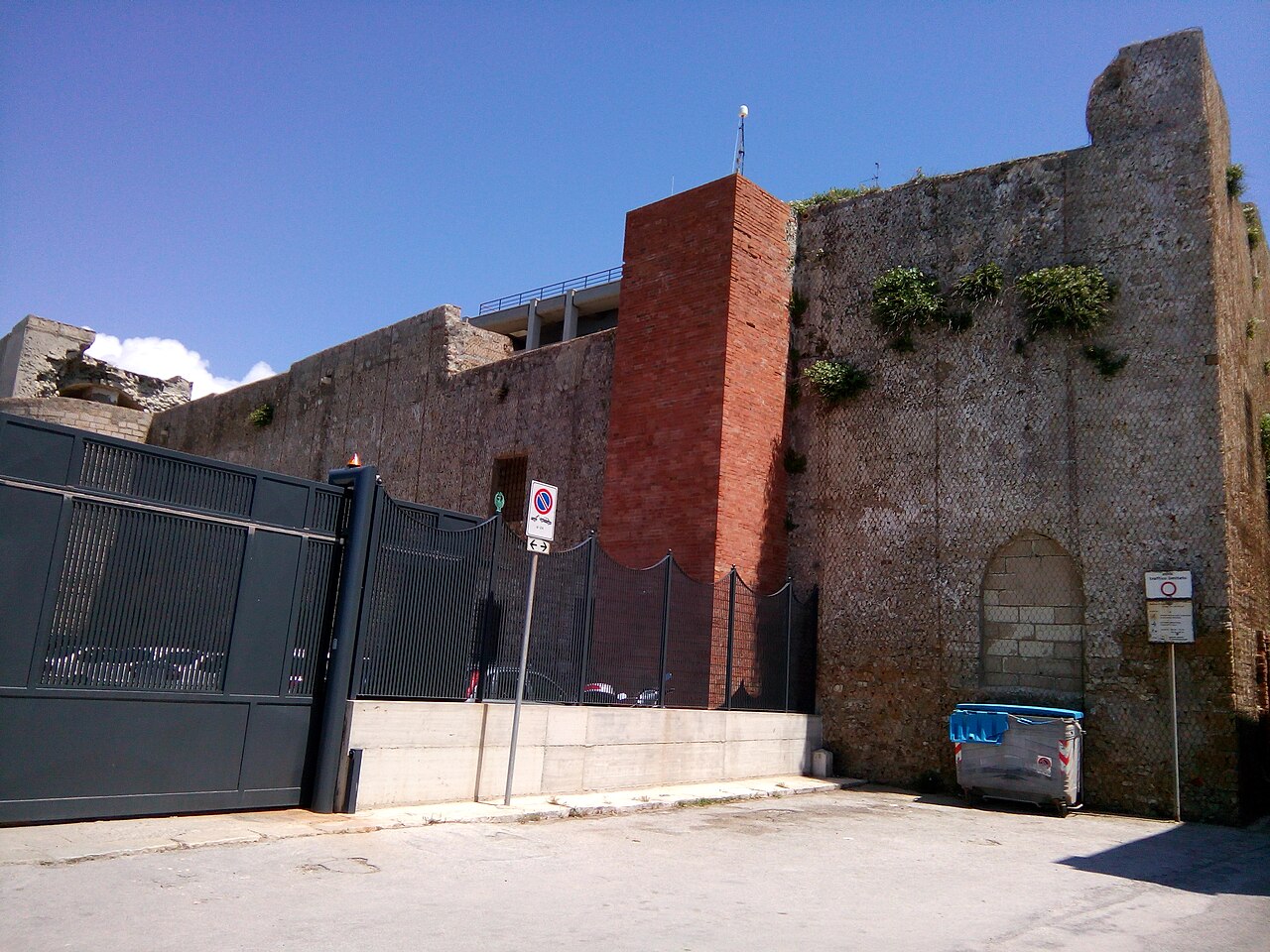
Colombaia Castle
Colombaia Castle is a remarkable historic fortress located on a small islet at the western edge of the port of Trapani, a coastal city in Sicily, Italy. This castle has a rich history spanning over two millennia, originating from the First Punic War era around 260 BCE. Its strategic position overlooking the sea made it a vital military outpost for various civilizations including the Carthaginians, Romans, Arabs, Aragonese, and later the Spanish Empire. The castle’s unique octagonal shape and its towering height of 32 meters make it an imposing structure that has witnessed significant historical events and architectural transformations.
The site initially served as a military fortification built by the Carthaginian civilization, traditionally attributed to the general Amilcar Barca. During the First Punic War, the fortress played a key role in naval engagements, including the notable Carthaginian victory near Trapani in 249 BCE. However, by 247 BCE, the Romans captured the islet in a surprise night attack led by Consul Numerius Fabius Buteo, after which the fortress was abandoned for some time. This period of disuse saw the tower become a refuge for doves, which were culturally significant as sacred animals of Venus Ericina, a goddess worshipped in the region.
Medieval and renaissance transformations
The castle’s revival began with the arrival of the Arabs in Sicily, who repurposed the fortress as a lighthouse to guide maritime navigation. The most substantial reconstruction happened under the Aragonese dynasty around 1280, when the castle was rebuilt as a larger, more fortified military structure. This reconstruction established the octagonal tower that remains the castle’s central feature today.
During the Renaissance period, particularly under the reign of Emperor Charles V, the fortress was further strengthened to defend against frequent raids by Barbary pirates. The castle’s strategic location allowed early detection of pirate incursions threatening the Trapani coastline. Renovations continued into the 17th century, notably under Viceroy Don Claudio Lamoraldo, Prince of Ligny, with a commemorative plaque dated 1671 marking this phase of enhancement.
Architectural features and layout
Colombaia Castle is characterized by its tall, octagonal tower rising to 32 meters and comprising four floors, each serving distinct purposes. The main entrance is uniquely located on the second floor, suggesting the presence of a drawbridge or elevated access for defensive advantage. The ground floor originally functioned as a cistern for water storage, vital for sustaining the garrison during sieges.
The castle’s interior is organized around narrow streets connecting various buildings, including guard posts, two quays for maritime access, chapels, and open courtyards. The right side of the tower features a paved walkway leading to a rear courtyard, which historically provided an internal open space for the fortress inhabitants.
Two chapels within the courtyard highlight the castle’s dual military and religious functions. These chapels were later converted into storage during World War II but have since fallen into disrepair along with one of the quays, which is now unstable and restricted for safety reasons. The tower itself contains several windows, though some are sealed, and a balcony that is no longer accessible due to a partially collapsed staircase.
Later history and current condition
After its military role diminished in the early 19th century under Bourbon rule, Colombaia Castle was repurposed as a prison following the 1821 uprisings. It held notable Sicilian patriots involved in the Risorgimento, including Michele Fardella, who later became mayor of Trapani in 1861. This prison function lasted until 1965 when a modern facility replaced it.
Since then, the castle has suffered from neglect, with only partial restoration efforts in the 1990s focusing on the tower. The rest of the fortress remains in a state of decay, with entrances sealed off due to safety concerns. Recognized as a culturally significant site by the Fondo per l’Ambiente Italiano in 2009, ownership transferred to the Sicilian Region in 2010, which has plans for comprehensive restoration to preserve this important heritage monument.
Cultural significance and heritage conservation
Colombaia Castle stands as a testament to the layered history of Sicily, reflecting the island’s strategic maritime importance and the succession of civilizations that have shaped its identity. Its architecture encapsulates elements from the High Medieval period through the Renaissance, embodying military ingenuity and adaptation to evolving threats over centuries.
The castle’s octagonal design is relatively rare among Mediterranean fortresses, offering insights into the defensive strategies employed by the Aragonese. Its role in protecting Trapani from pirate attacks underscores the ongoing geopolitical challenges faced by coastal communities in the Mediterranean basin.
Today, the castle is a focus of heritage conservation efforts aimed at safeguarding its structural integrity and promoting public awareness of its historical importance. Restoration initiatives seek to stabilize the deteriorating chapels, quays, and internal structures, ensuring that future generations can appreciate the castle’s architectural and cultural legacy.
Visitor information and accessibility
Currently, Colombaia Castle is closed to the public due to safety concerns stemming from its fragile condition. All entrances are secured to prevent unauthorized access. Visitors interested in the castle’s history can explore the surrounding harbor area of Trapani, which offers scenic views of the fortress from the mainland.
Plans for restoration and potential future public access are under consideration by local authorities and heritage organizations, aiming to integrate the castle into cultural tourism circuits in Sicily.
Frequently asked questions (FAQ)
- How do I get to Colombaia Castle?
- Colombaia Castle is located just outside of Trapani, Italy. Visitors can reach it by car, with parking available nearby, or by taking public transportation to Trapani and then walking to the castle.
- What is the historical significance of Colombaia Castle?
- Colombaia Castle dates back to the 13th century and is an important symbol of the region's medieval history. It served as a fortress to protect the coastline from invasions and later became a residence for nobility.
- When was Colombaia Castle built?
- Construction of Colombaia Castle began in the 12th century and was completed in the 13th century. Over the years, it has undergone various renovations and restorations, reflecting different architectural styles.
- Can I visit Colombaia Castle year-round?
- Yes, Colombaia Castle is open to visitors throughout the year. However, it's advisable to check the specific opening hours and any seasonal changes in operations before planning your visit.
- Why is Colombaia Castle a popular tourist attraction?
- Colombaia Castle attracts visitors for its stunning views of the surrounding sea and Trapani. Its rich history, impressive architecture, and picturesque setting make it a must-visit for history and architecture enthusiasts.
- Is it possible to tour the interior of Colombaia Castle?
- Currently, the interior of Colombaia Castle is not fully accessible for guided tours. However, visitors can explore the exterior and enjoy the scenic views from the castle grounds.
- What are the ticket prices for visiting Colombaia Castle?
- Admission to Colombaia Castle is generally free, but donations are appreciated to help maintain the site. It's best to check for any special events that may have different pricing.
- When is the best time to visit Colombaia Castle?
- The best time to visit Colombaia Castle is during the spring and fall months when the weather is mild and pleasant. Summer can be quite hot, while winter may bring cooler temperatures.
- What nearby attractions should I visit while in Trapani?
- While in Trapani, consider visiting the Salt Pans, the historic town center, and the beautiful beaches nearby. The Egadi Islands are also a short boat ride away and offer stunning natural beauty and recreational opportunities.
Information
Loading map...
Visitor reviews
No reviews yet. Been here? Write the first review and help other travelers!
Write the first reviewVisited this castle? Share your experience
Your review helps other travelers and adds first-hand knowledge to our encyclopedia.