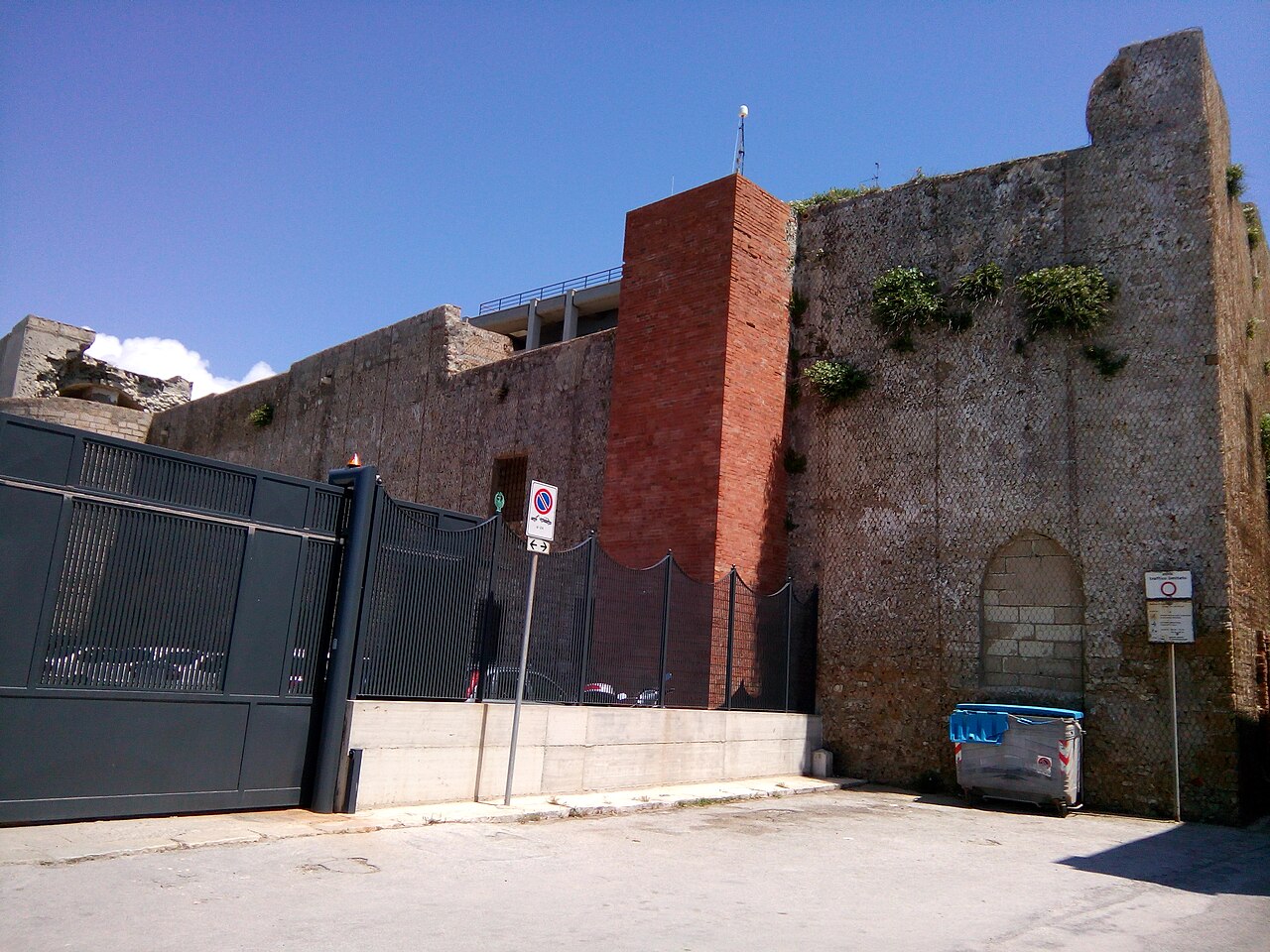
Erice Castle
Erice Castle, also known as the Castle of Venus, is a remarkable medieval fortress perched atop Monte Erice in the Sicilian town of Erice, Italy. This hill castle stands on a site steeped in history, where layers of ancient religious significance and medieval military architecture converge. Originally constructed by the Normans in the 12th century, the castle was built on the ruins of a sacred sanctuary dedicated to the goddess Venus Erycina, reflecting the site's importance from antiquity through the Middle Ages.
The castle's origins trace back to a sanctuary revered by the Elymians and later the Phoenicians, who worshipped a fertility goddess here. Subsequently, the Carthaginians and Romans rededicated the sanctuary to Venus Erycina, making it a prominent religious center in the Mediterranean. Ancient writers such as Thucydides and Diodorus Siculus documented the sanctuary's significance. The site was fortified separately from the city and endured military conflicts, including a notable sack by the Carthaginian general Hamilcar Barca.
Medieval construction and architectural features
The current castle structure was commissioned by King Roger II of Sicily in the 12th century, during the High Medieval period. The fortress incorporates architectural elements salvaged from the ancient sanctuary and Roman temple ruins, including granite columns and large stone blocks. The castle's defensive walls follow the natural contours of the cliff, featuring distinctive merli guelfi battlements with swallowtail crenellations common in medieval military architecture.
A notable feature within the castle is the small medieval church of Santa Maria della Neve, built contemporaneously with the Norman fortress, indicating the continued religious significance of the site. Additionally, a Roman bathhouse near the cliff edge attests to the site's classical past and its integration into the medieval complex.
Defensive structures and layout
The castle's layout includes a circular well known as the Well of Venus, symbolically linking the fortress to its ancient sacred origins. The defensive system is enhanced by a tower-like structure called the colombaia or dovecote, which likely served military and communication purposes. Originally, access to the castle was secured by a drawbridge connecting it to the nearby Balio Towers, though this was later replaced by a stone ramp or staircase.
The fortress façade faces west and contains a secret underground gallery that once served as a concealed escape route. This passage has been restored and is accessible to visitors today, adding to the castle's strategic complexity. A remarkable feature on the northern rocky face is a wall traditionally attributed to the mythological Daedalus, composed of twelve horizontal layers of large, evenly cut stones laid in opus rectum masonry. This ancient construction technique predates the castle and underscores the site's long-standing architectural heritage.
The balio towers and civic role
The Balio Towers form an integral part of the defensive complex atop Monte Erice. Established during the Norman period, likely in the 13th century, these towers served as the center of civic and administrative life in Erice. The name "Balio" derives from the medieval official called the bajulo or bailiff, who oversaw royal justice and tax collection.
The towers functioned as the town hall and marked the end of the main street, originally known as the Royal Road. Tradition links the towers to the reign of King Frederick III of Aragon, especially during the siege of nearby Trapani around 1314-1315. A coat of arms of the Aragonese dynasty near the western entrance attests to their influence. Later additions include a third tower and a curtain wall with a gate bearing the Spanish Habsburg coat of arms, reflecting the site's evolving political history.
Restoration and modern use
By the 18th and 19th centuries, the Balio Towers' military importance waned, and their civic functions increased. Around 1861, municipal offices moved to a new town hall, and the towers fell into disuse. Restoration efforts began in 1872 under Count Agostino Sieri Pepoli, who rebuilt a demolished tower with a distinctive pentagonal shape and created the Balio Gardens, an English-style public park surrounding the towers.
The towers are enclosed by a high curtain wall with crenellations and multiple access points, including the main western entrance through the gardens. Visitors can enjoy a terrace with stone benches and a marble table, features from Pepoli's restoration. The towers remain a symbol of Erice's medieval heritage and civic history.
Historical significance and cultural heritage
Throughout its history, Erice Castle has played diverse roles—from a sacred sanctuary and religious center in antiquity to a Norman fortress, royal residence, prison under Bourbon rule, and a site of civic administration. Its layered history reflects the complex cultural and political transformations of Sicily over millennia.
Excavations in the 1930s uncovered artifacts such as Greek pottery and burial sites beneath the castle, now housed in the Museo Pepoli in Trapani. These findings deepen understanding of the site's ancient past and its continuous occupation.
Recent restorations completed in 2025 have focused on stabilizing the structure, enhancing visitor access, and adapting parts of the castle for museum use. Today, Erice Castle stands as a well-preserved monument showcasing a unique blend of medieval military architecture and ancient sacred heritage, offering visitors panoramic views and a tangible connection to Sicily's rich history.
Visitor experience and accessibility
Visitors to Erice Castle can explore the extensive fortifications, including the restored Balio Towers and the castle's interior spaces. The secret underground gallery and the Well of Venus are highlights, alongside the small medieval church of Santa Maria della Neve. The surrounding Balio Gardens provide a serene setting for reflection and leisure.
The castle's hilltop location affords spectacular views of the surrounding Sicilian landscape, including the nearby town of Erice and the Mediterranean Sea. The site is accessible by foot from the town center, with well-maintained paths and interpretive signage enhancing the visitor experience.
Frequently asked questions (FAQ)
- What is the historical significance of Erice Castle?
- Erice Castle, also known as Castello di Venere, was built on the ruins of an ancient temple dedicated to the goddess Venus. Its strategic location offers breathtaking views of the surrounding landscape, making it a key defensive site throughout history. The castle embodies the rich cultural heritage of the region and reflects various architectural styles influenced by different eras.
- When was Erice Castle built?
- The origins of Erice Castle date back to the 12th century when it was constructed by the Normans. However, the site has been inhabited since ancient times, with remnants of earlier structures suggesting a long history of occupation. Over the centuries, the castle underwent various modifications, especially during the medieval period.
- Can I visit Erice Castle, and what are the opening hours?
- Yes, Erice Castle is open to visitors, allowing you to explore its fascinating architecture and stunning views. The castle typically opens at 9 AM and closes at sunset, but it's advisable to check the official website for any seasonal variations or special events that may affect opening hours.
- Is it possible to access Erice Castle by public transport?
- Yes, Erice Castle can be accessed by public transport. You can take a bus from Trapani to Erice, and from the town center, it’s a short walk to the castle. Alternatively, many visitors choose to drive or hire a taxi for convenience.
- What are the ticket prices for Erice Castle?
- The ticket prices for Erice Castle are generally affordable, with discounts available for students and seniors. Children under a certain age may enter for free, making it a great family-friendly destination. It's best to verify current prices on the official website before your visit.
- When is the best time to visit Erice Castle?
- The best time to visit Erice Castle is during the spring and fall months when the weather is mild and pleasant. This allows for a more enjoyable experience while exploring the castle and its surroundings. Summer can be quite hot, while winter may bring chilly temperatures and fewer tourists.
- Are there any nearby attractions to visit after touring Erice Castle?
- Yes, there are several nearby attractions worth exploring after your visit to Erice Castle. The charming town of Erice itself offers quaint streets, shops, and local eateries. Additionally, you can visit the nearby Segesta archaeological site, which features well-preserved ancient Greek ruins.
- What architectural features should I look for at Erice Castle?
- Erice Castle showcases a mix of architectural styles, including Norman and medieval influences. Notable features include the robust stone walls, towers, and the remnants of the ancient temple dedicated to Venus. The panoramic views from the castle's ramparts are also a highlight, offering a glimpse into the strategic importance of this historic site.
Information
Website
Visit websiteSources & official resources
Verify the information above using these authoritative references.
Loading map...
Visitor reviews
No reviews yet. Been here? Write the first review and help other travelers!
Write the first reviewVisited this castle? Share your experience
Your review helps other travelers and adds first-hand knowledge to our encyclopedia.