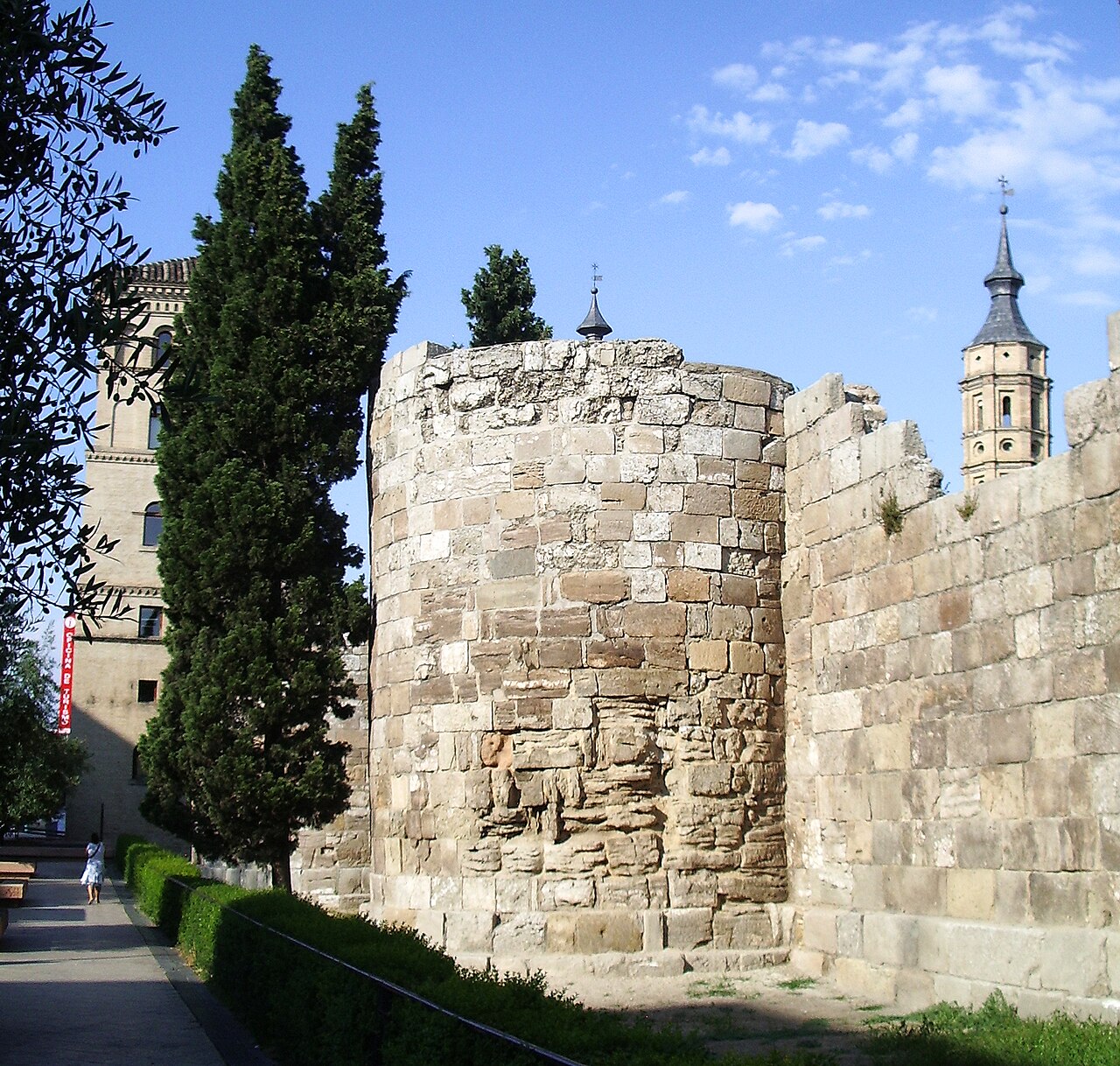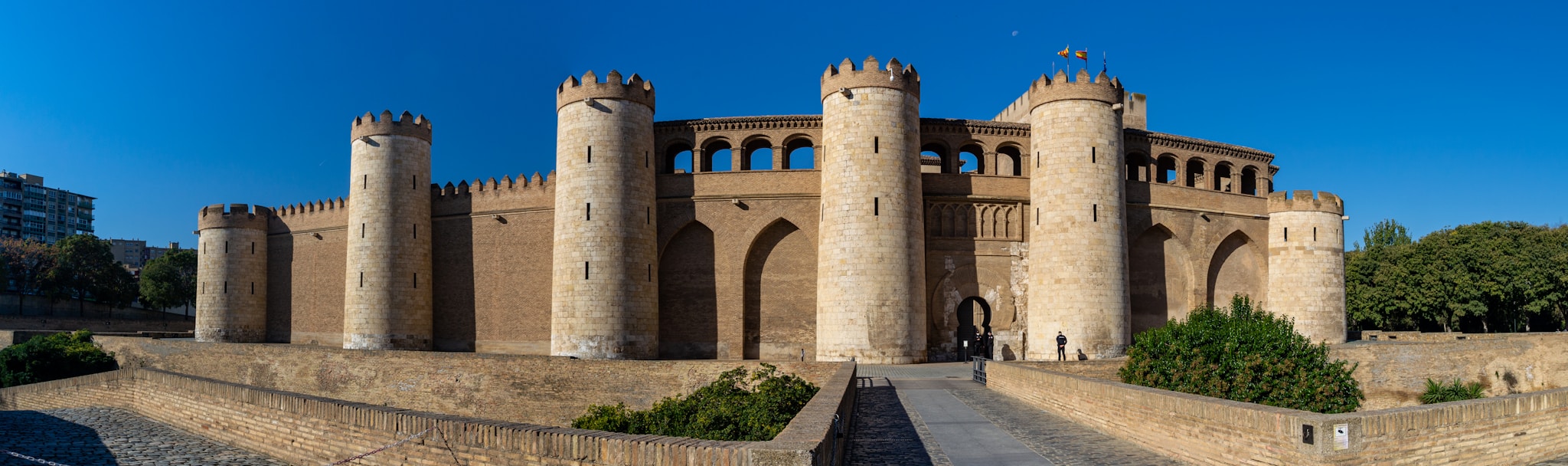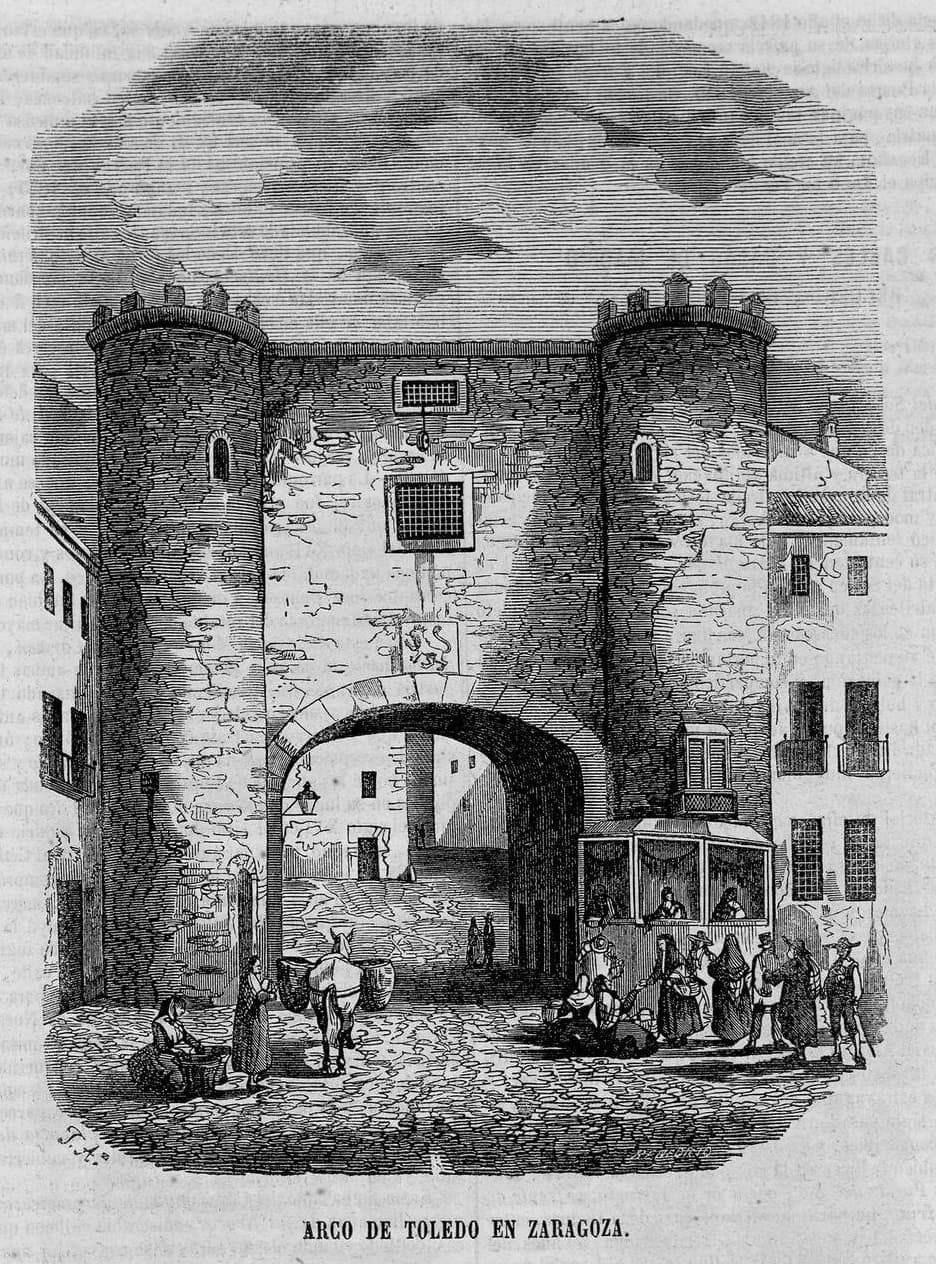
The Puerta de Toledo was a significant fortified gate that formed part of the historic walls of Zaragoza, located in the city of Zaragoza, Aragon, Spain. As one of the twelve original city gates, it played a crucial role in the defense and control of access to the city during the medieval and early modern periods. The gate was strategically positioned near the San Juan de los Panetes front, directly opposite the rear of the current Central Market, in a zone that historically contained the arches surrounding the statue of Augustus. This location highlights its importance in the urban fabric and defensive layout of Zaragoza.
Historical context and significance
The Puerta de Toledo was constructed on the foundations of the ancient Roman walls of Zaragoza, which date back to the Roman period when the city was known as Caesaraugusta. The reuse of Roman masonry and structural elements was a common practice, reflecting the continuity of urban fortifications across centuries. This gate served not only as a defensive bastion but also as a controlled entry point facilitating trade and movement in and out of the city, contributing to Zaragoza's economic and military strength.
Its role as a bastioned fortress gate indicates that it was adapted or rebuilt to include bastions—angular defensive projections designed to improve the fortification's ability to withstand artillery attacks, a feature typical of early modern military architecture. This suggests that the gate underwent modifications during the Renaissance or post-medieval periods to respond to evolving military technologies.
Architectural features and layout
The Puerta de Toledo was integrated into the city's defensive walls, which included bastions and other fortifications characteristic of the bastioned fortress style. The gate likely featured robust stone construction with defensive elements such as thick walls, arrow slits, and possibly a portcullis or heavy wooden doors to control access. The bastions flanking the gate would have allowed defenders to cover the approaches with crossfire, enhancing the gate's defensive capabilities.
While detailed architectural plans or illustrations of the gate are scarce due to its demolition, the presence of bastions indicates an advanced fortification design influenced by the military engineering principles of the 16th to 18th centuries. The gate's position near the Central Market area also suggests it was a key urban landmark and a transition point between the fortified city and its surrounding environs.
Demolition and legacy
The Puerta de Toledo was demolished in 1842, a period when many European cities were dismantling their medieval walls and gates to accommodate urban expansion and modernization. The removal of the gate reflects the changing priorities of the city, shifting from military defense to commercial development and urban planning.
Although the gate no longer exists, its historical footprint remains significant in understanding the evolution of Zaragoza's fortifications and urban structure. The site where the gate once stood is near important city landmarks, connecting the past defensive architecture with the modern cityscape.
Preservation and archaeological importance
Despite its demolition, the Puerta de Toledo holds archaeological value due to its foundations on the Roman walls. Excavations and studies in the area have helped shed light on the layering of Zaragoza's fortifications from Roman times through the medieval and early modern periods. These findings contribute to the broader knowledge of urban defensive strategies and architectural adaptations over centuries.
Today, the memory of the gate is preserved through historical records, maps, and the urban layout of Zaragoza, offering insights into the city's defensive heritage and architectural evolution.
Frequently asked questions (FAQ)
- When was the Puerta de Toledo demolished?
- The Puerta de Toledo was demolished in 1842 during a period of urban modernization in Zaragoza.
- What was the Puerta de Toledo's role in Zaragoza?
- It served as one of the twelve fortified gates in the walls of Zaragoza, controlling access and providing defense for the city.
- Is the Puerta de Toledo still standing today?
- No, the Puerta de Toledo was demolished in 1842, and only archaeological remains exist today.
- What architectural style did the Puerta de Toledo feature?
- The gate was part of a bastioned fortress design, incorporating defensive bastions typical of early modern military architecture.
- Where was the Puerta de Toledo located within Zaragoza?
- It was located near San Juan de los Panetes, opposite the rear of the current Central Market in Zaragoza.
Photo gallery

Photo by J. A.•Public domain
Information
Loading map...
Visitor reviews
No reviews yet. Been here? Write the first review and help other travelers!
Write the first reviewVisited this castle? Share your experience
Your review helps other travelers and adds first-hand knowledge to our encyclopedia.