Ancient Roman wall of Zaragoza
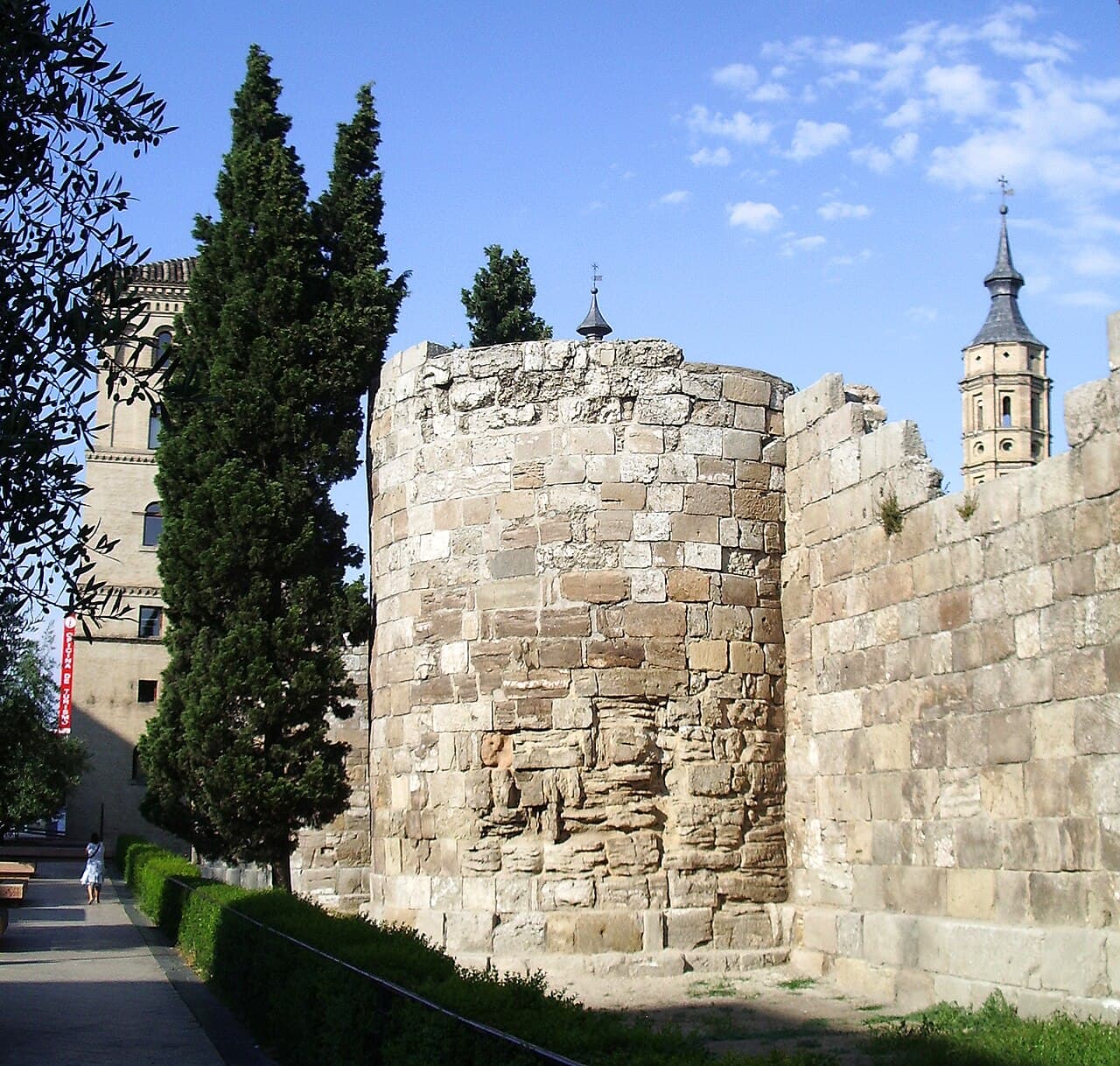
The ancient Roman wall of Zaragoza represents a significant archaeological site that reflects the military and urban planning prowess of the Roman Empire in Hispania. This archaeological ruin is located in the city of Zaragoza, in the region of Aragon, Spain. It is a surviving fragment of the extensive fortifications that once protected the Roman city of Caesaraugusta, the ancient name for Zaragoza.
Historical context and significance
The construction of the Roman wall in Zaragoza dates back to the 1st century BC to 3rd century AD, during the Roman Imperial period. Caesaraugusta was founded in 14 BC under the reign of Emperor Augustus and quickly became a vital administrative and military center in the Roman province of Hispania Tarraconensis. The city walls were erected to defend against external threats and to assert Roman authority in the region.
The wall's remains reveal the strategic importance of the city, which sat at the crossroads of major Roman roads connecting the Iberian Peninsula to the rest of the empire. These fortifications were part of a larger complex that included gates, towers, and bastions, designed to withstand sieges and control access to the city.
Architectural features and construction
The surviving sections of the Roman wall display typical Roman military architecture characterized by large stone blocks and opus caementicium (Roman concrete) construction techniques. The walls were originally about 4 to 6 meters high and several meters thick, with a foundation designed to endure both natural and human threats.
The wall included rectangular towers spaced at intervals, which served as lookout points and defensive strongholds. The masonry work demonstrates the Roman mastery of durable and functional design, combining both ashlar stonework and concrete core to create a formidable barrier.
Archaeological excavations have uncovered parts of the city gates, which featured monumental arches and were likely adorned with inscriptions and reliefs celebrating Roman power. The gates controlled traffic into the city and were critical points for defense and commerce.
Preservation and archaeological research
Today, the ancient Roman wall of Zaragoza exists as ruins that provide valuable insights into Roman urban fortification methods and the historical development of Zaragoza. The site has been subject to archaeological excavations that have helped to map the original extent of the walls and understand their construction phases.
Preservation efforts focus on maintaining the structural integrity of the remaining wall sections and making the site accessible to the public. Interpretive signage and guided tours help visitors appreciate the wall's historical context and architectural significance.
Cultural and heritage importance
The Roman wall is an essential part of Zaragoza's cultural heritage, linking the modern city with its ancient past. It attracts historians, archaeologists, and tourists interested in Roman history and military architecture. The wall's remains contribute to the broader understanding of Roman influence in Spain and the evolution of urban defenses over centuries.
In addition to its archaeological value, the site is integrated into Zaragoza's urban landscape, often featured in cultural events and educational programs that promote historical awareness and preservation.
Frequently asked questions (FAQ)
- What is the historical significance of the Ancient Roman wall of Zaragoza?
- The Ancient Roman wall of Zaragoza is a significant remnant of the city's Roman past, showcasing the strategic importance of Zaragoza during the Roman Empire. Built in the 1st century BC, it served as a defensive structure and illustrates the architectural techniques of the time.
- When was the Ancient Roman wall of Zaragoza constructed?
- The construction of the Ancient Roman wall of Zaragoza began in the 1st century BC. Over the centuries, it has undergone various modifications, but many sections of the original wall still stand today, offering a glimpse into the city's ancient history.
- Can I access the Ancient Roman wall of Zaragoza?
- Yes, the Ancient Roman wall of Zaragoza is accessible to visitors. You can walk along certain sections of the wall and explore the surrounding areas, making it a great spot for history enthusiasts and casual visitors alike.
- What are the opening hours for visiting the Ancient Roman wall of Zaragoza?
- The Ancient Roman wall of Zaragoza is generally open to the public throughout the year. While there are no specific opening hours, it is recommended to visit during daylight hours for the best experience.
- Is there an admission fee to visit the Ancient Roman wall of Zaragoza?
- Visiting the Ancient Roman wall of Zaragoza is free of charge. This makes it an excellent option for travelers who want to explore the city's history without spending money on admission fees.
- What is the best time to visit the Ancient Roman wall of Zaragoza?
- The best time to visit the Ancient Roman wall of Zaragoza is during the spring and fall when the weather is mild and pleasant. These seasons allow for comfortable exploration and photography opportunities without the extreme heat of summer.
- Are there nearby attractions to visit after the Ancient Roman wall of Zaragoza?
- Yes, there are several nearby attractions, including the Basilica del Pilar and the Cathedral of La Seo. These sites are within walking distance and offer further insights into Zaragoza's rich cultural heritage.
- How do I get to the Ancient Roman wall of Zaragoza?
- The Ancient Roman wall of Zaragoza is centrally located and can be reached easily by public transportation or on foot from major city landmarks. Check local bus routes or enjoy a scenic walk through the historic district to reach this fascinating site.
- Is the Ancient Roman wall of Zaragoza wheelchair accessible?
- While some sections of the Ancient Roman wall may be challenging for wheelchair access due to uneven surfaces, efforts have been made to improve accessibility in the surrounding areas. Visitors with mobility concerns should plan their visit accordingly and may inquire at local tourist information for specific guidance.
Photo gallery

Information
Loading map...
Visitor reviews
No reviews yet. Been here? Write the first review and help other travelers!
Write the first reviewVisited this castle? Share your experience
Your review helps other travelers and adds first-hand knowledge to our encyclopedia.