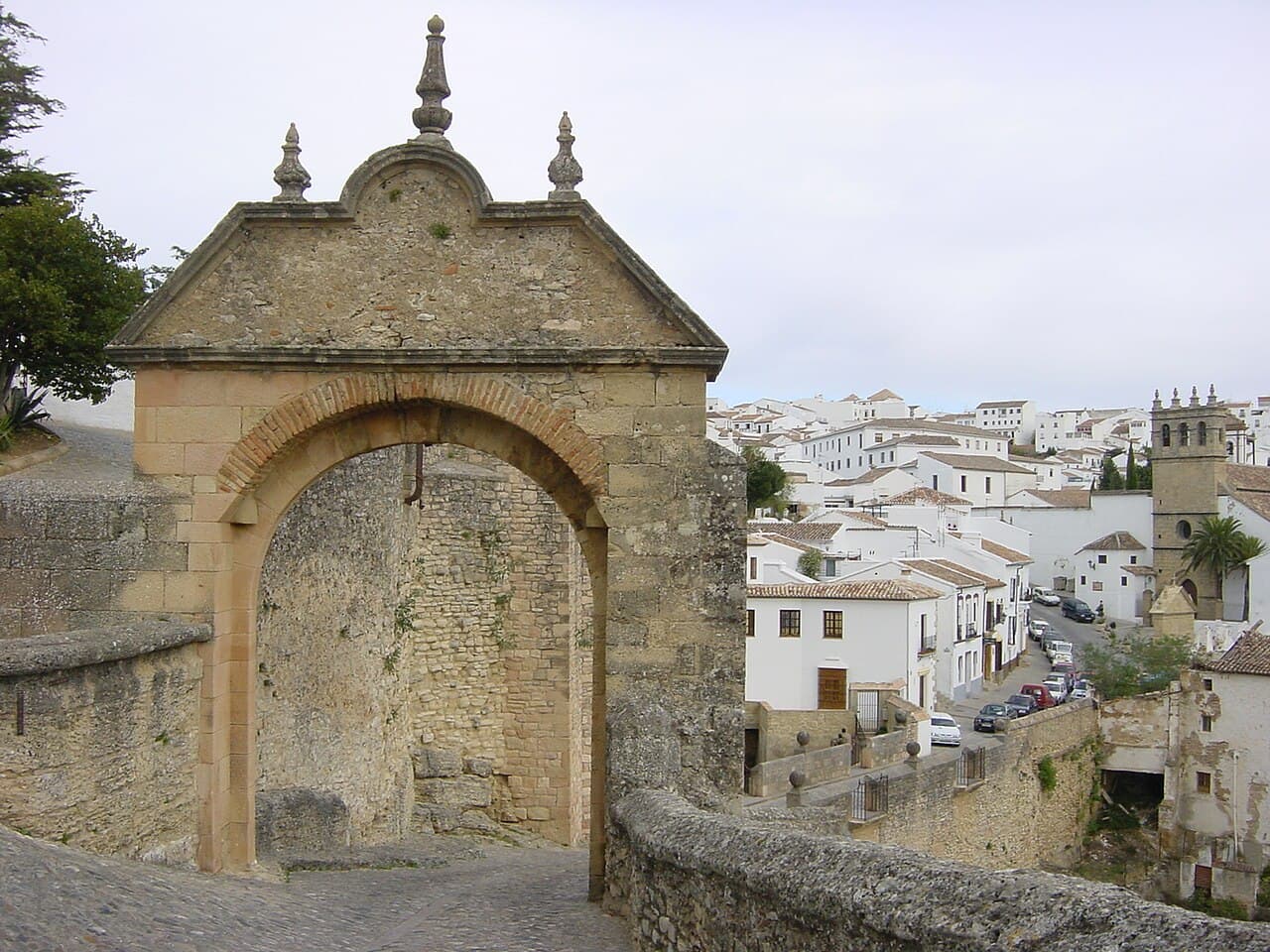
Puerta de Felipe V
Puerta de Felipe V is a notable example of 18th-century bastioned fortress architecture in Spain, reflecting the military engineering advances of the period. This fortress was constructed during the reign of King Philip V, the first Bourbon king of Spain, whose rule marked significant modernization in Spanish military fortifications.
The fortress is characterized by its angular bastions designed to provide overlapping fields of fire, a hallmark of bastioned fortresses developed in response to advances in artillery technology. These bastions allowed defenders to cover the walls with cannon fire, reducing blind spots and enhancing the fortress's defensive capabilities.
Historical context and significance
Built in the early 18th century, Puerta de Felipe V formed part of a broader effort to strengthen Spain's defenses following the War of Spanish Succession (1701–1714). The war resulted in the Bourbon dynasty ascending the Spanish throne, bringing French military architectural influences to Spain. The fortress exemplifies this influence, incorporating features typical of the Vauban-style fortifications favored by French military engineers.
The fortress's strategic location served to protect key routes or urban centers, although the exact city location is less widely documented. Its construction was part of a network of fortifications intended to secure Spanish territories against both internal revolts and external threats, particularly from rival European powers.
Architectural features and design
Bastions and walls
Puerta de Felipe V features robust stone walls with angular bastions at the corners, designed to deflect cannonballs and provide defensive crossfire. The walls are typically thick and sloped to absorb artillery impact. The bastions project outward from the main curtain walls, allowing defenders to cover adjacent walls with musket and cannon fire.
Gates and entryways
The fortress includes a prominent gate, likely named after Philip V, serving as a controlled entry point. This gate would have been heavily fortified, possibly with drawbridges, portcullises, and guardhouses to monitor and defend against enemy incursions.
Interior structures
Inside the fortress, there would have been barracks for troops, ammunition magazines, and command posts. The layout prioritized functionality to support a garrison capable of prolonged defense under siege conditions.
Military engineering and influence
The design of Puerta de Felipe V reflects the principles of trace italienne fortifications, which became widespread in Europe during the 16th to 18th centuries. This style emphasized low, thick walls and bastions to counteract the destructive power of cannon fire. The fortress's geometry minimized dead zones and maximized defensive coverage.
The influence of French military engineers, particularly those inspired by Sébastien Le Prestre de Vauban, is evident in the fortress's layout. Vauban's designs revolutionized fortification construction with their emphasis on star-shaped bastions and layered defenses, many of which were adopted in Spanish fortifications during the Bourbon reforms.
Preservation and current status
While specific details about the current condition of Puerta de Felipe V are limited, bastioned fortresses of this era in Spain often survive as well-preserved or partially restored historical monuments. They serve as important cultural heritage sites, illustrating the evolution of military architecture in Spain.
Such fortresses are frequently accessible to the public, offering insights into the military history and architectural ingenuity of the 18th century. Visitors can explore the bastions, walls, and gate structures, gaining an understanding of the fortress’s strategic design and historical role.
Legacy and cultural importance
Puerta de Felipe V stands as a testament to the military and political shifts in early 18th-century Spain. It embodies the Bourbon monarchy's efforts to modernize Spain's defenses and reflects broader European trends in fortress construction. The fortress contributes to Spain's rich tapestry of historical military architecture and remains a point of interest for historians, architects, and visitors alike.
Frequently asked questions (FAQ)
- What is the historical significance of Puerta de Felipe V?
- Puerta de Felipe V is significant as an 18th-century bastioned fortress built during the reign of King Philip V, reflecting Bourbon military reforms and French influence in Spanish fortifications.
- What architectural style characterizes Puerta de Felipe V?
- The fortress exemplifies bastioned fortification design influenced by the trace italienne style and Vauban principles, featuring angular bastions and thick walls for artillery defense.
- Can visitors explore Puerta de Felipe V today?
- Many bastioned fortresses from this period in Spain are preserved or partially restored and open to the public, allowing visitors to experience historical military architecture firsthand.
- Why were bastioned fortresses like Puerta de Felipe V built?
- Bastioned fortresses were constructed to counter advances in artillery, providing overlapping fields of fire and stronger defensive positions during sieges.
- When was Puerta de Felipe V constructed?
- Puerta de Felipe V was constructed in the 18th century, during the reign of King Philip V, following the War of Spanish Succession.
Photo gallery

Information
Loading map...
Visitor reviews
No reviews yet. Been here? Write the first review and help other travelers!
Write the first reviewVisited this castle? Share your experience
Your review helps other travelers and adds first-hand knowledge to our encyclopedia.



