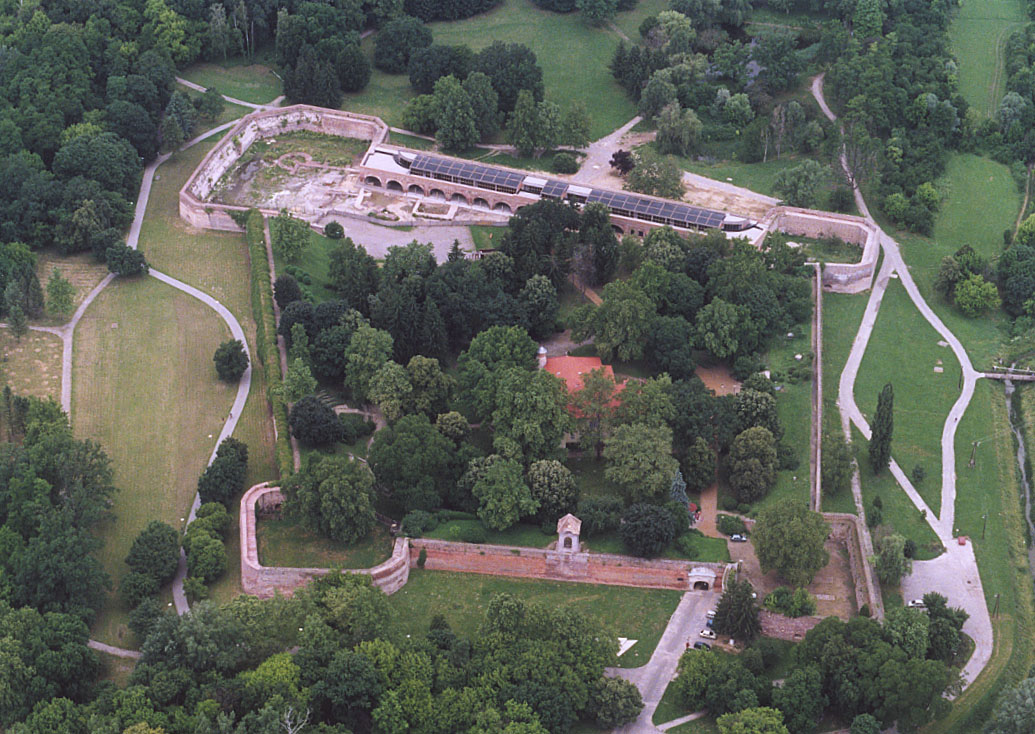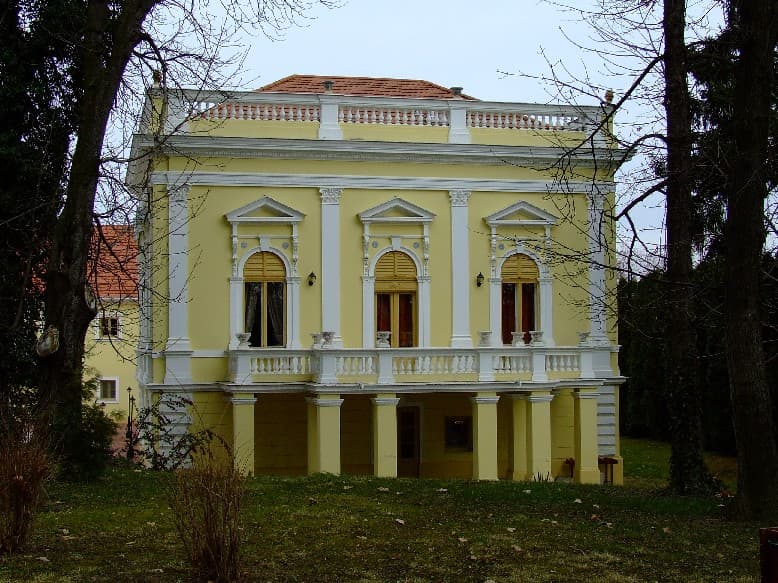
Puchner Mansion in Bikal — Hungary castle

Puchner Mansion in Bikal

Puchner Mansion in Bikal
Bikal, Hungary
Well Preserved

The Puchner Mansion in Bikal is a notable historic residence located in the village of Bikal, Hungary. This mansion is an example of aristocratic architecture set on a gentle hillside, reflecting the traditional style of Hungarian noble estates. While not a fortress in the strictest sense, the mansion's elevated location classifies it as a hill castle, a common feature for noble residences seeking both status and strategic views.

Historical background and significance

The mansion was originally constructed in the 18th century during a period when Hungarian nobility built grand country estates to demonstrate their wealth and social standing. The Puchner family, a noble lineage, commissioned the mansion as their primary residence in the region. Over the centuries, the mansion has witnessed various historical phases, including the Austro-Hungarian Empire era and the socio-political changes of the 20th century.

Though not a military fortress, the mansion played a role in local governance and land management, typical of aristocratic estates. Its architecture and grounds reflect the lifestyle of Hungarian nobility, combining residential comfort with symbolic power.

Architectural features and style

The Puchner Mansion exhibits architectural elements characteristic of the Baroque style, which was prevalent in Hungary during the 18th century. The mansion features a symmetrical façade, large windows, and decorative elements such as stucco work and wrought iron details. The roofline is often steep and hipped, consistent with regional adaptations of Baroque architecture.

Inside, the mansion contains spacious halls and rooms designed for both private living and public functions. The interiors typically include ornate plaster ceilings, frescoes, and woodwork that emphasize elegance and refinement.

Grounds and surrounding landscape

The mansion is set within landscaped gardens that complement its aristocratic character. These gardens often include formal layouts with pathways, ornamental plants, and sometimes water features. The hillside location provides panoramic views of the surrounding countryside, enhancing the estate's prestige.

Preservation and current condition

The Puchner Mansion is currently well preserved, maintaining much of its original architectural integrity. Restoration efforts have focused on preserving the façade and interior decorative elements to retain its historical authenticity. The mansion remains a significant cultural heritage site in the region.

While the mansion is privately owned, it occasionally opens for cultural events and guided tours, allowing visitors to appreciate its historical and architectural value.

Visiting information and accessibility

Visitors interested in the Puchner Mansion should check local listings for opening times, as access may be limited due to private ownership. The mansion's hillside location makes it accessible by road, with parking available nearby. Guided tours provide insights into the mansion's history, architecture, and the noble lifestyle of its former inhabitants.

Nearby attractions

The village of Bikal and its surroundings offer additional cultural and natural attractions, including traditional Hungarian rural architecture and scenic landscapes. Visitors can explore local museums, churches, and enjoy regional cuisine.

Frequently asked questions

  • What is the architectural style of the Puchner Mansion? The mansion is built in the Baroque style, typical of 18th-century Hungarian noble residences.
  • When was the mansion constructed? It dates back to the 18th century, reflecting the era's aristocratic building trends.
  • Is the mansion open to the public? Access is limited and often by appointment or during special events, as it is privately owned.
  • Where is the mansion located? It is situated in the village of Bikal, Hungary, on a hillside offering extensive views.
  • What is the current condition of the mansion? The mansion is well preserved with ongoing maintenance to retain its historical features.
  • Are there guided tours available? Guided tours are occasionally offered, providing detailed historical and architectural information.
  • Can visitors explore the gardens? The landscaped gardens are part of the estate and may be accessible during open days or events.

Frequently asked questions (FAQ)

How do I get to Puchner Mansion in Bikal?
Puchner Mansion is conveniently located in Bikal, Hungary, making it accessible by car and public transport. Visitors can reach the castle from major cities like Budapest by taking a train or bus to nearby towns, followed by a short taxi ride.
What is the historical significance of Puchner Mansion?
Puchner Mansion, built in the 19th century, is a fine example of neo-Renaissance architecture and has historical importance due to its role as a noble residence. The mansion is also known for its beautiful gardens and its connection to local history, showcasing the lifestyle of the Hungarian aristocracy.
When was Puchner Mansion built?
Puchner Mansion was constructed in the late 1800s, specifically in 1880. The mansion has been well-preserved, allowing visitors to step back in time and experience the architectural styles of the era.
Can I take guided tours of Puchner Mansion?
Yes, guided tours are available at Puchner Mansion, providing visitors with a rich understanding of its history and architecture. These tours are conducted by knowledgeable guides who share fascinating stories about the mansion and its former inhabitants.
Why is Puchner Mansion a popular tourist attraction?
Puchner Mansion attracts visitors due to its stunning architecture, rich history, and beautiful gardens. The combination of cultural significance and picturesque surroundings makes it a must-visit destination for those traveling in Hungary.
Is it possible to host events at Puchner Mansion?
Yes, Puchner Mansion offers facilities for hosting various events, including weddings and corporate gatherings. The elegant setting and scenic backdrop provide a unique atmosphere for any occasion.
What are the opening hours for Puchner Mansion?
Puchner Mansion is open to visitors from Tuesday to Sunday, with specific hours for guided tours. It is advisable to check the official website or contact the mansion for the most up-to-date information on opening hours and tour availability.
What are the ticket prices for visiting Puchner Mansion?
Ticket prices for Puchner Mansion vary based on age and whether visitors opt for a guided tour. Discounts for students and seniors may be available, so it's best to check beforehand for the latest pricing details.
When is the best time to visit Puchner Mansion?
The best time to visit Puchner Mansion is during the spring and early autumn months when the weather is mild and the gardens are in full bloom. These seasons offer ideal conditions for exploring the outdoor areas and enjoying the beauty of the mansion's surroundings.
Are there any nearby attractions to Puchner Mansion?
Yes, there are several nearby attractions, including local parks and historical sites that complement a visit to Puchner Mansion. Guests can explore the charming village of Bikal and enjoy the natural beauty of the surrounding countryside.

Photo gallery

Puchner Mansion in Bikal
Click to view

Photo by Egresij•CC BY-SA 3.0

1 photo • Click any image to view in full screen

Information

Hill Castle

Loading map...

Visitor reviews

No reviews yet. Been here? Write the first review and help other travelers!

Write the first review

Visited this castle? Share your experience

Your review helps other travelers and adds first-hand knowledge to our encyclopedia.
Write a review

(5/5)

0/2000 characters

Your review will be visible after admin approval

Nearby castles

12.2 km
Castle of Máré — Hungary castle

Castle of Máré

, Hungary

The Castle of Máré is a notable hill castle located in Hungary, renowned for its medieval origins and strategic position atop a prominent elevation. Though the exact city location is less documented, the castle's remains are significant for understanding medieval fortification in the region.Constructed during the high medieval period, the castle exemplifies defensive architecture typical of the era. The elevated site provided natural advantages, allowing defenders to monitor surrounding lands and control key routes. The castle's structure likely included a keep or donjon, surrounded by fortified walls and possibly a bailey for supporting buildings and garrisoned troops.Historical context and strategic importanceThe Castle of Máré was built during a time when Hungary was consolidating its territories and defending against invasions from various forces. Its location on a hill was chosen to maximize defensive capabilities and oversee the surrounding landscape. Such castles were crucial during the high medieval and late medieval periods for both military defense and as symbols of feudal power.Throughout its history, the castle would have served as a stronghold for local nobility or military commanders. It played a role in regional conflicts, possibly including defensive actions against invading armies or internal disputes among Hungarian nobility.Architectural features and layoutThe castle's architecture reflects typical hill castle design principles, utilizing the natural terrain to enhance defense. The ruins suggest a compact layout with thick stone walls designed to withstand sieges. The presence of a keep or main tower would have provided a final refuge during attacks.Additional features likely included battlements, arrow slits, and a gatehouse to control access. The castle may have had a moat or ditch on the more accessible sides to further deter attackers. Within the walls, there would have been living quarters, storage rooms, and possibly a chapel.Current condition and preservationToday, the Castle of Máré stands as ruins, with remnants of its walls and defensive structures visible. While much of the original castle has deteriorated over centuries, the site remains an important cultural and historical monument. Efforts to preserve the ruins help maintain its legacy and provide insight into medieval Hungarian fortifications.Visitors to the site can explore the remains, gaining a sense of the castle's former scale and strategic design. The hilltop location offers panoramic views, enhancing the understanding of why this site was chosen for defense.Cultural significance and tourismThe Castle of Máré holds cultural value as a symbol of Hungary's medieval past. It attracts historians, archaeologists, and tourists interested in castle architecture and medieval history. The site contributes to local heritage tourism and education about feudal Hungary.While facilities may be limited due to its ruinous state, the castle's evocative atmosphere and historical importance make it a noteworthy destination for those exploring Hungarian castles.

High Medieval (11th–13th c.)
Details
47.6 km

Pipo Castle

Ozora, Hungary

Pipo Castle in Ozora, Hungary, stands as a remarkable example of Italian Renaissance architecture in a small Hungarian village setting. Built in the 15th century for Filippo Scolari, also known as Pipo of Ozora, the castle reflects the cultural and political connections between Hungary and Italy during the late medieval period. Scolari arrived in Hungary as a merchant's clerk at the age of 13 and rose through the ranks to become a notable economist, soldier, and diplomat at the court of King Sigismund. The castle embodies his legacy and status, blending military functionality with Renaissance artistic elements. Architectural features and artistic heritage The castle's architecture reveals a fusion of fortified medieval structures with the emerging Renaissance style imported from Italy. Its courtyard is notable for a fountain topped with a replica of a Verrocchio putto, symbolizing the influence of Italian Renaissance sculpture. One of the castle walls features a reproduction of a Michelangelo relief, underscoring the artistic ambitions of the castle's design. The castle's chapel houses a treasured relic of St George, reflecting the religious devotion of the period and the importance of saintly protection for the castle's inhabitants. Interior furnishings and collections The interior of Pipo Castle contains important Renaissance furniture, fabrics, and travelling trunks that provide insight into the lifestyle and material culture of the Hungarian nobility during the 15th century. The knights' hall displays outstanding copies of works by the great masters of the Italian Renaissance, including Verrocchio, Donatello, and Michelangelo. This collection emphasizes the castle's role as a cultural bridge between Hungary and Renaissance Italy. The castle kitchen and armory The reconstructed Renaissance kitchen offers a detailed glimpse into the culinary practices of medieval Hungary, highlighting the roles of victuallers, cooks, and servants. Visitors can explore the tools and methods used in food preparation during the 14th and 15th centuries. The armory houses a splendid display of replica weapons from the Sigismund period, illustrating the martial aspects of the castle and the military career of Filippo Scolari. Historical significance and cultural exhibitions Pipo Castle is not only a monument to Renaissance art and architecture but also a repository of Hungarian literary heritage. It hosts a richly documented exhibition on Illyés Gyula, a celebrated 20th-century Hungarian poet and novelist, linking the castle's historical past with modern cultural achievements. This exhibition broadens the castle's appeal beyond architectural and historical interest to include literary and cultural tourism. Insights into medieval life and visitor experiences The castle provides visitors with an immersive experience of life in the 14th and 15th centuries, combining historical artifacts, reconstructed spaces, and educational displays. Guests can stay in a historic apartment within the castle, offering a unique opportunity to experience the ambiance of a Renaissance noble residence firsthand. This accommodation option enhances the visitor experience by allowing a deeper connection to the castle's history and architecture. Location and regional context Located in the Zala region of Hungary, Pipo Castle is situated in the town of Ozora. The castle's position reflects the strategic importance of this area during the late medieval period, serving both defensive and residential purposes. Its preservation and restoration efforts have maintained its status as a well-preserved example of Renaissance architecture within Hungary. Preservation and current status The castle is currently well preserved and serves as a cultural and historical museum. It provides educational programs and hosts exhibitions that celebrate both its Renaissance heritage and Hungarian history. The maintenance of the castle ensures that its architectural features and collections remain accessible to the public, contributing to Hungary's cultural tourism.

Late Medieval (14th–15th c.)
Details
48.9 km
Szigetvár Fortress — Hungary castle

Szigetvár Fortress

Szigetvár, Hungary

Szigetvár fortress stands as a remarkable symbol of Hungary's medieval and early modern military history. Located in the town of Szigetvár, southern Transdanubia, this late medieval hill castle was originally constructed in the 14th century and evolved into a formidable bastioned fortress. Its rich history is deeply intertwined with the turbulent conflicts between the Kingdom of Hungary and the expanding Ottoman Empire, culminating in the legendary 1566 siege that has been immortalized in literature and art. Early origins and medieval development The castle's earliest references date to 1449, but archaeological and historical evidence suggests its central keep and core structures were erected in the 14th and 15th centuries. The initial fortification was built by Janos, son of Anthimus, during his tenure in Slavonia. The fortress was strategically situated on a natural island formed by the Almás stream, which created a marshy defensive perimeter that hindered enemy advances. The original layout featured a circular keep at the center, surrounded by sturdy stone walls enclosing a square courtyard. This design was typical of medieval Hungarian castles, serving both defensive and administrative functions. Over the 15th century, the castle expanded to include residential buildings and a small settlement within its walls, reflecting its growing importance as a regional stronghold. Ownership passed through prominent Hungarian noble families, including the Garai family from 1463 and the Török family of Enying from 1471, each contributing to the castle's maintenance and fortification. Strategic role after the battle of mohács The Battle of Mohács in 1526 was a turning point for Hungary, leading to significant territorial losses to the Ottoman Empire. Szigetvár's location on the empire's western frontier elevated its military significance as a bulwark against further Ottoman incursions. The fortress became a critical defensive base, guarding key routes and serving as a rallying point for Hungarian resistance. In 1555, Horváth Márk was appointed commander and successfully repelled an Ottoman siege in 1556. This victory underscored the fortress's strategic value and the effectiveness of its defenses. In 1561, the renowned Croatian-Hungarian nobleman Miklós Zrínyi took command, marking the beginning of the fortress's most famous chapter. The heroic siege of 1566 and miklós zrínyi The 1566 siege of Szigetvár is one of the most celebrated episodes in Hungarian history. Sultan Suleiman the Magnificent led a massive Ottoman army to capture the fortress, which was defended by approximately 2,300 soldiers under Captain Miklós Zrínyi. Despite being vastly outnumbered, the defenders held out for 34 days in a fierce and determined resistance. The castle's medieval walls and natural marsh defenses proved resilient, but the overwhelming Ottoman forces gradually breached the fortifications. In a final act of defiance, Zrínyi led a desperate sortie against the besiegers, dying in battle. Sultan Suleiman also died during the siege, though his death was concealed to maintain Ottoman morale. This heroic defense has been commemorated extensively in Hungarian and Croatian culture, symbolizing courage and sacrifice against overwhelming odds. Ottoman reconstruction and architectural transformation After the fortress fell to the Ottomans, it underwent significant reconstruction to meet the demands of contemporary warfare. The castle was transformed into a bastioned fortress inspired by Italian Renaissance military architecture. Thick stone and earth walls, approximately three meters thick and six meters high, were constructed to resist artillery fire. Four corner bastions were added, projecting outward to allow defenders to cover all approaches with cannon and musket fire. This expansion increased the fortress's enclosed area to nearly six hectares, reflecting its importance as a regional military hub under Ottoman control. Within the castle grounds, Ottoman architectural elements such as a mosque and a minaret were introduced, illustrating the cultural and religious influence during the period of Turkish rule. Although the minaret is now truncated, restoration plans aim to preserve this significant feature. Return to habsburg control and later history The fortress returned to Habsburg control in 1689 as the Ottoman Empire retreated from Hungary. While it did not see active combat during the Rákóczi War of Independence in the early 18th century, it remained a strategic military site. Over time, the castle's military relevance declined, and it fell into partial ruin. Archaeological excavations began in 1959, revealing much about the castle's layered history. Between 1963 and 1968, extensive restoration was undertaken under architect Ferenc Erdei, focusing on stabilizing the walls and bastions and adapting the site for public visitation. Recent preservation efforts include European Union-funded projects to enhance exhibition spaces, restore bastions, and improve visitor facilities and landscaping. Plans to develop an Islamic cultural center within the castle grounds have been proposed, including restoration of the Ottoman minaret, reflecting the site's multicultural heritage. Architectural features and present condition The castle's current remains showcase a complex evolution from medieval keep to Renaissance bastioned fortress. The central keep and original stone walls remain visible, alongside the expansive bastioned perimeter walls that define the fortress's later form. The bastions are partially preserved, their angular shapes and thick walls clearly evident. The castle's position on a marshy island formed by the Almás stream continues to be a defining defensive feature, with landscaping efforts highlighting this natural moat. The main castle building now houses modern exhibition spaces and visitor amenities, offering insights into the fortress's history and military architecture. Displayed artifacts include remnants of the inner bastion from the 16th-century siege and Ottoman architectural fragments. Overall, Szigetvár fortress stands as a testament to Hungary's resilience and cultural complexity, embodying centuries of conflict, adaptation, and heritage preservation.

Late Medieval (14th–15th c.)
Details