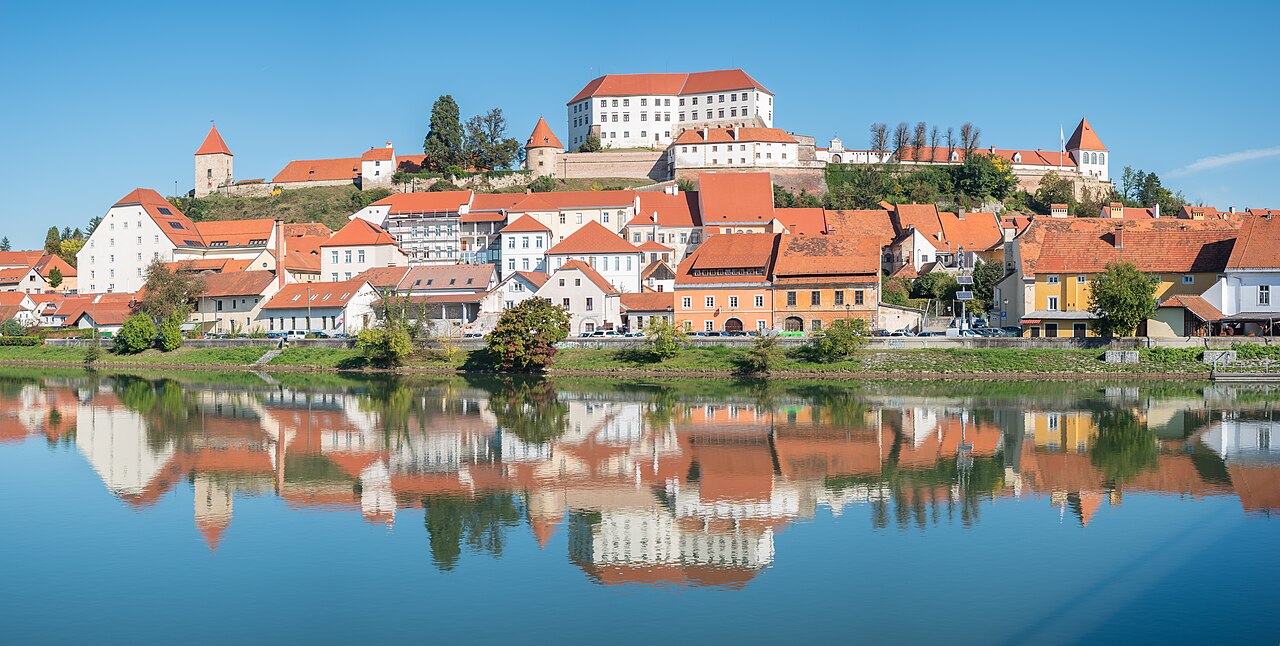
Vurberk Castle

Vurberk castle in slovenske gorice hills
Vurberk, Slovenia
High Medieval (11th–13th c.)
Partially Preserved

Vurberk Castle stands on the southern edge of the Slovenske Gorice hills in northeastern Slovenia. First documented in 1238, this high medieval fortress was strategically positioned at a crossroads connecting several important regional routes. Its location allowed control over traffic from the east and south to the north, highlighting its role in regional defense and trade oversight during the Middle Ages.

Historical background and significance

The castle's origins trace back to the 13th century, a period marked by the construction of numerous fortifications across the region to consolidate feudal power and protect territories. Vurberk Castle was originally built to serve as a stronghold for local nobility, notably the Herberstein family, who played a significant role in the area's governance and defense. The first written mention in 1238 confirms its early importance.

Throughout its history, the castle witnessed various phases of conflict and reconstruction. It endured damage during numerous military engagements, culminating in severe destruction from aerial bombing in 1945 during World War II. This bombing left much of the structure in ruins, with only a smaller section of the ramparts later undergoing renovation.

Architectural features and layout

Originally, Vurberk Castle was designed as a hill castle, utilizing the natural elevation of the Slovenske Gorice hills to enhance its defensive capabilities. The castle complex included ramparts, defensive walls, and an inner courtyard that today serves as an amphitheatre for cultural performances. The remnants of the walls and fortifications reveal typical high medieval military architecture, focused on practical defense rather than elaborate decoration.

Within the castle grounds lies the Church of the Virgin Mary, which incorporates tombstones of noblemen and a medallion bearing a portrait from antiquity. This church adds a religious and cultural dimension to the castle complex, reflecting the intertwined nature of feudal, military, and ecclesiastical power during the Middle Ages.

Cultural and healing traditions

Vurberk Castle is not only a historical monument but also a site of local cultural traditions and beliefs. In recent years, 31 energetic points have been identified in the vicinity, attracting visitors interested in their reputed healing properties. These points are linked to folk traditions and natural energy theories, contributing to the castle's contemporary cultural significance.

According to oral tradition, during the rule of the Herberstein family, the family doctor prescribed patients with pulmonary diseases to walk along specific forest paths on the castle hill. These paths included designated resting spots believed to aid in healing, emphasizing the castle's role beyond military and administrative functions to include health and wellness practices.

Modern usage and preservation

Today, Vurberk Castle remains partially in ruins but has been adapted for modern use. The castle yard functions as an amphitheatre, hosting various performances and cultural events that draw visitors and locals alike. While large parts of the castle remain unrestored, the site is maintained as a cultural heritage location, blending historical preservation with community engagement.

Visitors can explore the ruins and the church, gaining insight into the castle's medieval past and its ongoing role in the region's cultural life. The combination of historical architecture, natural surroundings, and cultural activities makes Vurberk Castle a unique destination in Slovenia.

Access and visitor information

Located in the town of Vurberk, the castle is accessible to the public, although specific visiting hours and ticketing details vary depending on events and seasons. The site offers a compelling experience for those interested in medieval architecture, Slovenian history, and cultural traditions linked to healing and nature.

Frequently asked questions (FAQ)

What is the historical significance of Vurberk Castle?
Vurberk Castle, dating back to the 12th century, played a crucial role in the defense against invasions in the region. Its strategic location allowed it to oversee important trade routes and contributed to the development of the surrounding area. Today, it stands as a testament to Slovenia's rich medieval history.
When was Vurberk Castle built?
Vurberk Castle was constructed in the early 12th century, with its origins linked to the need for fortified structures during the tumultuous medieval period. Over the centuries, it has undergone various renovations and restorations that reflect the architectural styles of different eras.
How do I get to Vurberk Castle?
Vurberk Castle is accessible by car and is located just a short drive from the city of Maribor. There are also local buses that connect to Vurberk, making it easier for visitors who prefer public transportation. Be sure to check local schedules for the most convenient options.
Can I visit Vurberk Castle year-round?
Yes, Vurberk Castle is open to visitors year-round, although opening hours may vary seasonally. It's advisable to check the official website or contact the castle administration for the most current visiting hours before planning your trip.
What are the ticket prices for visiting Vurberk Castle?
Tickets to Vurberk Castle are reasonably priced, with discounts available for students and seniors. Children under a certain age may enter for free, making it an affordable destination for families. Always check for any special events that might offer reduced admission prices.
Is it possible to take guided tours of Vurberk Castle?
Yes, guided tours are available at Vurberk Castle, providing visitors with in-depth insights into its history and architecture. These tours are often led by knowledgeable guides who can share fascinating stories and facts that enhance the visitor experience. It's recommended to book in advance during peak tourist seasons.
What is the best time to visit Vurberk Castle?
The best time to visit Vurberk Castle is during the spring and early autumn when the weather is mild and pleasant for outdoor exploration. Summer can be busy with tourists, while winter may bring snow, adding a unique charm to the castle. Each season offers a different perspective of the castle's beauty.
Are there nearby attractions to Vurberk Castle?
Yes, there are several nearby attractions, including the picturesque town of Maribor and the stunning Drava River. Visitors can also explore local vineyards and hiking trails in the surrounding countryside. This makes Vurberk Castle a perfect starting point for a full day of exploration in the region.
Is Vurberk Castle accessible for visitors with disabilities?
Vurberk Castle has made efforts to improve accessibility for all visitors, including those with disabilities. However, due to its historical nature, some areas may still present challenges. It's advisable to contact the castle administration prior to your visit to inquire about specific accessibility options available on-site.

Information

Hill Castle

Loading map...

Visitor reviews

No reviews yet. Been here? Write the first review and help other travelers!

Write the first review

Visited this castle? Share your experience

Your review helps other travelers and adds first-hand knowledge to our encyclopedia.

Write a review

(5/5)

0/2000 characters

Your review will be visible after admin approval

Nearby castles

8.8 km

Hrastovec Castle

Hrastovec, Slovenia

Hrastovec Castle stands as a significant example of medieval fortification and later architectural evolution in Slovenia. Located in the settlement of Hrastovec, this imposing castle complex reflects centuries of construction phases, combining High Medieval origins with prominent Renaissance and Baroque additions. Its strategic position and expansive structure make it one of the most remarkable castles in the country. Medieval foundations and early history The castle was first documented in 1265, indicating its origins in the 13th century during the High Medieval period. Initially, Hrastovec consisted of two defensive towers connected by a high curtain wall, a typical layout for fortifications of that era. The ground plan reveals an irregular medieval design, suggesting adaptations to the natural terrain or pre-existing structures. By 1338, the castle expanded with the addition of the chapel of St Oswald, reflecting the growing importance of religious spaces within fortified residences. Renaissance expansion and fortifications During the late 16th and early 17th centuries, Hrastovec Castle underwent significant enlargement and stylistic transformation. Around 1600, the southern part of the castle was rebuilt into a Renaissance-style central building featuring three round towers at its corners, enhancing its defensive capabilities and visual prominence. This phase introduced two-storeyed wings that enclosed an inner courtyard, a common Renaissance architectural element designed for both defense and residential comfort. Ownership by the counts of herberstein The castle came under the ownership of the Counts of Herberstein in 1481, who maintained possession for several centuries, except for a brief period between 1802 and 1902. The Herberstein family played a crucial role in the castle's development, commissioning expansions and renovations that blended the medieval structure with Renaissance and later Baroque styles. Baroque renovations and architectural features The northern part of the castle was extensively reconstructed during the Baroque period between 1655 and 1666 under the guidance of the architect Domenico Della Tore. This section features unevenly levelled roofs and multiple wings added to the original complex. The entrance portals and the adjacent Chapel of the Holy Cross bear the date 1668, marking the completion of this phase. Interior design and decoration The Baroque part of Hrastovec Castle boasts a lavishly designed ceremonial staircase and a luxurious Baroque Hall. The Main Hall is particularly notable for its wall paintings depicting mythological and classical scenes, complemented by high-quality Baroque stucco work from the early 18th century. These decorative elements extend to the ceilings of the corridor, chapel, and staircase, illustrating the artistic tastes and wealth of the castle's owners during this period. Architectural layout and complex structure Hrastovec Castle's layout reflects its gradual growth over centuries. The older southern Renaissance wing contrasts with the later northern Baroque additions, creating a mixed architectural complex. The castle's inner courtyard serves as a focal point, surrounded by three Renaissance two-storeyed wings and three round towers to the south, while the northern side comprises several wings with varied roof levels. Current status and accessibility Despite its historical and architectural significance, Hrastovec Castle is currently not open to the public. Its preservation state remains well-maintained, reflecting the care taken to protect this important cultural monument. The castle stands as a testament to the layered history of Slovenian fortifications and aristocratic residences. Frequently asked questions about Hrastovec Castle When was Hrastovec Castle built? Hrastovec Castle was first mentioned in 1265, with origins tracing back to the 13th century during the High Medieval period. What architectural styles are present in Hrastovec Castle? The castle features a combination of medieval, Renaissance, and Baroque architectural elements, reflecting its gradual expansion and renovations over centuries. Who owned Hrastovec Castle historically? The Counts of Herberstein owned the castle from 1481 until World War II, except for a century between 1802 and 1902. Is Hrastovec Castle open to visitors? No, Hrastovec Castle is currently not open to the public. What are the notable interior features of Hrastovec Castle? The castle's Baroque Hall contains wall paintings with mythological and classical themes and exquisite Baroque stucco work on ceilings and walls. Where is Hrastovec Castle located? Hrastovec Castle is located in Hrastovec, Slovenia.

High Medieval (11th–13th c.)
Details
9 km
Ptuj — Slovenia castle

Ptuj

Ptuj, Slovenia

Ptuj Castle stands as a prominent hill castle in the town of Ptuj, Slovenia, with a rich history dating back to the High Medieval period. Archaeological excavations have revealed that the castle hill was inhabited since the Stone Age, with fortified settlements existing around 1000 BCE. During the Roman era, defensive fortifications occupied the site, highlighting the strategic importance of this elevated position overlooking the Drava River. The natural defensive advantages of the hill were also recognized by the Slavs upon their arrival in the region. The first written record of Ptuj Castle appears in documents from the early 12th century, specifically from the tenure of Archbishop Konrad I of Salzburg (1106–1147). The chronicler noted that the archbishop ordered a new castle to be built on the site of an older fortification. Architectural analysis suggests that a stone tower dating from the 9th or 10th century survived as part of the original structure, likely serving as a border defense against Hungarian incursions. This tower remains one of the oldest surviving elements of the castle complex. Medieval origins and architectural development In the 12th century, the central part of the hill featured a complex including a Romanesque residential house and a fortified tower. Over subsequent centuries, the castle underwent significant expansions, evolving into a three-part complex with agricultural buildings and a western bailey. By the 14th century, the castle walls were integrated with the town's fortifications, creating a unified defensive system. The main castle layout took the form of a horseshoe plan with two-story buildings enclosing the courtyard. Defensive features and fortifications Ptuj Castle was a key border fortress, guarding the southern Styrian frontier against Turkish invasions during the late medieval and early modern periods. The castle's defensive system included ramparts, curtain walls, towers, and gatehouses. Notably, the west tower and several southern and northern towers date from before the 16th century. In response to the growing threat of Ottoman forces, the castle underwent extensive fortification upgrades in the 16th century, incorporating bastions and artillery defenses designed by Italian military engineers skilled in adapting medieval fortresses for gunpowder warfare. Ownership and renovations through the centuries The castle was originally owned by the archbishops of Salzburg, who granted it to a noble family that took the name Ptuj. The Ptuj family held the castle until 1438, when the last male heir, Friedrich IX, died. His red marble tombstone, brought from a ruined Dominican church, is preserved on the castle's ground floor. From 1480 to 1490, the castle was controlled by the Kingdom of Hungary under King Matthias Corvinus. In 1490, the castle passed to Emperor Maximilian I of Habsburg, who retained it until 1511 before pledging it back to the Salzburg archbishops. The property changed hands several times in the 16th and 17th centuries, including ownership by the Eggenberg and Thaunhausen families, the Jesuits of Zagreb, and finally the Scottish general Walter Leslie in 1656. Following the decline of the Turkish threat, Leslie transformed Ptuj Castle from a fortress into a Baroque residence, removing many defensive features and adding a new eastern wing with a tower housing stables. The oldest stone tower was dismantled during this period. The 18th century saw further additions, including an administrative building along the southern wall and a granary on the western bailey. The castle remained with the Leslie family until 1802, then passed to the Dietrichstein family until 1864. After complex inheritance issues, Countess Terezia Herberstein purchased the castle in 1873 and undertook extensive renovations that preserved the structure and restored its interiors. The Herberstein family owned Ptuj Castle until it was nationalized in 1945. Architectural highlights and current use Due to numerous reconstructions, few Gothic elements remain visible today. However, visitors can admire the knights' hall and a remarkable two-story castle chapel, both located in the northern wing. The chapel's vertical grandeur and the hall's historic significance stand out as key features of the castle's interior. Today, Ptuj Castle houses the Regional Museum of Ptuj, showcasing a rich collection of cultural and historical artifacts that narrate the castle's extensive past. The castle was declared a national cultural monument in 1999, highlighting its importance in Slovenian heritage. Archaeological significance The castle hill's continuous occupation from prehistoric times through Roman and medieval periods makes it a site of great archaeological interest. Excavations have uncovered remnants of early fortifications and settlements, providing valuable insights into the region's long-term strategic role. Visitor experience Visitors to Ptuj Castle can explore the well-preserved sections of the fortress, including the historical halls and chapel, as well as the museum's exhibits. The castle's elevated position offers panoramic views of Ptuj and the surrounding Drava valley, enhancing its appeal as a cultural and tourist destination.

High Medieval (11th–13th c.)
Details
13.5 km

Hompos Castle

Pivola, Slovenia

Hompoš Castle, located near Pivola in the Izola region of Slovenia, is a significant example of a late-medieval fortress with origins tracing back to the 14th century. The castle was first recorded in 1323, marking its historical importance in the region. Over the centuries, it changed ownership multiple times, reflecting the shifting political and social landscape of the area. Historical context and ownership The castle's history is intertwined with the feudal dynamics of medieval Slovenia, where it served as a defensive stronghold and a noble residence. Throughout its existence, Hompoš Castle passed through the hands of various noble families, each contributing to its architectural evolution and strategic significance. After World War II, the castle was nationalized, which marked a turning point in its preservation and use. Architectural features and modernization Originally constructed in the 14th century, Hompoš Castle exhibits typical features of late-medieval architecture, including fortified walls, defensive towers, and a strategic location that leveraged natural terrain for protection. Over time, the castle underwent significant modernization efforts, especially in the 20th century, which transformed it into a more habitable and functional structure while preserving its historical essence. Adjacent to the castle is the Pohorski palace, a structure that complements the castle complex and reflects later architectural influences. The modernization has maintained the castle's historical character while adapting it to contemporary standards. Current status and cultural significance Today, Hompoš Castle stands fully modernized, serving as a cultural landmark in the region. Its preservation allows visitors and scholars to explore a well-maintained example of late-medieval Slovenian castle architecture. The castle's location in the Izola region makes it accessible for cultural tourism and educational purposes, contributing to the local heritage. Visiting information and accessibility While specific visiting hours and ticket prices are not widely documented, Hompoš Castle is known to be accessible to the public, often included in regional tours highlighting medieval architecture and Slovenian history. Visitors can appreciate the blend of historical and modern elements that characterize the castle and its surroundings.

Late Medieval (14th–15th c.)
Details