Przedecz
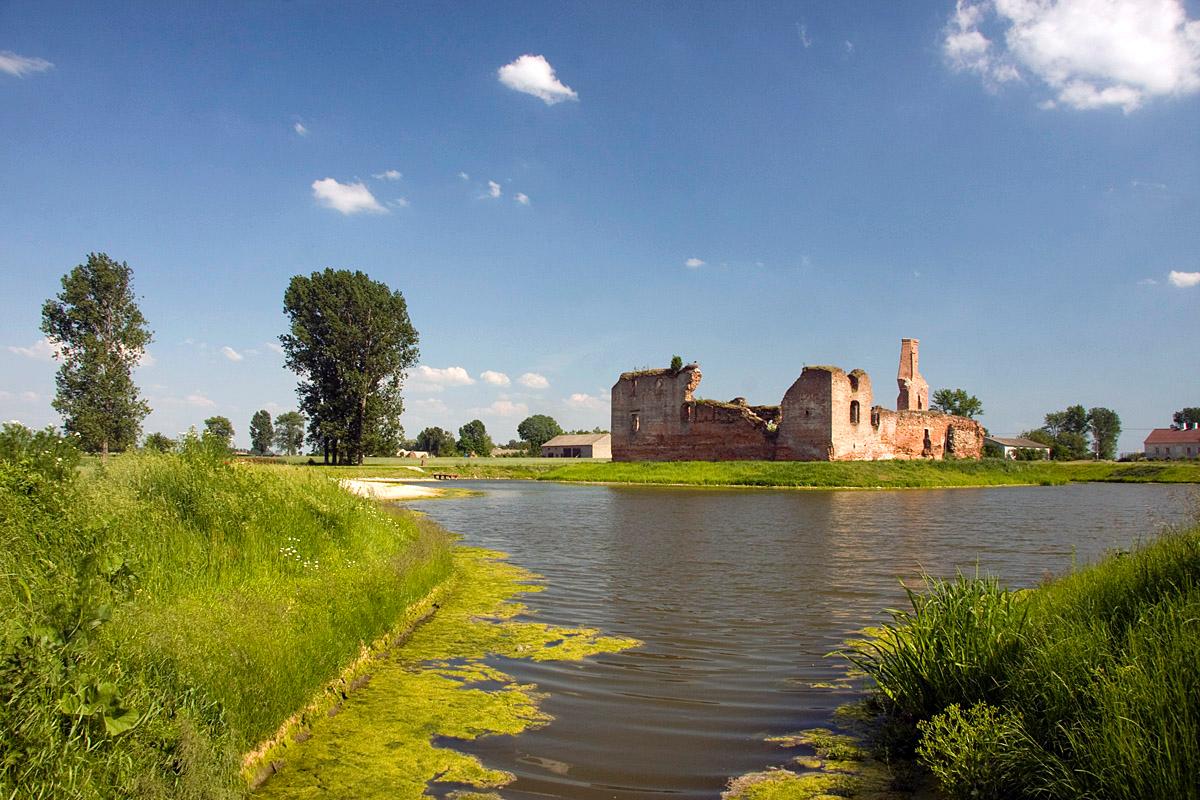
Przedecz Castle, located in the town of Przedecz in Poland, stands as a significant historical monument reflecting the evolution of medieval defensive architecture and regional power struggles. Originally founded in the 14th century on the site of an earlier wooden and earth fortification, the castle was a key stronghold in the Kuyavia region, witnessing numerous military conflicts, renovations, and adaptive reuses over the centuries. Today, the castle's remains are integrated into a cultural center, preserving its legacy while serving the community.
The medieval origins and early history
The earliest fortification at Przedecz was a wooden-earth stronghold, typical of early medieval defensive constructions in Poland. This initial fortification played a strategic role during the early 14th century conflicts between the Kingdom of Poland and the Teutonic Order. In 1329, the Teutonic Knights, led by Otto von Lauterberg, captured the fort, resulting in heavy losses among defenders and local inhabitants. The Order maintained control over the castle and the surrounding Kuyavia region until 1343, when Polish King Casimir the Great reclaimed the territory through the Peace Treaty of Kalisz.
Following the recovery, around 1350, Casimir the Great commissioned the construction of a substantial stone castle on the site, marking a transition from wooden fortifications to a durable stone fortress. This new castle was built on a modest hill overlooking Lake Przedeckie, taking advantage of natural defensive features. The castle's layout was rectangular, approximately 52 by 30 meters, and featured brick curtain walls on strong stone foundations, rising to about 11 meters high and topped with battlements for defense.
Architectural features and castle layout
The bergfried and defensive structures
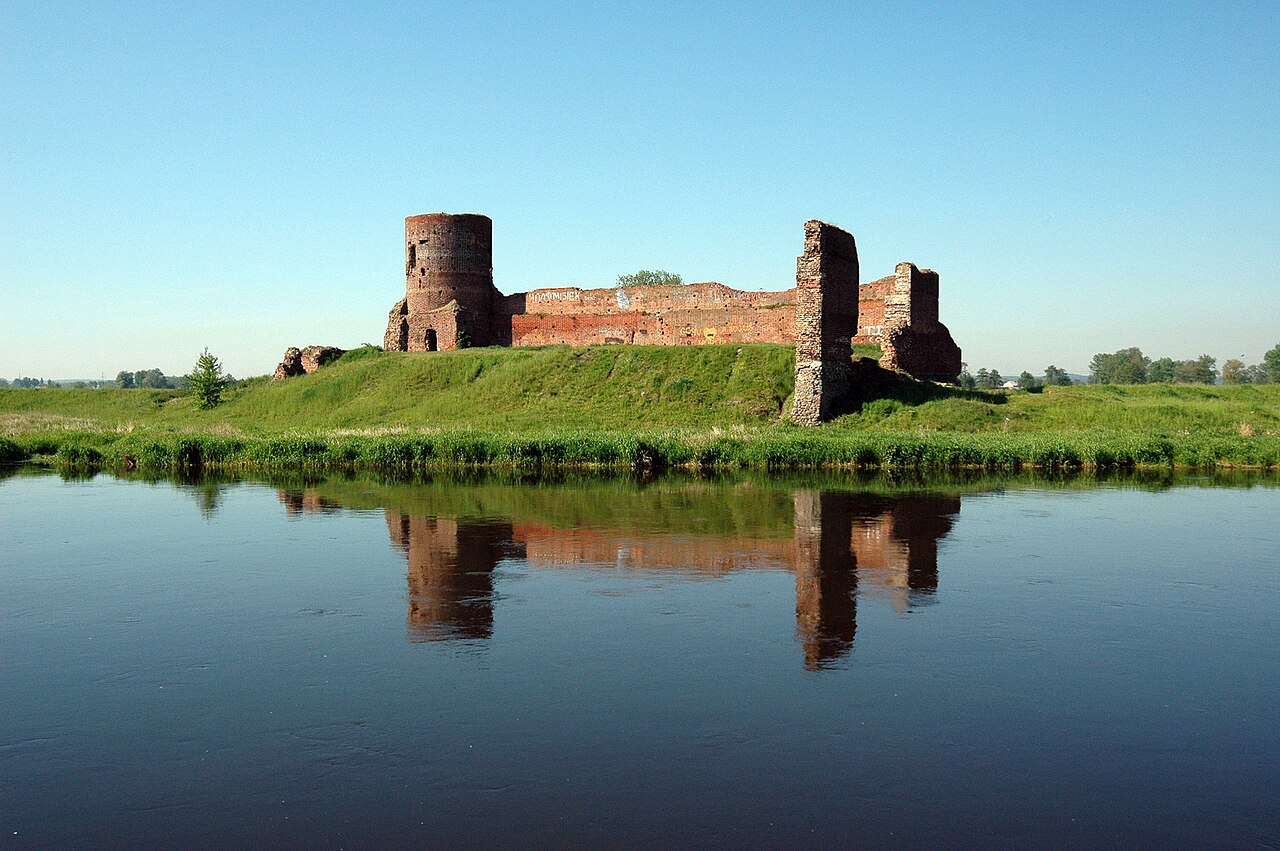
The castle's most prominent surviving feature is the cylindrical bergfried, a defensive tower about 7.5 meters in diameter. This tower served as the last refuge during sieges and included a dungeon in its lower section. Unlike residential towers, the bergfried was primarily military in function, designed to provide a secure stronghold and vantage point.
Residential buildings and gate towers
Alongside the bergfried, the castle included a two-story residential building known as the Kamienica, measuring approximately 11.5 by 28.4 meters. This building housed the castle's inhabitants and was closely integrated with the defensive walls. The castle's main entrance was protected by a rectangular gate tower located in the northwest corner, originally accessed via a drawbridge over a moat, emphasizing the site's strong defensive planning.
Renaissance renovations and 16th-century developments
In the mid-16th century, the castle underwent significant renovations under the direction of the starost Wojciech Koryciński. These changes were likely prompted by damage from a fire in 1538 and the evolving needs of defense and residence. A new western gate was constructed near the original gate tower, reinforced with a fortified outer gate or foregate.
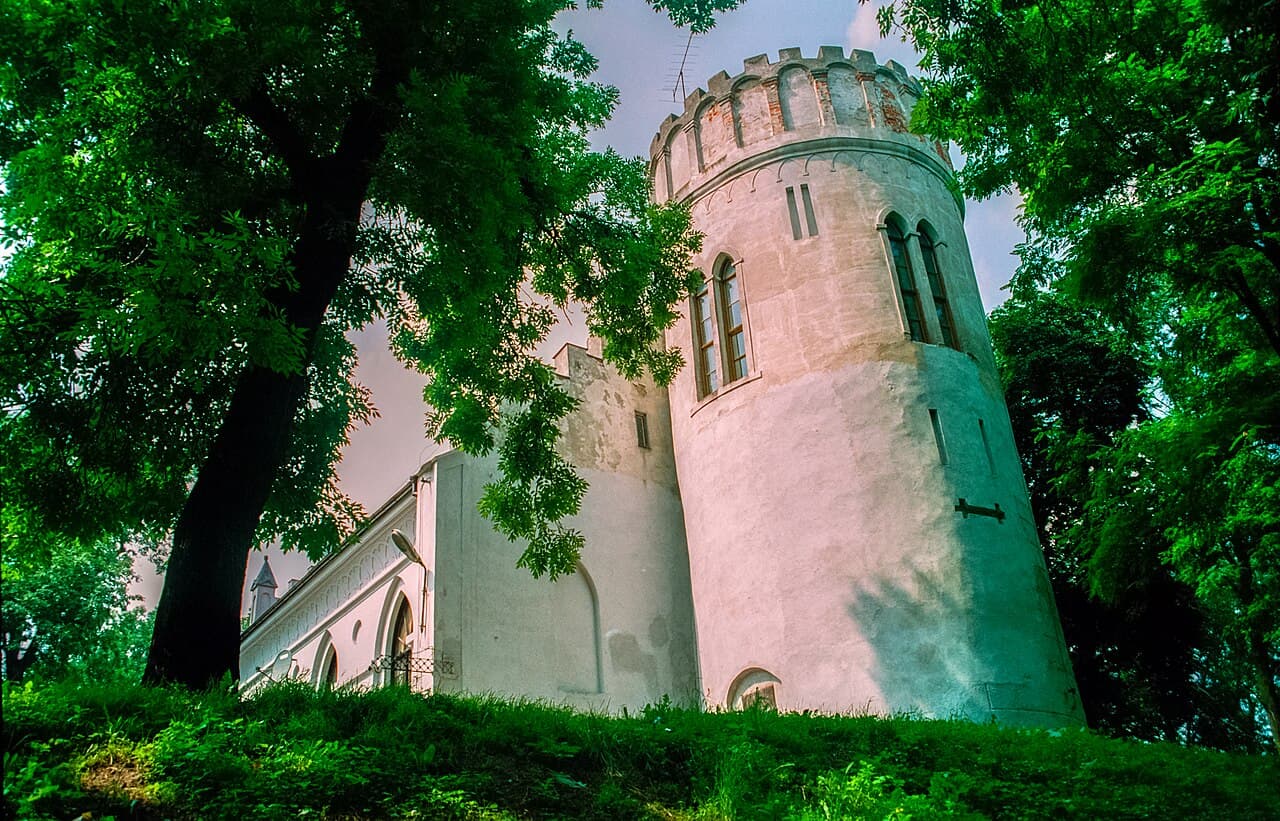
The bergfried was enhanced with a distinctive Renaissance attic, probably finished with plaster, which gave it the nickname the "White Tower." This contrasted with the older rectangular tower, known as the "Red Tower." Additionally, the gate tower was heightened with two timber-framed stories, creating living chambers and a firing gallery that allowed defenders to repel attackers with arrows or firearms.
Decline, destruction, and adaptive reuse
The turbulent 17th century, marked by wars such as the Swedish Deluge, caused damage to the castle, although it was not destroyed outright. By the late 18th century, the fortress had fallen into disrepair, with reports from 1766 and 1789 describing significant deterioration. In 1789, the castle was largely dismantled, and on its foundations, an Evangelical church was constructed.
The cylindrical bergfried was adapted to serve as the church's bell tower, preserving part of the medieval structure. Over time, the former church building was repurposed for various uses, including as a grain warehouse until 1960. The castle's vaulted cellars and some defensive walls remain beneath and around the church, blending medieval masonry with later architectural elements.
Modern preservation and cultural significance
Recognizing the site's historical importance, Przedecz Castle was registered as a protected monument in 1967. Restoration efforts commenced in the early 1970s, culminating in the establishment of the Municipal Cultural Center within the former castle precincts by 1977. This adaptive reuse has preserved the castle's heritage while providing a venue for cultural activities and community engagement.
The castle today offers visitors a glimpse into medieval military architecture, Renaissance modifications, and the layered history of the Kuyavia region. The remaining structures, including the bergfried-turned-bell tower and the vaulted cellars, serve as tangible links to Poland's rich past.
Supporting structures and estate facilities
At the base of the castle hill lay the Przygródek, a complex of outbuildings essential for the castle's daily operations. These included a smithy, stables with a capacity for 48 horses, a carriage house, cowshed, brewery, and administrative offices. This well-developed estate infrastructure supported both the military and residential functions of the castle, reflecting its role as a regional center of power.
Historical conflicts and ownership changes
Throughout its history, Przedecz Castle was a focal point in regional conflicts and power shifts. In 1383, during a civil war between the Grzymalit and Nałęcz factions, the castle was seized without resistance by Duke Siemowit IV of Mazovia. It was subsequently granted to Bartosz of Wezenburg, a supporter of Siemowit. Later, in 1398, King Władysław Jagiełło reclaimed the castle, restoring royal control.
These episodes illustrate the castle's strategic importance in the political landscape of medieval Poland, serving as both a military bastion and a symbol of authority.
Visiting Przedecz Castle today
Visitors to Przedecz can explore the Municipal Cultural Center housed within the former castle precincts, where medieval masonry and modern facilities coexist. The site offers educational opportunities about medieval fortifications, Renaissance architectural adaptations, and the turbulent history of the Kuyavia region. Though much of the original castle is in ruins, the preserved bergfried and cellars provide a compelling narrative of resilience and transformation.
The castle's location near Lake Przedeckie adds scenic value, making it an attractive destination for history enthusiasts and tourists interested in Poland's medieval heritage.
Frequently asked questions (FAQ)
- How do I get to Przedecz Castle?
- Przedecz Castle is located in the town of Przedecz, Poland. You can reach it by car or public transportation from nearby cities such as Poznań or Włocławek. The nearest train station is in Włocławek, from which you can take a bus or taxi to the castle.
- What is the historical significance of Przedecz Castle?
- Przedecz Castle dates back to the 14th century and served as a defensive fortress during various conflicts in Polish history. It is notable for its well-preserved architecture and serves as a symbol of the region's medieval heritage. The castle has been a focal point for various historical events, making it an important landmark in Poland.
- When was Przedecz Castle constructed?
- Przedecz Castle was constructed in the 14th century, with significant modifications and expansions occurring in subsequent centuries. The castle's architecture reflects various styles, showcasing the evolution of defensive structures in Poland. It has survived numerous historical changes, making it a fascinating subject for visitors interested in history.
- Can I take guided tours of Przedecz Castle?
- Yes, guided tours of Przedecz Castle are available for visitors who wish to learn more about its history and architecture. These tours provide in-depth insights into the castle's significance and allow you to explore areas that may not be accessible on your own. It's recommended to check the schedule ahead of your visit to ensure availability.
- Why is Przedecz Castle considered an architectural gem?
- Przedecz Castle is considered an architectural gem due to its unique blend of Gothic and Renaissance styles, which highlight the craftsmanship of different eras. The castle features impressive stonework, intricate details, and a strategic layout that once served defensive purposes. Its well-preserved state allows visitors to appreciate the artistry and historical significance of the structure.
- Is it possible to host events at Przedecz Castle?
- Yes, Przedecz Castle can be rented for various events, including weddings, conferences, and cultural gatherings. The venue provides a stunning backdrop and a unique atmosphere that enhances any occasion. It is advisable to contact the castle management for more information on availability and catering options.
- What are the opening hours for Przedecz Castle?
- Przedecz Castle is typically open to visitors from 10 AM to 6 PM during the tourist season, which runs from April to October. However, hours may vary during the off-season or due to special events. It's best to check the castle's official website or contact them directly for the most current opening hours.
- What is the ticket price for visiting Przedecz Castle?
- The ticket price for visiting Przedecz Castle is generally affordable, with discounts available for students and seniors. Prices may vary depending on the type of tour or event you choose. Always check the official website for the latest pricing information before your visit.
- When is the best time to visit Przedecz Castle?
- The best time to visit Przedecz Castle is during the spring and summer months, from May to September, when the weather is pleasant and the gardens are in full bloom. Additionally, many outdoor events and festivals take place during this time, enhancing your experience. However, visiting in the fall can also be beautiful with autumn foliage surrounding the castle.
- Are there any nearby attractions to visit along with Przedecz Castle?
- Yes, there are several nearby attractions to explore, including historical churches and local museums that showcase the region's heritage. The picturesque town of Przedecz itself offers charming streets and local eateries where visitors can enjoy authentic Polish cuisine. Planning a day trip allows you to experience both the castle and the surrounding cultural sites.
Photo gallery

Information
Loading map...
Visitor reviews
No reviews yet. Been here? Write the first review and help other travelers!
Write the first reviewVisited this castle? Share your experience
Your review helps other travelers and adds first-hand knowledge to our encyclopedia.