Prince’s Castle
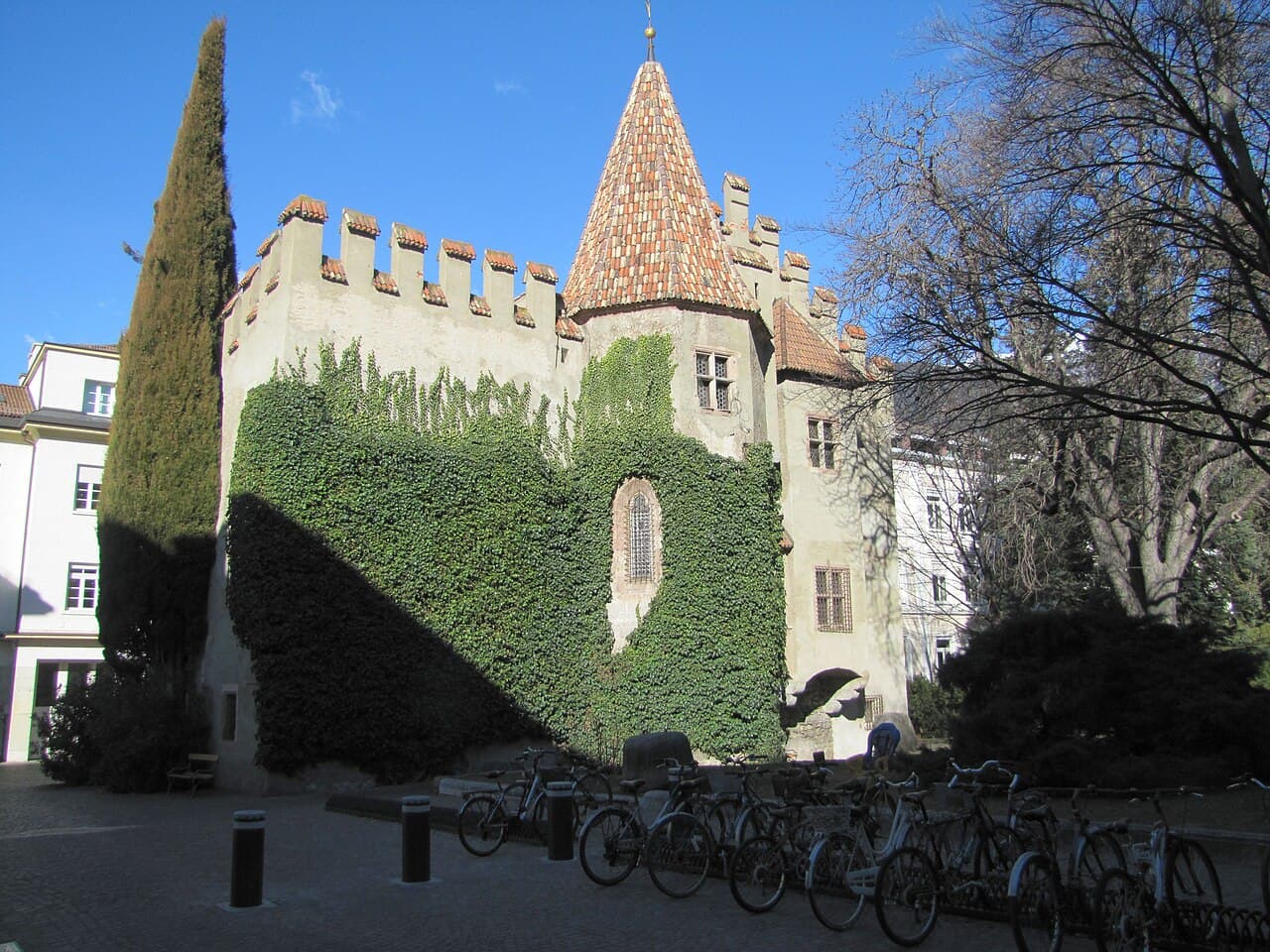
The Prince’s Castle, also known as the Landesfürstliche Burg, stands prominently in the heart of Merano, Italy. Built in the 15th century during the late medieval period, the castle was commissioned by Sigismund, Archduke of Austria, as a private city residence rather than a military fortress. Its strategic location behind the town hall underscores its importance as a noble domicile within the urban fabric of Merano. Unlike typical defensive castles of the era, this structure exhibits characteristics more akin to a fortified residence, emphasizing comfort and artistic design over military strength.
Historical background and noble significance
Construction of the Prince’s Castle began around 1470 under the auspices of Duke Sigismund of Austria. The castle served as an aristocratic residence, reflecting the status and tastes of its noble inhabitants. Throughout the 16th century, it maintained its role as a royal residence, highlighted by the stay of Emperor Maximilian I in 1516, which attests to its prominence within the Holy Roman Empire's noble estates.
Following its peak as a noble dwelling, the castle experienced gradual decline by the 17th century. Although much of the building fell into disuse, the chapel remained active, preserving the spiritual function of the site. The Napoleonic Wars brought political shifts, placing the castle under Bavarian control. Subsequently, ownership transferred to the princely family of Thurn und Taxis, who repurposed the castle as an administrative center, marking a transition from noble residence to governance.
In 1815, the municipality of Merano acquired the building. Initial plans to demolish the castle to make way for a school were abandoned due to public opposition, preserving this historical monument for future generations.
Architectural features and restoration
The Prince’s Castle is distinguished by its elegant yet modest fortified design. Rather than a heavily fortified stronghold, the castle presents a solid building with a low enclosure, emphasizing residential comfort. The central courtyard is notable for its naturalistic frescoes depicting plants, animals, and human figures, showcasing the artistic sensibilities of the late medieval period.
The castle's chapel contains valuable artistic treasures including a 15th-century statue of Saint George and the Dragon and several frescoes dating from the 16th century. These elements highlight the religious and cultural significance of the site.
A remarkable feature within the prince’s chamber is the maiolica tiled stove from the 15th century, one of the oldest surviving examples of its kind, illustrating the craftsmanship and domestic comforts of the era.
The interiors are richly appointed with wooden paneling and furnishings reflecting Gothic and Renaissance styles. The collection includes ancient musical instruments, weaponry such as lances and halberds, and kitchen implements, providing a comprehensive glimpse into the daily life of the castle’s inhabitants.
Two large halls, originally used for storage, were transformed during the late 19th-century restoration into spaces for civil wedding ceremonies and art exhibitions. These halls display portraits of notable figures such as Empress Maria Theresa and Emperor Francis I, alongside works by artists Franz Anton Zeiler and Simon Ybertracther.
The significant restoration between 1878 and 1880 was led by the renowned architect Friedrich von Schmidt, known for his work on the Vienna Cathedral. His efforts revived the castle’s late Gothic character, carefully restoring its architectural integrity and furnishing it with period-appropriate artifacts.
Cultural role and current status
Today, the Prince’s Castle Museum offers visitors an immersive experience into the life of late medieval nobility in South Tyrol. The well-preserved interiors, combined with the castle's artistic and historical collections, make it a significant cultural landmark.
The castle also serves as a venue for civil wedding ceremonies, maintaining its historical role as a place of social importance within the community. Its preservation as one of the most intact noble residences in the region underscores its value to both heritage tourism and local identity.
Artistic and historical collections
- Wood-panelled parlours and bedrooms furnished with Gothic and Renaissance pieces
- Ancient musical instruments reflecting the cultural life of the castle’s inhabitants
- Weapons collection including lances and halberds
- Kitchen implements showcasing domestic aspects of medieval noble life
- Chapel frescoes and a 15th-century statue of Saint George and the Dragon
- Maiolica tiled stove from the 15th century in the prince’s chamber
- Portraits and paintings by prominent historical figures and artists
Architectural style and classification
The castle exemplifies a late medieval hill castle designed primarily as a noble residence rather than a military fortress. Its architectural style blends Gothic elements with Renaissance furnishings added during its history. The modest defensive features and artistic details emphasize its residential and cultural functions over martial purposes.
Frequently asked questions (FAQ)
- How do I visit Prince’s Castle in Merano?
- Prince’s Castle is open to the public as a museum. Visitors can explore the richly decorated interiors and chapel. Check the official Merano tourism website for current opening hours and guided tour availability.
- What is the historical significance of Prince’s Castle?
- Built in the 15th century by Archduke Sigismund of Austria, Prince’s Castle served as a noble residence and hosted Emperor Maximilian I. It reflects the late medieval aristocratic lifestyle in South Tyrol.
- Can I attend events or ceremonies at Prince’s Castle?
- Yes, the castle hosts civil wedding ceremonies in its restored halls, blending historical ambiance with modern social functions.
- What architectural style is Prince’s Castle?
- Prince’s Castle showcases late medieval Gothic architecture with Renaissance furnishings added during restoration, emphasizing its role as a noble residence.
- Are there notable artworks inside Prince’s Castle?
- The castle contains frescoes, a 15th-century statue of Saint George and the Dragon, and paintings by artists like Franz Anton Zeiler and Simon Ybertracther.
Photo gallery

Information
Sources & official resources
Verify the information above using these authoritative references.
Loading map...
Visitor reviews
No reviews yet. Been here? Write the first review and help other travelers!
Write the first reviewVisited this castle? Share your experience
Your review helps other travelers and adds first-hand knowledge to our encyclopedia.