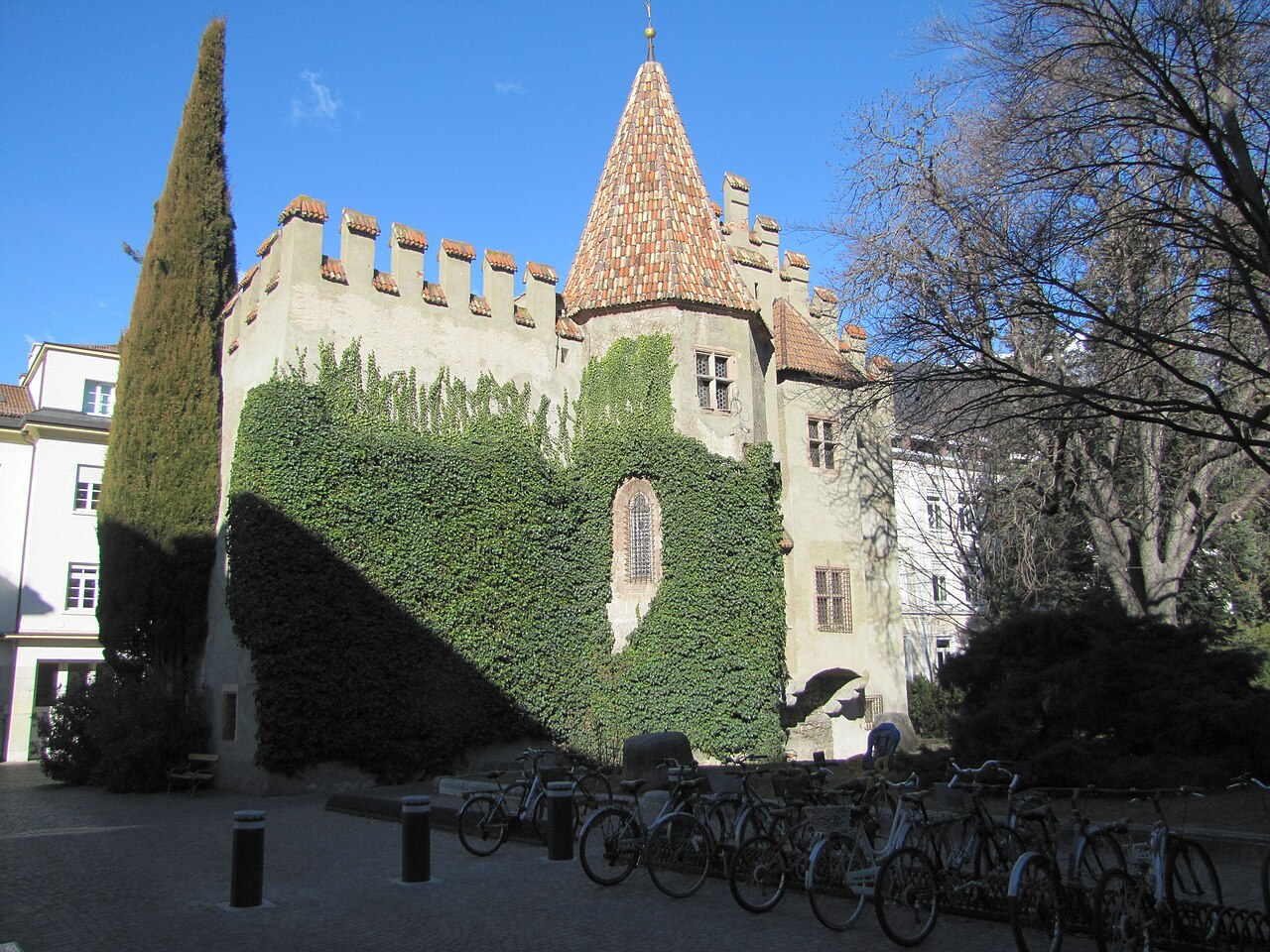
Rubein Castle

Rubein Castle in Meran: medieval fortress and historic hotel
Meran, Italy
High Medieval (11th–13th c.)
Restored

Rubein Castle, located near Meran in Italy, stands as a notable example of a High Medieval fortress with origins tracing back to the early 13th century. The castle was likely constructed around 1220 by the lords of Rubein, a noble family whose name is closely tied to the site. The earliest documented reference to the castle dates from that year, confirming its establishment in the High Medieval period.

Architectural layout and defensive features

The castle's most prominent feature is its 21-meter-high tower, which was originally erected for defensive purposes. This tower formed the core of the fortress, around which the rest of the castle was built. The tower’s height and robust construction would have provided a commanding view of the surrounding landscape, crucial for early warning and defense against attackers.

Rubein Castle exemplifies the hill castle typology common in the Alpine region, strategically positioned to oversee and control the surrounding territory. The castle complex is surrounded by a large park covering approximately 5 hectares, which today forms part of the castle’s grounds and contributes to its scenic setting.

Late Gothic chapel and religious significance

Within the castle grounds, there is a late Gothic chapel dating from 1455. This chapel reflects the architectural style and religious practices of the late Middle Ages, featuring characteristic Gothic elements such as pointed arches and ribbed vaults. The chapel would have served the spiritual needs of the castle’s inhabitants and visitors, underscoring the integration of religious life within medieval castles.

Restoration and modern use

After centuries of use and changes in ownership, major restoration efforts were undertaken beginning in 1875 by Count Brandis. These efforts aimed to preserve and enhance the castle’s structural integrity and historical character. Later restoration work was carried out by Countess Anna Asseburg-Wolff-Metternich and her husband, whose descendants continue to own the property.

Today, Rubein Castle has been adapted for modern use as a hotel and conference center. The castle’s historical ambiance combined with its natural surroundings makes it a unique venue for visitors seeking to experience a medieval atmosphere with contemporary amenities.

Historical context and significance

Rubein Castle’s construction in the early 13th century places it within the context of the High Medieval period, a time of significant castle building across Europe. Castles like Rubein served both military and administrative functions, acting as fortified residences for noble families and centers of local power.

The castle’s survival through centuries of political and social change highlights its resilience and the importance placed on its preservation by successive owners. Its blend of defensive architecture and later Gothic religious elements offers insight into the evolving needs and tastes of its inhabitants.

Architectural style and influences

While primarily functional in design, the castle incorporates elements typical of the High Medieval architectural style, with later additions reflecting Gothic influences evident in the chapel. The combination of military and religious architecture within the same complex is characteristic of many medieval castles in the region.

Location and landscape

Situated near Meran, Rubein Castle benefits from a strategic location in the South Tyrol region of northern Italy. The surrounding landscape of hills and valleys provided natural defenses and control over important routes, which was a key consideration in the castle’s original siting.

Visiting Rubein Castle today

Visitors to Rubein Castle can explore the castle grounds and enjoy the extensive parkland. The castle’s adaptation as a hotel allows guests to experience its historic atmosphere firsthand. The combination of medieval architecture and natural beauty makes it a popular destination for tourists interested in history, architecture, and cultural heritage.

The castle’s conference facilities also attract a range of events, blending historical ambiance with modern functionality. Its preservation and continued use demonstrate the successful integration of heritage conservation with contemporary needs.

Frequently asked questions (FAQ)

How do I get to Rubein Castle?
Rubein Castle is located in Meran, Italy, easily accessible by car or public transport. If you're traveling by train, you can take a local bus from Meran station that will take you close to the castle.
What is the historical significance of Rubein Castle?
Rubein Castle dates back to the 13th century and is an important example of medieval architecture in the region. It served as a noble residence and played a strategic role in controlling trade routes in the area.
When was Rubein Castle built?
Construction of Rubein Castle began in the early 1200s, making it one of the oldest castles in the South Tyrol region. Over the centuries, it has undergone various renovations, preserving its historical charm.
Can I visit Rubein Castle year-round?
Yes, Rubein Castle is open to visitors throughout the year, although some areas may be restricted during the winter months due to weather conditions. It's advisable to check the official website for seasonal opening hours and any special events.
Why is Rubein Castle a popular tourist attraction?
Rubein Castle is popular for its stunning architecture, breathtaking views of the surrounding landscape, and rich history. Visitors enjoy exploring the well-preserved rooms and learning about the castle's past through informative displays.
Is it possible to take guided tours of Rubein Castle?
Yes, guided tours are available and provide an in-depth look at the castle's history and architecture. These tours are led by knowledgeable guides who can share fascinating stories and facts about the castle.
What are the ticket prices for Rubein Castle?
Admission to Rubein Castle is reasonably priced, with discounts available for students and seniors. Tickets can be purchased on-site, and it's recommended to check for any special offers or family packages.
What are the opening hours for Rubein Castle?
Rubein Castle typically opens at 9 AM and closes at 6 PM, but hours may vary depending on the season. Always check the castle's official website for the most current information before your visit.
What are some nearby attractions to Rubein Castle?
Nearby attractions include the charming town of Meran, known for its thermal baths and beautiful gardens, as well as hiking trails that offer stunning views of the Alps. Visitors can also explore nearby castles and historical sites in the region.

Information

Hill Castle

Sources & official resources

Verify the information above using these authoritative references.

Loading map...

Visitor reviews

No reviews yet. Been here? Write the first review and help other travelers!

Write the first review

Visited this castle? Share your experience

Your review helps other travelers and adds first-hand knowledge to our encyclopedia.

Write a review

(5/5)

0/2000 characters

Your review will be visible after admin approval

Nearby castles

0.3 km

Castle Pienzenau

Merano, Italy

Castle Pienzenau stands as a remarkable example of a hill castle with a rich and layered history, located in the municipality of Merano, in the South Tyrol region of modern-day Italy. Its origins date back to the late 14th century, when it was first documented as a rural estate owned by the noble couple Klara and Ulrich von Pienzenau. This early mention situates the castle within the context of medieval feudal estates, typical of the region’s aristocratic landholdings. Throughout the centuries, Castle Pienzenau evolved from a modest estate into a residence that reflects the changing architectural and social trends of its owners. In the 16th century, ownership transferred to Georg Büchler von Weidenegg, marking a phase of noble stewardship. By the late 18th century, specifically in 1779, the estate entered a new chapter under the Benedictine monks from Ettal Abbey in Bavaria. This religious order transformed the property into a prebendal holding, a form of ecclesiastical estate that provided income for clergy members. The monks also developed extensive vineyards on the grounds, cultivating both red wine and sacramental wine, which supplied their monastic communities and underscored the estate’s agricultural importance. Monastic influence and horticultural development The Benedictine monks left a lasting imprint on the estate, not only through its spiritual and agricultural functions but also in its landscape design. They commissioned a Spanish botanist and garden designer to create a large park that embraced the Mediterranean climate of the region. This garden became home to a diverse collection of plants and trees, including hemp palms, monkey puzzle trees, cypresses, cedars, araucaria, and bamboo. This botanical variety reflects both the monks’ horticultural interests and the estate’s role as a tranquil retreat for rest and contemplation. A small roadside chapel with a devotional niche built into the west wall remains a significant relic from the monastic period. This chapel continues to be owned by Ettal Abbey as an independent enclave, maintaining a direct spiritual connection to the estate’s religious past. Architectural transformation and aristocratic residence The mid-19th century brought profound changes to Castle Pienzenau’s architecture and ownership. Following secularization laws during the reign of Emperor Franz Joseph, many church properties, including this estate, were sold. The castle passed through several owners, such as Johann Prunner, Josef von Trauttmannsdorff-Weinsberg, and Reichsritter Moritz von Leon. The latter initiated a significant remodeling of the farmhouse into a residence with castle-like features, marking the beginning of the estate’s transformation into a more aristocratic domicile. In 1884, Eugen von Popoff, a pioneer in fruit cultivation, acquired the estate. He enhanced its castle character by adding battlements, known in German as zinnen, which gave the roofline a fortified medieval appearance. Internally, the castle underwent renovations that modernized its living spaces, though detailed records of the interior layout and decoration are scarce. During the period between approximately 1870 and 1900, the castle and surrounding holdings served as imperial residences during visits by Empress Elisabeth of Austria, affectionately known as Sissi. This royal association elevated the estate’s prestige, and by 1889, the designation "Schloss" (German for castle) had become standard in local descriptions, reflecting its status as a manor and fortress. Notable guests and later ownership Later owners continued to develop the estate’s cultural significance. Paul Kuh-Chrobak, one of the proprietors, was known for hosting notable guests, including the renowned composer Richard Strauss. In 1969, the Schölzhorn family acquired Castle Pienzenau and undertook extensive renovations to preserve and adapt the property for contemporary use. Current status and heritage preservation Today, Castle Pienzenau retains its historical layering, serving as a venue for hospitality and events while preserving its rich heritage. The castle buildings and the expansive park represent centuries of evolving use, from a monastic agricultural estate to an aristocratic residence and now a cultural venue. The interior spaces have been adapted for modern hospitality, including a public bistro and event hosting facilities, blending historical ambiance with contemporary functions. The estate’s large park remains a highlight, showcasing the botanical legacy of the Benedictine monks and the Spanish garden designer. The presence of Mediterranean plants and trees continues to attract visitors interested in horticulture and landscape history. The small roadside chapel on the west boundary remains an independent ecclesiastical enclave, symbolizing the enduring spiritual ties to Ettal Abbey. Architectural features and layout Castle Pienzenau’s architectural character is defined by its battlemented roofline, which imparts a fortress-like silhouette typical of 19th-century romanticized castle renovations. The structure integrates elements of a traditional farmhouse with castle-like embellishments, reflecting its transformation from a rural estate to a noble residence. The surrounding park and gardens complement the built environment, creating a harmonious blend of architecture and landscape. Although detailed architectural plans and interior descriptions are limited, the castle’s evolution illustrates broader trends in South Tyrolean aristocratic residences of the 19th century, where medieval motifs were revived to convey prestige and historical continuity.

Late Medieval (14th–15th c.)
Details
0.7 km

Trauttmansdorff Castle and Gardens

Meran, Italy

Trauttmansdorff Castle and Gardens in Meran, Italy is a historic site that embodies a blend of architectural styles and centuries of history. Originally documented in 1300 as Neuberg Castle, the castle's medieval roots are still visible today, especially in the southwest medieval walls and the crypt dating from the Middle Ages. The site also preserves a Renaissance fresco room, reflecting the castle's evolution through different historical periods. Medieval origins and renaissance features The earliest phase of the castle, known as Neuberg, was a typical medieval fortress designed for defense and residence. While much of the original structure was altered or rebuilt over the centuries, the surviving medieval walls and crypt provide important architectural evidence of the castle's early function and style. The Renaissance fresco room adds a layer of artistic and cultural significance, showcasing decorative elements from the Renaissance period that have been preserved within the castle. 19th-century neo-gothic renovation and rococo expansion In the mid-19th century, the castle was acquired by Count Joseph von Trauttmansdorff, who undertook a significant renovation. He introduced neo-Gothic architectural elements, making Trauttmansdorff Castle the earliest example of this style in the Tyrol region. This renovation included stylistic features typical of the neo-Gothic movement, such as pointed arches, decorative tracery, and battlements that evoked medieval Gothic castles but with a romanticized 19th-century interpretation. Later, in 1899, the castle underwent further transformation under Baron Friedrich von Deuster. He raised the east wing by an additional level and added the grand Rococo Hall. This addition introduced Rococo style elements characterized by elaborate ornamentation, curved forms, and intricate detailing, which contrasted with the earlier neo-Gothic features and significantly altered the castle's silhouette and interior ambiance. 20th and 21st-century restoration and preservation Following periods of neglect after the World Wars, Trauttmansdorff Castle required extensive restoration to preserve its architectural and historical value. Between 2000 and 2003, a comprehensive renovation project was carried out. This restoration focused on key parts of the castle including the siding, chapel, crypt, Rococo Hall, and the living quarters on the second floor associated with Empress Elisabeth of Austria. These efforts restored the castle to much of its former splendor, allowing visitors to experience the diverse historical layers of the property. The botanical gardens and empress elisabeth's legacy The gardens surrounding Trauttmansdorff Castle are an integral part of its appeal. Originally laid out around 1850 by Count Trauttmansdorff during the castle's restoration, the gardens have evolved into a renowned botanical attraction. The gardens reflect a variety of plant species and carefully designed landscapes that complement the castle's architecture and history. Empress Elisabeth of Austria, known affectionately as "Sisi," was a frequent visitor to Meran and the castle's gardens. Her connection to the site is commemorated by a bronze bust placed in the gardens following her assassination in Geneva in 1898. This memorial honors her legacy and the cultural ties between the castle and the Habsburg monarchy. Architectural significance and cultural heritage Trauttmansdorff Castle stands as a unique example of architectural evolution, combining medieval defensive structures with Renaissance artistic elements, 19th-century neo-Gothic revival features, and Rococo grandeur. Its preservation and restoration allow for a comprehensive understanding of the region's history and architectural trends across centuries. The castle and its gardens continue to be a popular destination for tourists and scholars interested in Tyrolean history, castle architecture, and botanical gardens. The site offers insights into the lifestyle of nobility, the artistic movements influencing castle renovations, and the natural beauty of the region.

Late Medieval (14th–15th c.)
Details
1.5 km
Prince’s Castle — Italy castle

Prince’s Castle

Meran, Italy

The Prince’s Castle, also known as the Landesfürstliche Burg, stands prominently in the heart of Merano, Italy. Built in the 15th century during the late medieval period, the castle was commissioned by Sigismund, Archduke of Austria, as a private city residence rather than a military fortress. Its strategic location behind the town hall underscores its importance as a noble domicile within the urban fabric of Merano. Unlike typical defensive castles of the era, this structure exhibits characteristics more akin to a fortified residence, emphasizing comfort and artistic design over military strength. Historical background and noble significance Construction of the Prince’s Castle began around 1470 under the auspices of Duke Sigismund of Austria. The castle served as an aristocratic residence, reflecting the status and tastes of its noble inhabitants. Throughout the 16th century, it maintained its role as a royal residence, highlighted by the stay of Emperor Maximilian I in 1516, which attests to its prominence within the Holy Roman Empire's noble estates. Following its peak as a noble dwelling, the castle experienced gradual decline by the 17th century. Although much of the building fell into disuse, the chapel remained active, preserving the spiritual function of the site. The Napoleonic Wars brought political shifts, placing the castle under Bavarian control. Subsequently, ownership transferred to the princely family of Thurn und Taxis, who repurposed the castle as an administrative center, marking a transition from noble residence to governance. In 1815, the municipality of Merano acquired the building. Initial plans to demolish the castle to make way for a school were abandoned due to public opposition, preserving this historical monument for future generations. Architectural features and restoration The Prince’s Castle is distinguished by its elegant yet modest fortified design. Rather than a heavily fortified stronghold, the castle presents a solid building with a low enclosure, emphasizing residential comfort. The central courtyard is notable for its naturalistic frescoes depicting plants, animals, and human figures, showcasing the artistic sensibilities of the late medieval period. The castle's chapel contains valuable artistic treasures including a 15th-century statue of Saint George and the Dragon and several frescoes dating from the 16th century. These elements highlight the religious and cultural significance of the site. A remarkable feature within the prince’s chamber is the maiolica tiled stove from the 15th century, one of the oldest surviving examples of its kind, illustrating the craftsmanship and domestic comforts of the era. The interiors are richly appointed with wooden paneling and furnishings reflecting Gothic and Renaissance styles. The collection includes ancient musical instruments, weaponry such as lances and halberds, and kitchen implements, providing a comprehensive glimpse into the daily life of the castle’s inhabitants. Two large halls, originally used for storage, were transformed during the late 19th-century restoration into spaces for civil wedding ceremonies and art exhibitions. These halls display portraits of notable figures such as Empress Maria Theresa and Emperor Francis I, alongside works by artists Franz Anton Zeiler and Simon Ybertracther. The significant restoration between 1878 and 1880 was led by the renowned architect Friedrich von Schmidt, known for his work on the Vienna Cathedral. His efforts revived the castle’s late Gothic character, carefully restoring its architectural integrity and furnishing it with period-appropriate artifacts. Cultural role and current status Today, the Prince’s Castle Museum offers visitors an immersive experience into the life of late medieval nobility in South Tyrol. The well-preserved interiors, combined with the castle's artistic and historical collections, make it a significant cultural landmark. The castle also serves as a venue for civil wedding ceremonies, maintaining its historical role as a place of social importance within the community. Its preservation as one of the most intact noble residences in the region underscores its value to both heritage tourism and local identity. Artistic and historical collections Wood-panelled parlours and bedrooms furnished with Gothic and Renaissance pieces Ancient musical instruments reflecting the cultural life of the castle’s inhabitants Weapons collection including lances and halberds Kitchen implements showcasing domestic aspects of medieval noble life Chapel frescoes and a 15th-century statue of Saint George and the Dragon Maiolica tiled stove from the 15th century in the prince’s chamber Portraits and paintings by prominent historical figures and artists Architectural style and classification The castle exemplifies a late medieval hill castle designed primarily as a noble residence rather than a military fortress. Its architectural style blends Gothic elements with Renaissance furnishings added during its history. The modest defensive features and artistic details emphasize its residential and cultural functions over martial purposes.

Late Medieval (14th–15th c.)
Details