Prince of Wales Fort
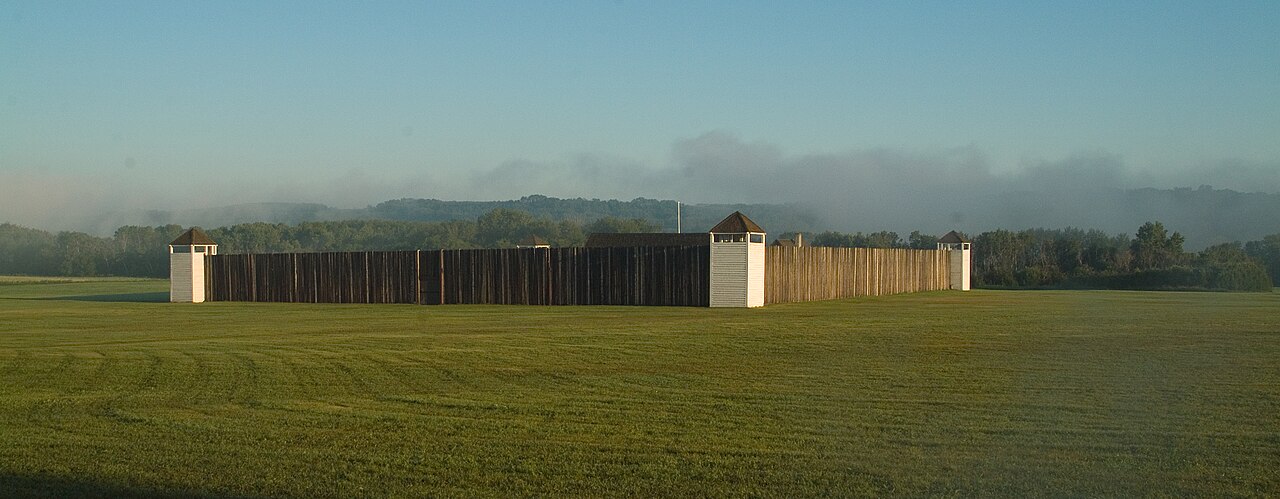
Prince of Wales Fort is a significant bastioned fortress located on the western shore of Hudson Bay, directly across the Churchill River from the town of Churchill, Manitoba. This imposing fortification stands as a remarkable example of 18th-century military architecture in North America and is recognized as the northernmost fort on the continent. It is also the oldest surviving structure west of Ontario in Canada, designated as a National Historic Site within the national park system.
The history of the fort is intertwined with the early European exploration and the fur trade in the Hudson Bay region. The area was first charted by Europeans following the discovery of Hudson Bay in 1610, which opened a vital gateway for trade and exploration. The Hudson's Bay Company (HBC), established in 1670, quickly recognized the strategic importance of controlling access to the bay and its surrounding lands for the lucrative fur trade. The initial European presence at this site began with the construction of a wooden fort called the Churchill River Post by James Knight in 1717.
Architectural design and construction
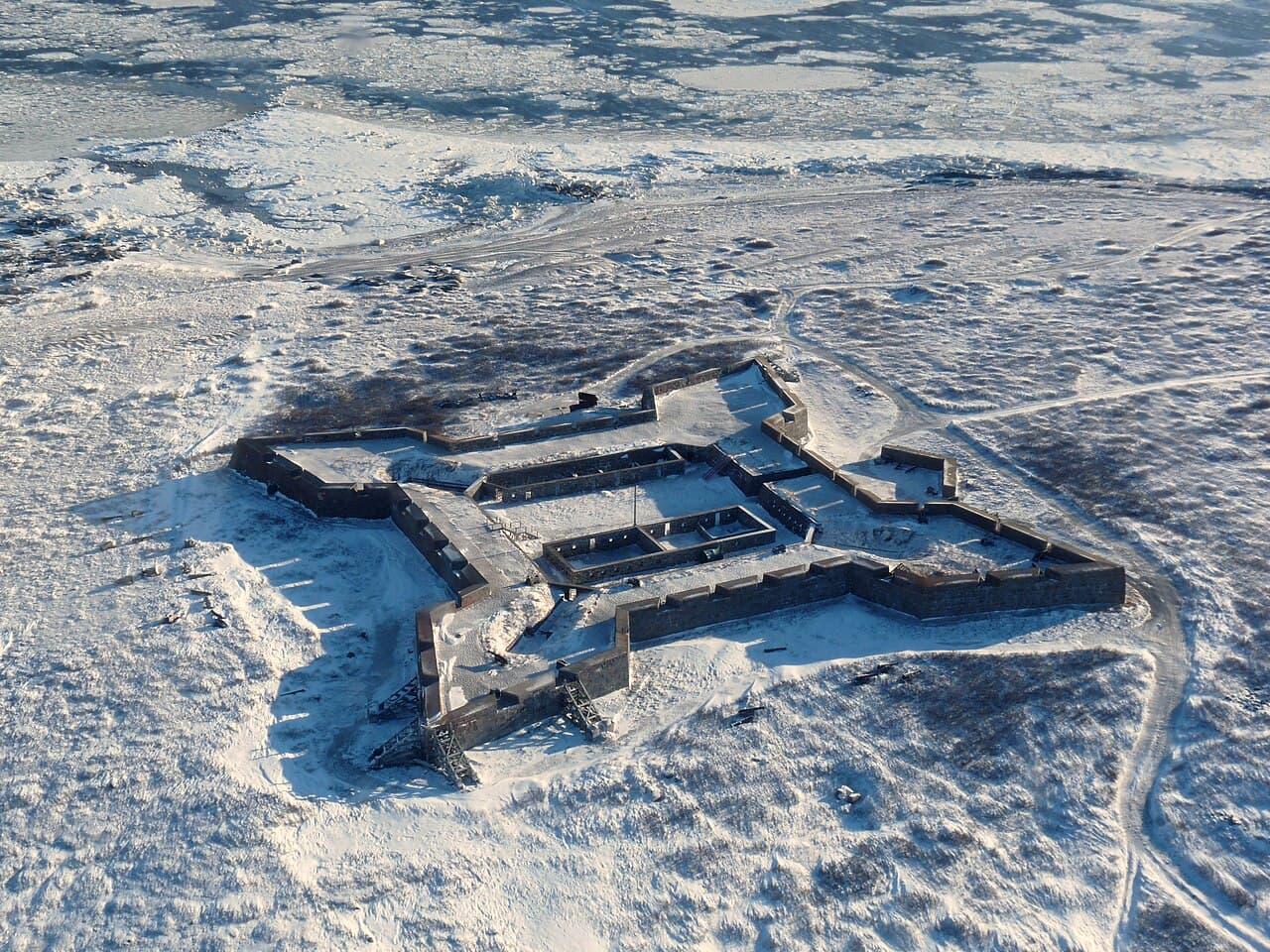
The original wooden fort was soon replaced by a much more formidable stone structure to meet the requirements of the Royal Charter, which mandated the fortification of Rupert's Land to secure HBC's commercial interests. Construction of the current Prince of Wales Fort began in 1731 near what was then known as Eskimo Point. The fort was designed in the distinctive European star-shaped bastion style, a cutting-edge military architectural form of the post-Renaissance period that enhanced defensive capabilities against artillery attacks.
The fort's layout comprises a nearly perfect square, with each side measuring approximately 100 metres in length. Its walls are impressively thick—up to 10 metres at the base—and rise to a height of about 6 metres. The walls were constructed from local stone and mortar, providing robust protection against cannon fire and siege warfare. The fort was equipped with 42 cannons mounted along the walls, arranged to provide overlapping fields of fire. Additionally, a separate battery was established across the Churchill River on Cape Merry, armed with six more cannons to cover the river approach and enhance the fort's defensive perimeter.
Defensive features and layout
The bastioned design allowed defenders to cover all angles of approach with cannon and musket fire, minimizing blind spots. The fort included thick curtain walls connecting the bastions, a dry moat surrounding the structure, and a central courtyard. Inside, the fort housed various functional buildings such as barracks, storage magazines for gunpowder and supplies, officers' quarters, and workshops necessary for maintaining the fort's operations.
Historical significance and military engagements
Prince of Wales Fort played a crucial role in protecting the Hudson's Bay Company's fur trade monopoly during the 18th century. Its location on the Churchill River was strategically chosen to control access to the interior fur trading routes. Despite its formidable defenses, the fort's military history includes a notable episode during the Hudson Bay Expedition of the 1780s, when French forces sought to disrupt British trading dominance in the region.
In 1782, a French naval squadron led by Jean-François de La Pérouse arrived with three warships to capture the fort. At that time, the fort was garrisoned by only 39 men, none of whom were professional soldiers. The fort's governor, Samuel Hearne, recognizing the overwhelming French force and the fort's inability to withstand a siege, surrendered without resistance. The French forces partially destroyed the fort before withdrawing. This event marked a rare instance of a European colonial fortification in North America being taken without a fight.
Following the Treaty of Paris in 1783, the fort was returned to British control and the Hudson's Bay Company, but its strategic importance declined as the fur trade shifted and transportation routes evolved. The fort's buildings fell into disrepair over the subsequent decades.
Preservation and archaeological efforts
After the completion of the Hudson Bay Railway to Churchill in 1929, efforts began to stabilize and restore the fort using railway labor and equipment. Further restoration took place in the late 1950s, aimed at preserving the fort's stone walls and remaining structures. Archaeological investigations commenced in 1958 to better understand the site's history and layout.
Since 2005, Parks Canada has been actively involved in extensive archaeological excavations, wall stabilization projects, and interpretive programming to educate visitors about the fort's history and significance. These efforts have helped to preserve the fort's ruins, which remain a prominent cultural and historical landmark.
Current condition and visitor experience
Today, the Prince of Wales Fort stands as a partially preserved ruin, with much of its massive stone walls intact but many internal buildings roofless and deteriorated. Visitors can explore the extensive fortifications and learn about the site's role in the fur trade and colonial conflicts through interpretive signage and guided tours. Its remote northern location and dramatic setting on Hudson Bay make it a unique destination for those interested in Canadian history and military architecture.
Legacy and cultural importance
The fort represents a significant chapter in the history of European colonization and commerce in northern Canada. It reflects the military and economic strategies of the Hudson's Bay Company during the post-Renaissance period and the geopolitical struggles between Britain and France in North America. As a bastioned fortress, it exemplifies the adaptation of European military design to the challenging conditions of the Canadian Arctic frontier.
Prince of Wales Fort continues to be an important site for historians, archaeologists, and visitors seeking to understand the complexities of early Canadian history, indigenous relations, and the fur trade economy.
Frequently asked questions (FAQ)
- When was Prince of Wales Fort built and by whom?
- Prince of Wales Fort was constructed beginning in 1731 by the Hudson's Bay Company to protect its fur trade interests in the Hudson Bay region.
- What is the architectural style of Prince of Wales Fort?
- The fort is designed as a bastioned fortress in the European star-shaped style typical of the post-Renaissance period, featuring thick stone walls and multiple cannon placements.
- Can visitors explore Prince of Wales Fort today?
- Yes, visitors can explore the partially preserved ruins of Prince of Wales Fort, which include extensive stone walls and bastions. Interpretive signage and guided tours are often available to explain the site's history.
- Why was the fort surrendered without a fight in 1782?
- The fort was surrendered without a fight because it was garrisoned by only 39 non-military men who were vastly outnumbered by the French forces led by Jean-François de La Pérouse during the Hudson Bay Expedition.
- What efforts have been made to preserve Prince of Wales Fort?
- Restoration efforts began after the Hudson Bay Railway completion in 1929, with further work in the 1950s and ongoing archaeological and stabilization projects by Parks Canada since 2005.
Photo gallery

Information
Current owner
Parks Canada
Loading map...
Visitor reviews
No reviews yet. Been here? Write the first review and help other travelers!
Write the first reviewVisited this castle? Share your experience
Your review helps other travelers and adds first-hand knowledge to our encyclopedia.