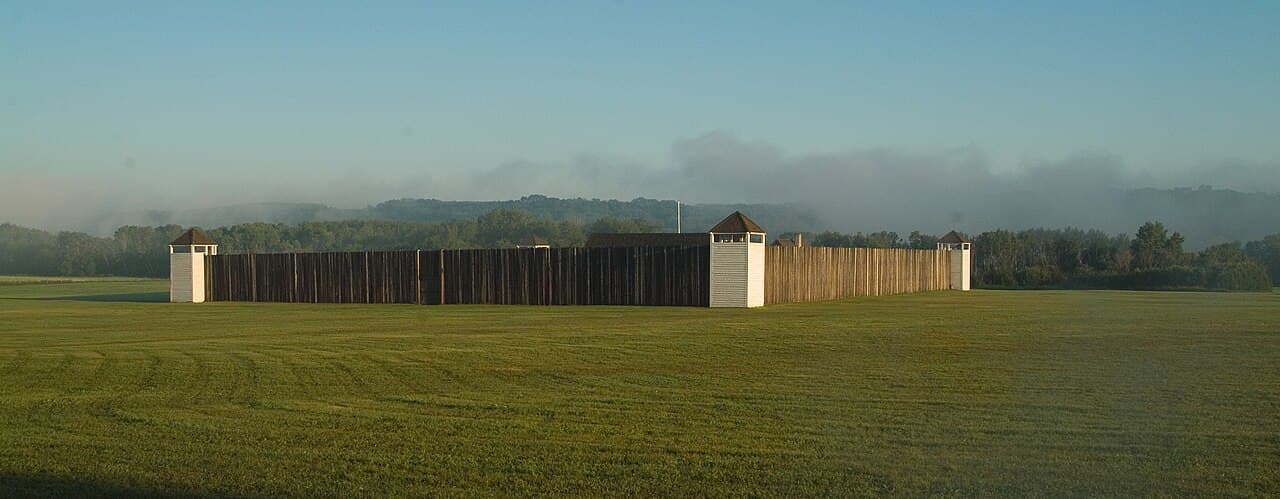
Fort Carlton — Canada castle

Fort Carlton

Fort Carlton historic Hudson's Bay Company trading post in Saskatchewan
Saskatchewan, Canada
Modern (19th–20th c.)
Restored

Fort Carlton served as a significant Hudson's Bay Company fur trading post from 1795 until 1885, playing a crucial role in the fur trade economy of western Canada. Situated along the North Saskatchewan River, near the present-day town of Duck Lake in Saskatchewan, the fort was a strategic location for trade between Indigenous peoples and European settlers. Its position approximately 65 kilometres north of Saskatoon made it a central hub in the region during the 19th century.

Historical significance and role in the fur trade

Established by the Hudson's Bay Company, Fort Carlton was part of a network of trading posts facilitating the exchange of furs, goods, and supplies. The fort was a focal point for interaction between the company and various Indigenous groups, including Cree and Métis peoples. It also played a role in the broader geopolitical context of the Canadian west during a period marked by expansion and conflict, including the North-West Rebellion of 1885.

Architecture and structural features

While originally constructed in the late 18th century, the fort underwent several rebuilds and expansions, culminating in a design characteristic of a bastioned fortress by the 19th century. The fort featured defensive wooden palisades with bastions at the corners, designed to provide overlapping fields of fire for muskets and small artillery. Inside the fort, there were storehouses, trading rooms, officer quarters, and workshops, arranged around a central courtyard.

The fort's layout reflected typical 19th-century North American trading post architecture, combining practical defense with commercial functionality. The bastions allowed defenders to cover the walls effectively, while the wooden construction materials were locally sourced, reflecting the frontier conditions of the time.

Destruction and reconstruction

Fort Carlton was abandoned following the North-West Rebellion and fell into ruin over time. In the 20th century, the government of Saskatchewan undertook efforts to reconstruct the fort as part of a provincial historic park. The reconstruction was based on historical records, archaeological findings, and period illustrations to ensure accuracy.

Today, the site is a well-preserved historical park that offers visitors insight into the fur trade era and the complex history of colonial and Indigenous relations in western Canada. The reconstructed fort includes replica buildings, interpretive exhibits, and guided tours that explain the fort's role and significance.

Visiting Fort Carlton today

Visitors to Fort Carlton can explore the reconstructed bastioned fortress and learn about the fur trade through various educational programs. The site is accessible year-round, with special events held during the summer months to commemorate the fort's history. Interpretive signage and museum displays provide context about the daily life of traders, Indigenous peoples, and the military presence during the 19th century.

The location along the North Saskatchewan River also offers scenic views and opportunities for outdoor activities such as hiking and bird watching, enhancing the visitor experience beyond the historical aspects.

Frequently asked questions (FAQ)

When was Fort Carlton originally established?
Fort Carlton was originally established in 1795 as a Hudson's Bay Company trading post along the North Saskatchewan River.
What role did Fort Carlton play in Canadian history?
Fort Carlton was a key fur trading post and played an important role during the North-West Rebellion of 1885, marking its significance in Canadian colonial and Indigenous history.
Can I visit Fort Carlton today?
Yes, Fort Carlton has been reconstructed as a provincial historic park and is open to visitors who can explore the site and learn about its history through exhibits and guided tours.
What architectural features define Fort Carlton?
Fort Carlton was designed as a bastioned fortress with wooden palisades and corner bastions for defense, typical of 19th-century trading posts in North America.
Where is Fort Carlton located?
Fort Carlton is located along the North Saskatchewan River, near Duck Lake, approximately 65 kilometres north of Saskatoon in Saskatchewan, Canada.

Photo gallery

Fort Carlton
Click to view

Photo by Mrhyland•CC BY-SA 3.0

1 photo • Click any image to view in full screen

Information

Bastioned Fortress

Current owner

Government of Saskatchewan

Loading map...

Visitor reviews

No reviews yet. Been here? Write the first review and help other travelers!

Write the first review

Visited this castle? Share your experience

Your review helps other travelers and adds first-hand knowledge to our encyclopedia.

Write a review

(5/5)

0/2000 characters

Your review will be visible after admin approval

Nearby castles

300.9 km

Stone Hall Castle

Regina, Canada

Stone Hall Castle stands as a unique architectural gem in the heart of Regina, Saskatchewan, offering visitors an immersive medieval European experience unlike any other in the Canadian prairies. Though inconspicuous from the outside, the castle's interior is a remarkable journey through time, featuring stone walls, dark wood beamed ceilings, grand fireplaces, oil paintings, and authentic period furniture that collectively evoke the grandeur of a renaissance chateau or a medieval fortress. The origins and historical context The castle was originally commissioned by Francis Nicholson Darke, a prominent figure in Regina's early 20th-century history. The motivation behind the castle's construction is tied to a dramatic event: the devastating cyclone of 1912 that struck downtown Regina. Darke's first residence, located where the Hotel Saskatchewan now stands, was severely damaged during this natural disaster. His wife, Annie Darke, deeply shaken by the cyclone, urged her husband to build a home that could withstand such forces of nature and provide a sanctuary of safety. In response, in the mid-1920s, with his children grown and no expense spared, Darke embarked on creating a fortress-like residence that would endure the harsh prairie weather. The construction began in earnest in 1926, utilizing the same limestone as the Regina Legislative Building, a choice that was extraordinary for a private residence at the time. This choice of material ensured both durability and a stately appearance. Architectural features and craftsmanship Stone Hall Castle is distinguished by its robust construction, including a solid stone fortress exterior, a stone roof, and a bomb shelter located in the basement—an unusual feature for a residential building of its era. The castle's design blends elements reminiscent of medieval castles and renaissance chateaux, with an emphasis on strength and elegance. The interior showcases masterful craftsmanship from the finest masons, carpenters, and artisans of the 1920s. The dark wood beams overhead contrast beautifully with the stone walls, while the grand fireplaces serve as focal points in the richly appointed rooms. The inclusion of oil paintings and period furniture enhances the historic ambiance, transporting guests back to a bygone era. Rooms and accommodations Visitors to Stone Hall Castle can experience this historic atmosphere firsthand by booking one of the three sumptuously appointed rooms available for overnight stays. Each room is carefully decorated to maintain the castle’s authentic medieval and renaissance-inspired aesthetic, offering guests a unique lodging experience that combines historic charm with modern comfort. Cultural significance and current use Today, Stone Hall Castle serves multiple functions beyond being a private residence. It is open for castle tours during the day, allowing the public to explore its architectural and historical richness. Additionally, the castle is a sought-after venue for weddings and special events, providing a memorable and distinctive setting that reflects its medieval inspiration. The castle’s enduring appeal lies in its successful fusion of authentic medieval design with the practical needs of 20th-century life, making it a rare example of a historical revival residence that pays homage to European castle architecture while standing firmly in the Canadian landscape. Location and accessibility Located at 2210 College Ave, Regina, Stone Hall Castle is easily accessible within the city, making it a convenient destination for both locals and tourists interested in history, architecture, and unique cultural experiences. Its presence enriches Regina’s architectural diversity and offers a distinctive attraction in the region. Legacy of francis nicholson darke Francis Nicholson Darke was a significant figure in Regina’s development, known for his philanthropy and business acumen. Stone Hall Castle remains a testament to his love and dedication to his wife Annie, as well as his commitment to creating a lasting legacy through architecture. The castle encapsulates a personal story intertwined with the broader narrative of Regina’s growth and resilience in the face of natural disasters. Construction and materials The use of the same limestone as the Regina Legislative Building not only ensured structural integrity but also linked Stone Hall Castle visually and materially to one of the city’s most iconic landmarks. The stone roof is particularly notable for its rarity and durability, underscoring the intent to create a fortress-like home designed to withstand the harsh prairie climate. Unique architectural elements The inclusion of a bomb shelter in the basement reflects the concerns of the era and adds a layer of historical intrigue, highlighting the castle’s role as a true fortress in both form and function. The castle’s design incorporates traditional medieval defensive features adapted for residential use, blending aesthetics with practicality.

Post-Renaissance (17th–18th c.)
Details
566.5 km

Hillcrest Museum Castle

Souris, Canada

Hillcrest Museum Castle, located in Souris, Manitoba, Canada, is a distinctive property known for its castle-esque architectural style. Originally constructed at the start of the 20th century, the building was formerly known as 'Squire Hall'. This historic structure has been preserved and repurposed as a museum, showcasing the rich cultural and historical heritage of the local region. Architectural features and style The castle-like appearance of Hillcrest Museum is characterized by its unique blend of early 20th-century design elements that evoke the feel of a traditional castle. While not a medieval fortress, the building incorporates features such as turrets, steeply pitched roofs, and decorative stonework that give it a distinctive silhouette reminiscent of European castles. The architecture reflects the romantic revival styles popular in North America during the period, which aimed to create stately homes with historic charm. Historical context and original purpose Constructed in the early 1900s, the building originally served as a private residence known as Squire Hall. It was built during a period of growth and prosperity in Souris, reflecting the aspirations of its original owners to evoke grandeur and permanence. Over time, the property transitioned from a private estate to a public museum, preserving its architectural integrity while opening its doors to visitors interested in local history. The museum and its collections Today, Hillcrest Museum Castle functions as a cultural institution dedicated to the preservation and exhibition of artifacts related to the history of Souris and the surrounding region. The museum's collections include a variety of historical objects, documents, and photographs that illustrate the development of the community, its people, and its industries. Visitors can explore exhibits that highlight the agricultural heritage, pioneer life, and social history of Manitoba. Community engagement and educational role In addition to its role as a repository of local history, the museum actively engages the community through educational programs, special events, and guided tours. These initiatives aim to foster a deeper appreciation of the region's heritage and encourage the preservation of its cultural landmarks. Location and visitor information Hillcrest Museum Castle is situated at 16 Crescent Ave W, Souris, Manitoba, R0K 2C0, Canada. Its accessible location makes it a convenient destination for tourists and locals alike. While specific visiting hours and ticket prices may vary, the museum typically offers opportunities for public tours and educational visits. Nearby attractions Visitors to the museum can also explore the charming town of Souris, known for its scenic landscapes and community events. The region offers additional historical sites and natural attractions that complement a visit to the museum.

Post-Renaissance (17th–18th c.)
Details
699.1 km

Luxury Castle

Great Falls, United States of America

Luxury Castle in Great Falls, Montana, is a distinctive example of castle-inspired architecture adapted for modern private living. Located at 665 Wilson Butte Road, this estate stands out in the American West for its impressive size, unique amenities, and scenic riverside setting.The castle encompasses over 5,000 square feet of internal living space, featuring expansive rooms that blend traditional castle aesthetics with contemporary design elements. Unlike historic European castles built for defense, this property reflects a modern interpretation of castle architecture, prioritizing comfort, luxury, and lifestyle over fortification.Architectural features and layoutThe design of Luxury Castle incorporates medieval-inspired elements such as robust stonework and turret-like structures that evoke the feel of a traditional castle. These features are balanced with large windows and an open interior layout that invite natural light and offer expansive views of the surrounding landscape.The interior spaces are thoughtfully arranged to accommodate both private living and entertaining. The castle’s layout includes spacious great rooms, luxurious bedrooms, and specialized functional areas such as an aircraft hangar and a boat house. These additions cater to the unique lifestyle of the owners, integrating aviation and boating facilities directly into the estate.Stonework and exterior detailsThe exterior stonework is a defining characteristic, using materials that suggest permanence and solidity. The turrets and battlement-inspired parapets contribute to the castle motif, while modern construction techniques ensure durability and comfort.Interior design and amenitiesInside, the castle balances traditional and modern elements. While the high ceilings and arched doorways reference medieval design, the interiors are outfitted with contemporary finishes and luxury amenities. The integration of the aircraft hangar and boat house demonstrates a practical approach to modern luxury living.Location and surroundingsLuxury Castle is situated along the river in Great Falls, offering a tranquil and private setting. The location at 665 Wilson Butte Road provides scenic views and easy access to outdoor recreational activities, enhancing the estate’s appeal as a retreat from urban life.The surrounding landscape includes natural features typical of the Montana region, complementing the castle’s aesthetic and providing a peaceful environment for its residents.Historical context and modern significanceUnlike traditional castles with centuries of history, Luxury Castle represents a contemporary interpretation of castle architecture. Built as a private residence rather than a fortress, it reflects a trend in the United States where castle motifs are employed to convey prestige and uniqueness.The property gained public attention when listed by Clearwater Properties in July 2020, highlighting its distinctive character and the lifestyle it offers. This listing emphasized the castle’s role as a luxury estate rather than a historical monument.Privacy and ownershipAs a private residence, Luxury Castle is not open to the public. The owners’ privacy is strictly maintained, and visitors are advised to respect the property boundaries. This exclusivity contributes to the serene atmosphere and the estate’s appeal as a secluded luxury home.

Details
