Prince Alexander of Oldenburg Castle
Prince Alexander of Oldenburg Castle stands as a notable example of early 20th-century aristocratic architecture on the Caucasian Black Sea coast in Russia. Commissioned by Duke Alexander of Oldenburg between 1898 and 1902, this hill castle was designed as a combined residence and leisure retreat, reflecting the tastes and lifestyle of the Romanov-era nobility during the final years of the Russian Empire.
Historical background and construction
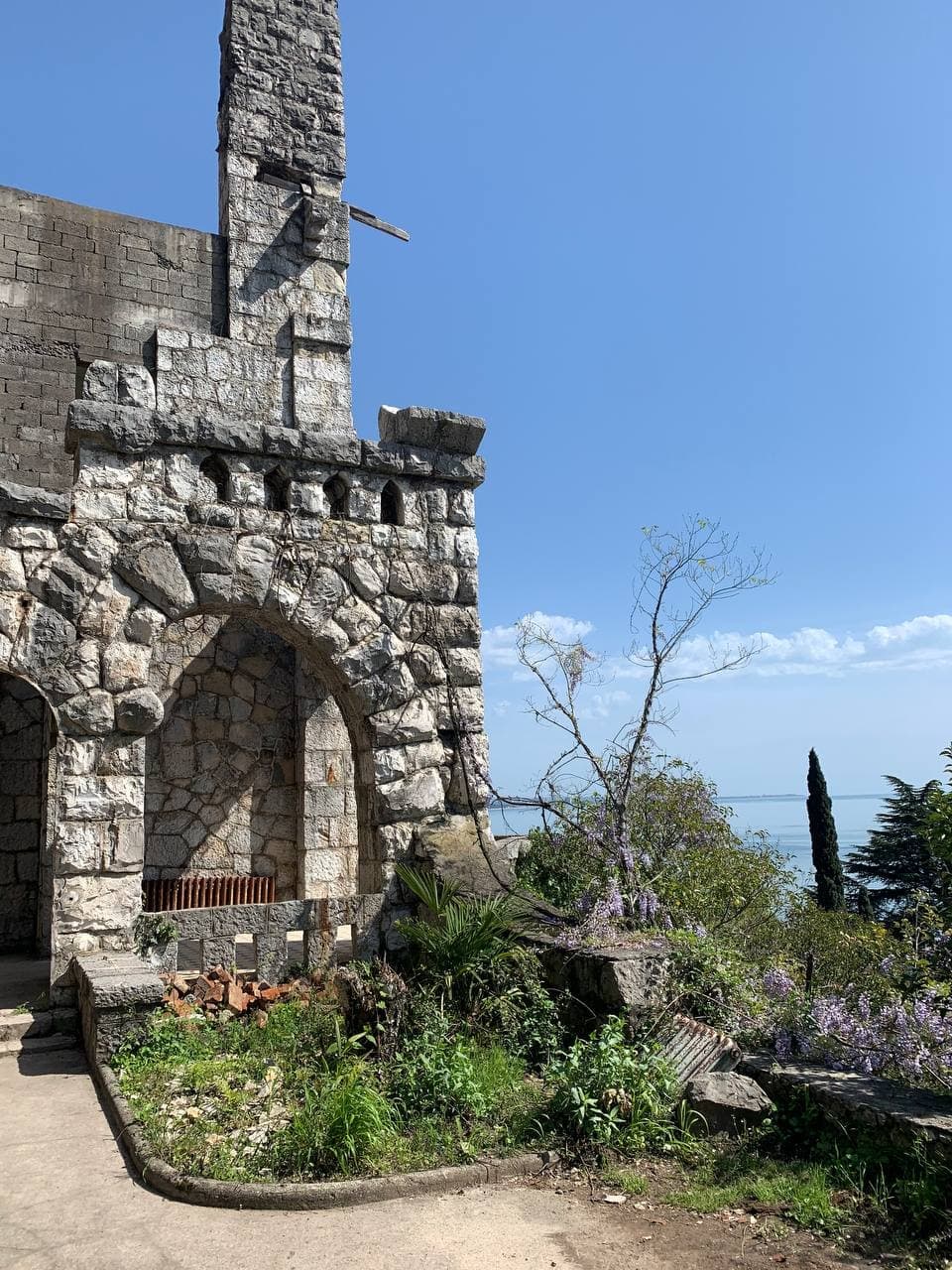
The castle is situated on the slopes of Signal Mountain, overlooking the Joekwara River near Old Gagra. This location was chosen for its scenic views and proximity to the Black Sea, making it an ideal site for a summer residence and health resort. The initial construction phase included the main palace, featuring distinctive architectural elements such as a round panoramic window in the prince’s private study, a decorative metal spiral chimney, and richly ornamented façades.
Shortly after the main building was completed, an attached hotel wing was added to accommodate visiting members of the royal family and high nobility. This expansion reflected the castle’s dual function as both a private residence and a social hub for the imperial elite.
In January 1903, Prince Alexander officially launched the Gagra climatic resort with the opening of the Gagripsh restaurant, establishing the estate as a fashionable destination for health and relaxation. The inclusion of two functional lighthouses on the property served a practical purpose, aiding navigation for ships and yachts along the nearby coastline.
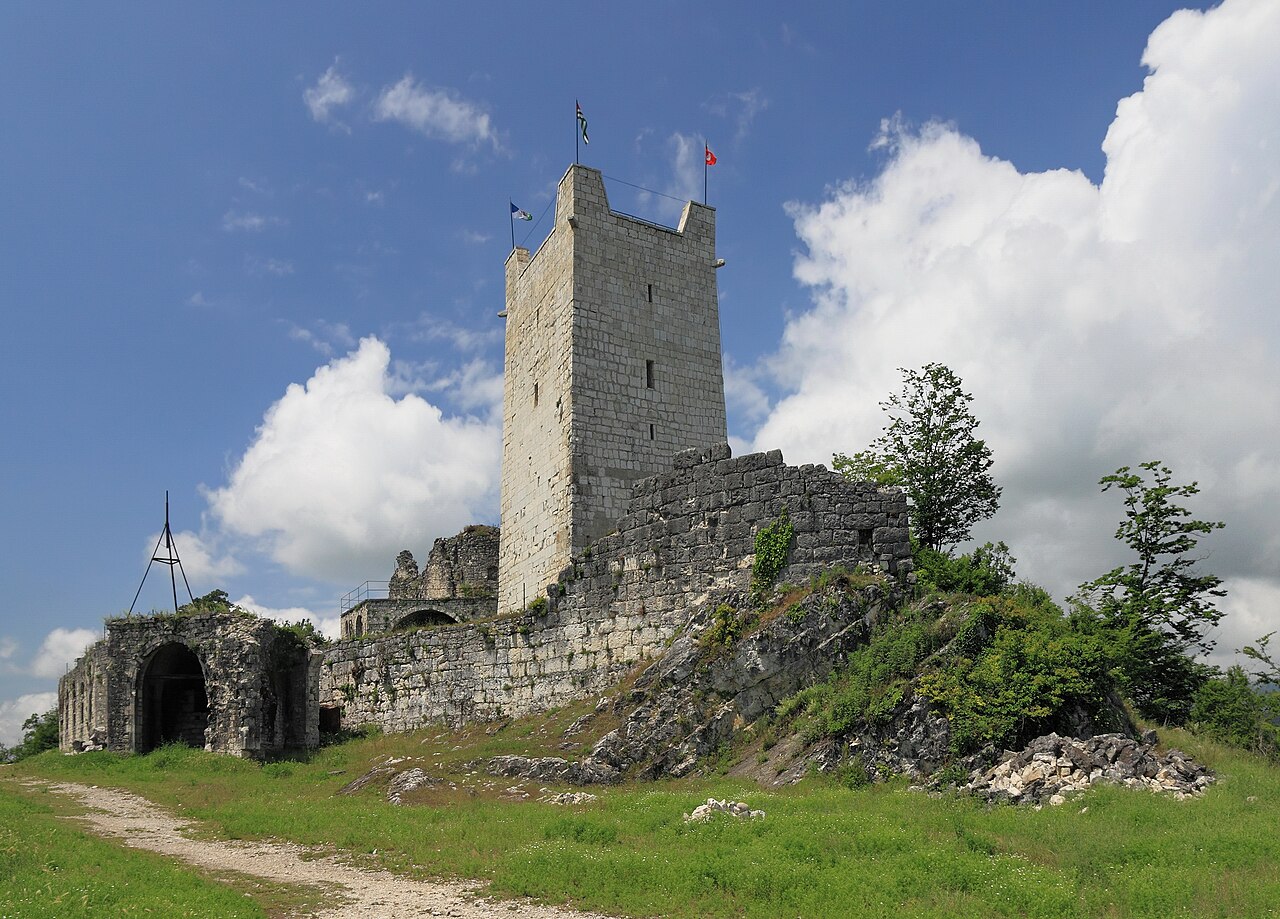
Further expansion took place in 1906 with the addition of a wing topped by the Falconer’s Tower. This tower, a vertical architectural highlight, was inspired by Prince Alexander’s passion for falconry. Historians debate whether the tower was used as an observation post or a dedicated space for falconry activities, but it remains a distinctive feature of the castle’s silhouette.
Architectural style and features
The castle is an example of the Art Nouveau style, characterized by its elegant flowing lines, colorful balconies, and intricately shaped windows. The main structure is crowned with a red tile roof and a semicircular central pediment that adds to the building’s graceful appearance.
The estate is surrounded by a luxuriant garden, which includes ornamental sculptures, fountains, and swimming pools. These elements complement the architectural design and enhance the overall aesthetic of the property. The garden is enclosed by tall arched gates, emphasizing the refined character of the estate.
One of the castle’s unique architectural adaptations is the narrow entrance courtyard, which historically led to the invention of a wooden turning circle to maneuver the prince’s Mercedes automobile within the confined space. This feature illustrates the integration of early motor technology with the estate’s design.
Changes during the Soviet era and later history
Following the 1917 Russian Revolution, Prince Alexander emigrated, and the castle was nationalized. During the Soviet period, its function shifted from a noble residence to a sanatorium specializing in nervous disorders. It operated under various names, including one associated with Joseph Stalin’s administration and later as the "Chaika" boarding house, serving an elite clientele.
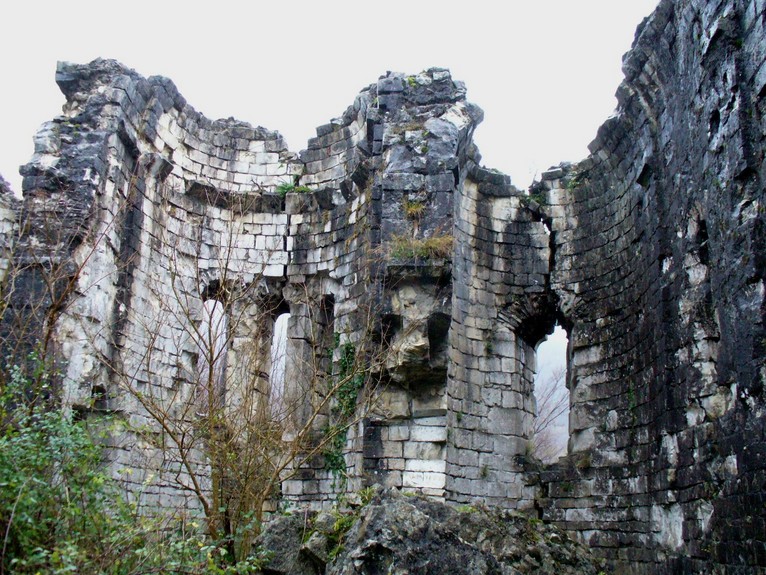
The castle suffered significant damage during the late 20th century. A major fire in the 1980s caused extensive harm to the structure, which was further exacerbated by destruction during the armed conflict between Georgian and Abkhaz forces in 1992–1993.
Preservation and restoration efforts
In the post-Soviet era, efforts to preserve and restore the castle have been ongoing. In 2013, Duke Guno of Oldenburg, a descendant of Prince Alexander, visited the site, participating in events held within a restored section of the castle. Proposals have been made to nominate the estate for inclusion on the UNESCO World Heritage list, recognizing its cultural and historical significance.
Since 2010, the property has been leased for 49 years to a legal entity responsible for restoration. Some conservation activities began without formal authorization, highlighting challenges in managing heritage preservation. As of September 2022, restoration efforts continue with the aim of preserving the castle’s key architectural and decorative elements.
Architectural highlights and estate features
The castle complex is carefully planned, with the main palace and attached wings arranged to maximize views and functionality. The Falconer’s Tower remains a defining vertical element, symbolizing the prince’s personal interests.
The estate’s gardens feature a variety of ornamental elements such as sculptures, fountains, and swimming pools, all contributing to the luxurious atmosphere. The two lighthouses on the property underscore the estate’s maritime connection and practical considerations for coastal navigation.
Despite the damage caused by fire and conflict, many of the castle’s façades and decorative details have survived. Photographic documentation shows the preservation of colorful balconies, intricately shaped windows, and the semicircular pediment that define the castle’s Art Nouveau character.
Frequently asked questions (FAQ)
- When was Prince Alexander of Oldenburg Castle built?
- Construction took place between 1898 and 1902, commissioned by Duke Alexander of Oldenburg as a residence and leisure retreat.
- What architectural style characterizes the castle?
- The castle is designed in the Art Nouveau style, featuring elegant flowing lines, colorful balconies, and intricately shaped windows.
- What is the significance of the Falconer's Tower?
- The Falconer's Tower was added in 1906 and reflects Prince Alexander's passion for falconry, serving as a distinctive vertical element of the castle.
- How was the castle used during the Soviet era?
- It was repurposed as a sanatorium specializing in nervous disorders and later operated as the "Chaika" boarding house for elite guests.
- What damage has the castle endured?
- The castle suffered extensive damage from a major fire in the 1980s and further destruction during the 1992–1993 conflict between Georgian and Abkhaz forces.
- Are there ongoing restoration efforts?
- Restoration has been ongoing since 2010, with efforts to preserve the castle's architectural and decorative features continuing as of 2022.
Photo gallery

Information
Loading map...
Visitor reviews
No reviews yet. Been here? Write the first review and help other travelers!
Write the first reviewVisited this castle? Share your experience
Your review helps other travelers and adds first-hand knowledge to our encyclopedia.