Preston Castle

Preston Castle: Romanesque Revival reform school in Ione, California
Ione, California, United States of America
Post-Renaissance (17th–18th c.)
Partially Restored

Preston Castle, located in Ione, California, is a striking example of Romanesque Revival architecture and one of the most prominent historic reform school buildings in the United States. Officially opened on July 1, 1894, it was originally constructed as the Preston School of Industry, a juvenile reform institution for boys. The castle served as a pioneering center for juvenile rehabilitation, combining education, vocational training, and discipline within a fortress-like environment designed to convey strength and moral authority.

Architectural significance and design features

The castle's design embodies the Romanesque Revival style, distinguished by its rounded arches, massive stone and brick walls, and towering turrets that give the building a fortress-like appearance. These architectural elements were carefully chosen to project a sense of permanence and security, reflecting the late 19th-century trend in institutional architecture aimed at reform and social order.

Constructed primarily from locally sourced brick and stone, Preston Castle features intricate masonry work and decorative stone carvings typical of the Romanesque Revival movement. The castle's facade includes multiple arched windows, buttresses, and corner towers that rise prominently above the main structure. The layout of the complex was designed to accommodate various functions, including dormitories, classrooms, workshops, and administrative offices, all arranged around spacious courtyards and green areas.

Construction materials and layout

The extensive use of brick and stone not only provided durability but also contributed to the imposing aesthetic appropriate for a reform school. The building's towers and turrets served both practical and symbolic purposes, offering vantage points and reinforcing the institution's authority. The complex originally included numerous auxiliary buildings and expansive farmland, totaling approximately 1,000 acres, which supported the school's self-sustaining agricultural programs.

Historical context and role as a reform school

As the Preston School of Industry, the castle was established to provide education and vocational training to juvenile offenders, emphasizing rehabilitation through work and discipline. At its operational peak, the institution housed up to 800 wards and employed around 200 staff members. The campus included approximately 50 buildings, with 750 acres dedicated to farmland where boys learned agricultural skills as part of their rehabilitation.

The school operated in this capacity until 1960, when it was relocated to newer facilities better suited to contemporary correctional approaches. Throughout its years of operation, Preston Castle was notable for its progressive approach to juvenile justice, focusing on reform rather than punishment.

Preservation efforts and current uses

Since 2001, the Preston Castle Foundation has managed the site, working to preserve and maintain the historic buildings and grounds. The foundation offers self-guided tours and private guided group tours, allowing visitors to explore the castle's unique architecture and history. Special events such as paranormal nights, craft fairs, and a Christmas bazaar are organized to engage the community and raise funds for ongoing restoration.

The castle is also available for private photography sessions and serves as a filming location for film and television productions. These activities contribute financially to the preservation efforts and help maintain public interest in the site.

Visitor experience and accessibility

Visitors to Preston Castle can explore its imposing halls, dormitories, and administrative areas, gaining insight into the lives of the young wards who once lived and studied there. The site offers a rare glimpse into late 19th and early 20th-century institutional architecture and juvenile reform history. Additionally, the castle's reputation for being haunted attracts paranormal enthusiasts.

Community engagement and cultural importance

Beyond its architectural and historical significance, Preston Castle serves as a cultural landmark in the California Gold Country region. The foundation's events foster community involvement and help preserve the castle as a symbol of the area's heritage. Its listing on the National Register of Historic Places underscores its importance as a preserved historic site representing changing attitudes toward juvenile justice and institutional architecture.

Location and visitor information

Preston Castle is situated at 900 Palm Drive, Ione, California, 95640. Visitors can explore the castle grounds through self-guided tours or arrange private group tours for a more detailed experience. The foundation regularly updates information on visiting hours and special events via its official website and social media platforms.

Frequently asked questions (FAQ)

What is the historical significance of Preston Castle?
Preston Castle was a pioneering juvenile reform school established in 1894, known for its Romanesque Revival architecture and progressive rehabilitation programs for boys.
Can I take guided tours of Preston Castle?
Yes, the Preston Castle Foundation offers both self-guided and private guided group tours, providing visitors with detailed insights into the castle's history and architecture.
Is Preston Castle accessible to visitors year-round?
Visiting hours vary throughout the year. It is recommended to check the official Preston Castle Foundation website for the most current information on opening times and special events.
Are there any special events held at Preston Castle?
The foundation organizes events such as paranormal nights, craft fairs, and a Christmas bazaar to engage the community and support preservation efforts.
Can Preston Castle be used as a filming location?
Yes, Preston Castle is available for film and television productions, which helps generate funds for its maintenance and restoration.

Information

Lowland Castle

Opening hours

Varies; check official website

Ticket prices

Varies; see official website for details

Current owner

Preston Castle Foundation

Address

900 Palm Drive, Ione, California, 95640

Loading map...

Visitor reviews

No reviews yet. Been here? Write the first review and help other travelers!

Write the first review

Visited this castle? Share your experience

Your review helps other travelers and adds first-hand knowledge to our encyclopedia.
Write a review

(5/5)

0/2000 characters

Your review will be visible after admin approval

Nearby castles

52 km
Sutter's Fort — United States of America castle

Sutter's Fort

Sacramento, United States of America

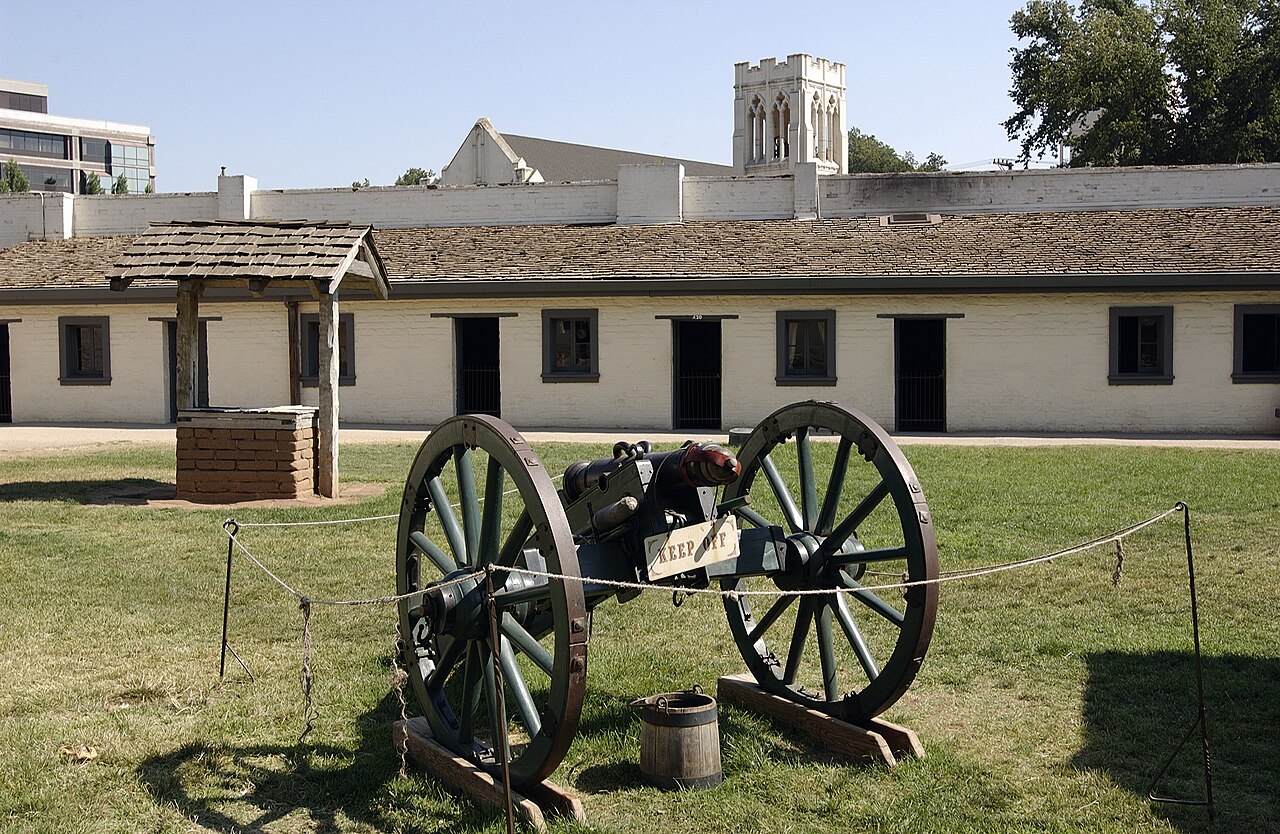
Sutter's Fort stands as a significant historical site in the early development of California during the 19th century. Originally established as part of a larger colonial enterprise known as New Helvetia (New Switzerland) by John Sutter in 1839, the fort itself began construction in 1841. This adobe fortification was the first non-Indigenous settlement in the California Central Valley, playing a crucial role in the region's agricultural and trade activities during the Mexican Alta California period. Historical context and foundation The founding of Sutter's Fort occurred amid a period of territorial shifts and cultural encounters in California. John Sutter, a Swiss immigrant, envisioned New Helvetia as a utopian agricultural colony, aiming to establish a self-sufficient community. The fort was designed as a fortified compound to protect settlers and serve as a center for trade and agriculture. Its location was strategic, near the convergence of important trails such as the California Trail and the Siskiyou Trail, making it a vital waystation for travelers and migrants moving westward. Construction and architecture The fort's construction began in 1841, primarily using adobe bricks, a common building material in the region due to its availability and insulating properties. The structure was designed as a bastioned fortress, featuring defensive walls with bastions at the corners to allow for protection against potential attacks. The fort included living quarters, storage rooms, workshops, and stables arranged around a central courtyard, typical of frontier forts of the era. Role in California's early development Sutter's Fort quickly became a focal point for the emerging non-Indigenous population in the Central Valley. It served as a hub for agricultural production, utilizing Indigenous labor under conditions that have since been recognized as exploitative and harsh. The fort's agricultural output supported both the local community and travelers passing through the region. The fort gained historical prominence due to its association with several key events. It was near the site where the Donner Party passed during their ill-fated journey west. More notably, the discovery of gold at Sutter's Mill in 1848, located nearby on Sutter's property, sparked the California Gold Rush, dramatically transforming the region's economy and demographics. Impact on indigenous populations The establishment and operation of Sutter's Fort had profound effects on local Indigenous communities. Indigenous laborers were employed under conditions resembling feudal servitude, and many suffered mistreatment. This aspect of the fort's history is critical to understanding the broader impacts of colonization in California. Transition and legacy Following the American annexation of California after the Mexican-American War, Sutter's Fort transitioned from a private colonial enterprise to a historical landmark. The surrounding area developed into the city of Sacramento, which grew out of the settlement around the fort. The fort itself fell into disrepair over time but was later restored to reflect its original 19th-century appearance. Preservation and modern significance Today, Sutter's Fort is preserved as a California State Historic Park, administered by the California Department of Parks and Recreation. The adobe structure has been carefully restored, allowing visitors to explore the fort's original layout and gain insight into early California history. It was designated a National Historic Landmark in 1961, recognizing its cultural and historical importance. The site offers educational programs and reenactments that highlight the daily life of settlers and Indigenous peoples during the fort's operational period. Its location near Sacramento makes it accessible for those interested in the formative years of California's statehood and the complex interactions between cultures during the 19th century.

Modern (19th–20th c.)
Details
98.3 km

Vikingsholm Castle

Vikingsholm, United States of America

Vikingsholm Castle, located on the scenic shores of Lake Tahoe, California, is a remarkable example of Scandinavian-inspired architecture in the United States. Often referred to as "Tahoe's Hidden Castle," Vikingsholm stands out for its harmonious blend of natural materials and Nordic design principles, making it a unique cultural landmark in the Sierra Nevada region. Constructed in 1929, Vikingsholm was commissioned by Mrs. Lora Josephine Knight, a wealthy philanthropist and preservationist, who sought to create a summer home that reflected the traditional building styles of Scandinavian countries. The castle's design was heavily influenced by Mrs. Knight's travels in Sweden, Norway, and Denmark, where she admired the craftsmanship and architectural heritage of the region. The project was overseen by architect Leonard Palme, who meticulously incorporated authentic Nordic elements into the structure. Architectural features and design Vikingsholm is renowned for its extensive use of natural materials, particularly local granite and timber, which blend seamlessly with the surrounding forest and lake environment. The exterior walls showcase intricate stonework that evokes the rugged castles and manor houses of Scandinavia. A defining feature of Vikingsholm is the Round Room Wing, a tower-like structure that adds both visual interest and functional space to the residence. The castle's rooflines, steeply pitched and adorned with wooden carvings, reflect traditional Nordic styles, while the interior boasts handcrafted details such as carved wooden beams, folk art motifs, and built-in furnishings. The craftsmanship throughout Vikingsholm highlights a dedication to authenticity and cultural appreciation, making it a rare example of early 20th-century American architecture inspired by European medieval traditions. Historical context and significance Vikingsholm was built during a period when American interest in European heritage and romantic architectural styles was growing. Mrs. Knight's vision for the castle was not only as a private retreat but also as a tribute to the enduring legacy of Scandinavian culture. The site was chosen for its stunning natural beauty and proximity to Emerald Bay, one of Lake Tahoe's most picturesque locations. The castle has since become a cherished historical site, preserved as part of Emerald Bay State Park. It offers visitors a glimpse into early 20th-century interpretations of medieval Scandinavian architecture and lifestyle. Vikingsholm also serves as an educational resource, illustrating the influence of immigrant cultures on American architectural heritage. Visiting Vikingsholm Today, Vikingsholm is open for guided tours during the summer months, from June through September. These tours are conducted by knowledgeable guides employed by the Sierra State Parks Foundation, who provide insights into the castle's history, architecture, and the life of Mrs. Knight. The adjacent visitor center offers additional resources, including ticket sales and educational materials. Visitors to Vikingsholm can explore the castle's stone walls, wooden interiors, and unique tower, gaining an appreciation for the skill and artistry involved in its construction. The surrounding Emerald Bay State Park also provides opportunities for hiking, photography, and enjoying the natural splendor of Lake Tahoe. Preservation and cultural heritage Maintaining Vikingsholm's structural integrity and historical authenticity is a priority for park authorities and preservation groups. Efforts include regular maintenance of the stone masonry, wooden elements, and roofing to protect against the region's variable climate. The castle's status as a cultural landmark highlights the importance of preserving diverse architectural influences within American history. Vikingsholm stands as a testament to the enduring appeal of Scandinavian architecture beyond its native lands, showcasing how traditional design can be adapted to new environments while honoring its origins. Its continued preservation ensures that future generations can experience this unique blend of history, art, and nature at Lake Tahoe.

Post-Renaissance (17th–18th c.)
Details
140.2 km

Ledson Castle & Winery

Kenwood, United States of America

Ledson Castle & Winery is a distinctive modern chateau-style estate located in Kenwood, California, in the heart of the Sonoma Valley wine region. This grand 16,000 square foot castle was constructed in the 1990s as a private family residence inspired by the historic Normandy chateaux of France. Today, it functions as a prestigious winery and event venue, attracting visitors with its unique combination of European architectural grandeur and world-class viticulture.The castle's design faithfully replicates many of the characteristic features of 16th-century French chateaux, especially those from the Normandy region. These include steeply pitched gabled roofs, ornate hand-carved stonework, and multiple elegant towers and turrets capped with conical roofs. The stone façade and decorative ironwork contribute to the estate's striking silhouette, which stands prominently amidst the rolling vineyards of Sonoma County. The castle's exterior evokes the atmosphere of medieval European nobility while serving modern functions.Architectural inspiration and designThe Ledson Castle was meticulously designed to embody the essence of post-Renaissance French chateaux, with particular attention to the Normandy style. The use of authentic materials and skilled craftsmanship is evident throughout, from the hand-carved stone details to the ornamental iron balconies and gabled roofs. The castle's layout features multiple towers and turrets that not only enhance the medieval aesthetic but also serve as observation points and architectural accents.Exterior featuresStone walls: The castle's exterior walls are clad in natural stone, providing a durable and timeless appearance reminiscent of European fortifications.Turrets and towers: Several towers rise above the main structure, featuring conical roofs and narrow windows that enhance the chateau's historic look.Landscaped gardens: Surrounding the castle are carefully maintained gardens that complement the architectural style and offer scenic views of the vineyards.Interior highlightsGrand halls: Spacious rooms with high ceilings, elegant woodwork, and stone fireplaces create a majestic ambiance suitable for gatherings and events.Wine tasting rooms: Intimate yet sophisticated spaces designed for sampling the estate's acclaimed wines.Fireplaces and stonework: Authentic stone fireplaces and detailed masonry add warmth and character to the interiors.The castle's role in sonoma wine cultureLedson Castle & Winery is a significant part of the Sonoma County wine industry, producing a range of acclaimed varietals including Cabernet Sauvignon, Chardonnay, and Pinot Noir. The castle setting enhances the wine tasting experience, offering visitors a unique opportunity to enjoy premium wines in an environment that reflects centuries of European chateau tradition.The winery hosts numerous events throughout the year, including wine tasting weekends, romantic getaways, and executive retreats. These events take advantage of the castle's enchanting atmosphere and picturesque surroundings, making it a popular destination for both tourists and locals.Location and visitor informationLocated at 7335 CA-12, Kenwood, CA 95409, Ledson Castle is easily accessible within the Sonoma Valley, a region renowned for its scenic vineyards and wine tourism. Visitors can explore the castle grounds, participate in guided tours, and enjoy tastings of the estate's premium wines.The castle's official website and social media channels provide up-to-date information on visiting hours, special events, and booking options, ensuring a well-organized and memorable visit experience.

Post-Renaissance (17th–18th c.)
Details

