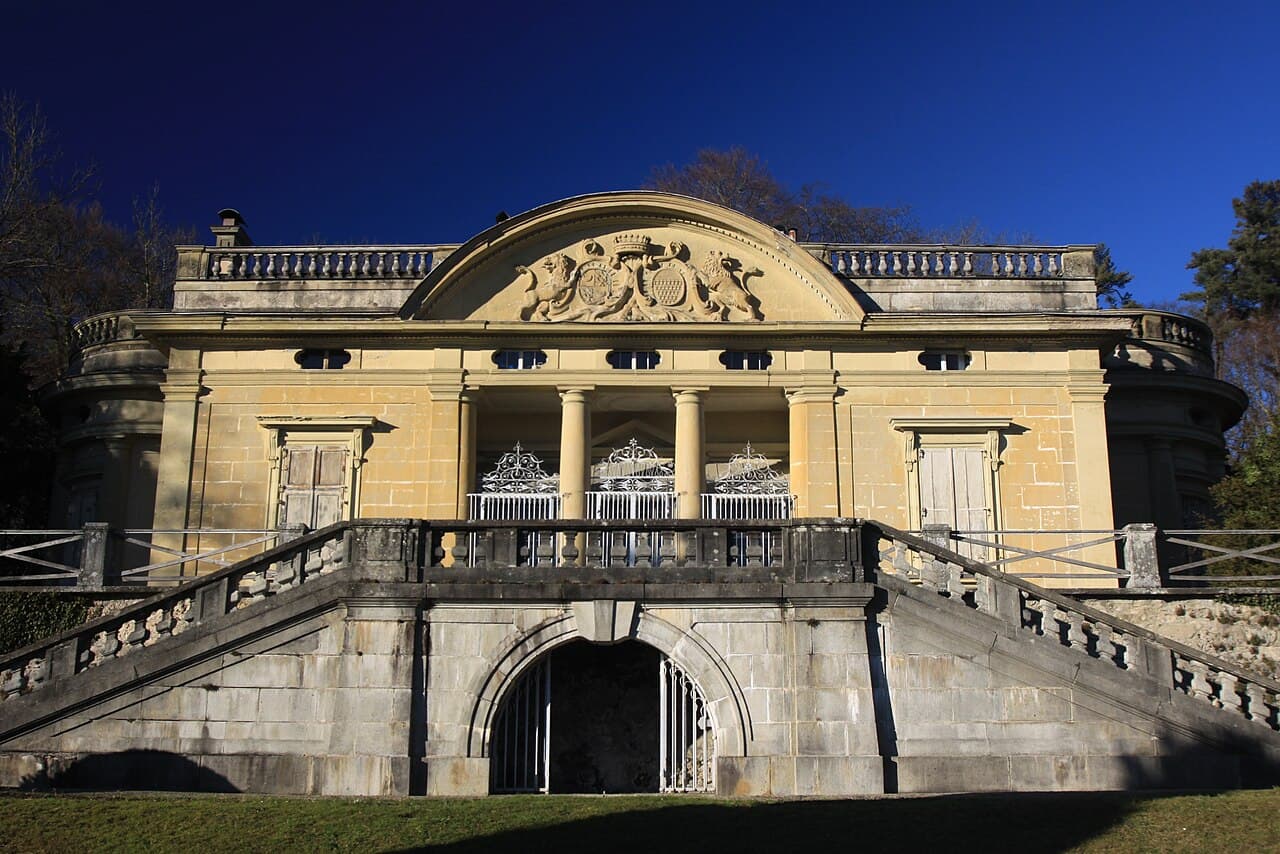
Poya Castle
Poya Castle (French: Château de la Poya) stands prominently in the municipality of Fribourg within the Canton of Fribourg, Switzerland. It is celebrated as the first example of Neo-Palladian architecture north of the Alps, marking a significant architectural transition in the region during the 17th century. This castle is recognized as a Swiss heritage site of national significance, reflecting its cultural and historical importance.
Architectural significance and style
The castle's design is heavily influenced by the principles of Palladianism, an architectural movement inspired by the Venetian architect Andrea Palladio. This style emphasizes classical forms, symmetry, and proportion, which was a departure from the medieval fortress styles previously dominant in Switzerland. Poya Castle exemplifies these ideals through its balanced façade, orderly arrangement of windows, and classical decorative elements. Its construction during the Renaissance period represents a pivotal moment when Swiss architecture began embracing the broader European Renaissance trends.
Neo-Palladian features
The castle incorporates hallmark features of Neo-Palladian architecture, including a clear geometric layout and the use of classical motifs such as pilasters and pediments. Unlike earlier medieval castles designed primarily for defense, Poya Castle's architecture reflects a shift toward residential comfort and aesthetic appeal. The building's elevated position on a hill (hill castle) offers commanding views, which historically provided strategic advantage but also enhances its visual prominence in the landscape.
Historical context and construction
Constructed in the 17th century, Poya Castle was built during a time of relative peace in the region, allowing for architectural experimentation beyond military necessity. The castle's builders sought to combine the defensive advantages of a hilltop location with the refined elegance of Renaissance design. Its construction marks a transition from fortress to stately home, reflecting changing social and political conditions in Fribourg and the wider Swiss territories.
Ownership and use over time
Throughout its history, Poya Castle has served various roles, including a noble residence and a symbol of prestige for its owners. Its preservation as a heritage site ensures that the castle remains a valuable resource for understanding the evolution of Swiss architecture and aristocratic life in the early modern period.
Preservation and cultural importance
Today, Poya Castle is well-preserved and continues to attract interest for its architectural uniqueness and historical value. Its designation as a Swiss heritage site of national significance underscores the importance of maintaining such landmarks for educational and cultural purposes. Visitors to the castle can appreciate the fusion of Renaissance aesthetics with the traditional hill castle form, offering insights into the architectural and social transformations of 17th-century Switzerland.
Visiting information
While specific visiting hours and ticket prices vary, the castle is accessible to the public for tours and cultural events. Its location in Fribourg makes it an important destination for those interested in Swiss history, architecture, and heritage conservation.
Frequently asked questions (FAQ)
- What is the architectural style of Poya Castle?
- Poya Castle is designed in the Neo-Palladian style, characterized by classical symmetry, proportion, and decorative elements inspired by Andrea Palladio.
- When was Poya Castle built?
- Poya Castle was constructed in the 17th century during the Renaissance period, reflecting a shift from medieval fortress design to more elegant residential architecture.
- Where is Poya Castle located?
- Poya Castle is located in the municipality of Fribourg, within the Canton of Fribourg in Switzerland, positioned on a hill for strategic and aesthetic purposes.
- Is Poya Castle open to visitors?
- Yes, Poya Castle is accessible to the public for tours and cultural events, though visiting hours and ticket prices may vary depending on the season and event schedule.
- Why is Poya Castle significant?
- It is the first example of Neo-Palladian architecture north of the Alps and is designated as a Swiss heritage site of national significance, highlighting its cultural and architectural importance.
Photo gallery

Information
Loading map...
Visitor reviews
No reviews yet. Been here? Write the first review and help other travelers!
Write the first reviewVisited this castle? Share your experience
Your review helps other travelers and adds first-hand knowledge to our encyclopedia.


