Portalegre Castle
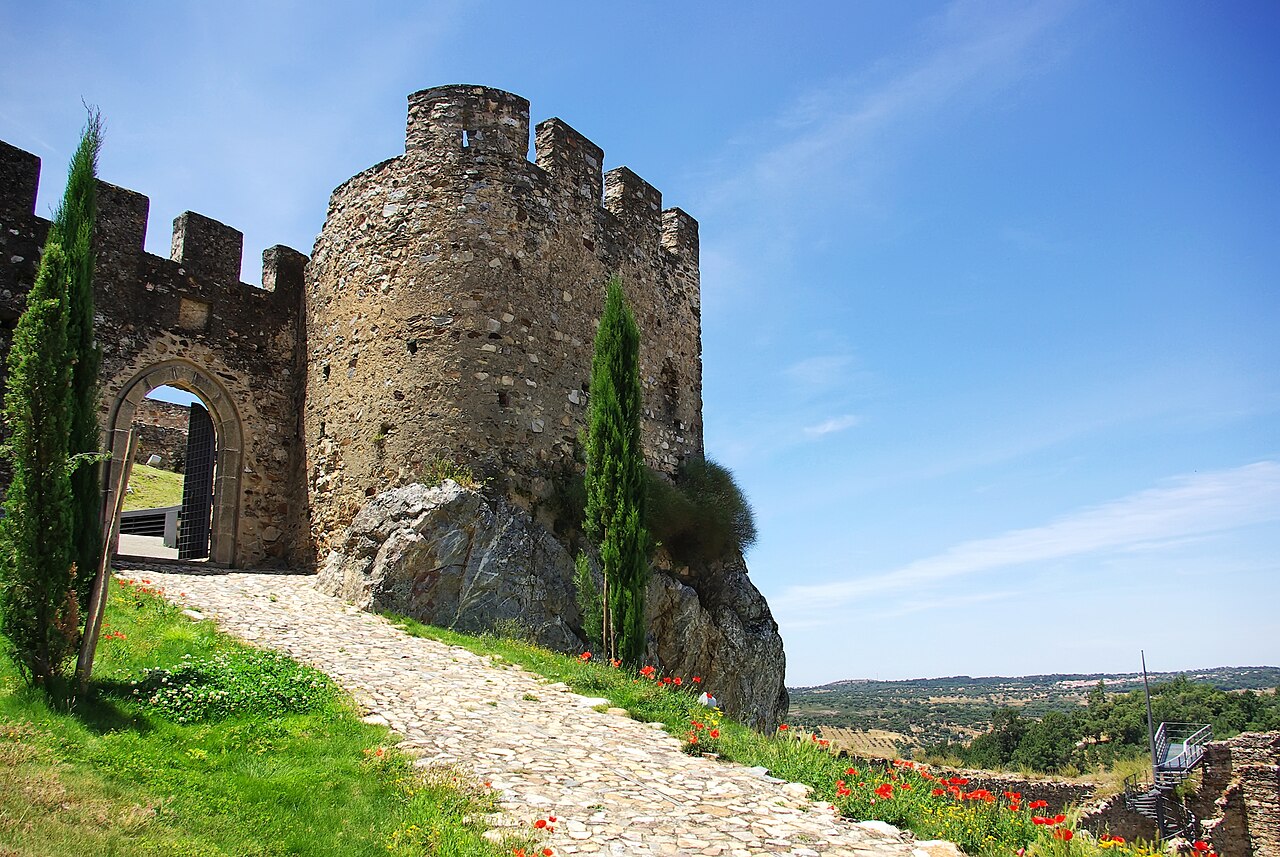
Portalegre Castle, known locally as Castelo de Portalegre, is a significant historic fortress located in the town of Portalegre in the Alto Alentejo region of Portugal. This hill castle stands as a testament to centuries of military architecture and the turbulent history of the Portuguese borderlands. Its origins trace back to the medieval period, with construction beginning in the 13th century and substantial developments continuing through the Renaissance and beyond.
The castle's strategic position atop a hill overlooking the town was crucial for controlling the border with neighboring Castile during the Middle Ages. The earliest mention of the castle dates to 1271, shortly after Portalegre was granted a charter by King Afonso III of Portugal in 1259. This initial phase of fortification was expanded and strengthened under his son, King Denis of Portugal, in the 1290s, who completed the town walls and remodeled the castle to enhance its defensive capabilities. The castle's early history is marked by internal royal conflicts, including a notable siege in 1290 when King Denis besieged the fortress held by his brother Afonso, highlighting the castle's political and military importance.
Medieval origins and early fortifications
The castle was originally constructed as part of a broader effort to secure the Portuguese frontier. Its medieval design incorporated a large quadrangular keep tower integrated into the curtain walls, serving both as a stronghold and a symbol of royal authority. The keep features Gothic architectural elements, including pointed arches and ribbed vaults, although the original Gothic rib vault was replaced in the 16th century with a more complex polynerved vault, reflecting evolving architectural techniques of the Renaissance period.
The fortifications included an irregular octagonal plan with defensive curtain walls punctuated by three rectangular towers, including the keep. The town itself was protected by a double ring of walls, originally fortified with twelve towers and seven gates, though only three gates survive today: Porta de Alegrete, Porta do Crato, and Porta da Devesa. These walls were essential in defending the town against both Castilian incursions and internal conflicts.
Role during dynastic conflicts and wars
Portalegre Castle played a pivotal role during several key historical conflicts. During the dynastic crisis of 1383-1385, the castle's commander sided with Castilian interests, leading to a popular uprising in the town that ousted him. This event was part of the larger struggle that culminated in the Battle of Aljubarrota in 1385, where Portuguese forces secured independence from Castile.
In the 16th century, the castle underwent modernization efforts to adapt to changing military technologies, including the reconstruction of the keep's vault and strengthening of the walls. Further enhancements occurred during the Portuguese Restoration War (1640-1668), when the fortress was updated to withstand artillery attacks. This included the construction of three small forts outside the medieval walls—Fortim de São Cristóvão, Fortim de São Pedro, and Fortim da Boavista—which formed a star-shaped polygon typical of 17th-century military architecture.
Despite these improvements, the castle and town were occupied by foreign troops multiple times: by French and Spanish forces in 1704 during the War of the Spanish Succession, and again by Spanish troops in 1801 during the War of the Oranges. The castle also witnessed local resistance during the Peninsular War in 1808, when inhabitants rose against Napoleonic forces.
Architectural features and layout
The castle's plan is somewhat oblong and irregular, adapted to the terrain of the hill. The central feature is the imposing quadrangular keep tower, which is internally divided into two levels with vaulted ceilings. The keep was originally part of the town's defensive walls and served as the main stronghold.
The curtain walls enclose a main courtyard known as the praça das armas, which contains remains of auxiliary buildings that likely served military and administrative functions. The walls were originally equipped with battlements and crenellations, many of which were restored in the 20th century after being lost to urban development and neglect.
The castle's defensive system was augmented by the addition of the three 17th-century forts outside the walls, connected via earthworks and designed to provide overlapping fields of fire against artillery and infantry assaults. This combination of medieval and early modern fortifications illustrates the castle's adaptation to changing military needs over several centuries.
Decline, restoration, and current status
By the 19th century, Portalegre Castle had lost much of its strategic importance due to changes in military technology and urban expansion. Parts of the curtain walls were demolished to make way for new streets, which effectively separated the keep from the rest of the castle. The fortress fell into ruin, suffering from neglect and partial destruction.
Recognizing its cultural and historical value, the castle was declared a National Monument in 1922. Restoration efforts began in earnest in the 1960s, focusing on consolidating the remaining structures, removing intrusive buildings, and reconstructing battlements to restore the castle's silhouette.
In 1999, a small museum was established within the medieval keep to display the castle's military history, including weapons and armor from the 15th century through World War I. Early 21st-century restorations improved public access to parts of the defensive walls and enhanced visitor facilities, including exhibition spaces and an amphitheater for cultural events.
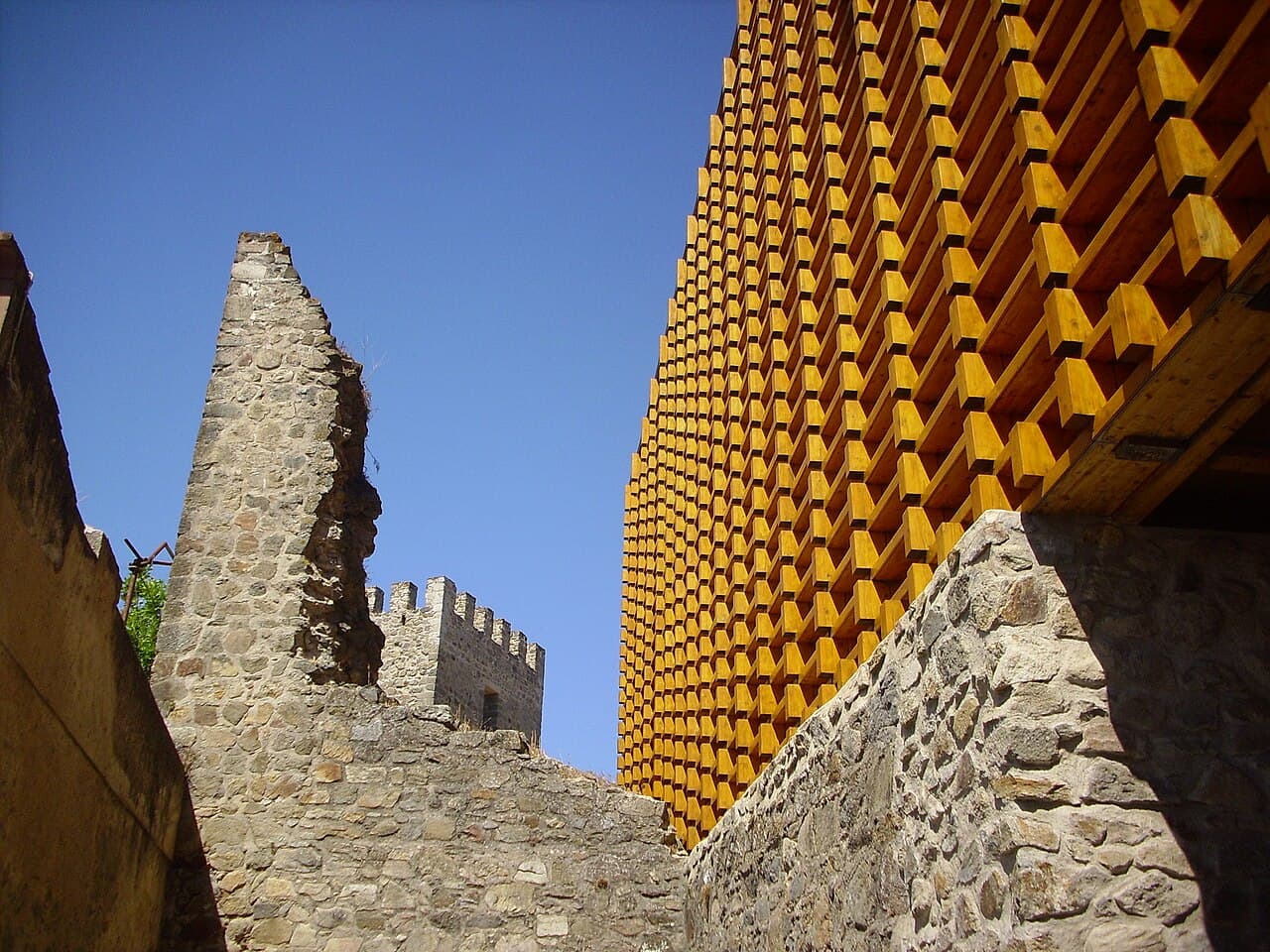
However, a wooden structure built within the castle walls to connect the keep with other parts of the fortress, intended for cultural activities, was closed in 2021 due to safety concerns and is currently deteriorating. Visitors today can freely explore the keep during business hours, but access to the rest of the castle is limited, which restricts the full experience of the fortress's extensive walls and towers.
Surrounding landmarks and cultural significance
Near Portalegre Castle, the Atalaião Tower stands on a hill above the town, serving as a complementary historic watchtower. Together, these fortifications reflect the town's historical role as a border defense point and its rich military heritage.
Portalegre Castle remains an important cultural landmark, symbolizing the complex history of Portuguese border defense, medieval and Renaissance military architecture, and the town’s evolution through centuries of conflict and peace. Its layered construction and varied architectural styles offer valuable insights into the adaptation of fortifications over time.
Frequently asked questions (FAQ)
- How do I visit Portalegre Castle?
- Portalegre Castle is open to visitors during business hours. Access is currently limited to the medieval keep, as the wooden structure connecting the keep to the rest of the castle is closed for safety reasons.
- What is the historical significance of Portalegre Castle?
- Portalegre Castle played a crucial role in border defense between Portugal and Castile, witnessing key events such as the 1383-1385 dynastic crisis and the Portuguese Restoration War.
- When was Portalegre Castle built?
- Initial construction began in the 13th century under King Afonso III, with significant expansions and renovations continuing through the 16th century.
- Can I explore the entire castle complex?
- Currently, only the keep tower is accessible to the public. The rest of the castle, including the walls and other towers, is closed due to safety concerns.
- Why was the castle partially demolished?
- In the 19th century, urban expansion led to the demolition of sections of the curtain walls to make way for new streets, separating the keep from the rest of the castle.
- Is there a museum at Portalegre Castle?
- Yes, a small museum inside the keep displays military artifacts from the 15th century to World War I, highlighting the castle's historical military role.
Photo gallery

Information
Opening hours
Business hours
Ticket prices
Free
Current owner
Municipality
Website
Visit websiteAddress
R. Luiz Barahona Antiga Rua do Castelo, Portugal
Sources & official resources
Verify the information above using these authoritative references.
Loading map...
Visitor reviews
No reviews yet. Been here? Write the first review and help other travelers!
Write the first reviewVisited this castle? Share your experience
Your review helps other travelers and adds first-hand knowledge to our encyclopedia.