Poeke Castle
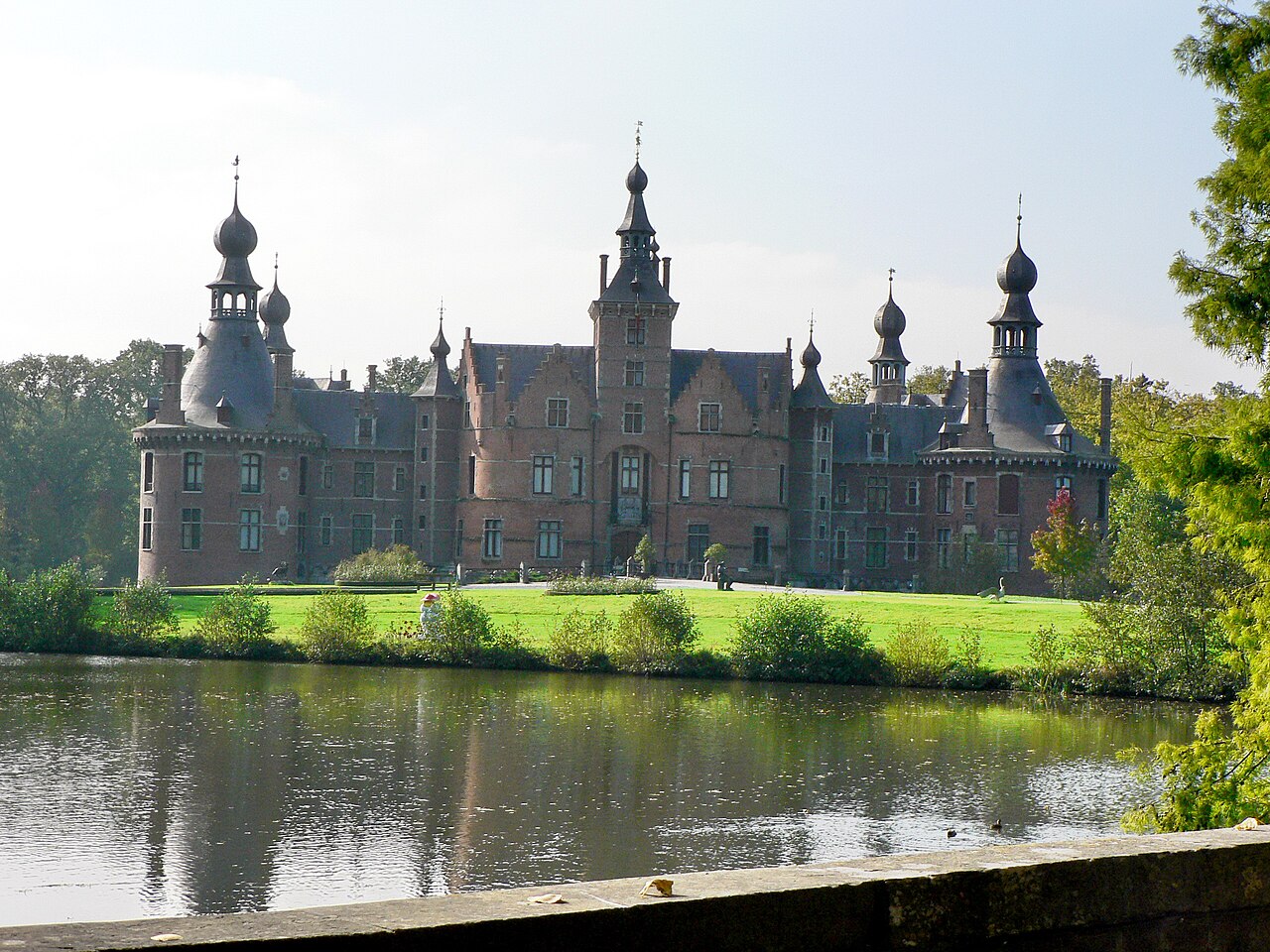
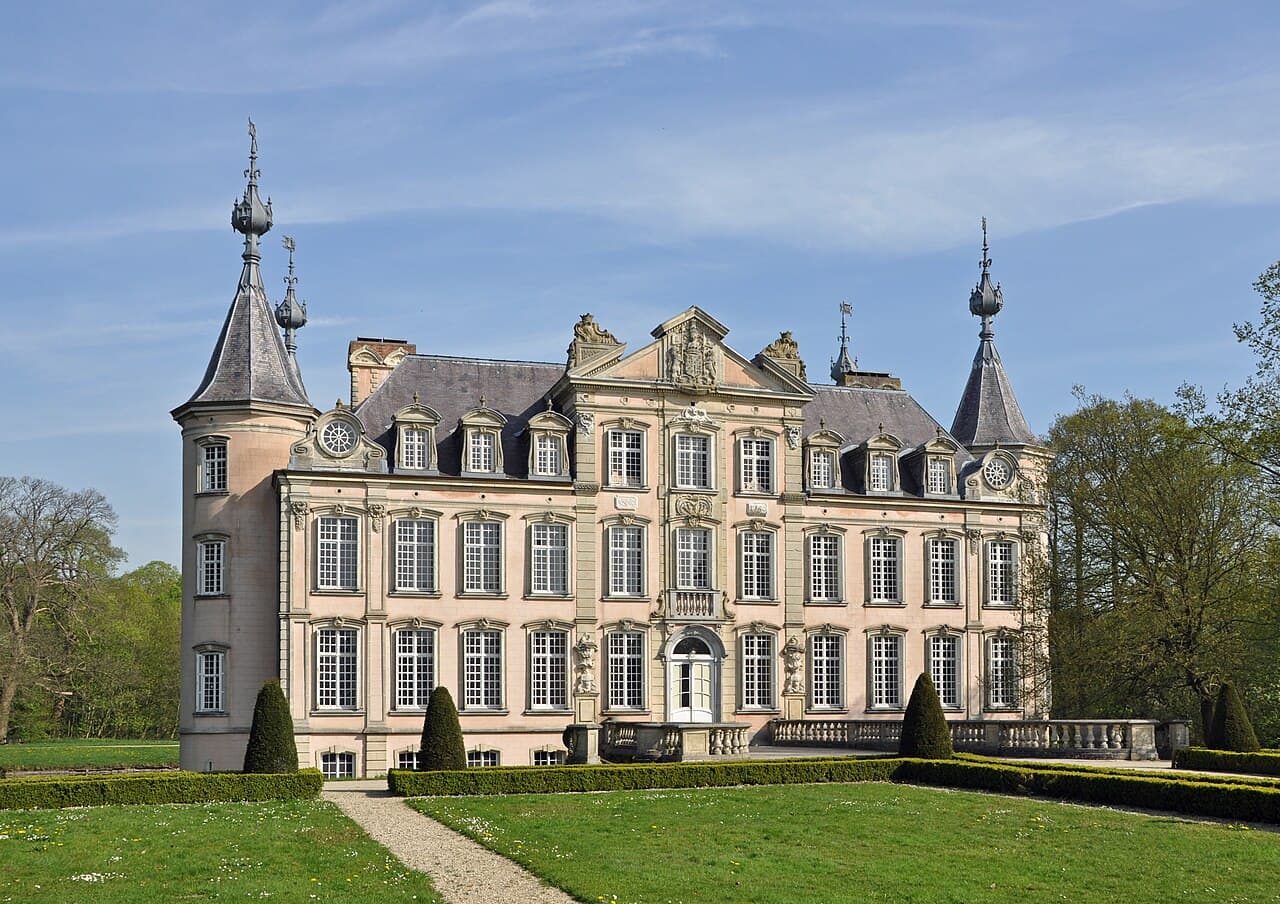
Poeke Castle is a prominent historic hill castle located near the small town of Poeke within the municipality of Aalter, Belgium. Set on a natural elevation approximately 15 meters high and surrounded by a defensive moat formed by water, the castle stands amidst a vast 56-hectare park that enhances its picturesque and strategic setting. The castle is accessible via bridges at both the front and rear, emphasizing its classic medieval defensive design.
The castle's origins trace back to the early 12th century, with the first recorded mention appearing in 1139. It was established by the local nobility who were loyal vassals of the Counts of Flanders, serving as a fortified stronghold to control the Leie Valley. The name "Poeke" derives from the Celtic word "poca," meaning "the beautiful" or "the pleasant," reflecting the area's natural charm.
Medieval origins and strategic importance
During the High Medieval period, Poeke Castle played a significant role in the regional power struggles of Flanders. It was a key fortress during conflicts such as the 1382 confrontation between Count Louis II of Flanders and the rebellious city of Ghent. In this battle, Eulaard II of Poeke died attempting to halt the advance of the Ghent militia, who had already captured the castle, underscoring its military significance.
The castle's lords were influential noblemen within the medieval county, and family alliances linked them closely to the ruling counts. For example, Eulaard III's second wife married Robert of Flanders, an illegitimate son of Louis II, intertwining the castle's proprietors with the broader Flemish nobility.
Destruction and decline in the 15th century
During the revolt of Ghent against Duke Philip the Good in 1452, the castle was seized by the Ghent militia. The duke recaptured the fortress in July 1453, executing the captured rebels and ordering the castle's destruction. This event marked a significant turning point, as the castle was left in ruins for over a century thereafter.
Rebuilding and transformation in the early modern period
After remaining in ruins until the late 16th century, the castle changed ownership several times. It passed from the de Mastaing family to Philibert Delrye and then to Jean de Preudhomme of Lille in 1597. Under the Preudhomme family, particularly Markus-Antonius de Preudhomme d'Hailly, rebuilding efforts took place between 1658 and 1671, though the extent of these renovations is not fully documented.
More substantial reconstruction occurred in the 18th century under Charles Florent Idesbald de Preudhomme d'Hailly, who worked on the castle between 1743 and 1752. His efforts helped transform the castle into a representative residence reflecting the tastes and status of its noble owners.
19th-century renovations and landscape redesign
In 1872, Baron Victor Pycke de Peteghem acquired the estate and initiated extensive renovations that lasted until 1875. These works included raising the roof by integrating the third floor into a higher structure and remodeling the interiors. The castle's exterior was enhanced with rococo elements, and the rear facade was radically rebuilt, including the addition of a chapel on the first floor.
The surrounding gardens underwent a significant transformation from a formal French style to an informal English landscape garden, introducing sweeping lawns, forested areas, and curving paths. Baron Pycke de Peteghem also added several estate buildings, such as a coach house, a walled vegetable garden, and a distinctive circular kennel with a central bakehouse, reflecting the estate's recreational and practical functions.
Modern ownership and cultural significance
Following the death of the last Pycke de Peteghem descendant in 1955, the castle passed to a foundation caring for abandoned children before becoming municipal property in 1977. The municipality of Aalter restored the castle in the late 1990s and now uses it for cultural events and festivities, preserving its historic legacy.
Poeke Castle was declared a national monument in 1943, and its park was protected as a landscape in 1978, recognizing its cultural and historical importance. The castle's well-preserved setting and architecture have made it a favored location for film and television productions, including the 2012 BBC/HBO series "Parade's End."
Architectural features and estate layout
The castle's defensive layout is typical of medieval hill castles, with its elevated position and surrounding water providing natural protection. The bridges controlling access reinforce this defensive character. The 56-hectare park is designed around a central axis with avenues that historically connected the castle to nearby villages and churches, although many of these pathways have been lost over time.
The 19th-century renovations significantly altered the castle's appearance, leaving few visible elements from earlier periods. However, the estate retains important features such as the circular kennel built in 1881, which includes a heating oven to shelter hunting dogs during winter, illustrating the estate's use for leisure pursuits.
Overall, Poeke Castle embodies a layered history, reflecting its evolution from a medieval fortress to a noble residence and modern cultural venue. Its combination of historic architecture, landscape design, and cultural heritage make it a significant landmark in the region of East Flanders.
Frequently asked questions (FAQ)
- How do I visit Poeke Castle and what are the opening hours?
- Poeke Castle is open to visitors primarily during cultural events and festivities organized by the municipality of Aalter. It is advisable to check the official website or local tourist information for specific opening hours and event schedules, as regular daily public access may be limited.
- What is the historical significance of Poeke Castle?
- Poeke Castle played a strategic role in medieval Flanders, particularly during conflicts involving the Counts of Flanders and the city of Ghent. It was destroyed and rebuilt multiple times, reflecting its importance in regional power struggles and noble family histories.
- Can I explore the park surrounding Poeke Castle?
- Yes, the castle is set within a 56-hectare park that features English landscape gardens, forested areas, and historical avenues. Visitors can enjoy walking paths and the natural beauty of the estate, which is protected as a historic landscape.
- Is Poeke Castle accessible for people with limited mobility?
- As a historic hill castle with water-surrounded access bridges, some areas may present challenges for visitors with limited mobility. It is recommended to contact the municipality of Aalter for detailed accessibility information before planning a visit.
- Are there any guided tours available at Poeke Castle?
- Guided tours may be available during special cultural events or by arrangement with the municipality. These tours provide insights into the castle's history, architecture, and park, enhancing the visitor experience.
Photo gallery

Information
Sources & official resources
Verify the information above using these authoritative references.
Loading map...
Visitor reviews
No reviews yet. Been here? Write the first review and help other travelers!
Write the first reviewVisited this castle? Share your experience
Your review helps other travelers and adds first-hand knowledge to our encyclopedia.