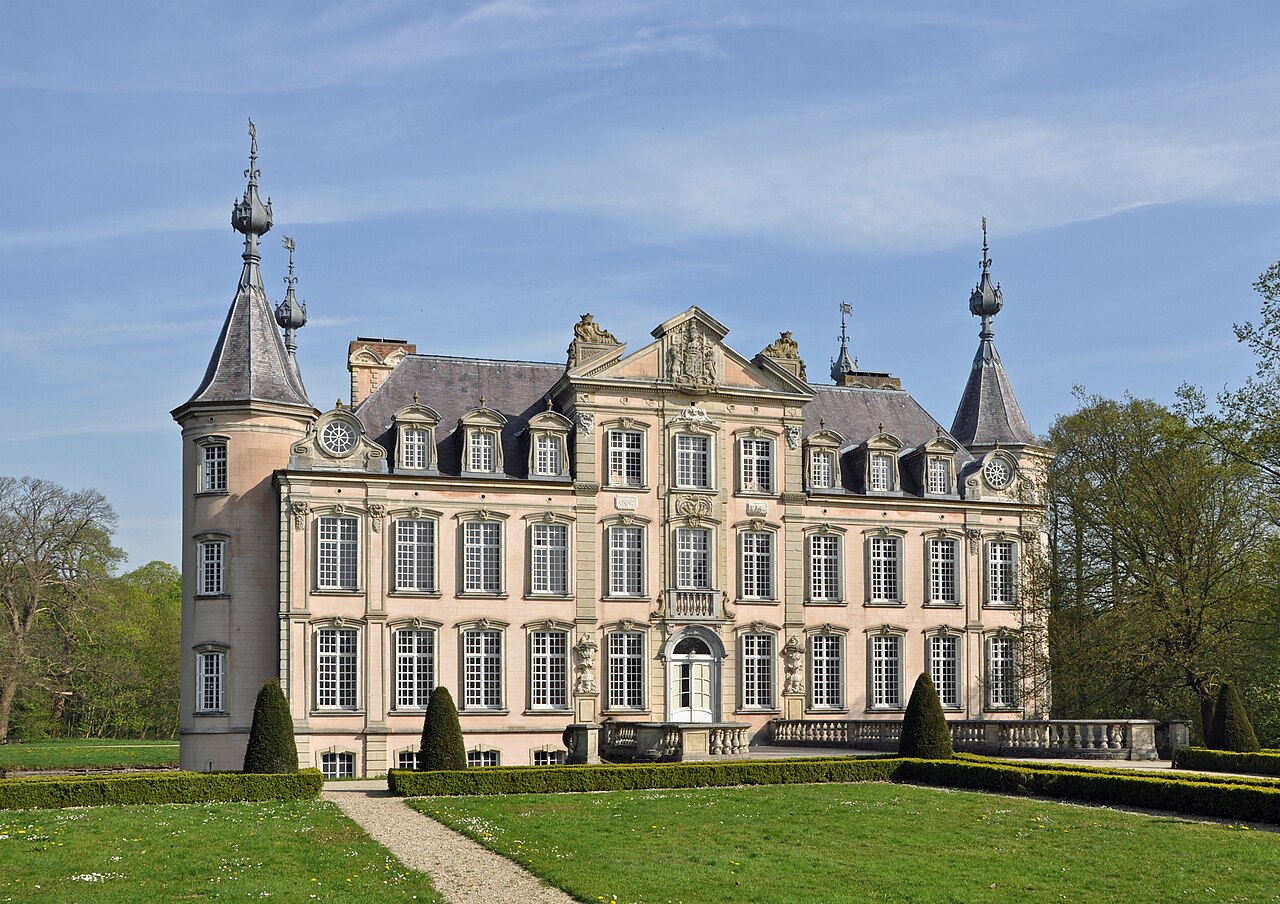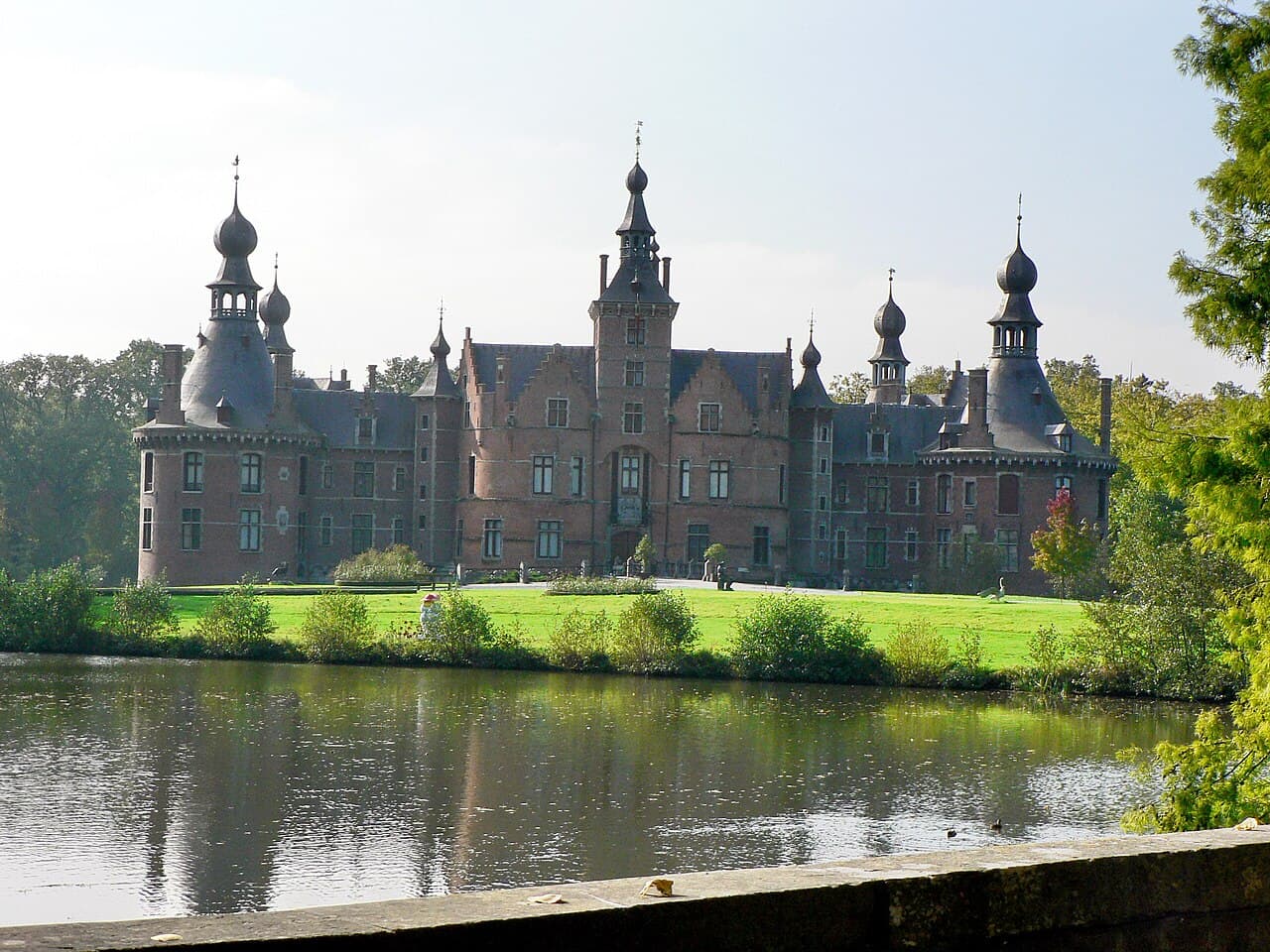
Ooidonk Castle
Ooidonk Castle, locally known as Kasteel Ooidonk, is a magnificent historic estate located east of the village of Bachte-Maria-Leerne in the province of East Flanders, within the Flemish region of Belgium. This castle stands as a prominent example of the Spanish-Flemish Renaissance architectural style that flourished in the 16th century, embodying centuries of military, political, and residential evolution.
The castle's name derives from the word 'hodonk', meaning a higher piece of land in a swampy area, which aptly describes its strategic location on elevated ground surrounded by wetlands. This natural elevation was crucial for its original defensive purpose, guarding the approaches to the city of Ghent and securing the vital river Leie.
Medieval origins and strategic importance
The site of Ooidonk Castle first hosted a fortress built around 1230, commissioned by Nikolaas van Hoendunc, lord of Nevele. This early stronghold was part of a defensive line intended to protect Ghent, one of the most important cities in Flanders during the Middle Ages. Though the exact appearance of this initial fortress remains unknown, it laid the foundation for all subsequent constructions.
After destruction by Louis de Male, count of Flanders, in the 14th century, the fortress was rebuilt and expanded by Jean de Fosseux from 1381. Significant enhancements included the addition of a moat system, drawbridges, and four fortified towers, transforming the site into a formidable late-medieval castle with strong defensive features typical of the period.
Ownership and conflicts in the 15th and 16th centuries
In the 15th century, the castle passed into the possession of the French noble family of Montmorency through the marriage of Jeanne de Fosseux to Jean de Montmorency. The Montmorency family held the castle for approximately 160 years, a period marked by significant turmoil. The castle was twice destroyed by fire: first in 1491 due to the owners' allegiance to Maximilian of Austria, and again in 1579 during the religious wars that engulfed the region.
One of the most notable figures associated with Ooidonk during this era was Philippe II de Montmorency-Nivelle, also known as Count Hoorn, a prominent nobleman and rebel against Spanish rule in the Netherlands. Born at Ooidonk Castle, he was executed in 1568 for his opposition to Spanish authority, underscoring the castle's role in the turbulent political landscape of the 16th century.
Renaissance transformation under Maarten della Faille
Following the devastation of the religious wars, the castle was sold in 1595 to Maarten della Faille, an affluent Antwerp banker. Della Faille undertook a comprehensive reconstruction of Ooidonk Castle, reshaping it in the Spanish-Flemish Renaissance style that reflected the wealth and artistic tastes of the period.
This transformation gave the castle its current appearance, characterized by elegant façades, ornate gables, and refined stonework, blending defensive features with residential comfort. The castle was no longer merely a fortress but a stately home designed to impress and accommodate noble living.
The della Faille family, later known as the Barons of Nevele, maintained ownership for two centuries, preserving the Renaissance character of the estate.
19th-century restoration and modern use
In 1864, the castle and its grounds were acquired by Senator Henri t'Kint de Roodenbeke, a prominent Belgian statesman who later served as Senate President and Minister of State. Under his ownership, a significant restoration began in 1870, led by the French architect Parent.
This restoration adapted the castle to 19th-century living standards, remodeling the interior extensively while preserving much of the exterior's Renaissance charm. Some pseudo-Renaissance elements were added to the façade, but the overall historic character remained intact. The interior redesign transformed Ooidonk into a comfortable mansion that still reflects the grandeur of its noble heritage.
Today, Ooidonk Castle remains a private residence of the t'Kint de Roodenbeke family, with the sixth Count and Countess and their children maintaining the estate. The castle and its picturesque park, featuring a deep moat and proximity to the gently flowing Lys river, are open to the public for visits, although interior access is limited to special occasions.
Architectural features and landscape
Ooidonk Castle is renowned for its harmonious blend of fortified medieval elements and Renaissance residential architecture. The castle is surrounded by a water-filled moat, a defensive feature dating back to its medieval origins, accessible by a drawbridge. The four corner towers provide a striking silhouette, emphasizing its historic role as a fortress.
The façades exhibit the Flemish Renaissance style with stepped gables, intricate brick and stone patterns, and decorative finials. Inside, the castle showcases 19th-century interiors with grand halls, ornate woodwork, and period furnishings that illustrate the lifestyle of Belgian nobility during that era.
The surrounding parkland enhances the castle's aesthetic appeal, combining natural water features with manicured gardens that reflect the estate's long-standing aristocratic heritage.
Historical significance and cultural heritage
Ooidonk Castle stands as a testament to the layered history of Flanders, reflecting the region's medieval military conflicts, Renaissance cultural flourishing, and 19th-century aristocratic lifestyle. Its association with notable historical figures such as Philippe II de Montmorency-Nivelle and its resilience through wars and reconstructions highlight its importance.
As a well-preserved example of a late-medieval fortress turned Renaissance residence, Ooidonk Castle offers valuable insights into the architectural and social transformations that shaped Belgian noble estates over centuries. Its continued occupation and careful maintenance by the t'Kint de Roodenbeke family ensure that this cultural landmark remains vibrant and accessible.
Visitor experience and accessibility
Visitors to Ooidonk Castle can explore the extensive grounds and admire the castle's impressive exterior and moat. Guided tours are occasionally available for the interior, providing a glimpse into the aristocratic life of the 19th century. The castle's location near Ghent makes it a convenient destination for those interested in Flemish history and architecture.
The estate also hosts cultural events and exhibitions, enriching the visitor experience and promoting the preservation of Flemish heritage.
Frequently asked questions (FAQ)
- How do I get to Ooidonk Castle?
- Ooidonk Castle is located at Ooidonkdreef 9 in Belgium, easily accessible by car or public transport. If you are traveling by train, the nearest station is in Deinze, from where you can take a taxi or local bus to the castle.
- What is the historical significance of Ooidonk Castle?
- Ooidonk Castle is a stunning example of Renaissance architecture, dating back to the 15th century. It has been an important site for Belgian history and has undergone several renovations, preserving its unique architectural features and historical artifacts.
- When was Ooidonk Castle built?
- Construction of Ooidonk Castle began in the late 15th century, with the original structure completed in the early 16th century. Over the centuries, it has been expanded and remodeled, reflecting various architectural styles while maintaining its historic charm.
- Can I take guided tours of Ooidonk Castle?
- Yes, guided tours are available at Ooidonk Castle, providing visitors with in-depth knowledge about its history, architecture, and the surrounding gardens. It's advisable to check the official website for tour schedules and availability prior to your visit.
- Why is Ooidonk Castle considered an architectural gem?
- Ooidonk Castle is renowned for its beautiful Renaissance style, characterized by its elegant towers, intricate stonework, and picturesque moat. The well-preserved interiors and lush gardens further enhance its appeal, making it a must-visit for architecture enthusiasts.
- Is it possible to host events at Ooidonk Castle?
- Yes, Ooidonk Castle offers facilities for hosting various events, including weddings, corporate gatherings, and private functions. For more information regarding availability and event planning, it's best to contact the castle's management directly.
- What are the opening hours for Ooidonk Castle?
- Ooidonk Castle is typically open to visitors from April to October, with specific hours varying by day. It is recommended to check the official website for the most current opening hours and any seasonal changes.
- What are the ticket prices for visiting Ooidonk Castle?
- Ticket prices for Ooidonk Castle vary depending on the season and the type of tour. Discounts may be available for children, seniors, and groups, so it's a good idea to consult the castle's official website for detailed pricing information.
- When is the best time to visit Ooidonk Castle?
- The best time to visit Ooidonk Castle is during the spring and summer months when the gardens are in full bloom and the weather is pleasant. Additionally, special events and exhibitions often take place during this time, enhancing the visitor experience.
- Are there any nearby attractions to visit along with Ooidonk Castle?
- Yes, the area surrounding Ooidonk Castle boasts several attractions, including parks, local museums, and charming villages. Visitors can also explore the beautiful countryside and enjoy outdoor activities such as hiking and cycling in the nearby scenic areas.
Photo gallery

Photo by Zwager•Public domain
Information
Website
Visit websiteSources & official resources
Verify the information above using these authoritative references.
Loading map...
Visitor reviews
No reviews yet. Been here? Write the first review and help other travelers!
Write the first reviewVisited this castle? Share your experience
Your review helps other travelers and adds first-hand knowledge to our encyclopedia.