Kasteel van Ooidonk
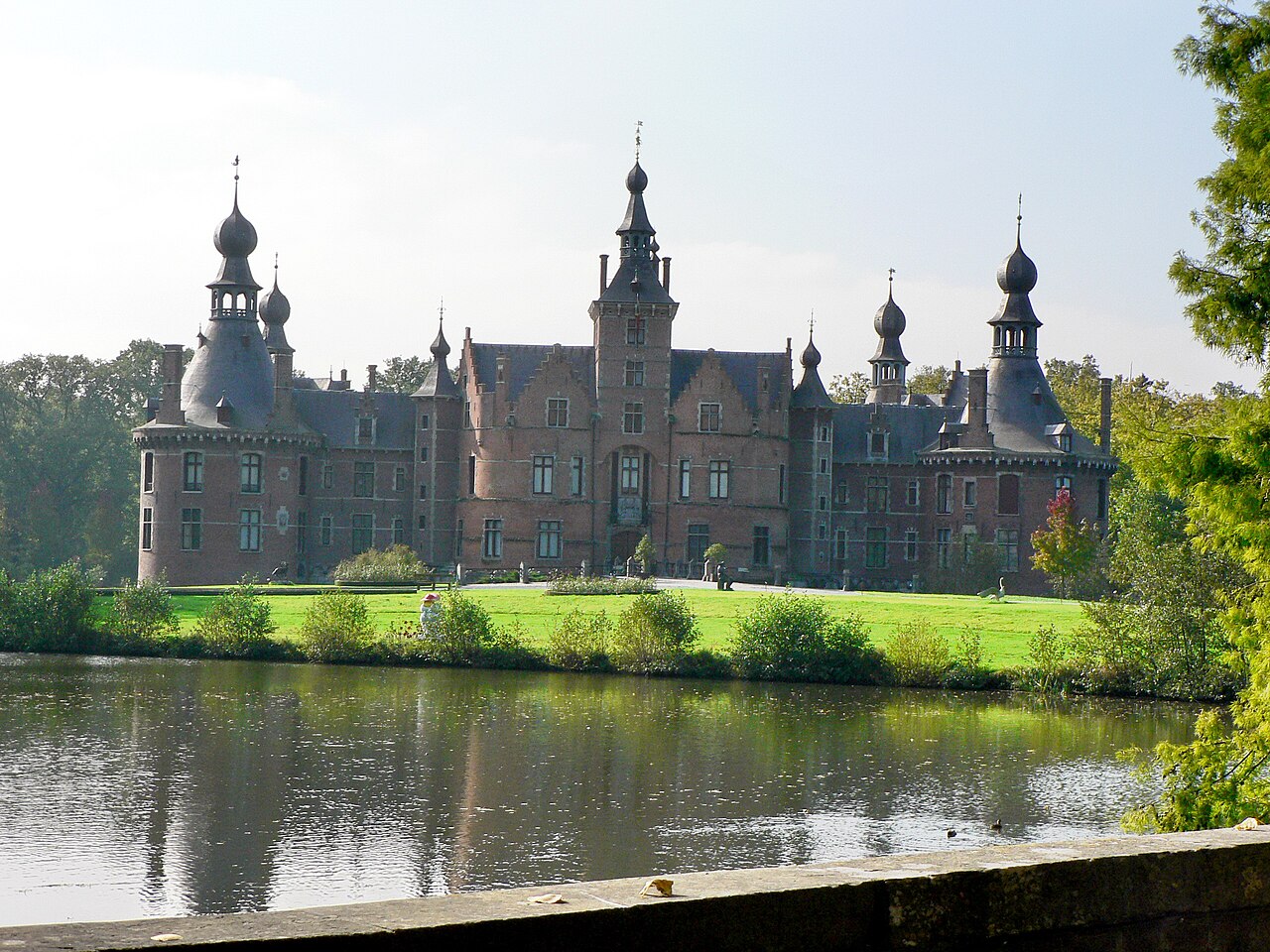
Kasteel van Ooidonk stands as a remarkable example of a Flemish Renaissance water castle located in Deinze, Belgium, near the city of Ghent. Its strategic position on a bend of the Leie River and its construction on a sandy hill highlight its historical role as a defensive stronghold controlling river access and protecting the region from invasion. The castle’s origins date back to the 12th century, when it began as a fortified farmstead, evolving over centuries into a noble residence with imposing fortifications and elegant Renaissance architectural features.
The early history and medieval fortifications
The site of Kasteel van Ooidonk first emerged in the early medieval period as a defensive outpost guarding the approaches to Ghent. Initially, it was a fortified farmstead on a sandy elevation, serving both agricultural and military purposes. By the 14th century, it had developed into a stone manor surrounded by a water-filled moat, reflecting the growing importance of the location.
The castle was originally constructed as a hill castle, utilizing the natural elevation to enhance its defenses. In 1230, a fortress was established on the site to fortify the river and protect Ghent. This early fortress was destroyed by Louis de Male, Count of Flanders, but was rebuilt and expanded from 1381 onwards by Jean de Fosseux. He added significant defensive features including moats that made the castle accessible only by a drawbridge, and strengthened the fortifications with four robust towers at the corners of the enclosure.
Destruction and rebuilding during conflicts
The castle’s turbulent history includes multiple episodes of destruction during regional conflicts. It was destroyed twice in the late medieval period, first in 1491 during a Flemish uprising against Emperor Maximilian I, and again in 1579 amid the religious wars and Ghent’s rebellion against Spanish rule under King Philip II. Each time, the castle was rebuilt, demonstrating its strategic and symbolic importance.
Following the devastating fire of 1579, the castle was acquired in 1592 by Maarten della Faille, a wealthy Antwerp banker, who undertook a comprehensive reconstruction. He rebuilt the castle in the Flemish Renaissance style, completing the work by 1595. This reconstruction gave the castle much of its present-day form and architectural character.
Architectural features and Renaissance influence
Kasteel van Ooidonk is classified as a water castle, built on an almost square artificial island surrounded by a wide moat. The layout features a spacious central courtyard enclosed by straight defensive walls with towers at each corner, a typical Renaissance adaptation of medieval fortifications to combine defense with residential comfort.
The main residential building occupies the northeastern side of the island and is accessed via a sturdy stone bridge, which replaced the original drawbridge. The castle exterior showcases hallmark Renaissance architectural elements such as stepped gables, numerous ornate chimneys, and corner towers. These features echo the style of the famous Loire Valley châteaux, notably Château de Chambord, reflecting the influence of French Renaissance aesthetics on Flemish noble architecture.
The castle’s facade preserves the grandeur of the late 16th-century design, while the interiors were remodeled in the 19th century in a neo-Flemish Renaissance style under the direction of French architect Clément Parent. This restoration, commissioned by Count Henri t’Kint de Roodenbeke after he purchased the property in 1864, also introduced a neo-Byzantine family chapel and enhanced the estate with a wrought iron gatehouse bearing the family coat of arms.
Estate and grounds
The castle is set within a large estate covering approximately 140 hectares, featuring well-maintained French-style gardens, a caretaker’s house, and several outbuildings. The landscape design complements the castle’s historic character, preserving its setting as a noble residence and fortified estate.
Historical ownership and heritage status
Ownership of Kasteel van Ooidonk has passed through several prominent families. Initially part of the lordship of Nevele, it was held by Nikolaas van Hoenduncs in the early 14th century. Through marriage, it came under the French Montmorency family in the 15th century, reflecting the castle’s integration into broader European noble networks.
The property was acquired by the t’Kint de Roodenbeke family in the 19th century, who have maintained the castle and estate continuously since. Their stewardship included significant restorations that preserved the castle’s Renaissance character while adapting it for modern use.
Since 1944, Kasteel van Ooidonk and its estate have been protected as heritage monuments, with the entire domain receiving official heritage status by 1995. This protection ensures the conservation of its architectural integrity and historical significance for future generations.
Preservation and current condition
Today, Kasteel van Ooidonk remains well preserved, with its original Renaissance features largely intact. The castle’s defensive structures, including its moat, towers, and walls, are maintained in excellent condition, providing visitors with a clear sense of its historical function as a fortified residence.
The 19th-century restorations have sensitively preserved the castle’s exterior while enhancing its interiors, blending historical authenticity with comfortable living spaces. The estate’s gardens and surrounding landscape continue to reflect the noble heritage and aesthetic traditions of the Flemish Renaissance.
Visiting and cultural significance
Kasteel van Ooidonk is not only a private residence but also an important cultural landmark in Belgium. Its combination of medieval fortifications and Renaissance elegance makes it a valuable example of architectural evolution over centuries. The castle’s location near Ghent places it within a rich historical region known for its medieval and Renaissance heritage.
Visitors to the castle can appreciate its architectural grandeur, historical depth, and the beautifully preserved estate grounds. The castle’s ongoing conservation efforts highlight its significance as a monument of Flemish history and noble culture.
Frequently asked questions (FAQ)
- How do I get to Kasteel van Ooidonk?
- Kasteel van Ooidonk is located in Deinze, Belgium, easily accessible by car and public transport. If traveling by train, the nearest station is Deinze, from which you can take a taxi or a short bus ride to the castle.
- What is the historical significance of Kasteel van Ooidonk?
- Kasteel van Ooidonk dates back to the 15th century and is a prime example of Renaissance architecture in Belgium. It has been a private residence for centuries and is known for its rich history, including its role in the local nobility and cultural heritage.
- When was Kasteel van Ooidonk built?
- The origins of Kasteel van Ooidonk trace back to the 15th century, with significant renovations occurring in the 18th century. The castle showcases various architectural styles developed over the centuries, reflecting its long-standing prominence in the region.
- Can I take guided tours of Kasteel van Ooidonk?
- Yes, guided tours are available for visitors who wish to explore the castle's rich history and stunning architecture. These tours provide insights into the castle's past, the surrounding gardens, and the art collections housed within.
- Is the castle accessible for visitors with disabilities?
- Kasteel van Ooidonk strives to be accessible to all visitors, with some facilities accommodating those with mobility challenges. However, due to the historical nature of the building, certain areas may have limitations, so it's advisable to check in advance.
- What are the opening hours of Kasteel van Ooidonk?
- Kasteel van Ooidonk is typically open to visitors from April to October, with varying hours depending on the season. It is best to check the castle's official website for the most up-to-date information on opening times and any special events.
- What is the ticket price for visiting Kasteel van Ooidonk?
- Ticket prices for Kasteel van Ooidonk vary based on age and group size, with discounts available for students and seniors. Children under a certain age may enter for free, making it an affordable destination for families.
- When is the best time to visit Kasteel van Ooidonk?
- The best time to visit Kasteel van Ooidonk is during the spring and early summer months when the gardens are in full bloom. Additionally, visiting during weekdays can provide a quieter experience compared to weekends.
- Are there any nearby attractions to visit along with Kasteel van Ooidonk?
- Yes, nearby attractions include the picturesque town of Deinze and the scenic Leie River, which offers various outdoor activities. Additionally, the region boasts several museums and parks that complement a day trip to the castle.
Information
Website
Visit websiteSources & official resources
Verify the information above using these authoritative references.
Loading map...
Visitor reviews
No reviews yet. Been here? Write the first review and help other travelers!
Write the first reviewVisited this castle? Share your experience
Your review helps other travelers and adds first-hand knowledge to our encyclopedia.