Podoliniec
Podoliniec castle is a modest yet historically significant late medieval bastioned fortress located in the town of Podoliniec in Slovakia. Established in the early 15th century, this castle reflects the turbulent political and military history of the region, especially the complex relations between the Kingdom of Hungary and the Kingdom of Poland. Its strategic position within the town and its fortifications highlight the importance of urban defense mechanisms during the late medieval period.
The origins of Podoliniec castle date back to the early 1400s, a time when the town itself was rapidly developing under royal patronage. Before 1382, Podoliniec had already been granted numerous royal privileges, which necessitated the construction of stone walls to protect the growing urban settlement. In 1408, King Sigismund of Luxembourg granted the castle of Lubownia and surrounding lands, including Podoliniec, in fief to Imrich of Perin. The following year, Imrich received royal permission to erect a fortress or castle made of stone or wood within the town's boundaries. This led to the construction of a stone castle by 1412 near the southern part of the town, adjacent to the Upper Gate.
The architectural layout and features
While detailed records of the castle's original appearance are scarce, it is believed that Podoliniec castle had a roughly trapezoidal plan. The fortress likely featured a residential building integrated into the town's defensive walls, possibly including a small tower projecting beyond the wall line. Supporting structures such as economic buildings would have complemented the castle's function. Despite being situated within the urban area, the castle was separated from the town by its own defensive wall and moat, emphasizing its role as a fortified stronghold independent of the municipal defenses.
Bastioned fortress characteristics
Podoliniec castle exemplifies the characteristics of a bastioned fortress, a style of fortification that became increasingly prominent in the late medieval and early Renaissance periods. This type of fortress incorporated angled bastions to better deflect artillery fire and improve defensive coverage. Although the castle was relatively small, its bastions and curtain walls would have provided enhanced protection against siege warfare, reflecting advancements in military architecture during the 15th century.
Historical significance and political context
In 1412, the same year the castle was completed, King Sigismund elevated Podoliniec to the status of a free royal town. That year, in Zagreb, Sigismund pledged several towns including Podoliniec to the Kingdom of Poland in exchange for a substantial loan of 37,000 Prague groschen. This pledge included the castle and its lands, which meant that Podoliniec and other Spiš towns remained under Polish administration for approximately 360 years, a unique arrangement in Central European history.
During the 15th century, Podoliniec castle was garrisoned by a permanent Polish military presence. It successfully withstood an attack by the Hussites led by Jan Jiskra, a notable military leader of the period. This defense underscored the castle's strategic importance in the region's ongoing conflicts, including succession disputes for the Hungarian throne.
Later ownership and renovations
In 1591, the Spiš starosty, including Podoliniec and its castle, was purchased by Sebastian Lubomirski, a prominent Polish noble. The Lubomirski family retained control for the next century and a half. Two years after acquiring the starosty, Sebastian initiated renovations of the castle, reflecting both the need for upkeep and the changing tastes of the period.
His son, Stanisław Lubomirski, was a fervent supporter of the Reformation and invited the Piarist order to Podoliniec. The Piarists founded a college and school within the town and constructed a monastery and church outside the Lower Gate. Before their monastery was built, the monks used two rooms within the castle, a fact that has led to some confusion about the castle's location relative to the monastic buildings.
Architectural evolution and current state
A preserved description from 1765 depicts Podoliniec castle as a small palace-like structure. The castle's cellars served as pantries, the first floor housed administrative offices, the second floor contained five rooms, and the third floor featured three chambers and a large representative hall. However, by this time, the uppermost floor was in poor condition and no longer in use due to structural instability.
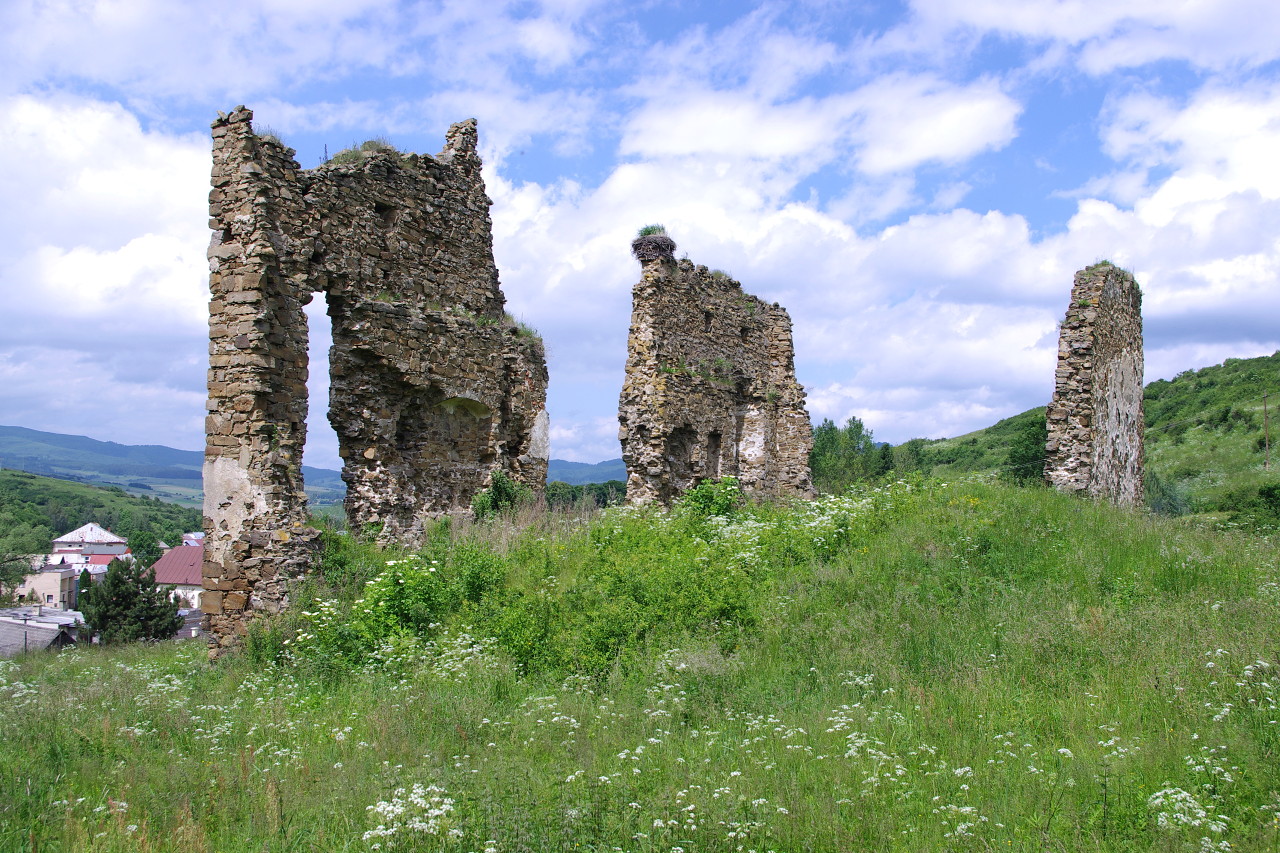
By the late 18th century, the castle had fallen into ruin and was likely dismantled. The main palace building was subsequently rebuilt and repurposed for municipal use, currently serving as the town hall. Remnants of the original fortifications survive nearby, including sections of the town walls and towers, which may have been incorporated into the castle's construction.
Preservation and cultural heritage
Today, Podoliniec castle is considered well preserved in terms of its remaining structures and historical footprint. The surviving walls and bastions offer valuable insights into the defensive architecture of the late medieval period in Central Europe. The castle's history as a contested border fortress and its long association with Polish administration make it a site of significant cultural heritage and interest for historians and visitors alike.
Visiting Podoliniec castle
Visitors to Podoliniec can explore the castle's remains alongside the town's historic center. The castle's location near the town hall provides easy access to the site. Although much of the original structure has been altered or lost, the surviving bastions and walls convey the castle's former strength and strategic importance.
Podoliniec's rich history, including its role in Polish-Hungarian relations and its connection to notable noble families, enhances the visitor experience. The town itself offers additional attractions such as the Piarist monastery and church, reflecting the intertwined religious and military history of the area.
Architectural and historical highlights for visitors
- Bastioned walls and towers showcasing late medieval military design.
- Town hall building incorporating the former castle palace.
- Remnants of the moat and defensive walls surrounding the castle.
- Nearby Piarist monastery and church illustrating the religious history linked to the castle.
Frequently asked questions (FAQ)
- When was Podoliniec castle built and by whom?
- Podoliniec castle was constructed by 1412 after King Sigismund of Luxembourg granted permission in 1409 to Imrich of Perin to build a stone or wooden fortress within the town.
- What architectural style characterizes Podoliniec castle?
- Podoliniec castle is a late medieval bastioned fortress featuring defensive walls, bastions, and a trapezoidal plan typical of 15th-century military architecture.
- Is Podoliniec castle open to visitors today?
- Yes, visitors can explore the castle remains and the town hall building that incorporates the former castle palace, along with nearby historic sites in Podoliniec.
- What historical events is Podoliniec castle known for?
- The castle played a key role during the 15th-century Polish-Hungarian conflicts, defended against Hussite attacks, and was part of a unique pledge transferring Spiš towns to Poland for over 360 years.
- Are there any notable architectural remnants at Podoliniec castle?
- Yes, remnants include bastioned walls, towers, sections of the town's defensive walls, and the moat, which illustrate the castle's defensive features.
Information
Current owner
Municipality
Loading map...
Visitor reviews
No reviews yet. Been here? Write the first review and help other travelers!
Write the first reviewVisited this castle? Share your experience
Your review helps other travelers and adds first-hand knowledge to our encyclopedia.