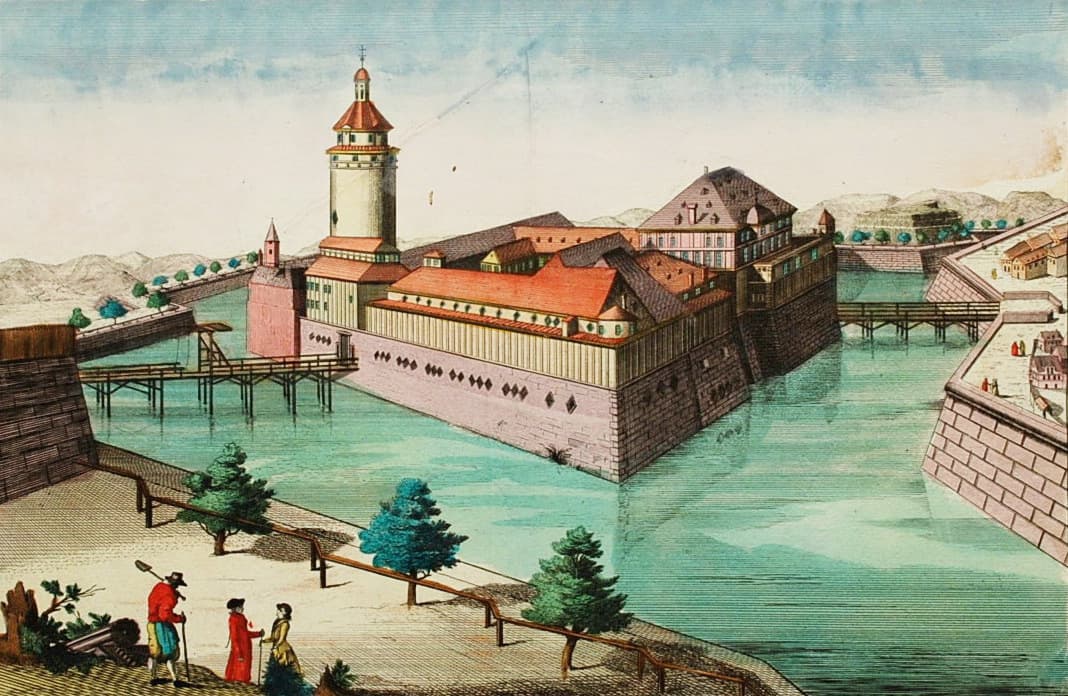
Pleissenburg
The Pleissenburg was a prominent medieval hill castle located in the city of Leipzig, in the region of Saxony, modern-day Germany. Constructed in the 13th century, it was originally built by Theodoric I, Margrave of Meissen, a notable figure of the High Medieval period. The castle took its name from the nearby Pleisse Mill Race (German: Pleißemühlgraben), a watercourse that runs close to the site and was commonly shortened to "Pleisse."
Historical significance and origins
The Pleissenburg served as a strategic fortress and administrative center during the High Medieval era. Its location on a hill provided a commanding view of the surrounding area, which was crucial for defense and control over the trade routes passing through Leipzig. The castle's establishment by Theodoric I reflected the expansion of territorial power by the Margraves of Meissen in the region.
Architectural features and layout
The castle was typical of hill castles of the 13th century, featuring robust stone walls and defensive structures designed to withstand sieges. While detailed architectural plans from the original construction have not survived, historical records indicate that Pleissenburg included a keep (donjon), fortified curtain walls, and a gatehouse controlling access. The proximity to the Pleisse Mill Race may have allowed for a defensive moat or water defenses, a common feature in medieval castles to enhance protection.
Defensive elements
The castle's elevated position was a natural defense, complemented by man-made fortifications. The curtain walls were likely equipped with battlements and arrow slits for archers. Towers at strategic points would have provided vantage points to monitor approaching threats. The gatehouse would have been heavily fortified, possibly with a portcullis and murder holes to repel attackers.
Residential and administrative spaces
Inside the walls, Pleissenburg housed residential quarters for the ruling family and their retainers, as well as administrative offices. The great hall would have served as a center for gatherings, judicial proceedings, and feasts. Storage rooms and stables supported the castle's self-sufficiency during times of siege.
Role in Leipzig's development
Pleissenburg was more than a military fortress; it played a significant role in the urban development of Leipzig. The castle's presence attracted merchants, artisans, and settlers, contributing to the growth of the town around it. Over time, Leipzig evolved into a major trade hub, partly due to the security and governance provided by the castle's occupants.
Later history and fate
Throughout the centuries, Pleissenburg underwent various modifications reflecting changes in military technology and architectural styles. However, by the early modern period, the castle lost its military importance. It was eventually demolished in the 19th century to make way for urban expansion and new construction projects in Leipzig. Today, no visible remains of the original Pleissenburg castle exist, but its historical footprint remains significant in the city's heritage.
Legacy and cultural importance
The legacy of Pleissenburg endures in Leipzig's historical narrative. It symbolizes the city's medieval origins and the strategic importance of Saxony during the High Medieval period. Archaeological studies and historical research continue to shed light on its structure and role. The castle's name is preserved in local place names and cultural memory, marking its lasting impact on the region.
Frequently asked questions (FAQ)
- What is the historical significance of Pleissenburg?
- Pleissenburg, built in the 15th century, played a vital role in the defense of Leipzig during various conflicts, including the Thirty Years' War. It served as a royal residence and later as a prison, reflecting the turbulent history of the region.
- When was Pleissenburg constructed?
- Construction of Pleissenburg began in 1480 and was completed in the early 16th century. The castle has undergone various renovations and restorations over the centuries, preserving its historical architecture.
- Can I visit Pleissenburg?
- Yes, Pleissenburg is open to visitors, offering guided tours that delve into its rich history and architectural features. Be sure to check the official website for any special events or exhibitions during your visit.
- What are the opening hours of Pleissenburg?
- Pleissenburg typically opens to the public from 10 AM to 6 PM, but hours may vary seasonally or during holidays. It's advisable to verify current hours online before planning your visit.
- Is there an admission fee to enter Pleissenburg?
- Yes, there is an admission fee for guided tours of Pleissenburg, with discounts available for students and seniors. Prices and any special rates can be found on the castle's official website.
- What is the best time to visit Pleissenburg?
- The best time to visit Pleissenburg is during the spring and fall when the weather is mild and the crowds are smaller. Summer can be busy, but the castle’s gardens are particularly beautiful during this season.
- Is Pleissenburg accessible for visitors with mobility challenges?
- Yes, Pleissenburg is equipped with facilities to assist visitors with mobility challenges. However, some areas may have limited access due to the castle's historic architecture, so it's a good idea to contact ahead for specific inquiries.
- Are there any nearby attractions to explore after visiting Pleissenburg?
- Absolutely! After visiting Pleissenburg, you can explore the beautiful Leipzig city center, including St. Thomas Church and the Museum of Fine Arts. The city's rich cultural scene offers plenty of options for a full day of sightseeing.
Photo gallery

Information
Loading map...
Visitor reviews
No reviews yet. Been here? Write the first review and help other travelers!
Write the first reviewVisited this castle? Share your experience
Your review helps other travelers and adds first-hand knowledge to our encyclopedia.


