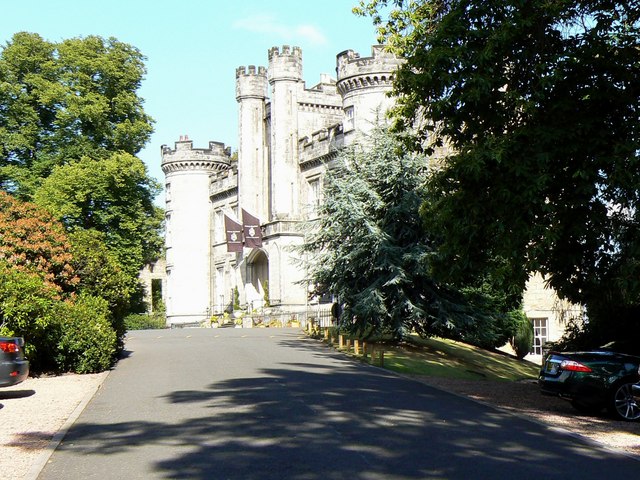
Plean Castle
Plean Castle stands as a notable example of a 15th-century Scottish tower house combined with a 16th-century manor house, located near Stirling in Scotland. This historic estate showcases the evolution of Scottish noble residences from fortified medieval structures to more comfortable domestic dwellings. The castle's origins trace back to a royal land grant by King Robert the Bruce shortly after 1314, when he bestowed the barony of Plean (also known as Plane) to John d’Erth. This grant laid the foundation for the estate that would develop into the present-day castle complex.
The origins and early history of Plean Castle
The core of Plean Castle is its oblong tower house, which likely dates from the 15th century. The tower was probably constructed by the Somerville family, who acquired the lands of Plean through marriage in 1449. This acquisition marked the beginning of the Somervilles' long association with the estate. Tower houses like Plean were common in Scotland during the late medieval period, serving both as fortified residences and symbols of noble status.
In about 1528, an adjoining manor house was built, expanding the living quarters and reflecting a shift towards more comfortable and domestic architecture. This manor house was connected to the tower by a wooden walkway, creating an integrated complex that combined defensive features with residential convenience. The manor was constructed over a vaulted basement that survives to this day, demonstrating architectural continuity and the practical use of subterranean spaces for storage and security.
Ownership changes and historical significance
By the mid-17th century, the estate underwent significant changes in ownership. In 1643, James Somervell, 8th Lord of Plane, sold the barony and lands to pay off debts. Subsequently, the property passed to the Nicholson and Elphinstone families. Over time, both the tower house and manor fell into disrepair, reflecting the challenges of maintaining such estates through turbulent periods.
The castle also played a role in the Jacobite uprising of 1745, when Jacobite troops used the property as a military quarters. This connection places Plean Castle within the wider context of Scotland's 18th-century political and military upheavals.
Architectural features and restoration efforts
The tower house
The tower house originally rose to three stories plus a garret, topped with a corbelled parapet. This parapet, supported by stone corbels, provided defensive battlements typical of Scottish tower houses. Inside, the tower contains a great hall featuring painted ceiling beams and a large fireplace, which served as the central gathering and living space.
The manor house
The adjoining manor house, built around 1528, is notable for its construction over a vaulted basement, an architectural feature that enhances structural stability and storage capacity. The manor is connected to the tower by a wooden walkway, forming a compound that balanced defense with domestic comfort.
Restoration history
In 1908, Sir David Menzies undertook restoration work to revive the castle buildings, including rebuilding parts and adding an extra floor to the tower to improve habitability. Despite these efforts, by the 1930s the structures again fell out of regular use and began to deteriorate.
Between 1991 and 1997, extensive restoration was carried out by Nancy and John Patrick Wright and their sons. Their work stabilized the ruins and adapted the buildings for residential and holiday accommodation, preserving the historical fabric while making the estate functional for modern use.
Current status and heritage significance
Today, Plean Castle is recognized as a category B listed building, highlighting its importance as a structure of regional historical and architectural value. The castle's combination of a medieval tower house with a Renaissance-era manor offers valuable insight into the evolution of Scottish noble residences over several centuries.
The surrounding grounds include a sculpture garden and a large pond, which complement the historic buildings and enhance the site's aesthetic appeal. The preservation of key architectural elements, such as the tower's great hall and the manor's vaulted basement, ensures that visitors and residents alike can appreciate the castle's rich heritage.
Architectural context and significance
Plean Castle exemplifies the typical late medieval Scottish tower house design, characterized by its vertical emphasis, defensive features, and compact footprint. The addition of the manor house in the early 16th century reflects the broader architectural trend in Scotland towards combining fortified residences with more comfortable living spaces as political stability increased.
The castle's corbelled parapet and vaulted basement are significant architectural features demonstrating the technical skill of Scottish masons during the period. The painted beams and large fireplace within the great hall highlight the blend of functionality and domestic refinement sought by the castle's inhabitants.
Frequently asked questions (FAQ)
- What is the historical significance of Plean Castle?
- Plean Castle has a rich history dating back to the 18th century and is notable for its stunning architecture and gardens. It has served various roles over the years, including as a family residence and a location for notable events in Scottish history.
- When was Plean Castle built?
- Plean Castle was originally constructed in the early 1700s, with significant renovations and expansions occurring throughout the 19th century. Its design reflects the architectural styles of the period, making it an interesting study for visitors interested in historical architecture.
- Can I visit Plean Castle?
- Yes, Plean Castle is open to visitors, although it is advisable to check for specific visiting hours and any special events that may affect access. Guided tours are often available to provide insights into the castle's history and architecture.
- What are the opening hours for Plean Castle?
- Plean Castle typically opens to the public from April to September, with varying hours depending on the day of the week. It is recommended to check the official website or contact the castle directly for the most current opening times before planning your visit.
- Is it possible to hold events at Plean Castle?
- Yes, Plean Castle offers facilities for hosting various events, including weddings and corporate gatherings. The picturesque surroundings and historic charm make it a popular choice for memorable occasions.
- What are the ticket prices for visiting Plean Castle?
- Ticket prices for Plean Castle vary depending on the type of visit, such as guided tours or self-guided access. Discounts may be available for children, seniors, and groups, so checking the official website for the latest pricing information is advisable.
- When is the best time to visit Plean Castle?
- The best time to visit Plean Castle is during the spring and summer months when the gardens are in full bloom and the weather is generally pleasant. Special events and guided tours are often more frequent during this period, enhancing the overall visitor experience.
- Are there any nearby attractions to visit while in Stirling?
- Yes, while visiting Plean Castle, you can explore several nearby attractions, such as the historic Stirling Castle and the Wallace Monument. The area offers a rich tapestry of Scottish history and stunning landscapes, making it an excellent destination for a full day of exploration.
- How do I get to Plean Castle?
- Plean Castle is easily accessible by car and public transport from Stirling. Detailed directions can be found on the castle's official website, which also provides information on parking facilities available for visitors.
Information
Website
Visit websiteSources & official resources
Verify the information above using these authoritative references.
Loading map...
Visitor reviews
No reviews yet. Been here? Write the first review and help other travelers!
Write the first reviewVisited this castle? Share your experience
Your review helps other travelers and adds first-hand knowledge to our encyclopedia.