Plavecký hrad
Plavecký hrad is a significant medieval castle ruin perched above the village of Plavecké Podhradie in Slovakia. Constructed in the mid-13th century by the Kingdom of Hungary, it served as a crucial royal border stronghold designed to defend the kingdom's western frontier against neighboring powers. The castle's strategic location on a hilltop provided commanding views and facilitated communication with nearby fortresses such as Branč, Ostrý Kameň, and Korlátka castles through signal stations, underscoring its military importance in the region.
Historical context and foundation
The origins of Plavecký hrad trace back to the reign of King Béla IV of Hungary, who initiated a widespread fortification campaign following the devastating Mongol invasion of 1241–1242. The castle was built between approximately 1256 and 1273 to bolster defenses along the kingdom's vulnerable western border with the Kingdom of Bohemia. The first documented mention of the castle dates to 1273 during a battle involving Hungarian forces and troops loyal to Přemysl Otakar II, King of Bohemia. The castle's construction is attributed to Detrich, son of Kunt, the mayor of Bratislava at the time, reflecting the importance placed on securing this frontier region.
Ownership and architectural evolution
Throughout its history, Plavecký hrad changed hands among several noble families, each contributing to its development and fortification. In 1398, it came under the ownership of Stibor of Stiborice, a prominent nobleman. Subsequently, the castle was held by the counts of Svätý Jur and Pezinok, and later by the Serédy family.
The 16th century marked a period of significant transformation when the wealthy Fugger family acquired the castle. They enhanced its defenses by constructing a substantial bastion to protect the steep access routes. The castle also became a cultural center during the Reformation, housing one of Slovakia's earliest printing presses between 1579 and 1584 under the Balaš family's ownership. This press produced Protestant religious texts by Peter Bornemis, highlighting the castle's role in the religious and intellectual movements of the era.
Late 16th-century renovations introduced Renaissance architectural features and expanded the lower courtyards, reflecting evolving military technologies and aesthetic preferences. In the 17th century, the castle was further adapted to withstand artillery warfare through the addition of artillery bastions, a response to the increasing use of cannon in European conflicts.
Military significance and decline
Plavecký hrad maintained its strategic military role well into the early modern period. It played a part in the anti-Habsburg uprising of 1706, when imperial forces captured the fortress during the rebellion led by Francis II Rákóczi. The damage sustained during this conflict marked the beginning of the castle's decline.
After its capture, the castle was owned by the Pálffy family from 1641 until the 20th century. Over time, they abandoned the fortress in favor of a more comfortable manor house in the nearby village, leading to Plavecký hrad's gradual deterioration into ruins. Despite this, the castle remains a site of historical and cultural significance, with ongoing preservation efforts to stabilize its remains.
Architectural features and remains
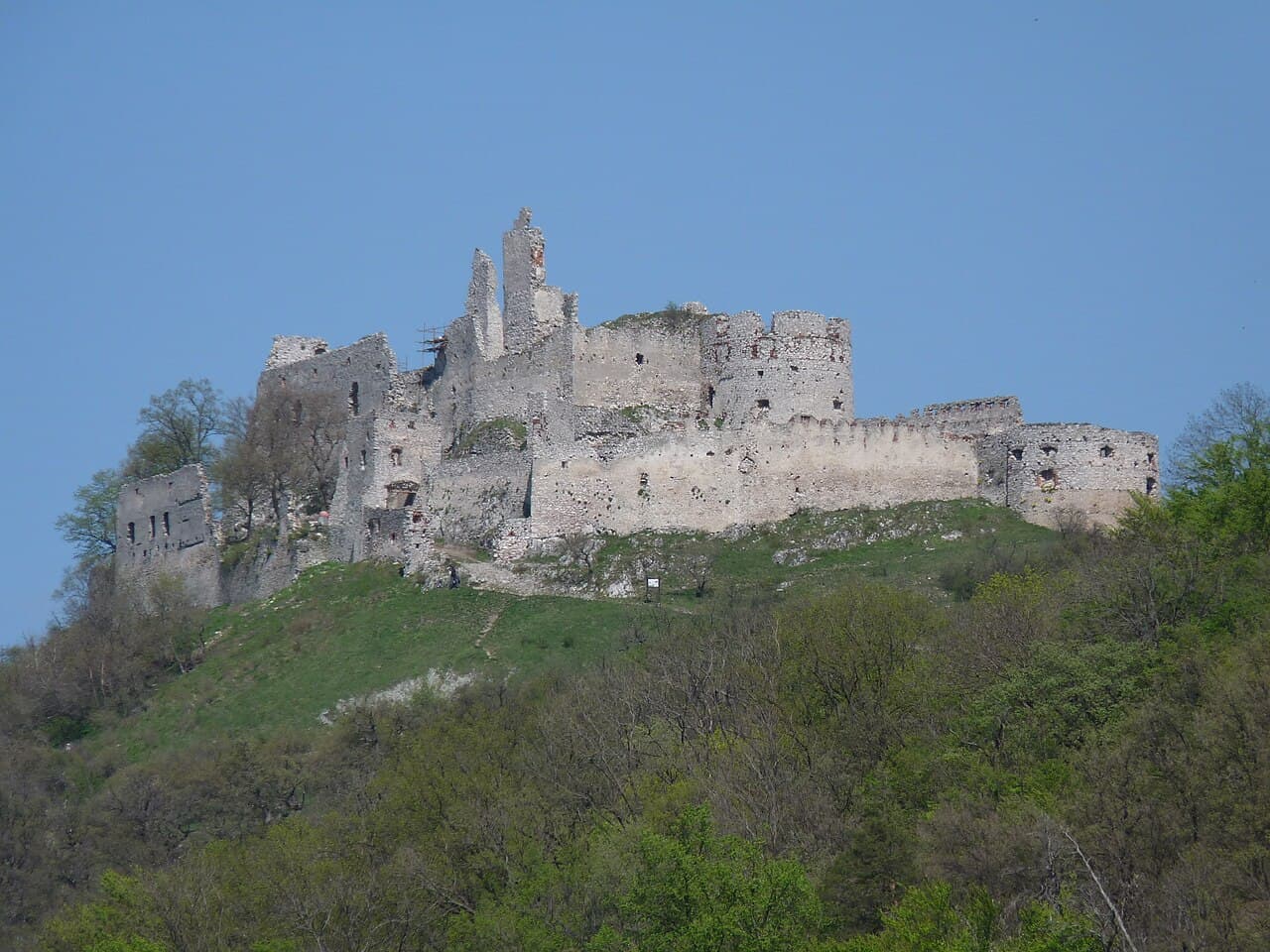
Plavecký hrad exemplifies a hilltop Gothic fortress with a layout designed for defense and communication. The castle's original stone masonry walls, bastions, and courtyards reflect construction techniques typical of the medieval period. The Renaissance-era lower courtyards and artillery bastions demonstrate the fortress's adaptation to changing military technologies, particularly the introduction of firearms and cannon.
The castle's most notable surviving features include the large bastion built by the Fuggers to secure the steep hill approach, and the artillery bastions from the 16th and 17th centuries that illustrate the evolution of fortress design in response to artillery warfare. These structures allowed defenders to mount early firearms and cannons effectively, enhancing the castle's defensive capabilities.
Surrounding landscape and archaeological context
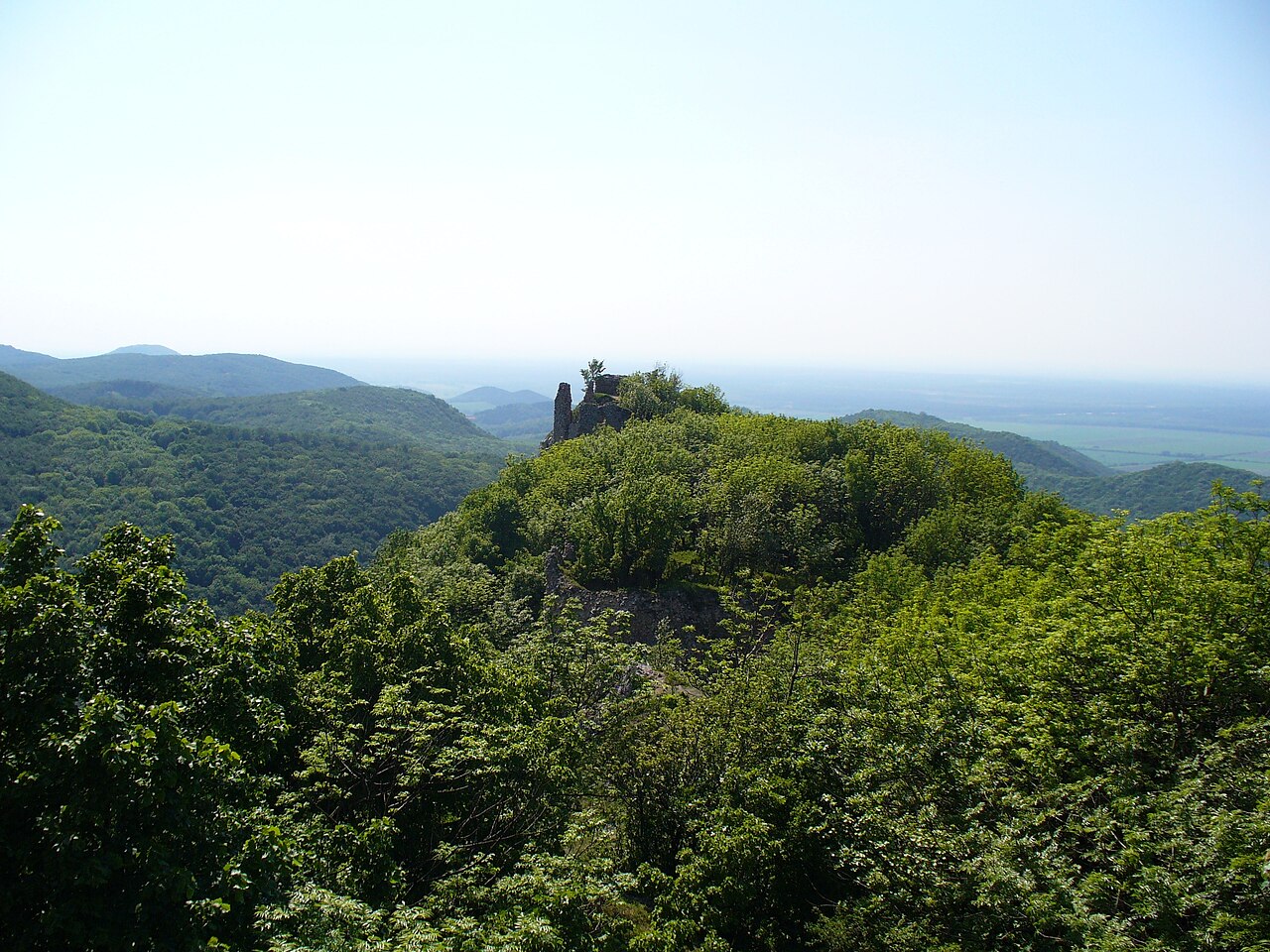
Situated on the western foothills of Pohanská hill within a national nature reserve, Plavecký hrad overlooks the village of Plavecké Podhradie. The site is archaeologically rich, with the ancient Pohanská hillfort located on the same hill, offering insights into earlier defensive settlements. Nearby natural landmarks include the Plavecká cave on the northern slope and the remains of a former monastery to the south, adding layers of historical and cultural significance to the area.
Visitor experience and access
Today, visitors can explore the castle ruins via marked hiking trails from Plavecké Podhradie and Plavecký Mikuláš. The trails lead through dramatic natural scenery to the extensive ruins, where the surviving stonework narrates centuries of military and architectural evolution. Conservation efforts have stabilized the ruins, allowing safe exploration while preserving the site's historical integrity.
Plavecký hrad remains a testament to medieval fortification strategies and the historical complexities of border defense in Central Europe. Its combination of Gothic and Renaissance architectural elements, along with its rich history of ownership and military engagement, make it a valuable cultural heritage site in Slovakia.
Frequently asked questions (FAQ)
- How do I get to Plavecký hrad?
- Plavecký hrad is accessible via marked hiking trails from the villages of Plavecké Podhradie and Plavecký Mikuláš. The trails offer a scenic route through the surrounding nature reserve.
- What is the historical significance of Plavecký hrad?
- Built in the mid-13th century, Plavecký hrad served as a royal border fortress for the Kingdom of Hungary, guarding against invasions and facilitating communication with nearby castles.
- Can I visit the castle ruins year-round?
- Yes, the castle ruins are open to visitors daily from 9:00 to 17:00. There is no entrance fee, making it accessible for tourists and locals alike.
- What architectural styles are visible at Plavecký hrad?
- The castle features primarily Gothic architecture with later Renaissance modifications, including artillery bastions and expanded lower courtyards reflecting military advancements.
- Is Plavecký hrad suitable for family visits?
- Yes, the site is suitable for families who enjoy hiking and exploring historical ruins. However, visitors should be prepared for uneven terrain and wear appropriate footwear.
Photo gallery

Information
Opening hours
9:00-17:00, daily
Ticket prices
Free
Current owner
State museum
Website
Visit websiteSources & official resources
Verify the information above using these authoritative references.
Loading map...
Visitor reviews
No reviews yet. Been here? Write the first review and help other travelers!
Write the first reviewVisited this castle? Share your experience
Your review helps other travelers and adds first-hand knowledge to our encyclopedia.