Plavecky Castle
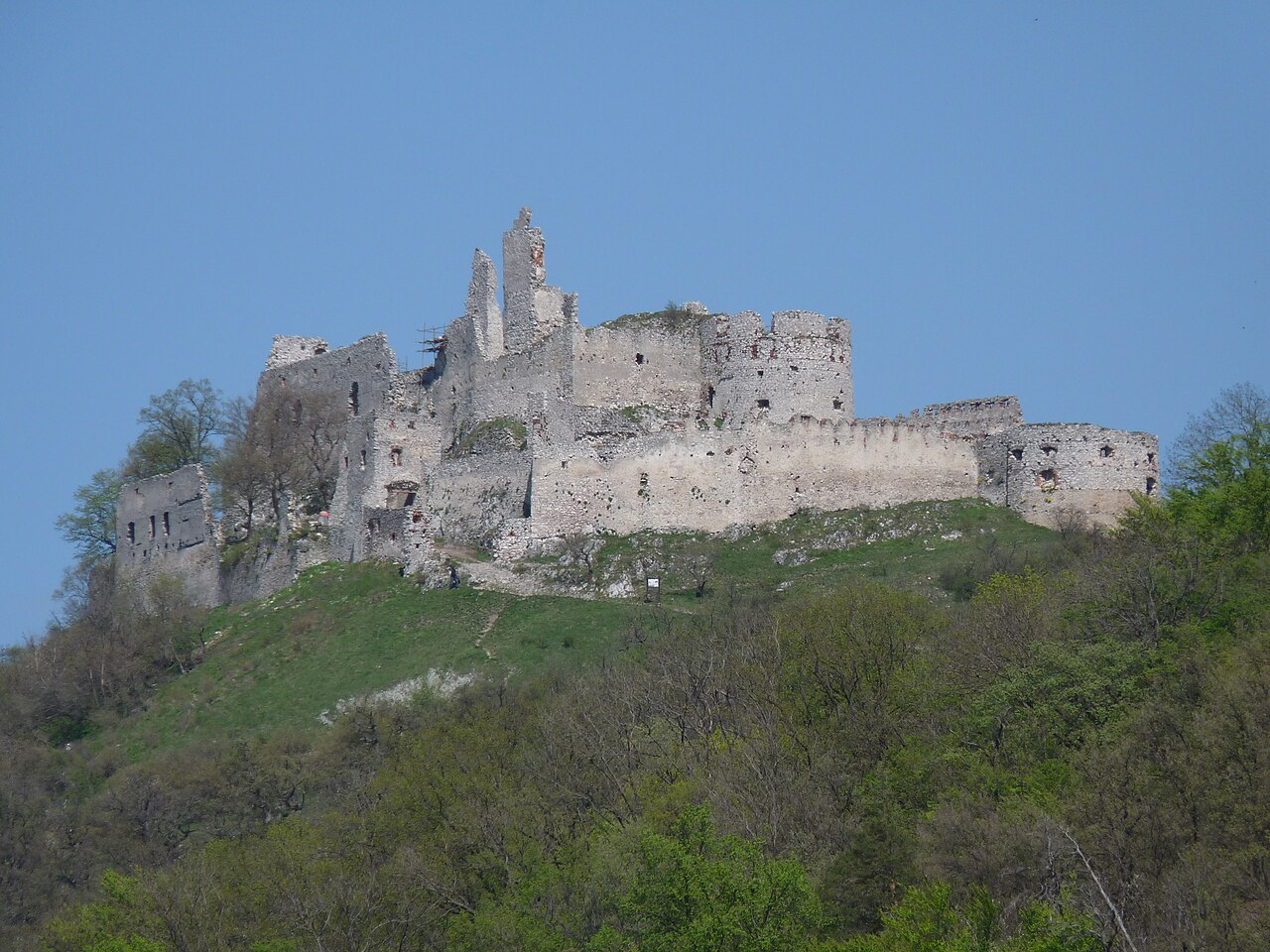
Plavecky Castle stands as a significant medieval ruin perched above the village of Plavec on Pohanská Hill within the Pohanská National Nature Reserve, nestled at the western foothills of the Little Carpathians in the Bratislava Region of Slovakia. This castle, now a ruin, played a crucial role in the defense and administration of the Kingdom of Hungary's borderlands during the High Medieval period.
Origins and strategic importance
Constructed between 1256 and 1273, Plavecky Castle was established as a royal border fortress in response to the geopolitical pressures following the devastating Mongol invasion of Hungary in 1241-1242. This wave of castle building aimed to strengthen frontier defenses and secure vital routes. The castle's position on Pohanská Hill allowed it to command the surrounding landscape and oversee the border between the Kingdom of Hungary and the Kingdom of Bohemia.
The earliest documented reference to the castle's existence is from 1273, when a battle took place beneath its walls between the Hungarian forces and those of Přemysl Otakar II. Its initial function was primarily military and surveillance-oriented, guarding the border and controlling the important road ascending the castle hill.
Architectural features and defensive systems
Originally, the castle comprised a keep and fortified walls designed to withstand sieges typical of the period. Its location on a hill classifies it as a hill castle, leveraging natural topography for defense. The castle was part of an advanced network of fortifications, including Branč Castle, Ostrý Kameň, and Korlátka, with which it communicated through an early form of visual signaling, often referred to as a radiosonde system. This allowed rapid transmission of warnings in case of enemy incursions.
During the 16th century, the castle underwent significant transformation to adapt to the changing nature of warfare. It was rebuilt in the Renaissance style with the addition of a lower courtyard and new cannon bastions to accommodate artillery, reflecting the evolution from medieval to early modern fortifications. These bastions were integral to the castle's ability to resist contemporary siege tactics.
Ownership and historical developments
Throughout its history, Plavecky Castle passed through the hands of several notable noble families. From 1398, it was owned by Stibor of Stiborice, a prominent nobleman of the Kingdom of Hungary. Later, ownership transferred to the Counts of Svätý Jur and Pezinok until the 16th century, followed by the Serédy family. Between 1553 and 1575, the castle was held by the influential Fugger family, renowned European bankers and merchants, before passing to the Balaš family.
Between 1579 and 1584, under the ownership of Štefan Balaš, the castle was notable for housing one of the first printing presses in Slovakia. This press produced calendars, Bibles, hymnals, and other religious and cultural texts, largely influenced by the Protestant writer and church dignitary Peter Bornemisa. This cultural activity highlights the castle's role beyond military functions, serving as an economic and administrative center.
From 1641 until the 20th century, the castle belonged to the Pálf family, a significant noble house in Hungarian and Slovak history. However, the castle's military importance declined over time, especially after it sustained damage during the conflicts of the early 18th century.
Decline and current condition
In 1706, during the anti-Habsburg uprisings, the castle was seized and damaged by the imperial army, which had captured it from rebel forces. This event marked the beginning of its decline. The castle was never restored to its former glory, and by the mid-17th century, the estate's administrative seat had been relocated to the nearby town of Malacky.
Today, Plavecky Castle remains a ruin, preserved as a historical monument and cultural heritage site. Its remnants offer insight into medieval and Renaissance military architecture and the turbulent history of the region. The castle's location within a protected nature reserve also makes it a popular destination for visitors interested in history, architecture, and natural beauty.
Visiting plavecky castle
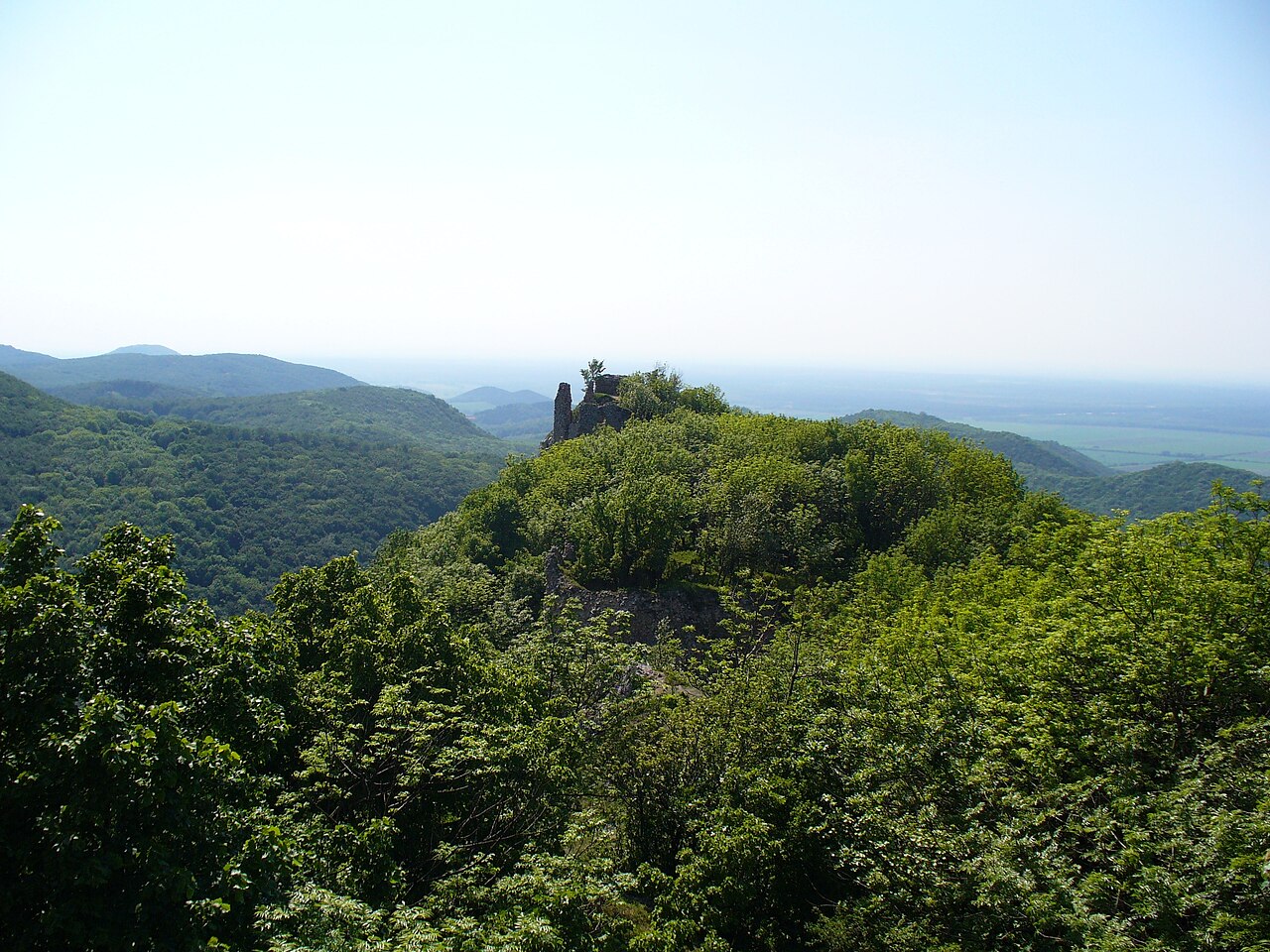
Visitors to Plavecky Castle can explore the ruins set amidst the scenic landscapes of the Little Carpathians. The castle's elevated position provides panoramic views of the surrounding countryside. The site is accessible via hiking trails from the village of Plavec, offering a rewarding experience for history enthusiasts and nature lovers alike.
The castle's remains include sections of the defensive walls, foundations of the residential and administrative buildings, and the distinctive cannon bastions added during the Renaissance modifications. Informational signage helps visitors understand the castle's historical context and architectural evolution.
Frequently asked questions (FAQ)
- How do I get to Plavecky Castle?
- Plavecky Castle is accessible by hiking trails from the village of Plavec in the Bratislava Region. Visitors should prepare for a moderate hike uphill to reach the ruins located on Pohanská Hill.
- What is the historical significance of Plavecky Castle?
- Plavecky Castle was a royal border fortress built in the 13th century to guard the Kingdom of Hungary's frontier with Bohemia. It played a key role in regional defense and later became an administrative and cultural center.
- When was Plavecky Castle built?
- The castle was constructed between 1256 and 1273 following the Mongol invasion of Hungary, as part of a wave of defensive fortifications.
- Can I explore the castle ruins?
- Yes, visitors can explore the ruins of Plavecky Castle, including its defensive walls and Renaissance cannon bastions. The site offers informative signage to enhance the visitor experience.
- Why is Plavecky Castle in ruins?
- The castle was damaged in 1706 during conflicts between imperial forces and rebels. It was never restored afterward and gradually fell into ruin.
Information
Loading map...
Visitor reviews
No reviews yet. Been here? Write the first review and help other travelers!
Write the first reviewVisited this castle? Share your experience
Your review helps other travelers and adds first-hand knowledge to our encyclopedia.