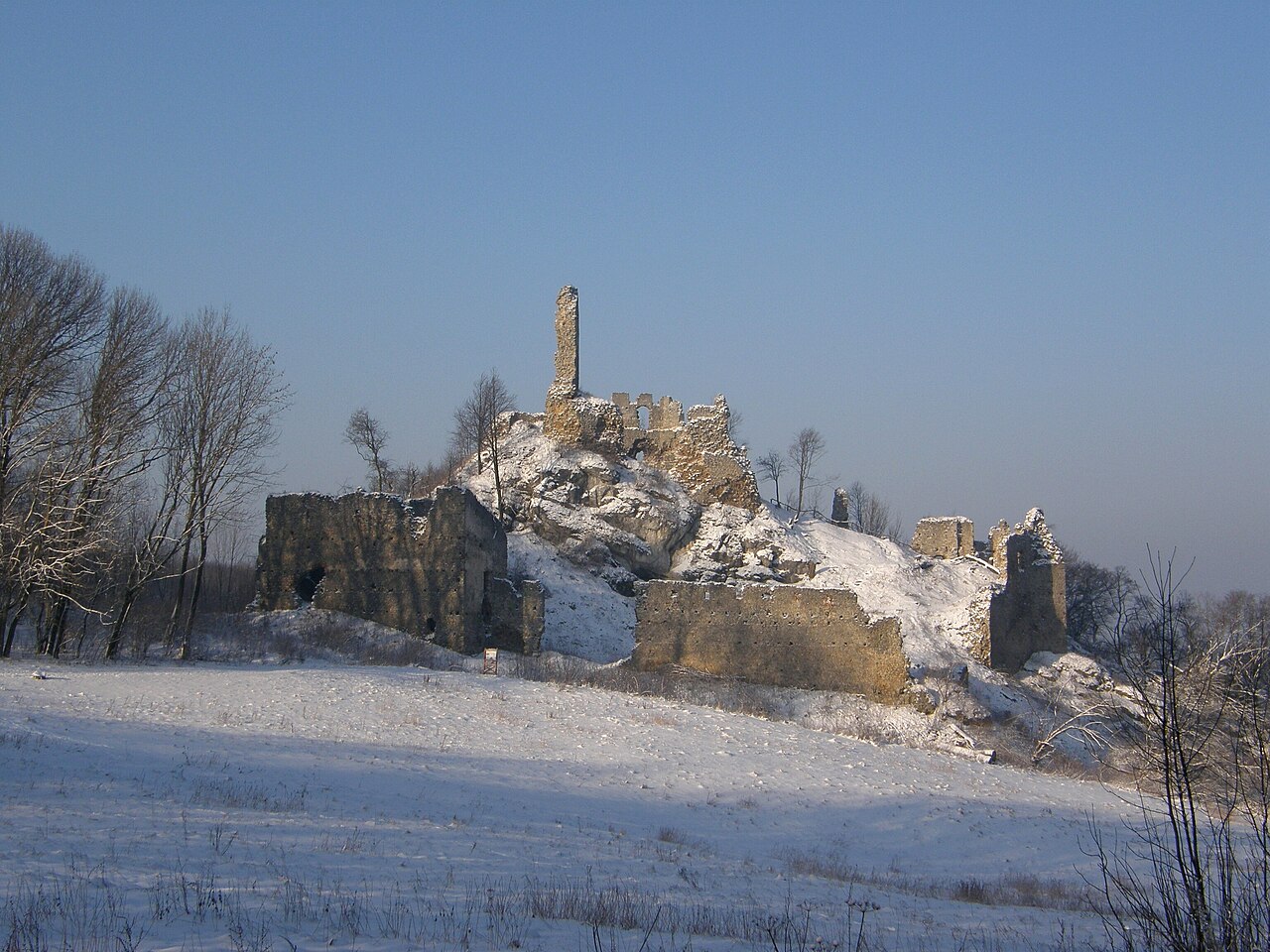
Ostrý Kamen Castle Ruins

Ostrý Kamen castle ruins in Buková, Slovakia
Buková, Slovakia
High Medieval (11th–13th c.)

Ostrý Kamen Castle is a medieval fortress located near the village of Buková in western Slovakia. Perched on a rocky hill north of Smolenice, this 13th-century castle was strategically positioned to guard the important Czech road, serving as a royal border fort during the High Medieval period. Though now in ruins, it remains a notable historic site with visible remnants of its defensive structures and offers visitors a glimpse into medieval military architecture.

Historical significance and strategic location

Constructed in the 13th century, Ostrý Kamen Castle was part of a network of fortifications designed to secure the western borders of the Kingdom of Hungary, which included present-day Slovakia. Its primary role was to oversee and protect the vital trade and military route known as the Czech road, linking important regional centers. The castle's position on a rocky outcrop provided natural defenses and excellent visibility over the surrounding Malé Karpaty Mountains and the Záhorská nížina lowland.

Architectural features and layout

The castle was built as a hill castle with a compact layout adapted to the rocky terrain. Its surviving structures include parts of the stone defensive walls, a bastion, and adjacent buildings that once served as living quarters and service areas. The walls were constructed from local stone, featuring typical medieval masonry techniques of the High Medieval period. The bastion, a projecting defensive element, was designed to provide overlapping fields of fire to protect the castle from assault.

Defensive elements

The castle's natural rocky foundation was enhanced by man-made fortifications. The walls enclosed the small courtyard and were complemented by the bastion, which strengthened vulnerable sections. Although much of the superstructure has collapsed over centuries, the remaining ruins reveal the castle's original defensive intent and strategic design.

Access and surroundings

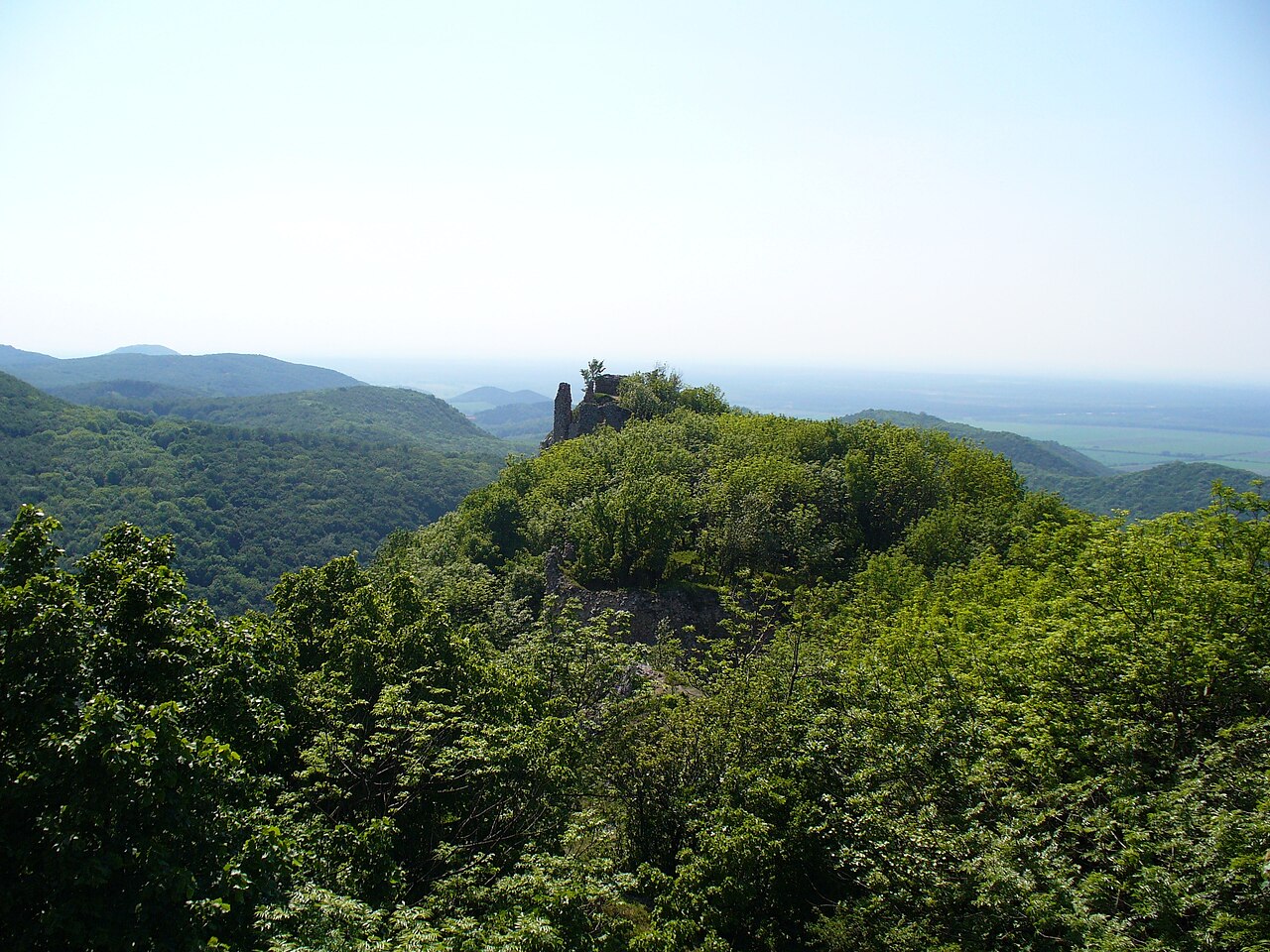
A marked hiking route leads visitors from Buková village, passing a water reservoir, to the castle ruins. The ascent to the castle is moderate, rewarding visitors with panoramic views from the top. The vantage point offers sweeping sights of the Malé Karpaty Mountains and the Záhorská nížina lowland, illustrating why the site was chosen for a defensive stronghold.

Decline and current condition

Ostrý Kamen Castle fell into decay starting in the 18th century, likely due to changing military technologies and political shifts that rendered such border forts obsolete. Today, it is classified as ruins, with only partial walls and the bastion remaining intact. Despite its ruined state, the site is well-preserved enough to convey the castle's original form and significance.

Visiting Ostrý Kamen castle ruins

The castle ruins are accessible to the public year-round via hiking trails from Buková. Visitors can explore the remains of the defensive walls and bastion while enjoying the natural beauty of the surrounding landscape. The site is popular among hikers and history enthusiasts interested in medieval fortifications and offers a quiet, atmospheric experience away from urban centers.

Nearby attractions

Close to Ostrý Kamen are other historic sites and natural landmarks in the Malé Karpaty Mountains, including the nearby Smolenice Castle, which is a restored castle with a museum and cultural events. The region is also known for its hiking routes, vineyards, and traditional Slovak villages.

Architectural and historical context

Ostrý Kamen Castle exemplifies the typical High Medieval hill castle architecture found in Central Europe during the 13th century. Its construction reflects the military needs of the era, emphasizing stone fortifications and strategic positioning. The castle's ruins provide valuable insight into the defensive strategies employed along the western borders of the Kingdom of Hungary and the broader geopolitical landscape of medieval Slovakia.

Frequently asked questions (FAQ)

What is the historical significance of Ostrý Kamen Castle Ruins?
Ostrý Kamen Castle Ruins date back to the 13th century and played a vital role in the defense of the region against invasions. The castle was strategically positioned on a rocky outcrop, which allowed it to oversee the surrounding area and serve as a stronghold for local nobility.
When was Ostrý Kamen Castle built?
Ostrý Kamen Castle was constructed in the late 13th century, with its first recorded mention in 1321. It underwent several modifications and expansions over the years, reflecting various architectural styles and the historical changes in the region.
Can I visit Ostrý Kamen Castle Ruins throughout the year?
Yes, visitors can explore the Ostrý Kamen Castle Ruins year-round. However, the best time to visit is during the spring and early autumn when the weather is mild and the surrounding landscape is particularly beautiful.
Is it possible to access the castle ruins by public transport?
Accessibility to Ostrý Kamen Castle Ruins via public transport is limited. Visitors may need to take a bus to Buková and then hike a short distance to reach the ruins, making it advisable to plan your visit ahead of time.
What are the opening hours of Ostrý Kamen Castle Ruins?
The castle ruins are accessible at all times, allowing visitors the flexibility to explore at their convenience. However, for guided tours or additional information, it's recommended to check with local tourism offices for specific hours of operation.
Are there any ticket prices for entering Ostrý Kamen Castle Ruins?
There are no official ticket prices for visiting the castle ruins, as access is free. However, donations to support the preservation of the site are often appreciated and help maintain the historical integrity of the castle.
What nearby attractions should I consider while visiting Ostrý Kamen Castle Ruins?
While visiting Ostrý Kamen Castle Ruins, you can explore the beautiful nature trails surrounding the area, perfect for hiking and photography. Additionally, nearby attractions include the picturesque village of Buková and the scenic views from various lookout points in the region.
What architectural features can I expect to see at Ostrý Kamen Castle?
Visitors to Ostrý Kamen Castle Ruins can observe remnants of medieval architecture, including thick stone walls and tower foundations. Although in ruins, the structure showcases the strategic design typical of 13th-century castles, set atop a rocky elevation for defensive purposes.

Loading map...

Visitor reviews

No reviews yet. Been here? Write the first review and help other travelers!

Write the first review

Visited this castle? Share your experience

Your review helps other travelers and adds first-hand knowledge to our encyclopedia.
Write a review

(5/5)

0/2000 characters

Your review will be visible after admin approval

Nearby castles

0.3 km
Ostrý Kameň Castle — Slovakia castle

Ostrý Kameň Castle

Buková, Slovakia

Ostrý Kameň Castle stands as a remarkable example of a medieval hill castle perched on the steep limestone ridge of Zárub, the highest point in the Little Carpathians at 576 meters above sea level. Its name, meaning "Sharp Stone," aptly describes the jagged rock formation that forms the castle's foundation. Originally constructed in the 13th century by medieval Hungarian rulers, the fortress was strategically positioned to guard the western border of the Kingdom of Hungary and to oversee the vital Czech Road, a medieval trade route linking Buda and Prague. The castle first appears in historical records in 1273, initially serving as royal property under the Hungarian crown. It remained under direct royal control until 1366, when it was granted to Mikuláš of Seč. This marked the beginning of a succession of noble families holding ownership, including prominent figures such as Stibor of Stiboricz, who received the castle from King Sigismund in the late 14th century. Over the following centuries, the fortress passed through the hands of influential families such as the Kegelevič, Thurzó, and Forgáč lineages, as well as counts from Svätý Jur and Pezinok. Medieval origins and strategic significance The primary purpose of Ostrý Kameň Castle was to serve as a royal fortress protecting the western frontier of the kingdom. Its location on the limestone ridge of Zárub provided commanding views of the surrounding terrain, including sightlines to other regional castles such as Plavecký hrad, Korlátka, and Branč. The original medieval design featured an elongated residential palace connected to a rectangular defensive tower situated at the ridge’s summit. This tower functioned as an observation post, critical for early warning against invading forces. The fortress was naturally fortified by cliffs on several sides, while a moat carved directly from the rock separated the defensive sections from the rest of the ridge. This combination of natural and man-made defenses made Ostrý Kameň a formidable stronghold in the medieval period. Architectural evolution and expansions During the mid-15th century, the castle underwent significant expansion to the northwest. A large forecourt was added, incorporating vital service buildings such as a bakery, vaulted storage rooms for supplies, a forge, and living quarters for the castle personnel. This development reflected the increasing complexity of the castle’s operations, serving both military and economic functions. In response to growing threats from Ottoman incursions in the 16th century, the castle's defenses were further enhanced. A second forecourt was constructed, featuring a round corner bastion and additional forecastles—outer defensive structures designed to strengthen protection. The entire complex was enclosed by high stone walls with corner bastions, while a neck moat, locally known as Šijová priekopa, was dug to safeguard the most vulnerable approach. Functional spaces within the upper castle Inside the upper castle, archaeologists have identified several specialized spaces that highlight the castle’s self-sufficiency. These include a water cistern for collecting and storing rainwater, a kitchen area for food preparation, prison cells, and a chapel for religious observance. The remaining architectural details also reveal Renaissance influences, such as a double console (a supporting stone feature), a key-shaped embrasure designed for archers or early firearms, and distinctive side window jambs. Decline and current state The military importance of Ostrý Kameň Castle waned after a damaging battle during the Kuruc uprising in 1704. This conflict inflicted structural damage, and the subsequent redirection of the Czech Road through Bratislava diminished the castle’s strategic relevance. By the late 18th century, the estate was inherited by the Pálffy family, who moved the administrative center to Moravský Svätý Ján. This shift led to the castle's abandonment and gradual decay. Today, only fragments of the castle's walls remain, including parts of three bastions. These ruins are enveloped by dense forest vegetation, which accelerates the erosion of the masonry. The castle's stonework is notably integrated with the uneven limestone bedrock, reflecting the adaptation of construction to the natural terrain. Despite the deterioration, the surviving remains provide valuable insight into the fortress’s historical complexity and its role as a military, residential, and economic center. Cultural and heritage significance Ostrý Kameň Castle is a significant cultural monument within Slovakia, representing the medieval defensive architecture of the Kingdom of Hungary and the strategic importance of the Little Carpathians region. Its location and design illustrate the evolution of castle architecture from the high medieval period through the Renaissance, adapting to changing military technologies and political circumstances. The castle’s ruins attract historians, archaeologists, and visitors interested in medieval fortifications and Slovak heritage. Its connection to notable noble families and historical events enriches its narrative, making it a key site for understanding regional history. Access and preservation efforts Access to the ruins requires a hike through forested terrain, reflecting its hill castle classification. Preservation efforts focus on stabilizing the remaining structures and mitigating damage caused by natural overgrowth and weathering. These initiatives aim to maintain the castle as a valuable historical site and tourist destination.

High Medieval (11th–13th c.)
Details
4.5 km
Smolenice Castle — Slovakia castle

Smolenice Castle

Smolenice, Slovakia

Smolenice Castle is a notable hill castle located on the eastern slope of the Little Carpathians, near the town of Smolenice, Slovakia. Originally constructed in the 15th century during the late medieval period, the castle has undergone significant transformations over the centuries, reflecting the turbulent history and architectural evolution of the region. Medieval origins and early history The castle was initially built as a strategic fortification in the 15th century, serving both defensive and residential purposes. Its location on a hill provided a commanding view of the surrounding landscape, an important feature for protection against invaders. However, the castle's medieval structure did not survive intact through the centuries. During Rákóczi's War of Independence (1703–1711), the castle suffered considerable damage. Later, it was further affected during the Napoleonic wars in the early 19th century, which contributed to its decline and eventual ruin. By the late 18th century, when Count János Pálffy inherited the estate in 1777, the castle was in a poor state and uninhabitable due to the lack of funds for restoration. 20th-century reconstruction and architectural design The castle's revival began in the early 20th century under the direction of Count József Pálffy. The rebuilding project was inspired by the Kreuzenstein Castle near Vienna, a well-preserved example of medieval architecture. The reconstruction was designed by the architect Jozef Hubert, with construction supervision by Pavol Reiter, an architect from Bavaria. The reconstruction employed a diverse workforce, including masters and craftsmen from Italy, Germany, Austria, and Hungary, alongside about 60 local workers from Smolenice and neighboring villages. The main building features two wings and a prominent tower, constructed using ferroconcrete, a modern material choice that allowed for greater structural strength while preserving a historic aesthetic. Damage, state ownership, and modern use In the spring of 1945, during the final stages of World War II, Smolenice Castle sustained damage. That same year, ownership transferred to the state. After 1950, several reconstruction efforts were undertaken to stabilize and restore parts of the castle. Since June 26, 1953, the castle has been the property of the Slovak Academy of Sciences. Today, it functions primarily as a conference centre, hosting various academic and cultural events. Public access is limited, with the castle generally open to visitors only during the summer season. Architectural features and layout The castle's layout includes a main building with two wings arranged around a courtyard, and a distinctive tower that serves as a visual focal point. The use of ferroconcrete in the 20th-century reconstruction reflects a blend of modern construction techniques with traditional castle architecture. The design draws heavily from the medieval style, echoing the original appearance while incorporating contemporary materials for durability. The castle's position on a hillside provides natural defensive advantages, with steep slopes on several sides. The surrounding landscape of the Little Carpathians adds to the castle's scenic and strategic significance. Cultural significance and visitor information Smolenice Castle holds cultural and historical importance in Slovakia, representing centuries of architectural and political history. Its restoration in the 20th century preserved a key piece of the region's heritage, linking medieval traditions with modern uses. Visitors interested in castle architecture, Slovak history, and scenic mountain landscapes find Smolenice Castle an intriguing destination. While the castle is not open year-round, the summer months provide the best opportunity to explore its grounds and appreciate its architectural features. As a conference centre, the castle also plays a role in fostering scientific and cultural exchange, contributing to the intellectual life of Slovakia.

Late Medieval (14th–15th c.)
Details
6 km
Korlátka Castle Ruins — Slovakia castle

Korlátka Castle Ruins

Cerová, Slovakia

Korlátka Castle, perched on a hilltop above the village of Cerová in Slovakia, is a significant example of a High Medieval Gothic hill castle that played a crucial role in the defense and control of the western frontier of the Kingdom of Hungary. Built in the mid-13th century, this fortress was strategically positioned to oversee the vital medieval trade route known as the “Česká cesta” or Czech Road, which connected important regional centers and facilitated commerce and military movements. The castle’s origins trace back to the latter half of the 13th century, with the first written record appearing in 1298. While the exact founder remains uncertain, historical evidence suggests a connection to Matthew Csák, a powerful magnate who controlled large parts of the region during this period. Korlátka’s construction reflects the typical defensive needs of the era, incorporating robust masonry walls and a layout designed to maximize surveillance and protection of the surrounding landscape. Historical significance and ownership transitions Throughout its history, Korlátka Castle witnessed numerous changes in ownership and played a dynamic role in regional conflicts. In 1394, the castle passed into the hands of Stibor of Stiborice, a prominent nobleman whose family maintained control for several decades. His son, Stibor Stiboricz, inherited the fortress during a turbulent period marked by the Hussite Wars in the early 15th century. During this time, the castle fell under the control of robber knights who used it as a stronghold to disrupt trade and exert local power. This occupation ended around 1444 when forces from nearby Bratislava expelled the bandits, restoring order to the region. Subsequently, from the late 15th century until 1772, the castle was owned by the Korlátsky family, who maintained it as a noble residence and defensive site. The castle’s military importance was reaffirmed in 1645 when it was captured by troops led by George II Rákóczi, a notable figure in Hungarian history. Later, during the early 18th century, kuruc forces—rebels opposing Habsburg rule during Rákóczi’s War of Independence in 1704—occupied the fortress, underscoring its continued strategic value. Architectural features and layout Korlátka Castle exemplifies the Gothic architectural style typical of High Medieval fortifications in Central Europe. The castle’s design focused on strong defensive capabilities, with thick masonry walls and a layout adapted to the natural hilltop terrain. The surviving ruins reveal a complex structure with both military and residential components. Defensive structures One of the castle’s most distinctive features is the remains of a cylindrical tower, which is relatively rare among Slovak castles. This tower would have served as a lookout and a strongpoint for defense, allowing guards to monitor the surrounding countryside for approaching threats. The tower’s advanced stonework and design reflect the architectural sophistication of the period. The castle also retains portions of its outer defensive walls, which enclosed the upper castle and extended to the lower fortifications. These walls were constructed using masonry techniques prevalent in the 13th century, designed to withstand sieges and provide secure barriers against attackers. Residential and economic buildings Within the castle complex, sections of the palace have been partially preserved, indicating the presence of residential quarters and administrative spaces. These areas would have housed the noble family and their retinue, serving as the center of governance and daily life within the fortress. Near the outer bailey, the most intact surviving building is the economic structure ("hospodárska budova"), which supported the castle’s daily operations. This building likely functioned as storage, workshops, or stables, essential for sustaining the castle’s inhabitants during peacetime and conflict. The remains of the entrance gate are also visible, marking the controlled point of access to the fortress. This gate would have been heavily fortified to prevent unauthorized entry and to protect the castle’s occupants. Decline and preservation status Following its active military use in the early 18th century, Korlátka Castle was abandoned in the mid-18th century. Since then, it has gradually fallen into ruin. Today, only fragments of the original structure remain, including the outer walls of the upper castle and several stretches of the lower fortifications. The castle’s ruins are a testament to its historical importance and architectural heritage. Despite the decay, the site offers valuable insights into medieval fortification techniques and noble life in the Kingdom of Hungary. Its location in the Little Carpathians provides a scenic backdrop and strategic vantage point, attracting visitors interested in history, architecture, and nature. Cultural and historical names Throughout its history, Korlátka Castle has been known by various names reflecting the region’s linguistic and cultural diversity. These include Korlátsky hrad, Korlátko, Cerovský zámok, and the German name Konradstein. Historical documents from 1324, 1399, and 1443 reference the castle under different versions of these names, underscoring its enduring presence and significance in the region. Visiting information and accessibility Today, Korlátka Castle ruins are accessible to visitors who wish to explore the remains of this historically significant fortress. The site, located near Cerová village, is open year-round, though there are no formal visitor facilities or entrance fees. Visitors should prepare for a hike up the hill to reach the ruins, where they can enjoy panoramic views of the surrounding landscape and appreciate the castle’s architectural remnants. While the ruins are not fully preserved or restored, they offer a compelling glimpse into the High Medieval period and the defensive strategies employed in the Kingdom of Hungary. The site is valued for both its cultural heritage and its natural setting in the Little Carpathians.

High Medieval (11th–13th c.)
Details