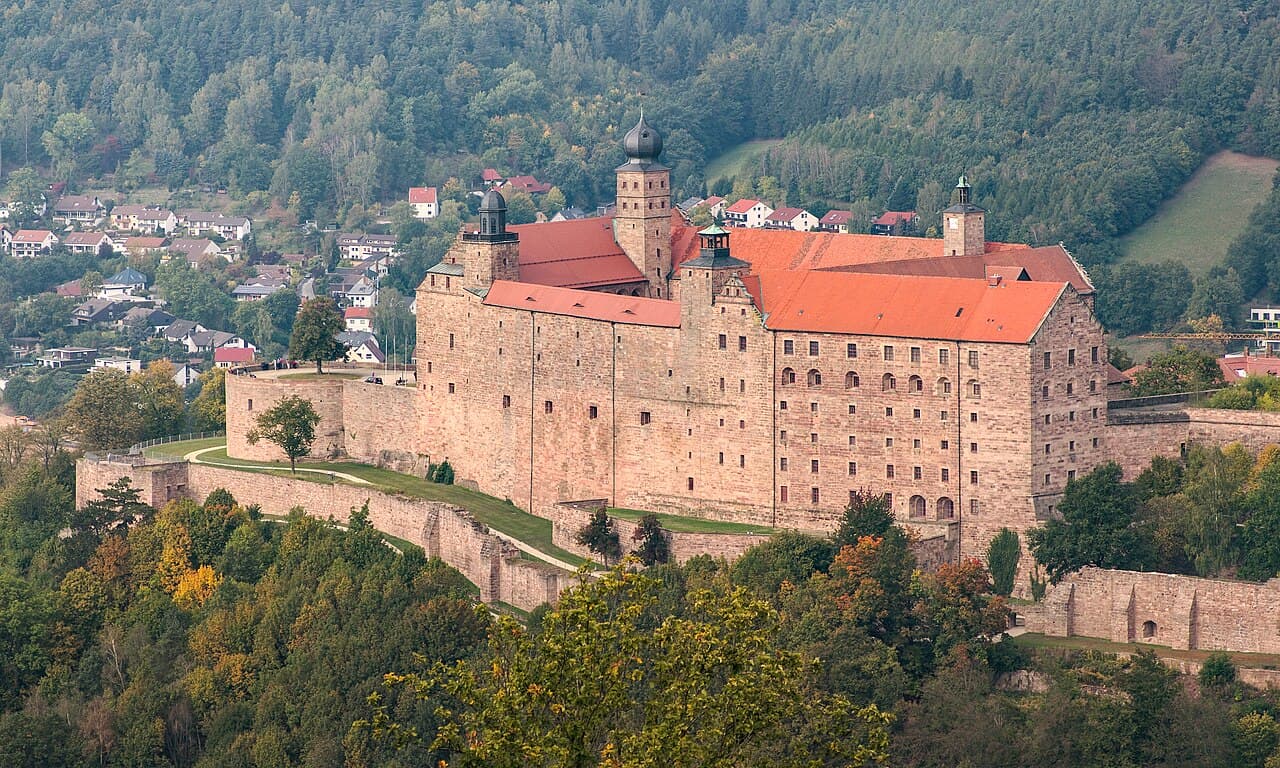
Plassenburg
Plassenburg castle stands as one of the most imposing and historically significant fortresses in Germany, commanding a strategic hilltop position overlooking the city of Kulmbach in the Franconian region. Built in the 12th century during the High Medieval period, Plassenburg served as a powerful symbol of territorial control and architectural prowess for the House of Hohenzollern, who ruled Franconian lands from this fortress until 1604.
Architectural design and strategic importance
The castle's design reflects the military and residential needs of its era, combining robust defensive features with the comforts of a noble residence. Plassenburg is classified as a hill castle, situated on a prominent elevation that provided commanding views and natural defenses. Its fortifications include massive curtain walls, multiple towers, and a complex system of gatehouses and moats that enhanced its impregnability.
The castle's layout evolved over centuries, incorporating elements of Romanesque and early Gothic architecture as it was expanded and modernized to meet changing military technologies and residential standards. The thick stone walls, battlements, and strategically placed arrow slits attest to its defensive purpose, while the inner courtyards and halls reveal its function as a noble seat.
Historical significance and ownership
Plassenburg's historical importance is closely tied to the Hohenzollern dynasty, who used the castle as their principal residence and administrative center in Franconia. From this fortress, the Hohenzollerns governed their territories, consolidating power and influence in the region. The castle's role as a political and military hub lasted until the early 17th century, when the family shifted their focus elsewhere.
In the early 19th century, Plassenburg witnessed significant military action during the Napoleonic Wars. In 1806, it endured a siege by combined Bavarian and French forces led by Jerome Bonaparte, Napoleon's brother. This event marked a turning point in the castle's military relevance.
Post-medieval uses and preservation
Following the Napoleonic era, the castle's function shifted dramatically. In 1810, when Kulmbach became part of the Kingdom of Bavaria, Plassenburg was repurposed as a prison and later served as a military hospital. These uses contributed to its preservation, albeit with modifications that reflect its changing roles.
Today, Plassenburg is a well-preserved historic site open to the public. It operates primarily as a museum complex hosting a variety of cultural events throughout the year. The castle houses an extensive collection of Prussian military artifacts and portraits, offering visitors insight into the region's military history and the castle's storied past.
Cultural and architectural legacy
Plassenburg remains a testament to medieval fortification architecture and the political history of Franconia. Its combination of defensive strength and residential elegance exemplifies the dual purpose of castles in the Middle Ages. The castle's ongoing use as a museum and cultural venue ensures that its legacy continues to educate and inspire visitors, preserving an important chapter of German history.
Frequently asked questions (FAQ)
- How do I get to Plassenburg Castle?
- Plassenburg Castle is located in Kulmbach, Germany, easily accessible by car or public transport. If you are traveling by train, the nearest station is Kulmbach, from where you can take a short bus ride or walk to the castle.
- What is the historical significance of Plassenburg Castle?
- Plassenburg Castle has a rich history dating back to the 13th century and served as a residence for the Margraves of Brandenburg-Kulmbach. The castle is known for its impressive architecture and as a key stronghold during various historical conflicts in the region.
- When was Plassenburg Castle built?
- Plassenburg Castle was originally constructed in the 13th century, with significant expansions and renovations occurring in the following centuries, particularly during the Renaissance. Its architecture reflects the various styles that evolved over time, making it a fascinating site for history enthusiasts.
- Can I take a guided tour of Plassenburg Castle?
- Yes, guided tours are available at Plassenburg Castle, providing visitors with in-depth knowledge about its history and architecture. These tours are typically offered in multiple languages, ensuring a rich experience for all guests.
- Why is Plassenburg Castle considered an architectural gem?
- Plassenburg Castle is admired for its Renaissance architecture, featuring intricate facades, grand towers, and well-preserved interiors. The design showcases the transition of architectural styles and the artistic influences of its time, making it a must-see for architecture aficionados.
- Is it possible to host events at Plassenburg Castle?
- Yes, Plassenburg Castle offers venues for various events, including weddings, corporate gatherings, and cultural events. The stunning backdrop and historical ambiance make it a unique location for memorable celebrations.
- What are the opening hours of Plassenburg Castle?
- Plassenburg Castle is generally open to visitors from April to October, with varying hours depending on the season. It is recommended to check the official website or contact the castle for the most current opening hours before your visit.
- What are the ticket prices for visiting Plassenburg Castle?
- Ticket prices for Plassenburg Castle vary based on age and whether you choose a guided tour. Generally, adults pay a standard entrance fee, while discounts are available for students, seniors, and children, making it accessible for all visitors.
- When is the best time to visit Plassenburg Castle?
- The best time to visit Plassenburg Castle is during the spring or early autumn when the weather is pleasant and the surrounding landscapes are beautiful. Additionally, visiting during weekdays can help you avoid larger crowds, allowing for a more enjoyable experience.
- Are there any nearby attractions to Plassenburg Castle?
- Yes, there are several nearby attractions, including the historic town of Kulmbach, the Bier und Oktoberfest Museum, and the Plassenburg's own museum showcasing local history. These sites can enhance your visit to the castle by offering a broader perspective on the region's culture and heritage.
Photo gallery

Photo by File:Plassenburg, Kulmbach from Rehturm.jpg: El Grafo derivative work: DYVER•CC BY-SA 4.0
Information
Website
Visit websiteSources & official resources
Verify the information above using these authoritative references.
Loading map...
Visitor reviews
No reviews yet. Been here? Write the first review and help other travelers!
Write the first reviewVisited this castle? Share your experience
Your review helps other travelers and adds first-hand knowledge to our encyclopedia.



