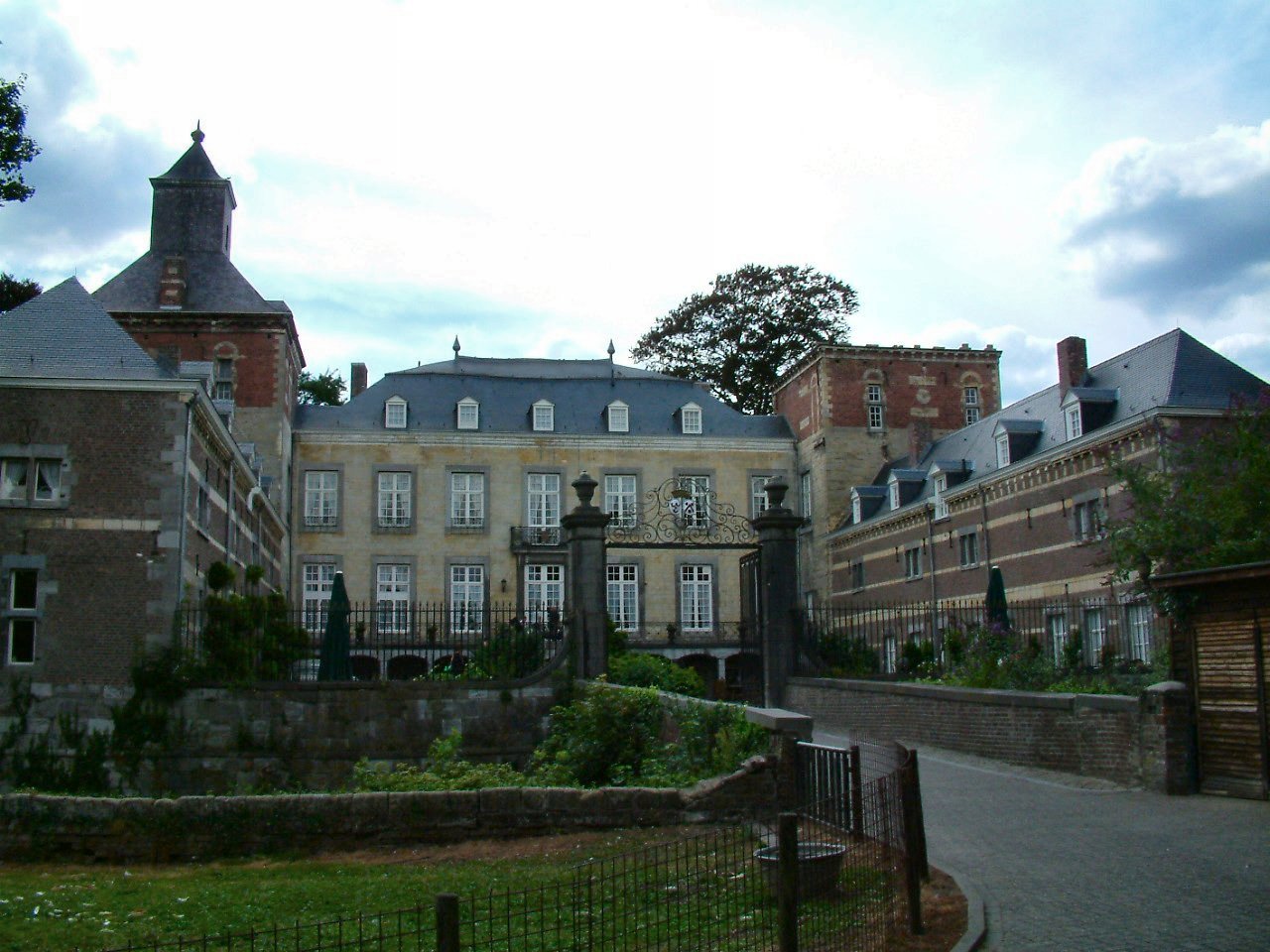
Pietersheim Castle
Pietersheim Castle, locally known as Kasteel Pietersheim, is located in the village of Lanaken in the Limburg province within the Flemish region of Belgium. This site has a rich history dating back to the late 11th century, with archaeological evidence confirming the presence of a castle here since that time. The castle was first mentioned in historical records in 1292, describing a stronghold characterized by a circular rampart surrounded by a moat.
Medieval origins and early fortifications
The original medieval castle was constructed with defensive features typical of the period, including the circular rampart and moat system designed to protect against invaders. In 1378, the castle was destroyed by forces from Tongeren and the Prince-Bishopric of Liège, marking a significant moment in its history. Following this destruction, the castle was rebuilt and significantly strengthened. The reconstruction included the addition of up to three concentric moats encircling the rampart, a bailey, a chapel, and fortified entrances, enhancing its defensive capabilities.
The van merode family and castle expansion
In 1449, the castle came into the possession of the Van Merode family, who undertook substantial expansions. They added a kitchen wing and a corps de logis to the structure. Despite the deterioration of some early medieval parts, the Van Merode family reinforced the castle's defenses by constructing two casemates, which are fortified gun emplacements or chambers designed to protect artillery and soldiers.
Sieges and military significance
Pietersheim Castle played a notable role during the turbulent conflicts of the 16th century. In 1569, it was besieged by the pro-Spanish cardinal bishop Gerard van Groesbeeck. Later, in 1579, the castle was captured by Alexander Farnese, Duke of Parma and Governor of the Spanish Netherlands. Farnese used Pietersheim Castle as his headquarters during the Siege of Maastricht, underlining its strategic importance in the region.
Decline and demolitions in the 17th and 18th centuries
Following the military conflicts, the Prince-Bishop of Liège ordered the demolition of all defensive elements of the castle in 1670. This directive led to the castle falling into disrepair over the ensuing decades. By 1720, part of the corps de logis collapsed, reflecting the neglect and deterioration of the once formidable fortress.
Rebirth and destruction in the modern era
In 1792, a new castle was constructed on the site of the old bailey, marking a shift from medieval fortifications to more residential architecture. However, the old medieval castle structure burned down in 1836, and its remains were subsequently demolished. The 1792 castle itself suffered a fire in 1909. On the ruins of this building, a new castle was erected in 1910, only to be destroyed by fire again in 1920. The castle was rebuilt once more in 1926, resulting in the neoclassical style castle that stands today.
Architectural features of the current castle
The present-day Pietersheim Castle, rebuilt in 1926, showcases neoclassical architecture distinguished by its symmetry, classical proportions, and restrained decorative elements. It stands adjacent to the ruins of the medieval castle, providing a striking contrast between the historical layers of the site. While the original medieval fortifications are mostly in ruins, visitors can still explore the remains of the ramparts and moats that hint at the castle's defensive past.
Visitor experience and current use
Today, Pietersheim Castle is open to the public during its visiting hours, allowing visitors to explore the castle grounds and the ruins freely. The neoclassical castle building currently houses a hotel-restaurant, offering hospitality services that blend historical ambiance with modern comfort. Although the interior of the medieval ruins offers limited exploration opportunities, the site remains an interesting destination for those interested in medieval architecture and Belgian history.
Historical significance and cultural heritage
Pietersheim Castle is a notable example of a site that has evolved through multiple historical phases, from its medieval origins with strong defensive structures to its modern incarnation as a neoclassical residence. Its history reflects the broader political and military struggles in the region, including sieges and ownership changes linked to prominent historical figures such as Alexander Farnese. The layered history of construction, destruction, and rebuilding provides valuable insights into the architectural and cultural transformations that have shaped Belgian castles over centuries.
Frequently asked questions (FAQ)
- How do I get to Pietersheim Castle?
- Pietersheim Castle is located in Lanaken, Belgium, and can be easily accessed by car or public transport. If you are driving, there is parking available on-site. For those using public transport, check local bus schedules for routes that connect to Lanaken.
- What is the historical significance of Pietersheim Castle?
- Pietersheim Castle dates back to the 14th century and has played a significant role in the region's history. Originally built for defensive purposes, it has undergone several renovations and served various functions over the centuries, including as a noble residence. Today, it stands as a testament to medieval architecture and history.
- When was Pietersheim Castle built?
- The construction of Pietersheim Castle began in the 14th century, with various expansions and modifications made in the following centuries. Its architectural style reflects the evolving trends of medieval fortifications and noble residences. The castle remains a prime example of historical architecture in Belgium.
- Can I visit Pietersheim Castle year-round?
- Yes, Pietersheim Castle is open to visitors year-round, although specific opening hours may vary by season. It is advisable to check the official website for the latest information on visiting hours and any seasonal events. Guided tours are often available, providing deeper insights into the castle's history.
- Why is Pietersheim Castle a popular tourist attraction?
- Pietersheim Castle attracts visitors due to its rich history, stunning architecture, and beautiful surrounding gardens. The castle offers a unique glimpse into medieval life and serves as a venue for various cultural events throughout the year. Visitors can enjoy guided tours, exhibitions, and scenic walks in the adjacent park.
- Is it possible to host events at Pietersheim Castle?
- Yes, Pietersheim Castle offers facilities for hosting events such as weddings, corporate meetings, and private gatherings. The picturesque setting and historical ambiance make it an ideal location for special occasions. It is recommended to contact the castle administration for details on booking and available services.
- What are the ticket prices for visiting Pietersheim Castle?
- Ticket prices for Pietersheim Castle vary depending on the type of tour or event. Typically, general admission tickets are affordable, with discounts available for children, students, and seniors. Check the official website for current pricing and any special offers.
- What is the best time to visit Pietersheim Castle?
- The best time to visit Pietersheim Castle is during the spring and early autumn when the weather is pleasant, and the gardens are in full bloom. Additionally, many events and festivals take place during these seasons, enhancing the visitor experience. Summer can also be a great time, but be prepared for larger crowds.
- Are there any nearby attractions to visit along with Pietersheim Castle?
- Yes, there are several nearby attractions that complement a visit to Pietersheim Castle, including the beautiful nature reserves and parks in the area. The nearby town of Lanaken offers additional cultural experiences, and the city of Maastricht is just a short drive away, featuring historic sites, shops, and restaurants. Visitors can easily plan a full day exploring the region.
Information
Address
Waterstraat 52, Belgium
Loading map...
Visitor reviews
No reviews yet. Been here? Write the first review and help other travelers!
Write the first reviewVisited this castle? Share your experience
Your review helps other travelers and adds first-hand knowledge to our encyclopedia.