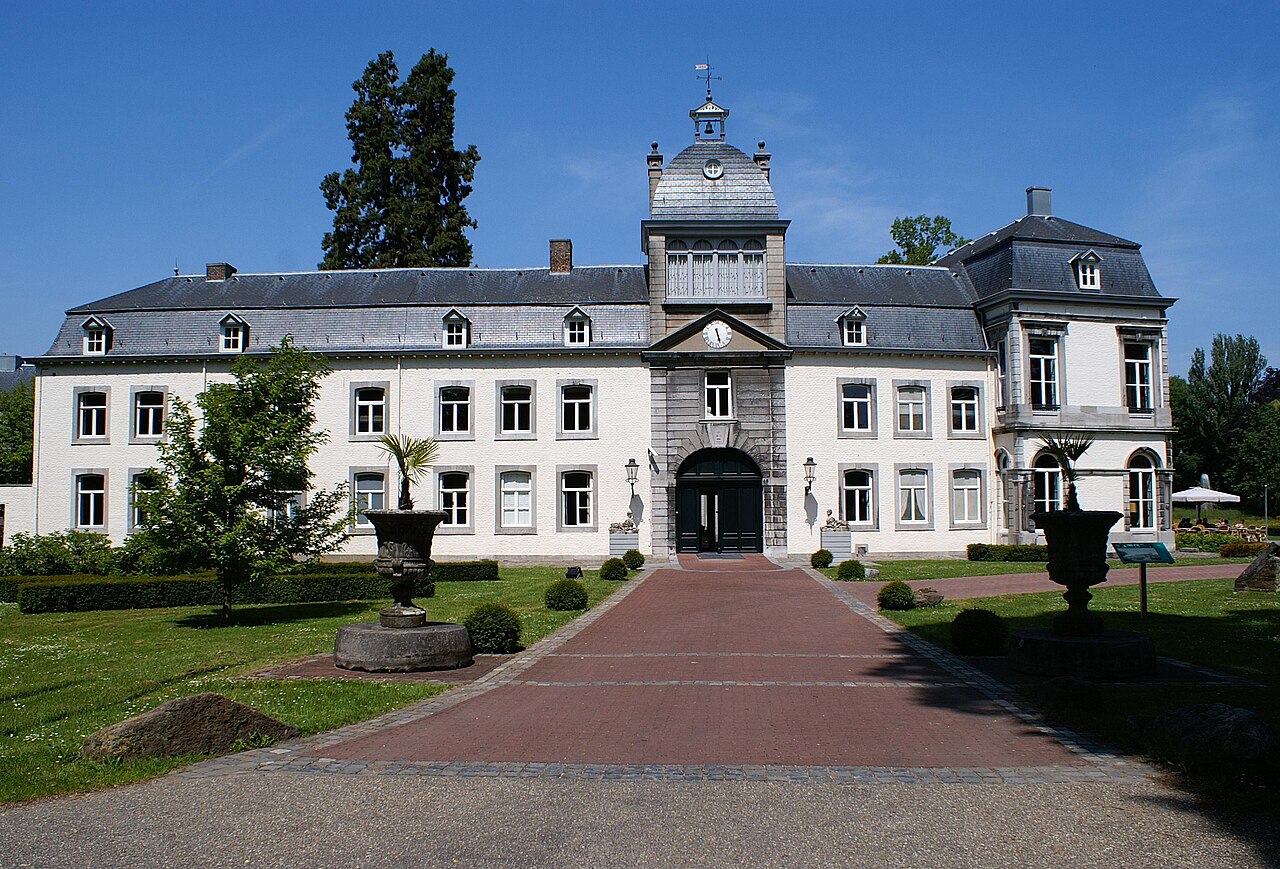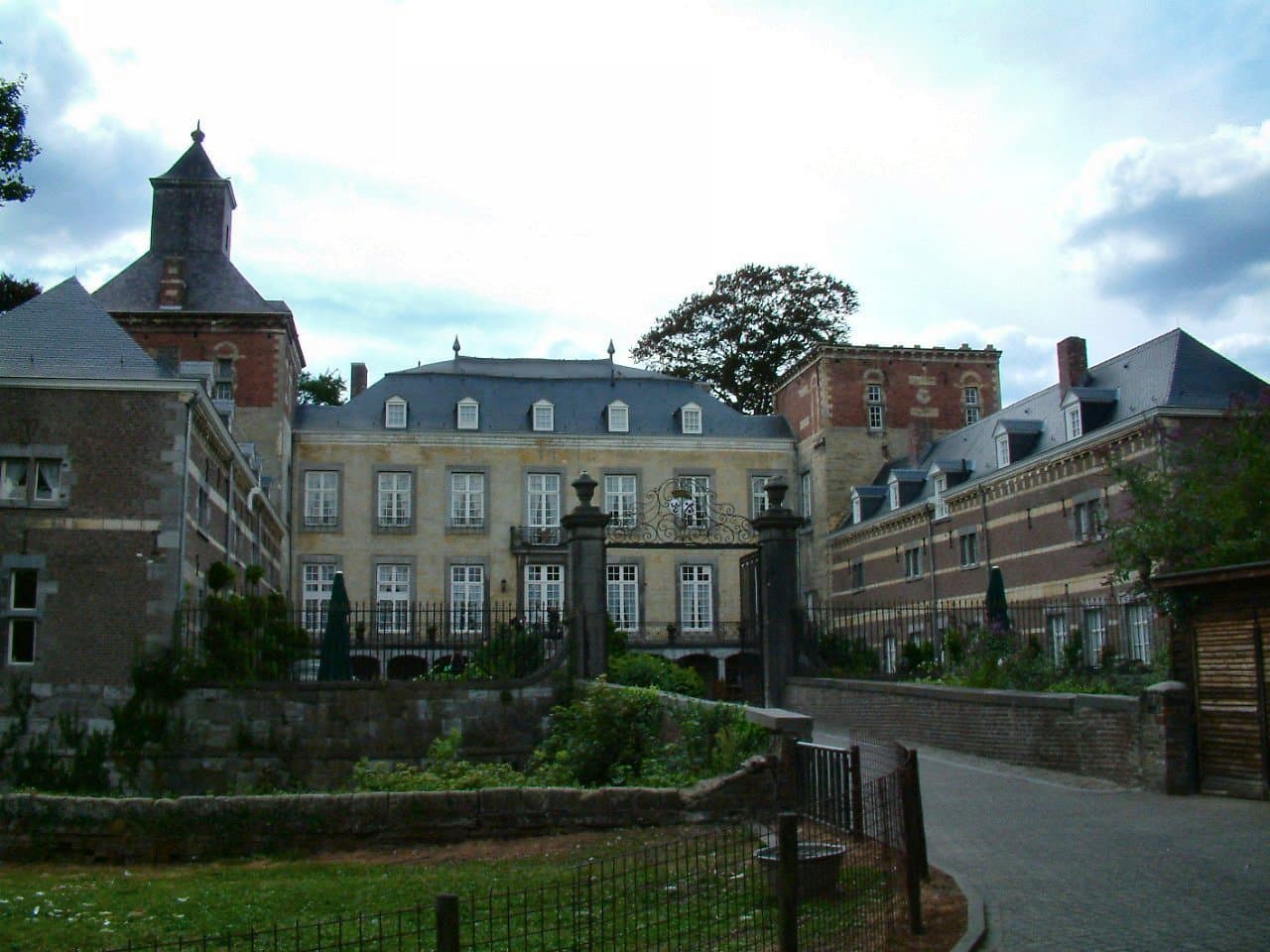
Borgharen Castle — Netherlands castle

Borgharen Castle

Borgharen Castle: historic hill castle in the Netherlands
High Medieval (11th–13th c.)
Partially Preserved

Borgharen Castle is a notable example of a hill castle located in the Netherlands. While its exact city location is less documented, Borgharen itself is a village near Maastricht, suggesting the castle's proximity to this historically significant city. The castle's origins trace back to the medieval period, with architectural and historical evidence pointing to its establishment during the High Medieval era.

Historical background and significance

The castle's strategic position on elevated terrain provided a defensive advantage, typical of hill castles designed to oversee and control surrounding lands. Borgharen Castle played a role in local territorial defense and administration during the Middle Ages, reflecting the feudal system prevalent in the region. Its location near Maastricht, a city with a rich history dating back to Roman times, placed the castle within a network of important medieval fortifications.

Architectural features and style

Borgharen Castle exhibits characteristics common to hill castles of the High Medieval period. Typically, such castles feature a fortified keep or donjon, surrounded by defensive walls and sometimes a moat, adapted to the natural contours of the hill. The castle likely included a courtyard, battlements, and towers positioned to maximize visibility and defense.

The architectural style of Borgharen Castle is primarily Romanesque, reflecting the construction techniques and aesthetic preferences of the time. This style is characterized by thick stone walls, rounded arches, and sturdy pillars, designed for fortification and longevity.

Construction materials and techniques

The castle was constructed using locally sourced stone and timber, materials typical for medieval fortifications in the Netherlands. The builders employed traditional masonry techniques, creating robust walls capable of withstanding sieges and the elements. The use of stone also contributed to the castle's imposing appearance and defensive strength.

Preservation and current condition

Today, Borgharen Castle is classified as partially preserved. While some original structures remain intact, others have succumbed to the ravages of time and historical conflicts. Restoration efforts have been undertaken to stabilize the ruins and preserve the castle's historical integrity.

The castle's remains offer valuable insights into medieval military architecture and the region's feudal history. Visitors can explore the surviving walls and foundations, which provide a tangible connection to the past.

Visiting Borgharen Castle

While Borgharen Castle is not as widely known as some other Dutch castles, it attracts visitors interested in medieval history and architecture. Its location near Maastricht makes it accessible for day trips and historical tours.

Visitors should check local resources for opening times and guided tour availability, as access may be limited due to preservation work or private ownership.

Nearby attractions

The castle's proximity to Maastricht allows visitors to combine a visit with exploring the city's rich cultural heritage, including Roman ruins, medieval churches, and vibrant markets. The surrounding Limburg region offers scenic landscapes and other historic sites, enhancing the overall experience.

Frequently asked questions about Borgharen Castle

  • What is the historical period of Borgharen Castle? The castle dates back to the High Medieval period, reflecting typical medieval defensive architecture.
  • Can visitors access the castle ruins? Yes, parts of the castle are accessible, but visiting conditions may vary depending on preservation efforts.
  • Where is Borgharen Castle located? It is situated near the village of Borgharen, close to Maastricht in the Netherlands.
  • What architectural style characterizes Borgharen Castle? The castle primarily reflects Romanesque architectural features common in medieval fortifications.
  • Is there an entry fee to visit Borgharen Castle? Information on ticket prices varies; visitors should consult local tourism sources for current details.
  • When is the best time to visit Borgharen Castle? Spring through early autumn offers favorable weather for exploring the castle and nearby attractions.

Frequently asked questions (FAQ)

What is the historical significance of Borgharen Castle?
Borgharen Castle is a notable example of medieval architecture in the Netherlands, with origins dating back to the 13th century. It played a crucial role in regional defense and has witnessed various historical events, making it a key landmark in the area's history.
When was Borgharen Castle built?
The construction of Borgharen Castle began in the late 13th century, around 1280. Over the centuries, it has undergone several renovations and restorations, reflecting the architectural styles of different periods.
Is it possible to visit Borgharen Castle?
Yes, Borgharen Castle is open to visitors, allowing them to explore its rich history and beautiful surroundings. It's advisable to check the castle's official website for specific visiting hours and any special events.
What are the opening hours for Borgharen Castle?
Borgharen Castle typically opens to visitors from Tuesday to Sunday, with specific hours that may vary by season. Always confirm the current schedule on their website before planning your visit.
Can I take guided tours of Borgharen Castle?
Yes, guided tours are often available, providing an in-depth look at the castle's history and architecture. These tours enhance the visitor experience by offering expert insights into the castle's significance.
What is the best time to visit Borgharen Castle?
The best time to visit Borgharen Castle is during the spring and early autumn when the weather is pleasant, and the gardens are in full bloom. Additionally, consider visiting during weekdays to avoid larger crowds.
Are there any nearby attractions to visit while at Borgharen Castle?
Yes, the area surrounding Borgharen Castle features several attractions, including picturesque parks and historical sites. Visitors can also explore the charming village of Borgharen and enjoy local cafes and shops.
What are the ticket prices for Borgharen Castle?
Ticket prices for Borgharen Castle vary based on age and group size, with discounts often available for children and seniors. Check their official website for the most current pricing information and any available packages.
How do I get to Borgharen Castle?
Borgharen Castle is easily accessible by car and public transportation, with clear signage directing visitors to the site. If traveling by public transport, check local transit schedules for the best routes to the castle.

Photo gallery

Borgharen Castle
Click to view

Photo by Pivos at Dutch Wikipedia•CC BY-SA 3.0

1 photo • Click any image to view in full screen

Information

Hill Castle

Loading map...

Visitor reviews

No reviews yet. Been here? Write the first review and help other travelers!

Write the first review

Visited this castle? Share your experience

Your review helps other travelers and adds first-hand knowledge to our encyclopedia.

Write a review

(5/5)

0/2000 characters

Your review will be visible after admin approval

Nearby castles

2.1 km

Bethlehem Castle

Maastricht, Netherlands

Bethlehem Castle stands as a significant medieval fortress in the historic city of Maastricht, Netherlands. Constructed in the 13th century, this castle has witnessed centuries of European history and transformation. Its origins lie in the High Medieval period, a time when fortifications were essential for controlling trade routes and territorial defense in the region. Medieval origins and early history The castle was initially built as a defensive stronghold to protect the city and its surroundings. In 1311, it came under the possession of the Teutonic Knights, a prominent military order with roots in the Crusades. They renamed the fortress Bethlehem Castle in honor of the biblical town of Bethlehem in the Holy Land, reflecting their religious and military heritage. Under the Teutonic Knights, the castle likely served both as a military base and administrative center. The order was known for its disciplined monastic knights and played a key role in the politics and military affairs of medieval Europe. Architectural features and style While specific architectural details of Bethlehem Castle are less documented, typical High Medieval castles of the region featured robust stone walls, towers for surveillance, and fortified gatehouses. The castle's layout would have included courtyards, residential quarters, and defensive structures designed to withstand sieges. The castle's construction reflects the military architectural style of the High Medieval period, emphasizing functionality and defense. The presence of the Teutonic Knights suggests elements of monastic military architecture, possibly including chapels or religious symbols integrated into the fortress design. Historical transformations and ownership changes In 1796, during the upheavals of the French Revolutionary Wars, the castle was confiscated by the French revolutionary army. This marked a significant turning point as many ecclesiastical and noble properties were seized and redistributed during this period. Following confiscation, Bethlehem Castle was sold into private hands, initiating a new chapter in its history. Over the centuries, the castle has undergone various modifications and restorations to adapt to changing uses. Modern use and cultural significance Today, Bethlehem Castle serves a unique educational purpose as a Hotel Management School. This adaptive reuse preserves the castle's structure while giving it a contemporary function that connects the historic site to the modern economy and community. The castle's location in Maastricht, a city known for its rich history and cultural heritage, makes it an important landmark. It contributes to the city's identity and offers visitors a glimpse into the medieval past alongside modern educational activities. Visiting and accessibility While primarily functioning as an educational institution, Bethlehem Castle remains accessible for certain events and guided tours that highlight its architectural and historical significance. Visitors interested in medieval military architecture and the history of the Teutonic Knights will find the castle a noteworthy site. Architectural legacy and preservation Efforts to maintain the castle's structure ensure that the High Medieval architectural elements are preserved despite its modern adaptation. The castle's preservation reflects a broader trend in Europe of repurposing historic fortresses for contemporary use while respecting their heritage.

High Medieval (11th–13th c.)
Details
2.7 km

Pietersheim Castle

Lanaken, Belgium

Pietersheim Castle, locally known as Kasteel Pietersheim, is located in the village of Lanaken in the Limburg province within the Flemish region of Belgium. This site has a rich history dating back to the late 11th century, with archaeological evidence confirming the presence of a castle here since that time. The castle was first mentioned in historical records in 1292, describing a stronghold characterized by a circular rampart surrounded by a moat. Medieval origins and early fortifications The original medieval castle was constructed with defensive features typical of the period, including the circular rampart and moat system designed to protect against invaders. In 1378, the castle was destroyed by forces from Tongeren and the Prince-Bishopric of Liège, marking a significant moment in its history. Following this destruction, the castle was rebuilt and significantly strengthened. The reconstruction included the addition of up to three concentric moats encircling the rampart, a bailey, a chapel, and fortified entrances, enhancing its defensive capabilities. The van merode family and castle expansion In 1449, the castle came into the possession of the Van Merode family, who undertook substantial expansions. They added a kitchen wing and a corps de logis to the structure. Despite the deterioration of some early medieval parts, the Van Merode family reinforced the castle's defenses by constructing two casemates, which are fortified gun emplacements or chambers designed to protect artillery and soldiers. Sieges and military significance Pietersheim Castle played a notable role during the turbulent conflicts of the 16th century. In 1569, it was besieged by the pro-Spanish cardinal bishop Gerard van Groesbeeck. Later, in 1579, the castle was captured by Alexander Farnese, Duke of Parma and Governor of the Spanish Netherlands. Farnese used Pietersheim Castle as his headquarters during the Siege of Maastricht, underlining its strategic importance in the region. Decline and demolitions in the 17th and 18th centuries Following the military conflicts, the Prince-Bishop of Liège ordered the demolition of all defensive elements of the castle in 1670. This directive led to the castle falling into disrepair over the ensuing decades. By 1720, part of the corps de logis collapsed, reflecting the neglect and deterioration of the once formidable fortress. Rebirth and destruction in the modern era In 1792, a new castle was constructed on the site of the old bailey, marking a shift from medieval fortifications to more residential architecture. However, the old medieval castle structure burned down in 1836, and its remains were subsequently demolished. The 1792 castle itself suffered a fire in 1909. On the ruins of this building, a new castle was erected in 1910, only to be destroyed by fire again in 1920. The castle was rebuilt once more in 1926, resulting in the neoclassical style castle that stands today. Architectural features of the current castle The present-day Pietersheim Castle, rebuilt in 1926, showcases neoclassical architecture distinguished by its symmetry, classical proportions, and restrained decorative elements. It stands adjacent to the ruins of the medieval castle, providing a striking contrast between the historical layers of the site. While the original medieval fortifications are mostly in ruins, visitors can still explore the remains of the ramparts and moats that hint at the castle's defensive past. Visitor experience and current use Today, Pietersheim Castle is open to the public during its visiting hours, allowing visitors to explore the castle grounds and the ruins freely. The neoclassical castle building currently houses a hotel-restaurant, offering hospitality services that blend historical ambiance with modern comfort. Although the interior of the medieval ruins offers limited exploration opportunities, the site remains an interesting destination for those interested in medieval architecture and Belgian history. Historical significance and cultural heritage Pietersheim Castle is a notable example of a site that has evolved through multiple historical phases, from its medieval origins with strong defensive structures to its modern incarnation as a neoclassical residence. Its history reflects the broader political and military struggles in the region, including sieges and ownership changes linked to prominent historical figures such as Alexander Farnese. The layered history of construction, destruction, and rebuilding provides valuable insights into the architectural and cultural transformations that have shaped Belgian castles over centuries.

Modern (19th–20th c.)
Details
2.8 km
Vaeshartelt Castle — Netherlands castle

Vaeshartelt Castle

, Netherlands

Vaeshartelt Castle, located in the Netherlands, is a notable example of an 18th-century hill castle that reflects the architectural and landscaping trends of the post-Renaissance period. This castle is distinguished by its elegant design and the integration of formal gardens, which were a hallmark of aristocratic estates during this era. Historical background and construction The origins of Vaeshartelt Castle date back to the 18th century, a time when many Dutch noble families built country estates that combined residential comfort with defensive features. Although the castle is classified as a hill castle, it was primarily constructed as a stately home rather than a military fortress. The castle was built to serve as a residence for wealthy landowners and to showcase their status through refined architecture and landscaped grounds. Architectural features and style Vaeshartelt Castle exemplifies the post-Renaissance architectural style, characterized by symmetry, proportion, and classical elements adapted to local tastes. The castle's structure includes a prominent main building with balanced windows and a hipped roof, typical of the period. The use of brick and natural stone materials aligns with Dutch construction practices of the time. Layout and structural components The castle is situated on a gentle hill, providing a commanding view of the surrounding landscape. Its design incorporates formal gardens and avenues that extend from the main building, emphasizing harmony between architecture and nature. The grounds feature ornamental ponds and tree-lined paths, reflecting the influence of French and English garden design trends that were popular in the 18th century. Gardens and landscape design The landscaped gardens of Vaeshartelt Castle are a significant aspect of its heritage. They include geometric parterres, water features, and carefully arranged greenery that enhance the visual appeal of the estate. The gardens were designed not only for aesthetic pleasure but also to demonstrate the owner's wealth and cultural sophistication. Influence of garden styles The garden layout shows elements of both the French formal garden style, with its emphasis on order and symmetry, and the emerging English landscape garden style, which favored naturalistic arrangements and picturesque views. This blend illustrates the transitional period of garden design in the 18th century. Preservation and current status Vaeshartelt Castle remains in well-preserved condition, retaining much of its original architectural integrity and garden layout. The estate is valued for its cultural and historical significance in the Netherlands. It is accessible to visitors who wish to explore its elegant interiors and extensive grounds, which offer insight into the lifestyle of the Dutch nobility in the 18th century. Visitor experience Visitors to Vaeshartelt Castle can enjoy guided tours that highlight the castle's architectural details, historical context, and the artistry of its gardens. The estate often hosts cultural events and exhibitions that celebrate regional heritage and promote conservation awareness.

Post-Renaissance (17th–18th c.)
Details