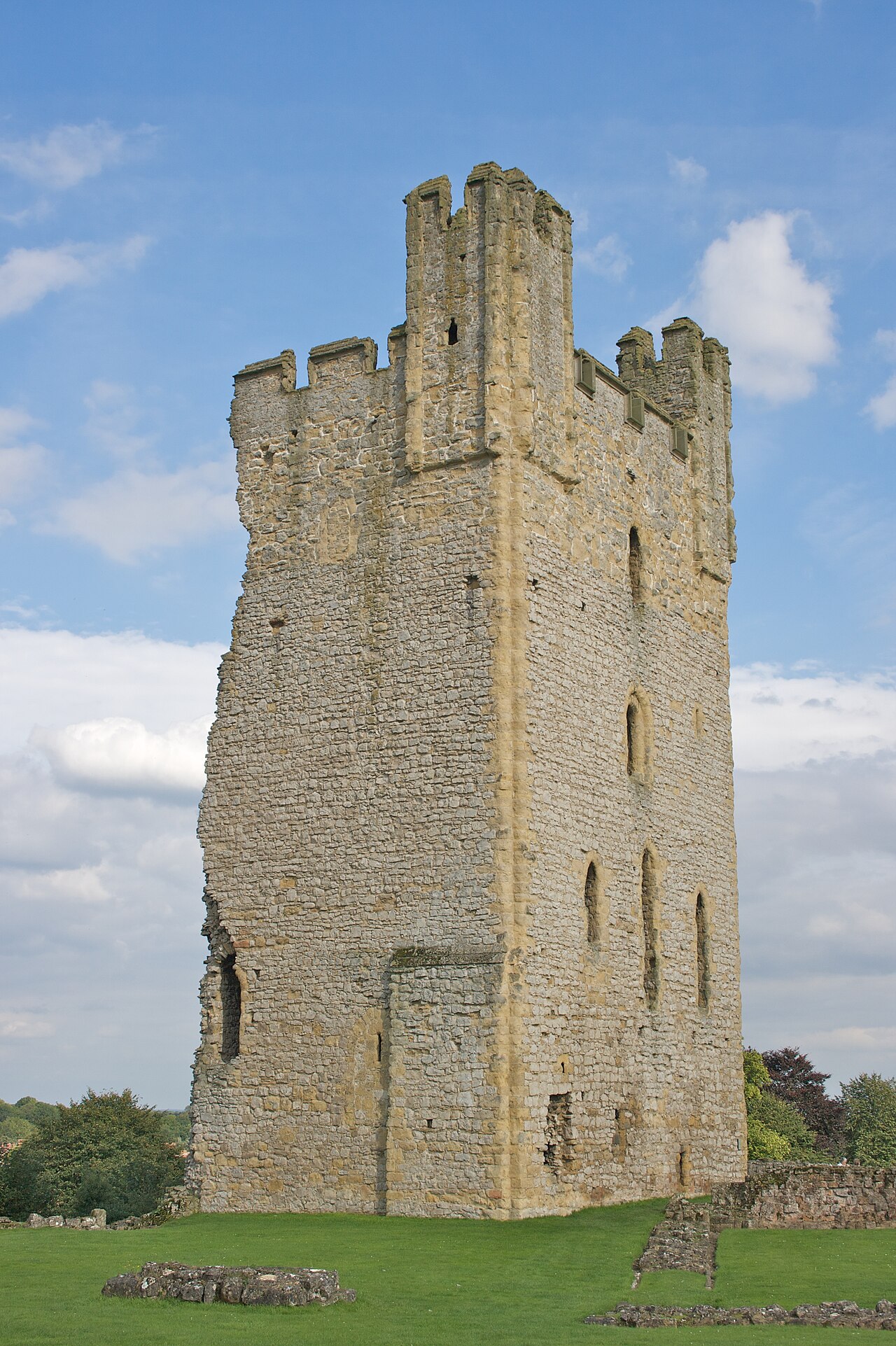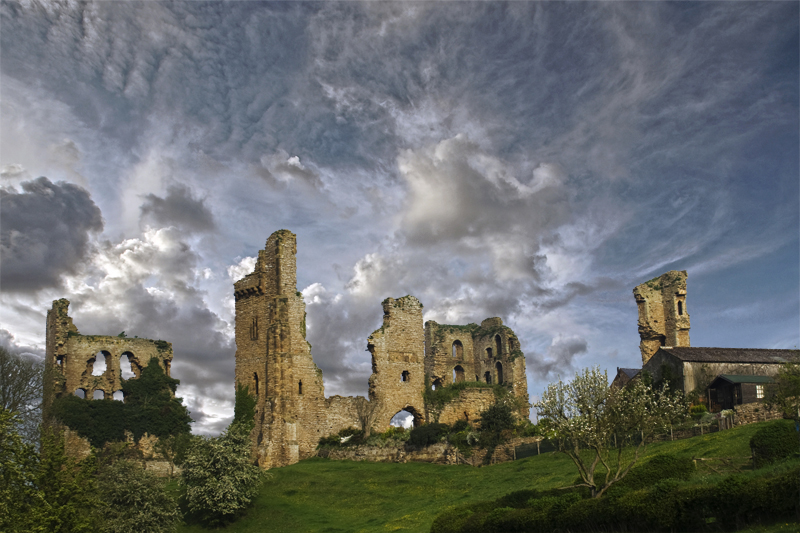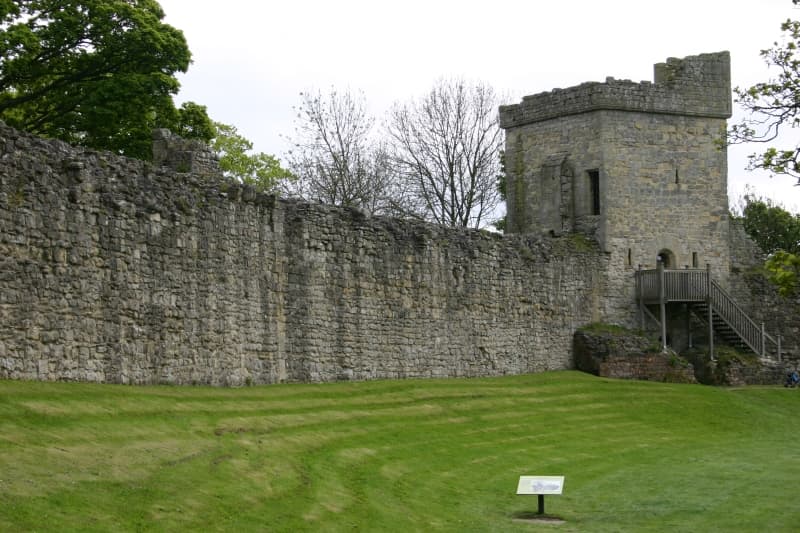
Pickering Castle
Pickering Castle stands as an enduring symbol of Norman military architecture in England, showcasing a remarkable evolution from its humble beginnings as a timber and earth motte-and-bailey fortress to a formidable stone stronghold. Located in the town of Pickering in North Yorkshire, this castle occupies a strategic position on elevated ground approximately 58 meters above sea level in the Vale of Pickering. Its placement against a steep western cliff naturally enhances its defenses, a feature carefully chosen by its original builders shortly after the Norman Conquest.
The early Norman origins and construction phases
Constructed around 1069 to 1070, Pickering Castle was part of William the Conqueror's efforts to consolidate control over northern England following the brutal campaign known as the Harrying of the North. The initial structure was a classic motte-and-bailey design, consisting of a raised earth mound (motte) topped by a timber keep, accompanied by an enclosed courtyard (bailey) surrounded by a wooden palisade and ditch. This early fortification was primarily built from timber and earthworks, reflecting the rapid construction techniques employed by the Normans to establish dominance swiftly.
During the late 12th century, significant stone reconstruction began, marking a transition from temporary wooden defenses to more permanent fortifications. Between 1180 and 1187, the wooden bailey was replaced with a robust stone inner ward. This phase introduced a stone curtain wall enclosing the bailey, enhancing the castle's defensive capabilities and longevity.
Development of the stone shell keep and religious structures
From 1216 to 1236, the wooden keep was replaced with a distinctive stone shell keep, a circular stone wall encircling the summit of the motte. This architectural evolution not only improved defense but also provided a more durable and imposing presence. Within this inner ward, a chapel was established, reflecting the castle's dual military and religious functions during the medieval period. The chapel's reconstruction on the original site preserves the spiritual heritage integral to the castle's history.
Expansion and fortification in the 14th century
In response to increased military threats, particularly from Scottish raids during the reign of King Edward II, the castle underwent further enhancements between 1323 and 1326. An outer ward was constructed, surrounded by a curtain wall reinforced with three defensive towers. This expansion included the addition of a gatehouse controlling access, ovens for food preparation, a hall for administrative and social gatherings, and storehouses for supplies, indicating the castle's role as a self-sustaining fortress.
Defensive measures were further strengthened by the inclusion of two ditches: one outside the curtain wall and another within the outer ward, creating multiple layers of defense against attackers. These features exemplify the medieval military architectural principles aimed at withstanding prolonged sieges.
Historical significance and royal connections
Pickering Castle played a notable role in English royal history. Around 1399, it temporarily housed the deposed King Richard II before his transfer to Pontefract Castle. This episode underscores the castle's importance as a secure royal prison during turbulent political times.
During the English Civil War in the 17th century, Pickering Castle was initially held for the king. However, Parliamentary forces breached the west side defenses, leading to partial dismantling of fortifications. The castle's strategic materials, including lead, timber, and iron, were removed and repurposed for strengthening defenses at Scarborough Castle. Visible earthworks and mounds on the west side mark the locations of Parliamentary artillery positions during the siege.
Preservation and current status
Remarkably, Pickering Castle avoided the widespread destruction that befell many medieval fortresses during subsequent conflicts such as the Wars of the Roses. Its stonework remains largely intact, offering a well-preserved example of Norman and medieval military architecture. The castle came under the care of the Ministry of Works in 1926, ensuring its protection as a historic monument.
Today, visitors can explore the castle's layered history through its surviving structures, including the stone shell keep, curtain walls, towers, gatehouse, and the reconstructed chapel. The site offers a tangible connection to England's Norman past and medieval defensive strategies, enriched by its role in royal and military history.
Architectural features and layout
The motte and inner ward
The castle's defining feature is its motte, a large earth mound crowned by the stone shell keep. This circular keep encloses the summit, providing a vantage point for surveillance and defense. The inner ward, originally the bailey, is enclosed by a stone curtain wall dating from the late 12th century, forming the heart of the castle complex.
Outer defenses and supporting structures
The early 14th-century outer ward is surrounded by a curtain wall fortified with three towers, enhancing the castle's defensive perimeter. Two ditches—one external and one internal to the outer ward—create layered defenses. Functional buildings such as the gatehouse, ovens, hall, and storehouses supported the castle's military and administrative functions, enabling it to operate independently during sieges.
Impact of the English Civil War
The west side of Pickering Castle bears scars from the 17th-century conflict. The breach and partial dismantling of defenses during the Parliamentary siege are still evident. The removal of valuable building materials for reuse elsewhere reflects the practical wartime approach to resource management.
Frequently asked questions (FAQ)
- When was Pickering Castle originally built?
- Pickering Castle was originally built around 1069 to 1070 by the Normans shortly after their conquest of England.
- What architectural style characterizes Pickering Castle?
- Pickering Castle features a mix of Norman motte-and-bailey design with later medieval stone fortifications, including a distinctive stone shell keep.
- Can visitors explore the chapel at Pickering Castle?
- Yes, the chapel within Pickering Castle has been rebuilt and is accessible to visitors, reflecting the castle's medieval religious heritage.
- What role did Pickering Castle play during the English Civil War?
- During the English Civil War, Pickering Castle was initially held for the king but was breached on the west side by Parliamentary forces, leading to partial dismantling of its defenses.
- Is Pickering Castle well-preserved today?
- Yes, Pickering Castle is well-preserved, with much of its medieval stonework intact, making it an excellent example of Norman and medieval military architecture.
Photo gallery

Information
Sources & official resources
Verify the information above using these authoritative references.
Loading map...
Visitor reviews
No reviews yet. Been here? Write the first review and help other travelers!
Write the first reviewVisited this castle? Share your experience
Your review helps other travelers and adds first-hand knowledge to our encyclopedia.