Helmsley Castle
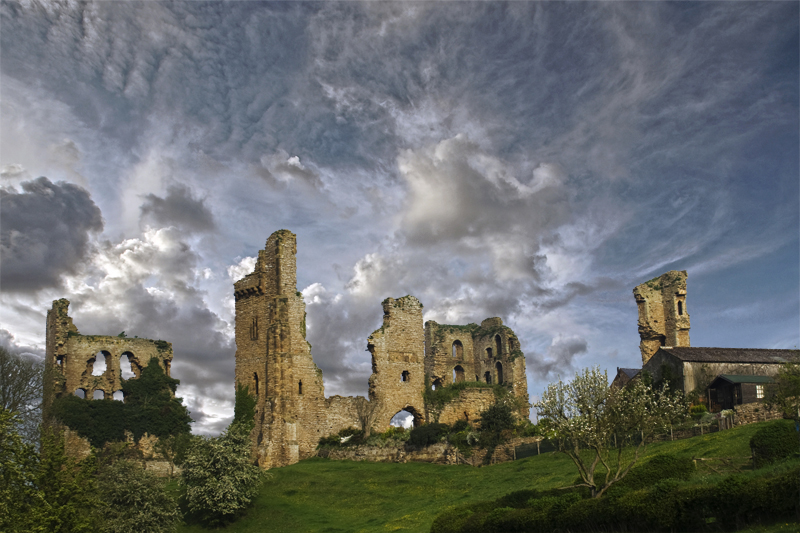
Helmsley Castle stands as a significant Norman hill castle in the town of Helmsley, England. Established in the early 12th century, it has witnessed centuries of architectural evolution, historical events, and ownership changes. Originally founded as a wooden fortification around 1120 by Norman settlers, the castle's origins are closely tied to Walter l’Espec, a prominent Norman lord who acquired the Helmsley estate following the Norman Conquest. Although Walter did not personally build the castle, his legacy includes founding the nearby Rievaulx Abbey, to which he granted land before his death in the mid-12th century.
Following Walter l’Espec’s death around 1153 or 1154 without direct heirs, the castle passed to his sister, Adelina, through her marriage to Peter de Roos. Their son, Robert de Ros, initiated a major transformation of the castle in 1186, replacing the original wooden structures with stone fortifications. This development included the construction of two main towers, rounded corner towers, and a southern principal gateway, marking the castle's transition into a formidable medieval stronghold.
Medieval architectural development and fortifications
The de Roos family maintained ownership of Helmsley Castle for nearly 300 years, overseeing continuous enhancements. In the early 13th century, under William de Ros, a chapel was built within the castle courtyard, reflecting the importance of religious practice in medieval noble life. Between 1227 and 1285, a southern barbican was added, serving as an outer fortified gatehouse to strengthen the castle's defenses.
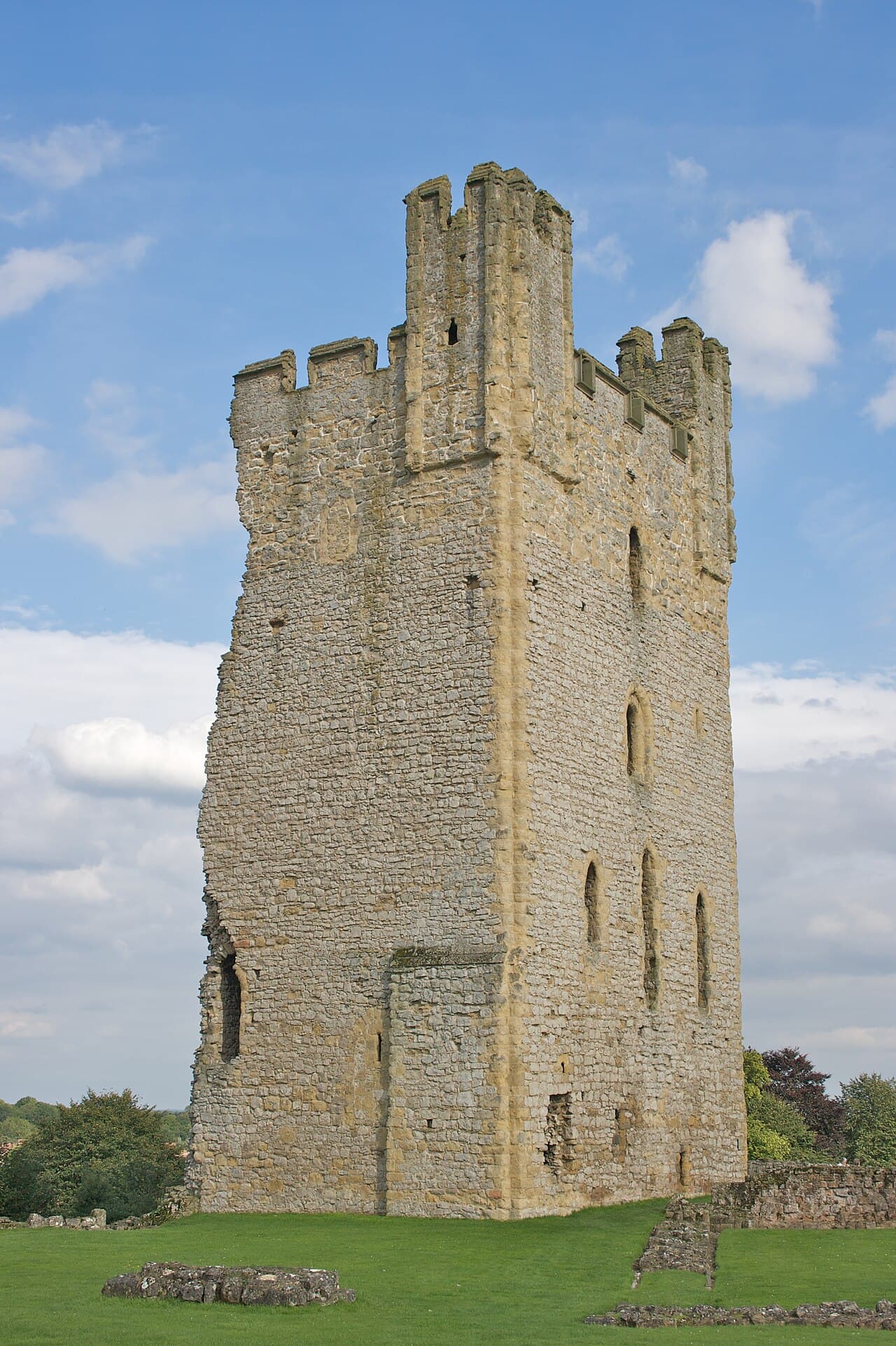
Mid-14th century modifications included the probable raising of the east tower to accommodate the visit of King Edward III in 1334. This enhancement increased the tower's height and prominence, likely to impress royal guests and assert the castle's status. The internal layout of the castle evolved to separate administrative and domestic functions, with the northern half housing officials and the southern half reserved for the lord's private quarters.
Castle layout and defensive features
Helmsley Castle is notable for its rectangular inner bailey surrounded by double ditches, a defensive design that contrasts with the more common motte-and-bailey castles of the Norman period. The castle is strategically situated on a natural rocky outcrop overlooking the River Rye, providing both a commanding view and natural protection.
The stone fortifications include robust round towers at the corners and two main towers guarding the southern entrance. The principal gateway on the southern side was heavily fortified to control access and defend against attackers. The castle's defensive earthworks remain substantial, with the ditches and bailey layout still visible today.
Tudor transformations and domestic adaptations
In 1508, the castle came under the ownership of the Manners family. Edward Manners, grandson of Thomas Manners, Earl of Rutland, initiated significant Tudor-era renovations that reflected changing tastes and domestic needs. The original medieval hall was converted into a mansion suited to the Renaissance style, emphasizing comfort and status over military function.
The 13th-century chapel was repurposed into a kitchen connected to the mansion by a covered gallery, allowing sheltered movement between spaces. Additionally, the south barbican was transformed into more comfortable living quarters, illustrating the shift from fortress to residence. Timber galleries in the mansion's attic, noted in 1578, further enhanced the castle's domestic character.
Siege, slighting, and decline
Helmsley Castle's military importance resurfaced during the English Civil War in 1644 when Sir Thomas Fairfax led a three-month siege against the Royalist garrison commanded by Sir Jordan Crosland. After surrender, Parliament ordered the castle to be slighted, a process of deliberate damage to prevent further military use. This resulted in the destruction of much of the walls, gates, and part of the east tower, though the Tudor mansion was spared.
Subsequent ownership passed to George Villiers, 2nd Duke of Buckingham, and then to Charles Duncombe in 1695, a wealthy banker and politician. The Duncombe family prioritized building the nearby Duncombe Park country house, allowing Helmsley Castle to fall into picturesque ruin during the 18th and 19th centuries.
Modern preservation and cultural significance
In 1923, the castle's preservation was entrusted to the government agency Office of Works, now managed by English Heritage. Efforts focused on clearing debris and stabilizing the ruins to prevent further deterioration. During World War II, the castle's earthworks were considered for anti-tank defenses, underscoring the site's enduring strategic value.
Today, Helmsley Castle remains under the ownership of the Duncombe family but is managed for conservation and public access by English Heritage. The ruins offer a tangible connection to England's medieval and Tudor past, showcasing architectural layers from Norman fortification to Renaissance residence. Visitors can explore the castle's double ditches, gatehouses, towers, and the well-preserved Tudor mansion, all set against the scenic backdrop of the River Rye and the historic landscape that includes Rievaulx Abbey.
Helmsley Castle stands as a testament to the evolution of English castle architecture and the shifting roles of such fortifications from military bastions to noble homes. Its ruins remain a prominent heritage site, attracting historians, architects, and tourists interested in England's rich medieval and early modern history.
Frequently asked questions (FAQ)
- How do I get to Helmsley Castle?
- Helmsley Castle is located in the picturesque market town of Helmsley in North Yorkshire. You can reach the castle by car, with ample parking available nearby, or by public transport from larger cities like York and Scarborough. The castle is within walking distance from the town center, making it easily accessible for visitors.
- What are the opening hours for Helmsley Castle?
- Helmsley Castle is typically open from 10 AM to 5 PM during the spring and summer months, with shorter hours in the autumn and winter. It's advisable to check the official website for any seasonal changes or special closures before your visit. This ensures you have the most up-to-date information for planning your trip.
- Can I buy tickets online for Helmsley Castle?
- Yes, tickets for Helmsley Castle can be purchased online through the official English Heritage website. Buying tickets in advance is recommended, especially during peak tourist seasons, as it can save you time and guarantee your entry. On-site tickets are also available, but availability may vary.
- When was Helmsley Castle built?
- Helmsley Castle was originally constructed in the 12th century and has a rich history that reflects the architectural styles of several periods. The castle has undergone various modifications and restorations over the centuries, making it an interesting site for history enthusiasts and architecture lovers alike. Its historical significance is evident in the well-preserved ruins that still stand today.
- Why is Helmsley Castle historically significant?
- Helmsley Castle played a crucial role in the defense of the region during various conflicts, including the English Civil War. Its strategic location made it an important stronghold, and it served as the residence for several noble families over the centuries. The castle's ruins offer a glimpse into medieval life and its architectural evolution.
- Is Helmsley Castle accessible for visitors with disabilities?
- Yes, Helmsley Castle strives to be accessible for all visitors. There are designated pathways and seating areas, although some parts of the castle may have uneven terrain. It is recommended to contact the staff in advance if you require specific assistance, ensuring a comfortable visit.
- What is the best time to visit Helmsley Castle?
- The best time to visit Helmsley Castle is during the spring and summer months when the weather is pleasant and the gardens are in full bloom. Additionally, many events and activities are scheduled during these seasons, enhancing the visitor experience. Early mornings or late afternoons are also ideal for avoiding crowds.
- Are there any nearby attractions to Helmsley Castle?
- Yes, there are several attractions near Helmsley Castle, including the charming market town of Helmsley itself, which features quaint shops and cafes. The nearby Ryedale Folk Museum and the stunning North York Moors National Park offer additional opportunities for exploration and enjoyment. Combining these visits makes for a delightful day out.
- What are the ticket prices for Helmsley Castle?
- Ticket prices for Helmsley Castle vary depending on age and membership status, with discounts often available for children, seniors, and families. As of now, adult tickets are generally around £10, and children can enter for a reduced fee. It's best to check the official website for the most accurate and current pricing information.
Photo gallery

Information
Website
Visit websiteSources & official resources
Verify the information above using these authoritative references.
Loading map...
Visitor reviews
No reviews yet. Been here? Write the first review and help other travelers!
Write the first reviewVisited this castle? Share your experience
Your review helps other travelers and adds first-hand knowledge to our encyclopedia.