Phet Fort
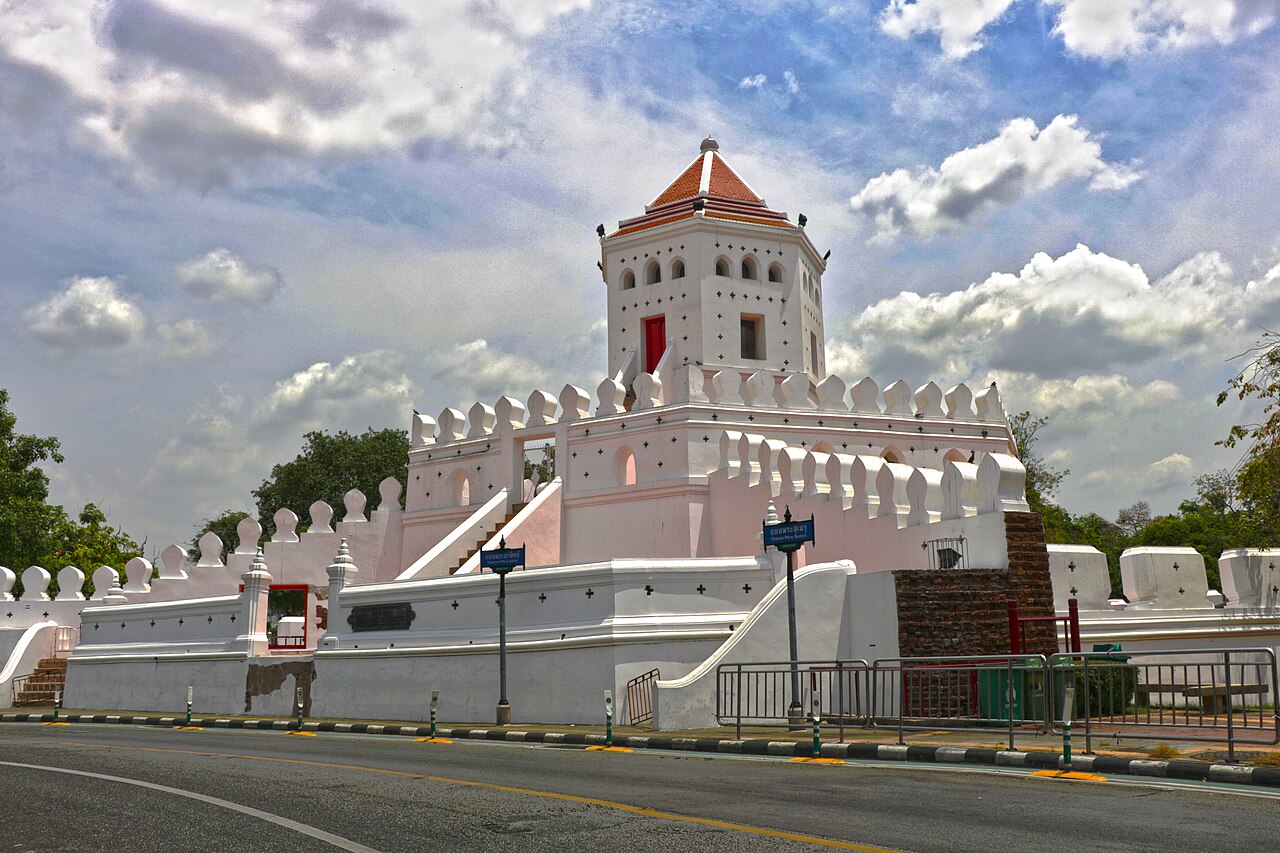
Phet Fort, also known as Pom Phet (Thai: ป้อมเพชร), stands as a significant relic of Ayutthaya's military architecture and history. Located in Phra Nakhon Si Ayutthaya, Thailand, this bastioned fortress is one of only two surviving forts from the original 29 that once fortified the ancient capital city of Ayutthaya. Built during the reign of King Maha Chakkraphat in the mid-16th century, following the Burmese–Siamese War of 1547–1549, Phet Fort was constructed to strengthen the city's defenses against future invasions.
Strategic location and defensive design
Phet Fort is strategically positioned at the confluence of the Pa Sak River and the Chao Phraya and Lop Buri Rivers—a critical junction known historically as Bang Kaja. This location allowed the fort to control river traffic and protect the southeastern approach to Ayutthaya island. The fort's name, meaning "diamond fort," reflects its reputation as the strongest and most important fortification in Ayutthaya's defensive network.
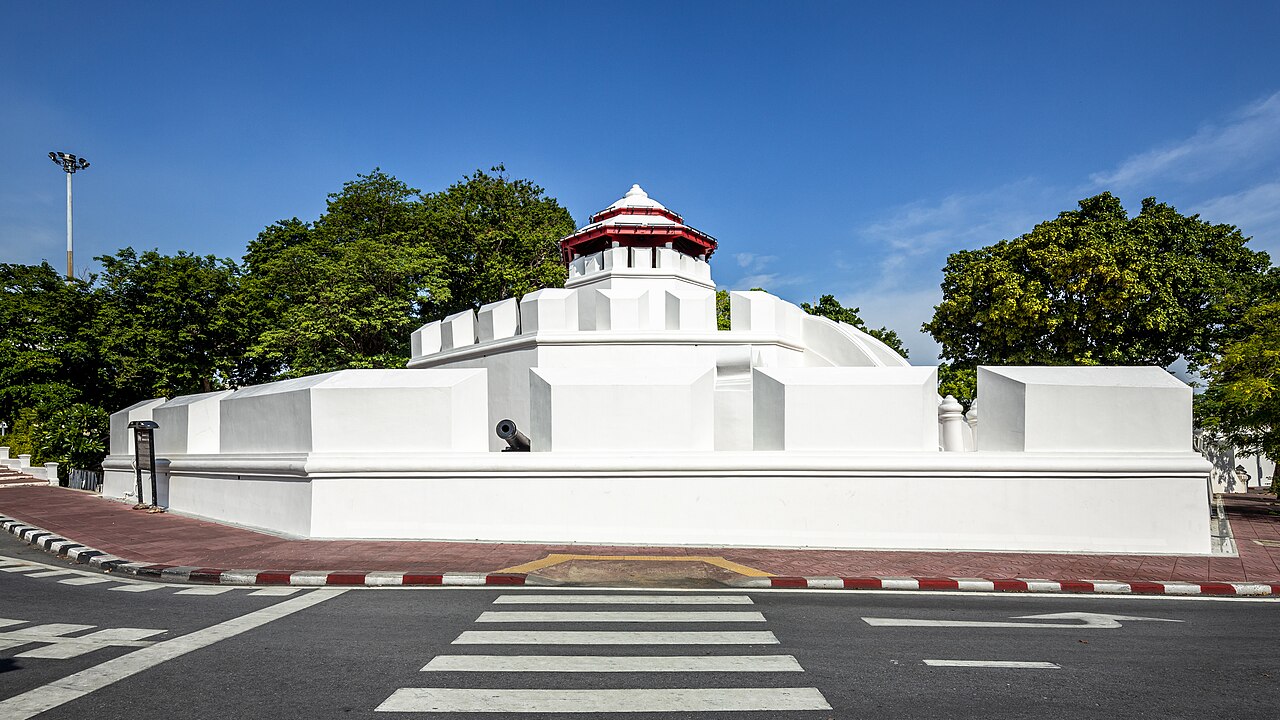
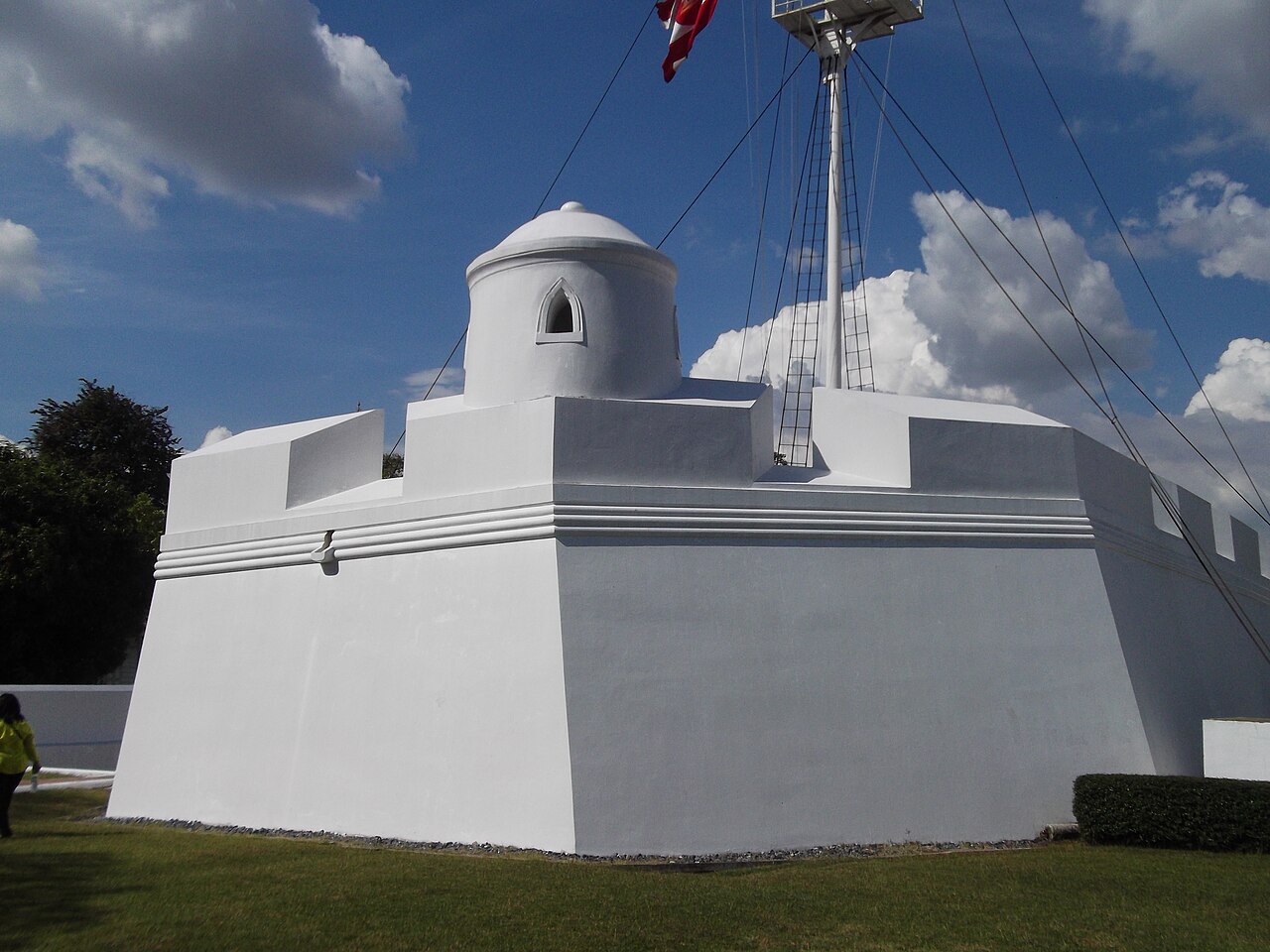
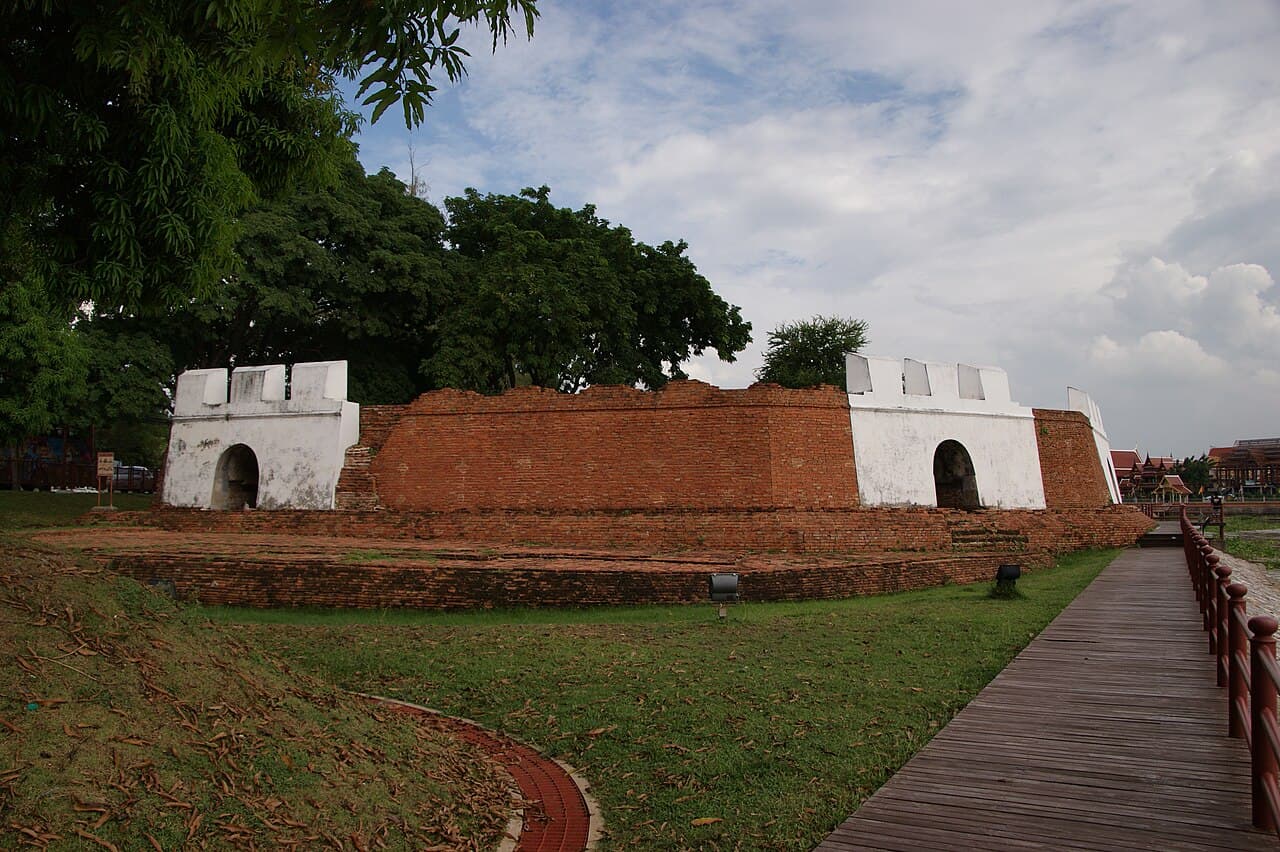
The fort was constructed using brick and laterite, materials common in Thai fortress construction of the period, with walls approximately 14 meters (45.9 feet) thick and a height of about 6.5 meters (21.3 feet). Its design includes eight cannon openings, enabling effective artillery defense. The bastioned fortress layout provided overlapping fields of fire and robust protection against siege weaponry and infantry assaults.
Historical context and significance
The fort was built in response to the first great war between Ayutthaya and Burma, which exposed vulnerabilities in the city's defenses. King Maha Chakkraphat commissioned Phet Fort as part of a broader effort to reinforce Ayutthaya after the war. It played a crucial role in subsequent conflicts, serving as a key defensive stronghold.
During the Ayutthaya period, the area surrounding Phet Fort was a vibrant trading center. The quarter attracted diverse communities, including foreign merchants and settlers. Notably, it was home to Thongdi, a Mon nobleman and the father of King Rama I, the founder of the Rattanakosin Kingdom and the Chakri dynasty. This connection adds cultural and historical depth to the fort’s significance.
Architecture and structural features
Phet Fort exemplifies traditional Thai military architecture adapted to the challenges of artillery warfare. The thick walls of brick and laterite were designed to absorb cannon fire, while the bastions allowed defenders to cover the fort's perimeter effectively. The eight cannon openings were positioned to maximize defensive coverage of the river approaches and the city walls.
The fort's robust construction and strategic design reflect an understanding of contemporary military technology and tactics. Its preservation offers valuable insights into 16th-century fortification techniques in Southeast Asia.
Modern status and cultural heritage
Today, Phet Fort has been renovated and integrated into a waterfront public park, providing visitors with scenic views of the river junction and access to an important historical site. It is located near Wat Phanan Choeng, on the opposite bank of the Chao Phraya River, in the southeastern part of Ayutthaya island.
The fort is recognized as a significant archaeological site and a popular tourist attraction, offering a tangible connection to Ayutthaya's past. Its enduring presence contributes to understanding Thailand's military and cultural history.
Legacy and notable associations
The name "Pom Phet" was bestowed as a surname, Na Pombejra, by King Rama VI to honor a noble family descended from ancestors who settled near the fort. Members of this family include prominent figures such as Poonsuk Banomyong, wife of the late Thai Prime Minister Pridi Banomyong, and Potjaman Na Pombejra, former wife of Prime Minister Thaksin Shinawatra.
This connection underscores the fort's continuing influence on Thai society beyond its military origins.
Frequently asked questions (FAQ)
- When was Phet Fort built and by whom?
- Phet Fort was built during the reign of King Maha Chakkraphat in the mid-16th century, following the Burmese–Siamese War of 1547–1549, to strengthen Ayutthaya's defenses.
- What materials were used to construct Phet Fort?
- The fort was constructed using brick and laterite, with walls approximately 14 meters thick and 6.5 meters high, designed to withstand cannon fire.
- Where is Phet Fort located in relation to Ayutthaya city?
- Phet Fort is located on the southeastern part of Ayutthaya island near the confluence of the Pa Sak, Chao Phraya, and Lop Buri Rivers, close to Wat Phanan Choeng.
- Is Phet Fort accessible to visitors today?
- Yes, Phet Fort has been renovated into a waterfront public park and is open to visitors interested in historical and archaeological sites.
- What is the historical significance of Phet Fort?
- Phet Fort was the strongest fort in Ayutthaya's defensive system and played a key role in protecting the city during conflicts with Burma in the 16th century.
Photo gallery

Information
Loading map...
Visitor reviews
No reviews yet. Been here? Write the first review and help other travelers!
Write the first reviewVisited this castle? Share your experience
Your review helps other travelers and adds first-hand knowledge to our encyclopedia.