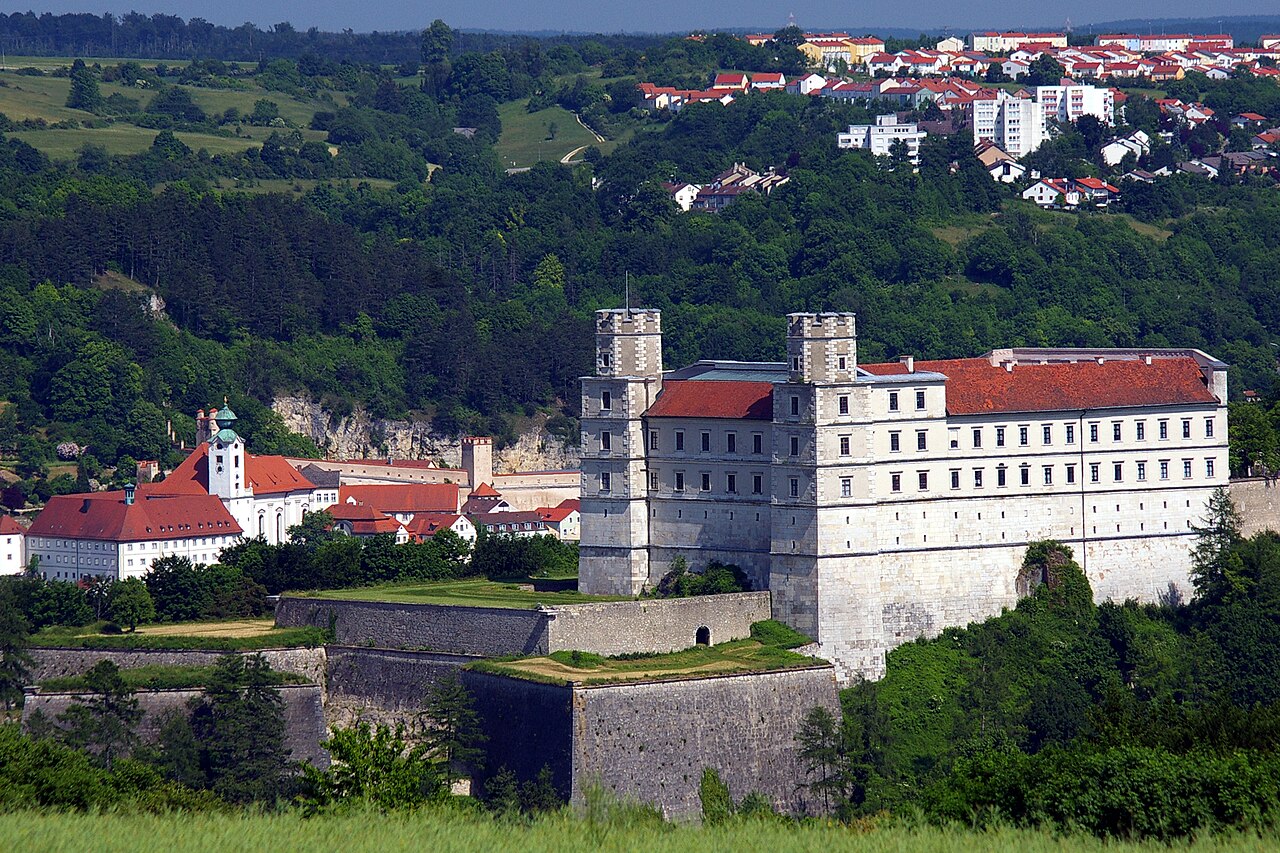
Pfünz Roman Fort
Pfünz Roman Fort, also known as Castra Vetoniana, is a significant archaeological site representing a Roman cohort camp constructed around 90 AD. Situated near the village of Pfünz in the municipality of Walting, Germany, the fort occupies a strategic position on a 42-metre-high Jurassic hillspur. This elevated location lies between the valleys of the Altmühl River and the Pfünzer Bach stream, providing commanding views and natural defensive advantages typical of Roman military engineering.
The role within the Rhaetian Limes frontier system
Pfünz Roman Fort was part of the extensive Rhaetian Limes, the fortified boundary marking the edge of the Roman Empire in this region. The Rhaetian Limes itself was designated a UNESCO World Heritage Site in 2005 due to its outstanding cultural and historical significance as a frontier system. The fort served as a permanent military base for a Roman cohort tasked with guarding this vulnerable border zone, controlling movement, and securing the empire's northern frontier.
Architectural features and defensive structures
The fort's design reflects typical Roman military architecture of the 1st century AD. One of its most remarkable features is the system of double V-shaped ditches carved directly out of the bedrock in front of the ramparts. These ditches enhanced the fort's defenses by creating formidable obstacles against attackers. Notably, the ditch on the western rampart is the best preserved and offers valuable insight into Roman fortification techniques of the period.
The fort's walls and internal structures, while largely archaeological ruins today, once included barracks, storage facilities, and command buildings arranged in a regular layout typical of Roman forts. The elevated position on the Jurassic hillspur was chosen not only for defense but also to allow surveillance across the surrounding landscape, including the important river valleys.
Archaeological investigations and findings
Extensive archaeological research has been conducted at Pfünz Roman Fort, especially notable was the work carried out in 1998 during the installation of a high-pressure water system. The Bavarian State Office for Monument Protection undertook test excavations that uncovered a wealth of artifacts and structural remains. Many of these finds are rare and provide critical information about the daily life of Roman soldiers stationed at the fort, their equipment, and the fort's operational history.
The archaeological record at Pfünz continues to be a focus for further study due to the site's well-preserved features and the richness of its material culture. These finds contribute to a broader understanding of Roman military presence and frontier policy in the province of Raetia during the early Imperial period.
Geographical and historical context
Located within modern Bavaria, Pfünz Roman Fort was part of the Roman effort to secure the northern boundaries of the empire against Germanic tribes and other external threats. The fort's position on a Jurassic hillspur provided natural defenses and facilitated control over the surrounding terrain, including the nearby river valleys which were vital for transportation and communication.
As a component of the Rhaetian Limes, the fort played a role in the broader Roman frontier system that stretched across Europe. The Limes included walls, watchtowers, forts, and roads that enabled rapid troop movements and effective border control.
Preservation and current status
Today, Pfünz Roman Fort remains an important archaeological site with partially preserved defensive ditches and foundations. While much of the original superstructure has not survived, the site's layout and key features are discernible. The fort is protected under German heritage laws and managed to facilitate ongoing research and public education.
The site's inclusion in the UNESCO World Heritage designation highlights its value not only as a military installation but also as a cultural monument illustrating Roman frontier life. Visitors to the area can explore the visible remains and interpretive materials that explain the fort's history and significance within the Roman Empire.
Frequently asked questions (FAQ)
- When was Pfünz Roman Fort built and what was its purpose?
- Pfünz Roman Fort was constructed around 90 AD as a Roman cohort camp to guard the Rhaetian Limes frontier and control movement along the empire's northern border.
- What are the notable architectural features of Pfünz Roman Fort?
- The fort features double V-shaped ditches carved out of rock, with the western rampart ditch being the best preserved, showcasing Roman defensive engineering.
- Is Pfünz Roman Fort accessible to visitors today?
- Yes, the site is open to the public with visible remains of the fortifications and interpretive information, though much of the original structure survives only as archaeological ruins.
- Why is Pfünz Roman Fort part of the UNESCO World Heritage Site?
- It is part of the Rhaetian Limes, a UNESCO World Heritage Site, recognized for its historical significance as a Roman frontier system protecting the empire's borders.
- What archaeological work has been done at Pfünz Roman Fort?
- Significant excavations occurred in 1998 during construction work, uncovering rare artifacts and structural remains that have informed understanding of Roman military life here.
Information
Current owner
Bavarian State Office for Monument Protection
Loading map...
Visitor reviews
No reviews yet. Been here? Write the first review and help other travelers!
Write the first reviewVisited this castle? Share your experience
Your review helps other travelers and adds first-hand knowledge to our encyclopedia.