Peter and Paul Fortress
The Peter and Paul Fortress is a foundational monument in the history of Saint Petersburg, Russia. Established by Peter the Great in 1703 on Hare Island, the fortress was designed to secure the nascent city against Swedish attacks during the Great Northern War. Although its military purpose was never truly tested in battle, the fortress stands as a significant example of star fortress design, constructed initially in earth and timber and later rebuilt in stone from 1706 to 1740 following the plans of the Swiss-Italian architect Domenico Trezzini.
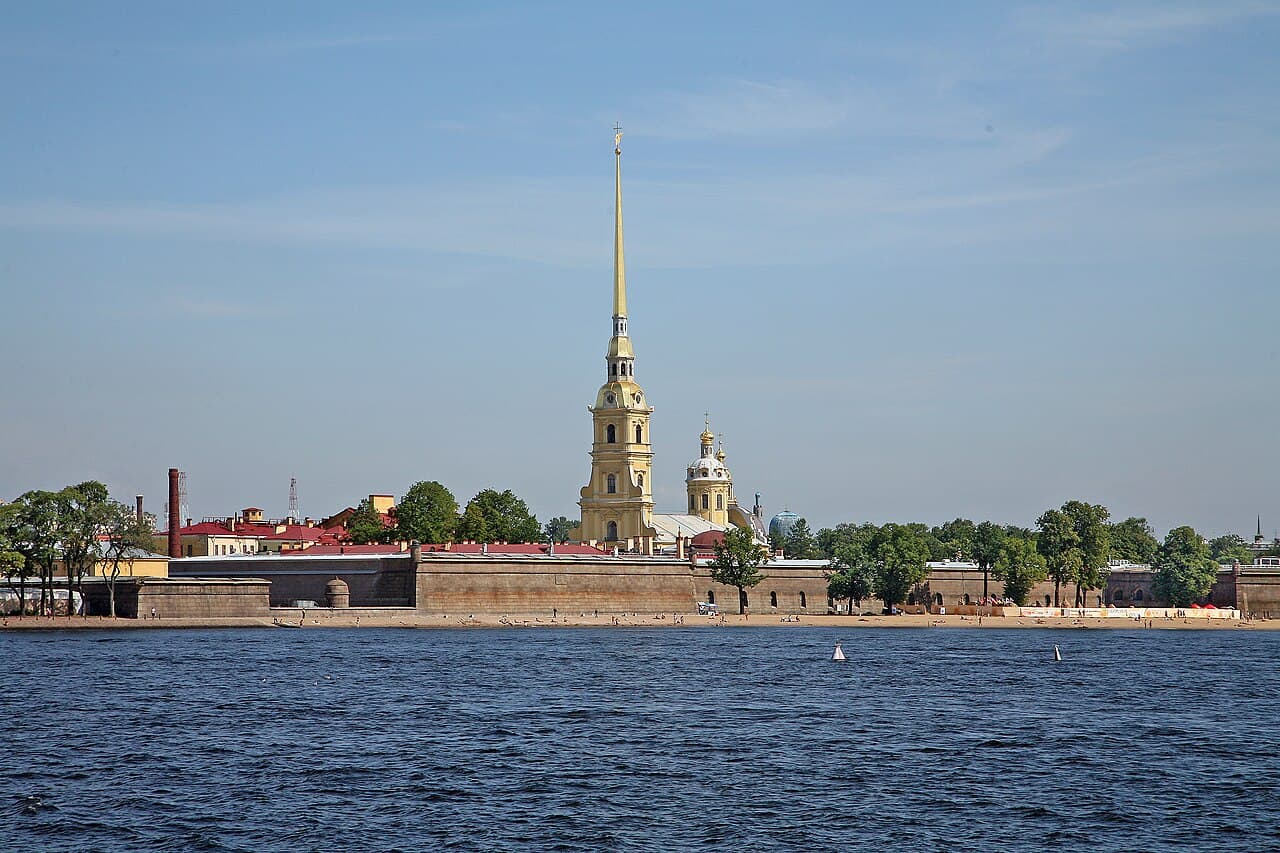
Located strategically on the northern bank of the Neva River, the fortress was the first structure of the new capital and remains a symbol of the city’s origins. Its layout features six bastions, typical of bastioned fortress architecture, which provided overlapping fields of fire and enhanced defense. The fortress complex includes the iconic Peter and Paul Cathedral, built between 1712 and 1733, distinguished by its soaring 123.2-meter bell tower topped with a gilded angel, which remains the tallest structure in the city center.
Architectural features and layout
The fortress exemplifies the post-renaissance military architectural style, specifically the bastioned fortress typology that was prevalent in early 18th-century Europe. Its walls were originally constructed with earth and timber, allowing rapid completion during wartime, but were soon rebuilt in durable stone to withstand artillery fire. The six bastions, including the Trubetskoy and Alekseyevsky bastions, were designed to create a star-shaped fortification, maximizing defensive coverage.
The Trubetskoy bastion became notorious as the fortress prison, known colloquially as the "Russian Bastille." Its grim cells housed many prominent political prisoners over two centuries, including Prince Peter Kropotkin, who famously escaped in 1876, and a host of other notable figures such as Fyodor Dostoevsky, Leon Trotsky, and Josip Broz Tito. The fortress’s role as a prison extended well into the 20th century, playing a significant part in the political upheavals of Russia.
Historical significance and political role
Beyond its military origins, the Peter and Paul Fortress evolved into a key political prison and symbol of state authority. During the February Revolution of 1917, mutinous soldiers attacked the fortress, liberating prisoners and marking a critical moment in the collapse of the Tsarist regime. The fortress was central during the October Revolution later that year; its artillery fired on the Winter Palace, signaling the Bolshevik assault that led to the overthrow of the Provisional Government.
Following the revolution, the fortress housed various government institutions and was transformed into a museum by 1924. Despite suffering damage during the siege of Leningrad in World War II, the fortress was carefully restored, preserving its historical fabric for future generations.
The peter and paul cathedral and mausoleums
The Peter and Paul Cathedral is the architectural and spiritual centerpiece of the fortress. Its distinctive baroque design, completed under Domenico Trezzini’s supervision, features a slender bell tower that dominates the city skyline. The cathedral serves as the burial site for most Russian tsars from Peter I to Alexander III, with exceptions such as Peter II and Ivan VI.
In the 20th century, the cathedral also became the resting place for the last imperial family, Nicholas II and his family, whose remains were interred in the St. Catherine's Chapel in 1998. The Grand Ducal Mausoleum, built in the neo-baroque style between 1896 and 1908 under architect Leon Benois, is connected to the cathedral by a corridor and was intended to accommodate Romanov family members not interred in the cathedral itself.
Additional structures and cultural importance
The fortress complex also includes the mint building, designed by Antonio Rinaldi during the reign of Emperor Paul, which remains operational. The fortress’s bastions, prison cells, and the city museum contribute to its role as a cultural and historical site. A longstanding tradition involves firing a cannon from the Naryshkin Bastion every noon, a practice that continues to attract visitors.
Today, the fortress is a major tourist attraction and a venue for city celebrations, including the annual City Day festivities on May 27. The sandy beaches along the fortress walls are popular in summer, often crowded during events such as the sand festival, reflecting the fortress’s ongoing role in the social life of Saint Petersburg.
Preservation and museum status
Since its conversion to a museum in 1924, the Peter and Paul Fortress has been meticulously preserved and restored, especially after the extensive damage it sustained during the Second World War. Its well-maintained structures offer insight into 18th-century military architecture, the political history of Imperial and Soviet Russia, and the cultural heritage of Saint Petersburg.
The fortress remains under the stewardship of the state and is accessible to the public with regular visiting hours. It stands as a testament to the city's foundation and evolution, bridging the past with the present through its architecture, history, and cultural significance.
Frequently asked questions (FAQ)
- How do I get to Peter and Paul Fortress?
- You can reach Peter and Paul Fortress by taking public transport, such as the metro to Gorkovskaya station, followed by a short walk. Buses and trams also serve the area, making it accessible from various parts of Saint Petersburg. Additionally, taxis and rideshare services are convenient options for direct access.
- What is the historical significance of Peter and Paul Fortress?
- Peter and Paul Fortress is the oldest structure in Saint Petersburg, founded in 1703 by Peter the Great. It served as a military fortification and the burial place for Russian tsars, making it a crucial part of the city's history. The fortress symbolizes the birth of Saint Petersburg and showcases the city's rich heritage.
- When was Peter and Paul Fortress built?
- Construction of Peter and Paul Fortress began in 1706 and continued for several years, with various modifications added over time. The fortress was designed to protect the newly established city from foreign invasions. Its architecture reflects the early Baroque style, which was influential in the era.
- Can I visit the cathedral within the fortress?
- Yes, visitors can explore the Peter and Paul Cathedral, which is located within the fortress grounds. The cathedral features stunning architecture and houses the tombs of many Russian emperors. It's a must-see for anyone interested in the history of the Russian monarchy.
- Why is Peter and Paul Fortress a popular tourist attraction?
- Peter and Paul Fortress is a popular tourist attraction due to its historical significance and stunning architecture. Visitors are drawn to its rich history, beautiful views of the Neva River, and the impressive Peter and Paul Cathedral. The fortress also offers engaging exhibitions and events throughout the year.
- Is it possible to visit Peter and Paul Fortress year-round?
- Yes, Peter and Paul Fortress is open to visitors year-round, though operating hours may vary by season. Summer months typically see longer hours and more activities, while winter may have reduced access due to weather conditions. Always check the official website for the latest information on hours and availability.
- What are the ticket prices for Peter and Paul Fortress?
- Ticket prices for Peter and Paul Fortress vary depending on the season and the areas you wish to access. Generally, entrance to the fortress is affordable, with discounts available for students and seniors. Special exhibitions may have additional fees, so it's advisable to check the website for current rates.
- What are the opening hours of Peter and Paul Fortress?
- Peter and Paul Fortress typically opens at 10 AM and closes at 8 PM during the summer months, while winter hours may be shorter. It's recommended to check the official schedule as hours can change on holidays or for special events. Planning your visit accordingly ensures you make the most of your time there.
- What nearby attractions can I visit after exploring the fortress?
- After visiting Peter and Paul Fortress, you can explore the nearby State Museum of St. Petersburg History and the stunning Summer Garden. The fortress is also close to the Hermitage Museum, which is a short walk or boat ride away. These attractions complement your visit and offer deeper insights into the city's culture and history.
Photo gallery

Information
Website
Visit websiteSources & official resources
Verify the information above using these authoritative references.
Loading map...
Visitor reviews
No reviews yet. Been here? Write the first review and help other travelers!
Write the first reviewVisited this castle? Share your experience
Your review helps other travelers and adds first-hand knowledge to our encyclopedia.