Péronne Castle
Péronne Castle, also known as Château-fort de Péronne, is a historically significant fortress located in the town of Péronne within the Somme department of Hauts-de-France. This hill castle has stood as a sentinel over the region for more than a millennium, witnessing the evolution of military architecture and the shifting tides of French history from the early medieval period through to modern times. Today, it is renowned not only for its medieval origins but also as the home of the Historial de la Grande Guerre, one of Europe's foremost museums dedicated to the history of World War I.
The castle's origins trace back to the 9th century, when Herbert I, Count of Vermandois, established the initial fortification on the site, replacing a royal palace destroyed during the Viking raids of 884 AD. This early structure underscored the strategic importance of Péronne as a defensive stronghold on the northern frontier of the Frankish kingdom. Notably, the castle served as a noble residence and a prison; Herbert II of Vermandois famously imprisoned Charles the Simple, King of West Francia, within its keep until his death in 929 AD.
Medieval reconstruction and royal significance
In the late 12th century, the castle became a royal domain once again. In 1209, under the reign of Philip II of France, the fortress underwent a significant transformation that shaped its iconic medieval form. The castle was rebuilt with a distinctive pentagonal layout, featuring circular towers at each corner and dominated by a large circular keep. This design reflected the high medieval period military architecture, balancing robust defensive capabilities with the symbolic assertion of royal authority.
Architectural features of the 13th-century fortress
The pentagonal shape was a tactical innovation, allowing the curtain walls to be effectively covered by the circular towers, reducing blind spots and improving defense against siege tactics. The circular towers themselves represented an advancement over earlier square designs, as their rounded form better deflected projectiles and resisted undermining efforts. The imposing keep served as both a last refuge during sieges and a powerful symbol of the king's presence in the region.
Conflicts and transformations in the late medieval period
Péronne Castle was a focal point in the complex political and military struggles of the 15th century. In 1468, it was the setting for a dramatic confrontation between Charles the Bold, Duke of Burgundy, and King Louis XI of France. During this meeting, Charles the Bold detained Louis XI within the castle, compelling him to sign a treaty that marked a significant shift in power dynamics between Burgundy and the French crown.
Siege and partial destruction in the 16th century
The castle faced a major military challenge in 1536 during a siege led by the Count of Nassau under the orders of Charles V, Holy Roman Emperor. The siege lasted 31 days and, although it failed to capture the fortress, it caused substantial damage, including the destruction of the circular keep on the western side. This damage significantly weakened the castle's defenses and necessitated extensive repairs and modifications.
Adaptations for artillery and continued military use
Throughout the 17th century, Péronne Castle was modernized to meet the challenges posed by the increasing use of artillery in warfare. The fortifications were reinforced, and walls were thickened to better absorb cannon fire. These adaptations allowed the castle to maintain its military relevance well into the early modern period, despite the changing nature of siege warfare.
20th-century destruction and rebirth as a museum
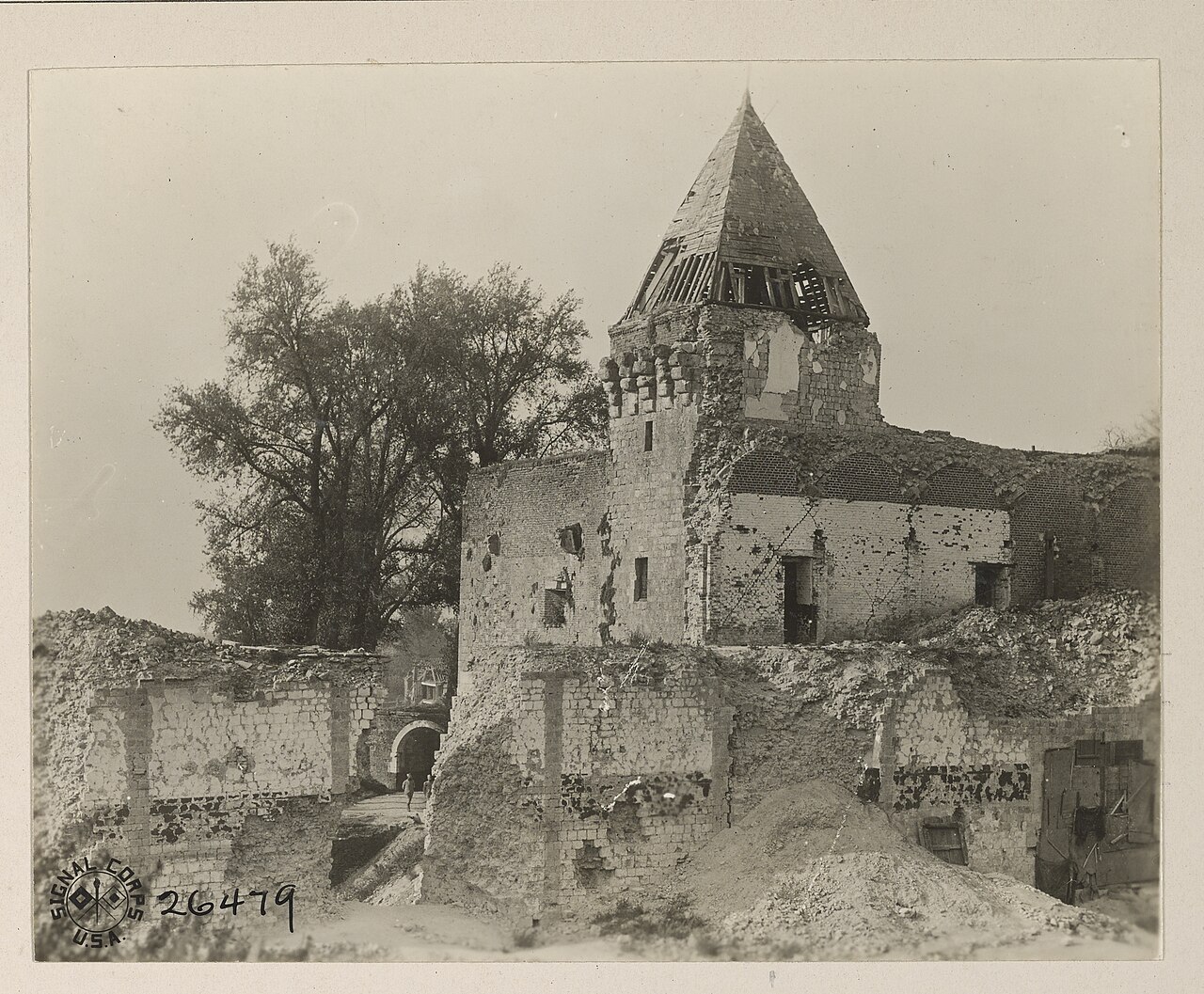
The castle's strategic location near the front lines of the Battle of the Somme during World War I brought it intense bombardment, resulting in near-total destruction of its medieval structures. After the war, reconstruction efforts used red brick to rebuild portions of the castle, blending practical restoration with the architectural styles of the early 20th century.
The historial de la grande guerre
Since 1992, the restored parts of Péronne Castle have housed the Historial de la Grande Guerre, a museum dedicated to the comprehensive history of World War I. The museum offers an immersive experience with exhibits covering the war's causes, military technology such as tanks and aircraft, the experiences of soldiers and civilians, and the profound social and political changes that followed. The castle's medieval gatehouse and courtyard serve as a powerful entrance, connecting centuries of military history in a single location.
Visiting péronne castle and its surroundings
While the interior of the medieval castle is not fully accessible for tours, visitors can explore the castle gate and courtyard, gaining insight into the fortress's original scale and defensive design. The museum within the castle provides extensive educational exhibits that deepen understanding of both the castle's medieval past and its role in modern warfare.
The town of Péronne itself offers additional historical attractions, including Fort Caraby, enhancing the visitor experience by providing a broader context of the region's military heritage from the medieval era through the 20th century.
Frequently asked questions (FAQ)
- What is the historical significance of Péronne Castle?
- Péronne Castle has a rich history, dating back to the 11th century, and played a crucial role in the Hundred Years' War. It served as a stronghold for various noble families and is known for its strategic location in the Somme region. The castle also witnessed significant events during the French Revolution, making it a key site in French history.
- When was Péronne Castle built?
- Construction of Péronne Castle began in the 11th century, with significant modifications made in the centuries that followed. The castle has been restored several times, preserving its medieval architecture while also adapting to modern needs. Its long-standing presence makes it one of the most important historical landmarks in the area.
- Can I visit Péronne Castle year-round?
- Yes, Péronne Castle is open to visitors throughout the year. However, it's best to check the official website for any seasonal changes in opening hours or special events that may affect access. This ensures you have the most enjoyable experience during your visit.
- What are the opening hours for Péronne Castle?
- Péronne Castle typically opens to the public from 10 AM to 6 PM, with extended hours during the summer months. It's advisable to verify the specific opening times before your visit, as they may vary on public holidays or during special exhibitions. Planning ahead will help you make the most of your time at the castle.
- Is it possible to access Péronne Castle with mobility issues?
- Péronne Castle aims to be accessible to all visitors, including those with mobility challenges. While some areas may have limitations due to the castle's historical architecture, there are provisions in place to assist with access. It's recommended to inquire in advance about specific accommodations that may be available during your visit.
- What are the ticket prices for visiting Péronne Castle?
- Ticket prices for Péronne Castle are generally affordable, with discounts available for students, seniors, and groups. Children under a certain age may enter for free. Always check the official website for the latest pricing information and any special offers that may be available.
- When is the best time to visit Péronne Castle?
- The best time to visit Péronne Castle is during the spring and early autumn months when the weather is mild and the gardens are in bloom. These seasons also see fewer crowds, allowing for a more relaxed exploration of the castle's grounds and exhibits. Special events and guided tours are often scheduled during these times, enhancing the visitor experience.
- What nearby attractions can I explore while visiting Péronne Castle?
- While visiting Péronne Castle, you can also explore the nearby Historial de la Grande Guerre, a museum dedicated to the history of World War I. The charming town of Péronne itself offers picturesque streets, local shops, and cafes. Other historical sites in the area include the memorials and cemeteries dedicated to the fallen soldiers of the Great War.
Information
Opening hours
10:00-18:00, daily
Ticket prices
€8 adult, €5 child
Current owner
Municipality
Website
Visit websiteAddress
Place André Audinot, Péronne, Somme, France
Sources & official resources
Verify the information above using these authoritative references.
Loading map...
Visitor reviews
No reviews yet. Been here? Write the first review and help other travelers!
Write the first reviewVisited this castle? Share your experience
Your review helps other travelers and adds first-hand knowledge to our encyclopedia.