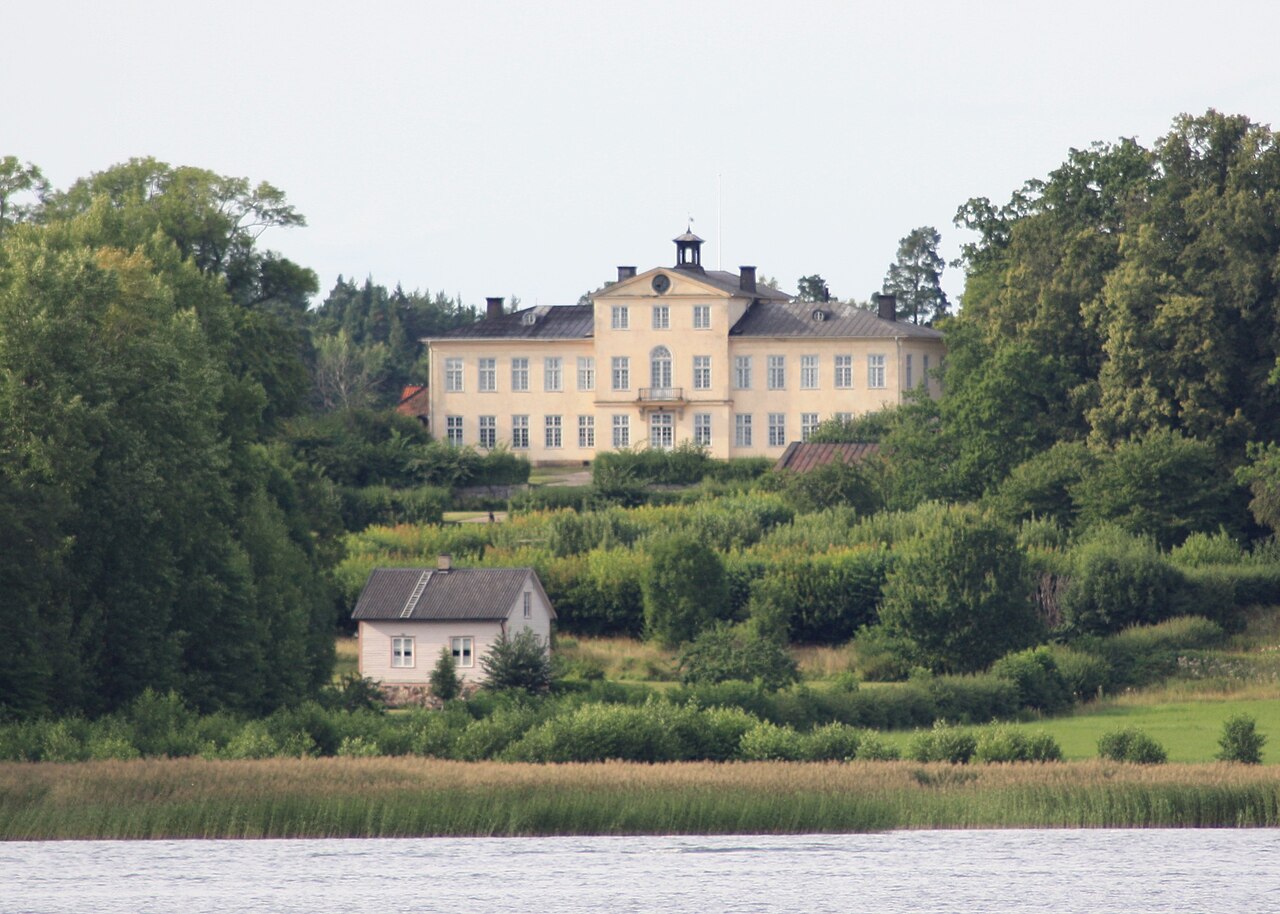
Penningby Castle
Penningby Castle is a prominent late medieval hill castle located in the municipality of Norrtälje, in the historical province of Uppland, Sweden. Situated roughly 70 kilometres north of Stockholm, the castle occupies a strategic valley near Edsviken, a narrow inlet connected to the Baltic Sea's Saltsjön bay. Its position near waterways historically linked the Baltic Sea to the religious center of Uppsala, underscoring its military and administrative importance during the medieval period.
The castle's origins date back to the early 14th century, with the estate first documented in the 1330s. Nearby lie the remains of an older fortress at Estängen, likely a predecessor to the current structure, featuring a moat and overgrown ruins that hint at the site's long-standing defensive role. Penningby Manor's earliest known owners included Lord Tord Bonde, burgrave of Raasepori and margrave of Viipuri castles, indicating the estate's connection to prominent noble families.
Medieval origins and construction
The construction of the current castle began in the 15th century, initiated by Lady Birgitta Tordsdotter Bonde, daughter of Tord Karlsson Bonde, the Lord High Constable of Sweden. This phase marked the transformation of the manor into a fortified residence, reflecting the turbulent political climate of the era and the growing need for defensible noble homes. The castle was designed as a twin house, a rare architectural form for coastal fortresses, combining residential and defensive functions in a single complex.
During the late 15th and early 16th centuries, further expansions were undertaken by Lord Lars Turesson of the Tre Rosor family. He constructed an imposing tower just before the 1550s and remodeled the eastern façade to include a new entrance, enhancing both the castle's fortifications and its residential appeal. The sea tower was also expanded with the addition of a distinctive round salon, celebrated as one of the most elegant rooms within the castle, blending aesthetic refinement with strategic vantage points over the surrounding waterways.
Architectural features and layout
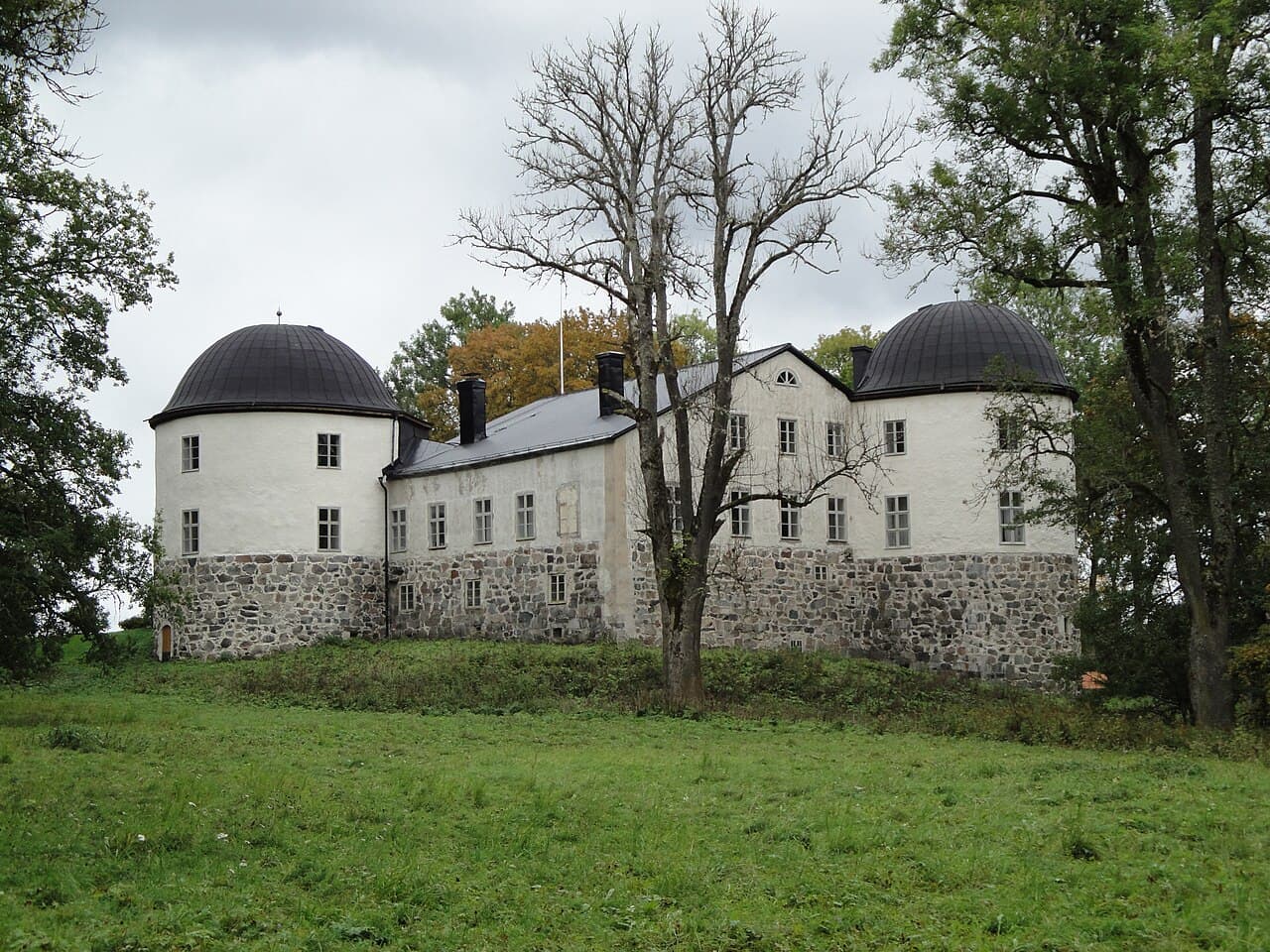
Penningby Castle's main building is roughly square, anchored by two round towers placed diagonally at its corners. The southwestern tower houses a large well, crucially positioned near the historical watercourses connecting Penningbyån and Väsbysjön. These waterways were part of a medieval transport route, highlighting the castle's role in controlling regional movement and trade.
The castle's lower two floors showcase traditional medieval construction techniques, built from robust gray stone and featuring cylindrical vaults that provide both structural strength and fire resistance. Portions of the original fortress walls remain intact, preserving the defensive character of the estate. Above these stone foundations, the upper two floors were largely rebuilt in the 17th century using sandstone, creating a visual contrast and reflecting evolving architectural tastes and residential needs.
The castle's sea tower and its round salon stand out as architectural highlights. This salon, likely added during Lord Lars Turesson's tenure, exemplifies a rare blend of military functionality and refined living spaces uncommon in many medieval fortifications.
Historical significance and notable figures
Penningby Castle has been associated with several prominent Swedish noble families, including the Vasas, Fleming, Bielke, Ryning, Oxenstierna, and Torstenson lineages. One of its most notable residents was Svante Nilsson, born at Penningby around 1460, who served as regent of Sweden from 1504 until his death in 1512.
The castle also has a connection to early Swedish colonial history in North America through Olof Persson Stille, who was employed at Penningby Manor before emigrating to New Sweden. Stille became a magistrate and judge in the Delaware River colony, linking the castle to transatlantic history.
Later history, restoration, and current status
In 1805, Countess Maria Juliana von Rosen redesigned the castle's gardens in the English landscape style, introducing naturalistic elements and gentle curves that replaced earlier formal designs. However, a devastating fire in 1831 severely damaged the castle's interiors, necessitating reconstruction of the roof and main house framework. Subsequent restorations in the 20th century focused on stabilizing the towers and preserving the castle's structural integrity.
A major restoration project between 1951 and 1953 helped conserve the castle, which was officially declared a national cultural heritage site (byggnadsminne) in 1980. Today, Penningby Castle is not inhabited but is accessible to visitors during the summer season. It has also served as a filming location for several Swedish films and television productions, highlighting its cultural significance.
The castle grounds and surrounding landscape
The castle grounds include the historic garden redesigned in the early 19th century and the remains of the older fortress ruins nearby. The presence of moats and water features reflects the site's defensive origins and its integration with the natural landscape. The valley setting near Edsviken provides scenic views and underscores the castle's strategic placement near important medieval transport routes.
Overall, Penningby Castle offers a rich architectural and historical narrative that spans from medieval fortification to noble residence and cultural landmark. Its preservation allows insight into Swedish noble life, defensive architecture, and the region's evolving landscape from the 14th century onward.
Frequently asked questions (FAQ)
- When was Penningby Castle originally built?
- Penningby Castle was originally constructed in the 15th century, with earlier records of the manor dating back to the 1330s.
- What architectural style characterizes Penningby Castle?
- The castle features late medieval architecture with traditional stone construction and later 17th-century sandstone additions.
- Is Penningby Castle open to visitors?
- Yes, Penningby Castle is open to visitors during the summer season, typically from June to August, with varying ticket prices.
- What significant historical figures are associated with Penningby Castle?
- Notable figures include Svante Nilsson, regent of Sweden, and Olof Persson Stille, an early Swedish settler and magistrate in colonial America.
- What happened to the castle in 1831?
- A fire in 1831 destroyed much of the castle's interiors, leading to reconstruction of the roof and main house structure.
Photo gallery

Information
Opening hours
Summer season, typically June to August
Ticket prices
Varies, often free or small fee
Current owner
Private owner
Website
Visit websiteSources & official resources
Verify the information above using these authoritative references.
Loading map...
Visitor reviews
No reviews yet. Been here? Write the first review and help other travelers!
Write the first reviewVisited this castle? Share your experience
Your review helps other travelers and adds first-hand knowledge to our encyclopedia.