Pennard Castle
Pennard Castle stands as a remarkable example of a medieval hill castle located on the scenic Gower Peninsula in the United Kingdom. This historic fortress, now in ruins, encapsulates centuries of architectural evolution and strategic military importance from the 12th century through the early 14th century. Its story reflects the Norman expansion into Wales, the adaptation of defensive designs, and the impact of natural forces such as encroaching sand dunes on medieval fortifications.
Constructed initially as a timber ringwork in the early 12th century, Pennard Castle was founded shortly after the Norman conquest of Wales. The castle's strategic position atop a limestone promontory overlooking Pennard Pill stream and the dramatic Three Cliffs Bay provided natural defenses on its northern and western flanks. This location offered commanding views and control over the surrounding landscape, making it a valuable stronghold for the Normans.
The original ringwork, an oval-shaped enclosure measuring approximately 34 by 28 meters, was fortified with earthworks and timber palisades. This early form of fortification was typical for Norman castles during the High Medieval period, emphasizing speed of construction and strategic positioning. The natural cliffs complemented the man-made defenses, creating a formidable obstacle to attackers.
Architectural development and stone reconstruction
By the early 13th century, Pennard Castle underwent a significant transformation. The initial timber structures were replaced with stone buildings, reflecting the growing stability and permanence of Norman control in the region. The central timber hall was rebuilt as a stone hall measuring about 18.6 by 7.6 meters. This hall was constructed using locally quarried red-purple sandstone with contrasting white limestone detailing, a combination that highlighted the castle’s architectural prominence.
This stone hall served as the primary residential and administrative building within the castle, marking a shift from purely military functions to a more complex feudal estate. Adjacent to the castle, a small settlement developed, including the construction of St Mary’s Church and a rabbit warren in the nearby dunes, which supported the local economy and food supply.
Late 13th and early 14th-century fortifications
The most substantial architectural enhancements occurred under the ownership of the Braose family in the late 13th and early 14th centuries. They replaced the remaining timber defenses with robust stone curtain walls standing approximately 8 meters high. These walls enclosed the castle, featuring battlements that allowed defenders to repel attacks effectively.
Integral to these improvements were the construction of two prominent towers: a square tower on the west side perched on a rocky spur, and a circular tower at the northwest corner. These towers served as lookout points and strong defensive positions, commanding views over the approaches to the castle.
The castle’s stone gatehouse is a particularly notable feature from this period. It comprised two semicircular towers flanking the entrance passage, equipped with a portcullis and narrow arrow loops for archers. The gatehouse design shows influences from contemporary Welsh castles such as Caerphilly Castle, indicating regional architectural trends.
The Braose family’s decision to rebuild Pennard Castle in stone coincided with the abandonment of their earlier nearby stronghold at Penmaen Castle, which had succumbed to advancing sand dunes. This shift underscores the challenges medieval builders faced from natural environmental changes.
Decline and impact of natural forces
From the 16th century onward, the relentless advance of sand dunes dramatically altered the landscape around Pennard Castle. This natural encroachment gradually made the site less habitable and contributed to the abandonment of both the castle and the surrounding settlement.
By around 1650, historical records described Pennard Castle as "desolate and ruinous," marking the beginning of its long decline. Structural collapses accelerated during the 18th century, with the south wall largely fallen by 1741 and further degradation noted by 1795. The gatehouse also suffered damage, partially collapsing in 1879 due to structural cracks.
20th-century preservation efforts
Recognizing the castle's historical significance, preservation work began in the early 20th century. Concrete repairs were applied to the gatehouse in the 1920s to stabilize the structure. Later, archaeological surveys conducted in 1960–1961 facilitated further masonry repairs in 1963, funded by public and institutional sources.
Today, Pennard Castle is protected as a Grade II* listed building and a scheduled ancient monument, ensuring legal protection and recognition of its cultural heritage. These efforts have helped maintain the ruins as a valuable educational and tourist site.
Architectural remains and layout
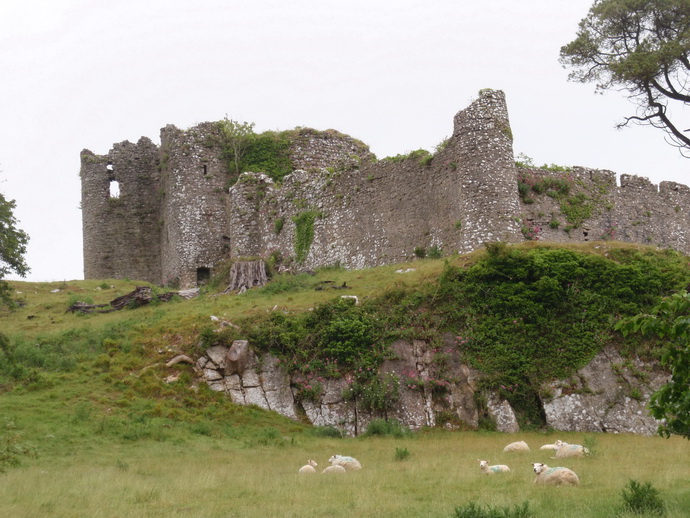
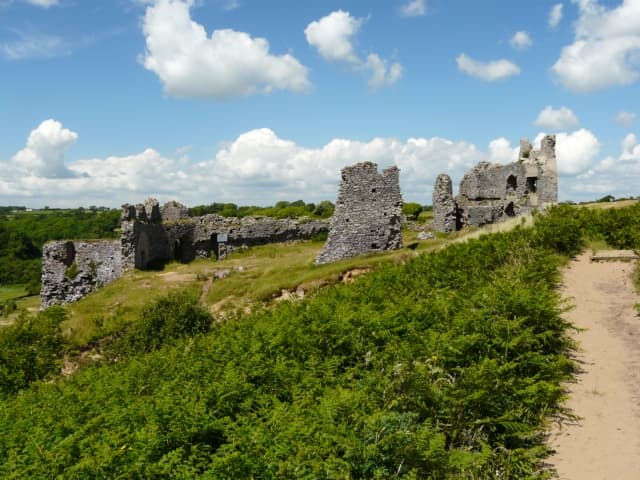
The surviving ruins of Pennard Castle offer a tangible glimpse into its layered history. The original ringwork layout is still discernible, with earth ramparts and a surrounding ditch visible on the limestone spur. The natural cliffs on the north and west sides remain a striking defensive feature.
The remains of the early 13th-century stone hall are evident in the central area, showcasing the use of red-purple sandstone and white limestone accents. The simplicity of this hall reflects its functional role within the castle's early stone phase.
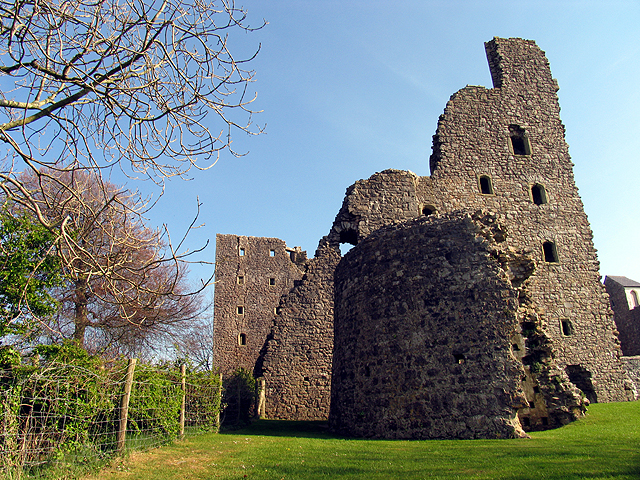
The late medieval curtain walls are the most prominent surviving structures. These walls, approximately 1.1 meters thick and 5 to 8 meters high where intact, incorporate both red sandstone rubble and reclaimed limestone. The square and round towers integrated into the curtain walls demonstrate typical medieval defensive architecture, providing vantage points and strongholds.
The gatehouse remains a highlight for visitors, with its semicircular towers and defensive features still visible. The east side of the gatehouse survives up to the battlements, a testament to the quality of construction and later restoration efforts.
Over centuries, natural erosion and human activity have taken their toll, but the castle's ruins continue to convey its historical significance and architectural evolution. The site exemplifies the blend of natural landscape and medieval military design, offering insight into Norman and medieval Welsh fortification strategies.
The cultural and historical significance of pennard castle
Pennard Castle holds a significant place in the history of the Gower Peninsula and medieval Wales. As a Norman stronghold, it played a crucial role in consolidating Norman power in the region and controlling strategic coastal routes. Its architectural evolution from timber to stone reflects broader trends in medieval castle construction and the adaptation to changing military and environmental conditions.
The castle’s story also highlights the challenges faced by medieval builders from natural forces, particularly the encroachment of sand dunes that led to the abandonment of multiple sites in the area. This interaction between human activity and the environment is a key theme in the study of medieval Welsh castles.
Today, Pennard Castle is a valued heritage site, attracting visitors interested in medieval history, architecture, and the dramatic landscapes of the Gower Peninsula. Its ruins serve as a reminder of the region’s turbulent past and the enduring legacy of Norman fortifications in Wales.
Frequently asked questions (FAQ)
- How do I get to Pennard Castle?
- Pennard Castle is located in Swansea, United Kingdom. You can reach the castle by car, with parking available nearby, or by taking public transportation to Swansea and then a short taxi ride. The castle is also accessible via walking trails from the surrounding areas.
- What is the historical significance of Pennard Castle?
- Pennard Castle dates back to the 12th century and is a significant example of Norman military architecture in Wales. It played an important role in the defense of the region during its early years. The ruins provide insight into the medieval period and the feudal system that existed in Wales.
- When was Pennard Castle built?
- The construction of Pennard Castle began in the early 12th century, around the year 1100. It was established by the Normans to help secure their control over the area. Over the years, it underwent various modifications and expansions.
- Can I visit Pennard Castle year-round?
- Yes, Pennard Castle is open to visitors throughout the year. However, it's important to check for any specific closure dates or maintenance schedules before planning your visit. The castle's grounds are accessible, allowing you to explore the ruins and enjoy the surrounding landscape.
- Why is Pennard Castle a popular tourist attraction?
- Pennard Castle is popular for its stunning views of the surrounding countryside and its historical significance. Visitors enjoy exploring the ruins, which provide a glimpse into medieval life and architecture. The castle's picturesque setting makes it a favorite spot for photography and leisurely walks.
- Is it possible to access the castle with mobility aids?
- Access to Pennard Castle can be challenging due to uneven terrain and steep paths. While some areas may be accessible with assistance, it is advisable for visitors with mobility aids to plan ahead. Contacting local visitor services for advice on accessibility options is recommended.
- What are the best times to visit Pennard Castle?
- The best times to visit Pennard Castle are during the spring and summer months when the weather is mild and the flowers are in bloom. Early mornings or late afternoons are also ideal for avoiding crowds and enjoying the peaceful atmosphere. Sunset views from the castle are particularly breathtaking.
- Are there any nearby attractions to visit?
- Yes, there are several attractions near Pennard Castle, including the beautiful Swansea Bay and the Gower Peninsula, known for its stunning landscapes and beaches. You can also explore local villages and enjoy walking trails that showcase the area's natural beauty. These nearby sites make for a perfect day trip.
- What are the ticket prices for visiting Pennard Castle?
- Admission to Pennard Castle is typically free, allowing visitors to explore the grounds without any charge. However, special guided tours or events may have associated fees, so it's best to check in advance. Donating to conservation efforts is encouraged to help maintain the site.
- What are the opening hours for Pennard Castle?
- Pennard Castle is generally open to visitors at all hours, allowing for flexible visiting times. It is recommended to visit during daylight hours for safety and optimal viewing. Always check local guidelines for any specific opening times or restrictions that may be in place.
Photo gallery

Information
Website
Visit websiteSources & official resources
Verify the information above using these authoritative references.
Loading map...
Visitor reviews
No reviews yet. Been here? Write the first review and help other travelers!
Write the first reviewVisited this castle? Share your experience
Your review helps other travelers and adds first-hand knowledge to our encyclopedia.