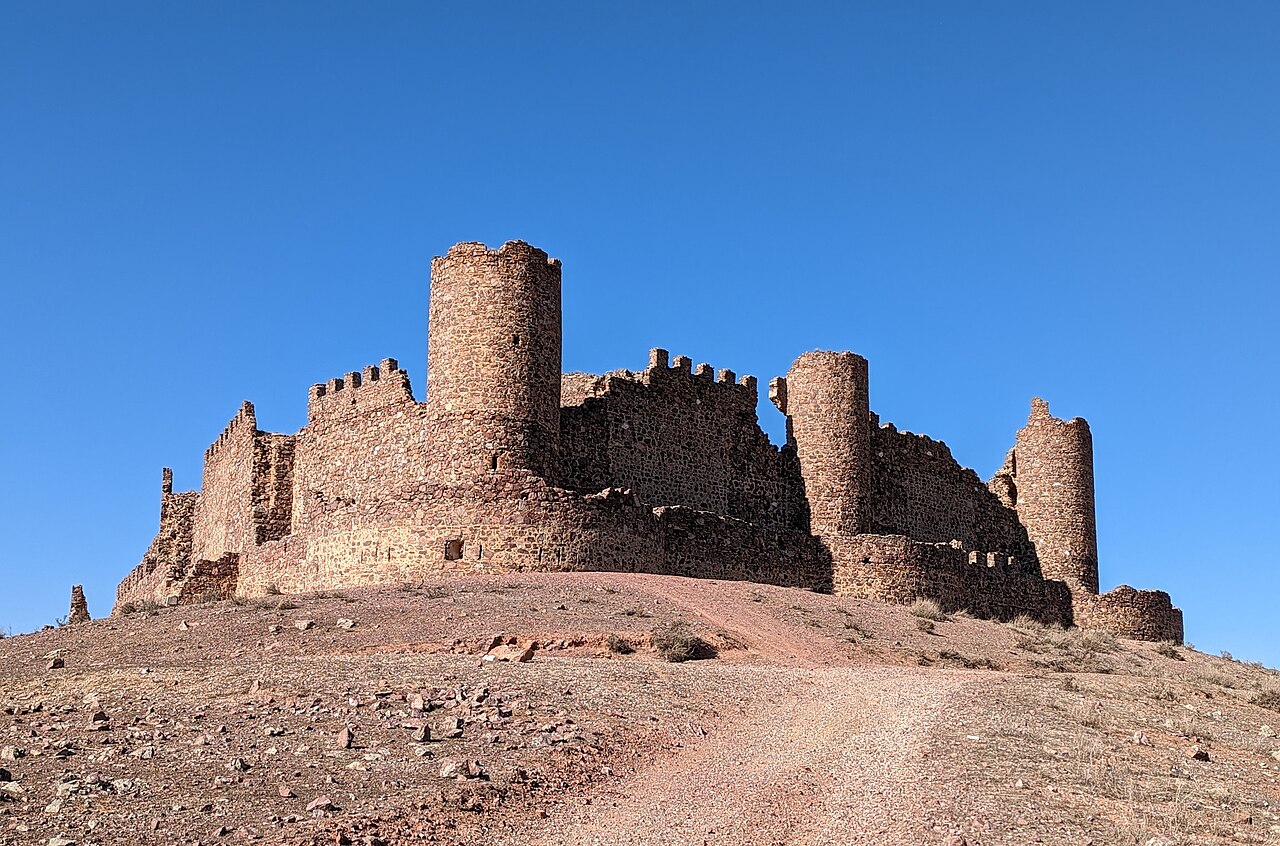
Peñas Negras Castle
Peñas Negras Castle is a historic fortress located approximately 2 kilometers east of the village of Mora in the province of Toledo, Spain. The castle's name, which translates to "Black Rocks," aptly describes its dramatic setting perched atop a rocky ridge. This strategic location contributed to its reputation as one of the most formidable castles in the province.
Historical background and strategic importance
The castle was originally constructed around 1143 under the reign of King Alfonso VII. Its primary function was military, serving as a base for launching raids into Moorish territories during the period of the Reconquista. The castle's commanders resided in the nearby village of Mora, highlighting the close connection between the fortress and local governance.
In 1172, the castle was ceded to the Order of Santiago by King Alfonso VIII. The order maintained the castle as a military stronghold until at least 1190. Over the subsequent centuries, Peñas Negras Castle also served as a state prison, capitalizing on its strong defensive position. Notably, Cesare Borgia is said to have been imprisoned here, adding to the castle's historical intrigue.
Architectural features and layout
Peñas Negras Castle is remarkable for its adaptation to the natural rocky terrain. The fortress is built on an irregular square plan, conforming to the contours of the rock ridge. One of its most prominent features is the keep, which rises three stories high with an entrance located on the second floor, a common defensive design to hinder attackers.
The castle complex includes three enclosures, each serving distinct purposes and separated by defensive structures. The inner enclosure is divided from the second by a deep dry moat carved directly out of the rock, enhancing the castle's defensibility. These enclosures housed essential facilities such as barns, stables, and rainwater tanks, allowing the castle to be largely self-sufficient during sieges or prolonged military campaigns.
Defensive elements
The castle's position on a rocky ridge naturally fortified it against assault. Its walls and battlements were designed to maximize defensive capabilities, with the dry moat serving as a significant obstacle to attackers. The use of natural rock formations in the castle's construction exemplifies medieval military architecture's integration with the landscape.
Decline and current status
By the early 15th century, Peñas Negras Castle had fallen into decline. It was then inhabited only by the castle keeper and a few laborers, reflecting its diminished strategic importance. The cost of repairs and maintenance had become prohibitive, leading to its gradual abandonment and ruin.
Today, the castle remains in a ruined state but is freely accessible to visitors. It offers panoramic views of the surrounding plains and nearby landmarks such as the Almonacid de Toledo Castle. The site is occasionally subject to archaeological excavations, with local volunteers involved in clearing undergrowth and preparing the grounds for study.
Visitor experience
Reaching Peñas Negras Castle involves a pleasant walk up the hill, rewarding visitors with expansive vistas and a tangible sense of medieval history. Despite its historical significance, the castle is rarely crowded, making it an appealing destination for those interested in off-the-beaten-path heritage sites.
Legacy and cultural significance
Peñas Negras Castle stands as a testament to the military and political dynamics of medieval Spain, particularly during the Reconquista. Its association with the Order of Santiago and figures like Cesare Borgia adds layers of historical interest. The castle's architecture reflects the practical challenges of fortress construction on difficult terrain, showcasing the ingenuity of medieval builders.
As a cultural landmark, the castle contributes to the rich tapestry of Toledo's medieval heritage and offers insights into the region's defensive strategies and feudal governance.
Frequently asked questions (FAQ)
- How do I get to Peñas Negras Castle from Mora?
- Peñas Negras Castle is located about 2 km east of Mora. Visitors can reach it by walking or driving along the CM-410 road, followed by a short uphill walk to the castle site.
- What is the historical significance of Peñas Negras Castle?
- Built in the 12th century by King Alfonso VII and later managed by the Order of Santiago, Peñas Negras Castle served as a military base, prison, and strategic fortress during the Reconquista.
- Is Peñas Negras Castle open to the public?
- Yes, the castle is freely accessible to visitors year-round. It is an open ruin without entrance fees, offering scenic views and a glimpse into medieval military architecture.
- What architectural features are notable at Peñas Negras Castle?
- The castle features a three-story keep with a second-floor entrance, three defensive enclosures separated by a rock-cut dry moat, and facilities like barns and stables, all adapted to the rocky ridge it sits on.
- When was Peñas Negras Castle built and by whom?
- The castle was built around 1143 by King Alfonso VII, reflecting early medieval military architecture adapted to the terrain.
- Are there any archaeological activities at the castle?
- Local volunteers occasionally clear undergrowth and prepare the site for archaeological excavations, which help uncover more about the castle's history and structure.
Information
Current owner
Municipality
Address
Near CM-410, Mora, Toledo, Spain
Loading map...
Visitor reviews
No reviews yet. Been here? Write the first review and help other travelers!
Write the first reviewVisited this castle? Share your experience
Your review helps other travelers and adds first-hand knowledge to our encyclopedia.