Pen Dinas Hill Fort
Pen Dinas hill fort is a large and historically significant Iron Age Celtic hillfort located just south of Aberystwyth in Wales. The site occupies a prominent hilltop and is notable for its complex construction, which evolved over several centuries beginning around 300 BCE. It represents one of the most extensive prehistoric defensive structures in the region and provides valuable insight into the social and military organization of Iron Age communities in western Britain.
The dual fort layout and early construction phases
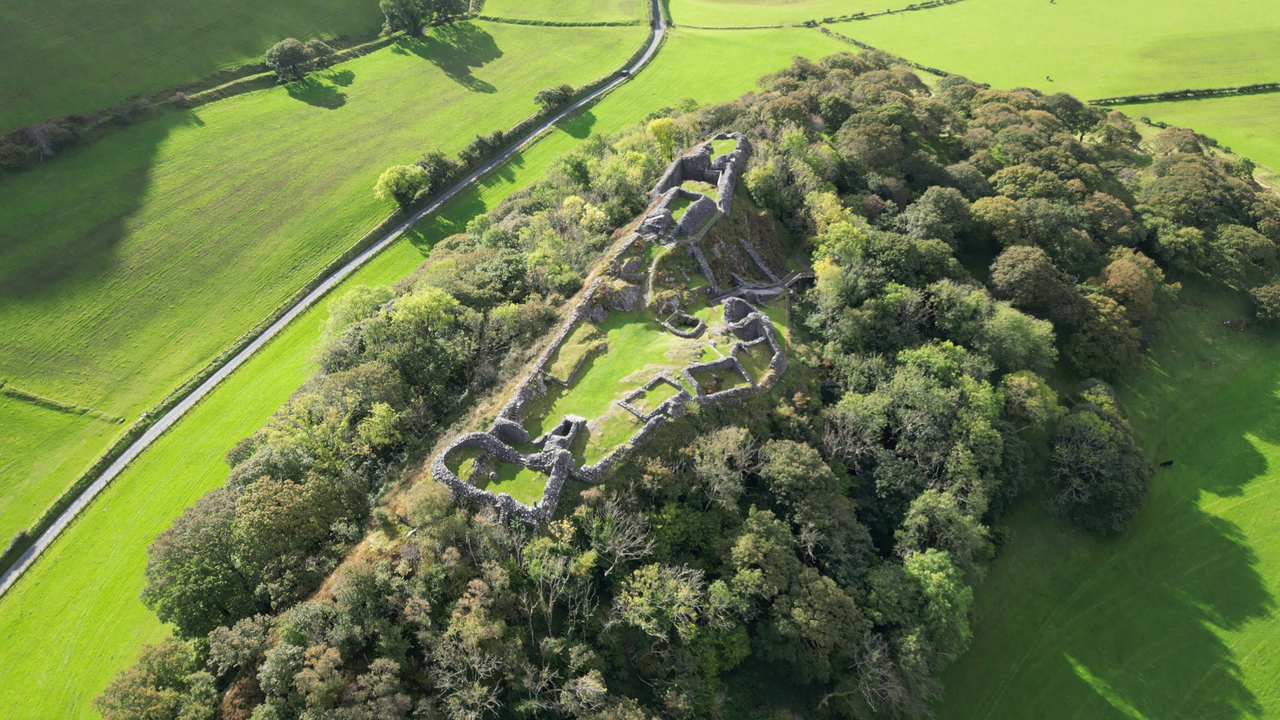
The hillfort is unique in that it consists of two originally separate forts built on adjacent summits of the hill, which were later combined into a single fortified enclosure. The first fort was constructed on the lower northern summit. This initial fortification featured an outer ditch and an inner rubble rampart, which would have originally been topped by a wooden palisade serving as a defensive barrier. The main entrance to this northern fort was located on the western side, where a stone-lined gap in the ditch and bank formed a gateway. The design of this gateway would have controlled access and provided a defensive choke point.
After a period of abandonment lasting several decades, a second fort was constructed on the higher southern summit of Pen Dinas hill. This southern fort was better defended naturally by the steeper slopes on the western side. To the south and east, the builders created large terraced earthworks faced with shale, which again were likely topped with a wooden palisade. The fort had two gateways, one to the north and one to the south, formed by narrow passageways through the earthworks. These entrances would have been crossed by timber bridges spanning the defensive ditches. The northern gateway was designed with a distinctive kinked left turn to slow down attackers and improve defensive capabilities.
Later modifications and final fortification phase
Eventually, the southern fort also fell into disuse, with archaeological evidence indicating that some of the wooden structures near the northern gateway were burnt. This destruction may have resulted from a hostile raid or could reflect abandonment due to resource shortages. Subsequently, the southern fort's defenses were rebuilt with a different layout, indicating a renewed strategic importance of the site.
The final phase of construction involved the refortification of the northern section and the creation of connecting banks and ditches to join the two forts into a single, unified defensive enclosure covering the entire hilltop. This extensive fortification would have offered significant protection and control over the surrounding landscape.
Historical context and Roman period evidence
The arrival of the Romans around 74 AD in this part of Wales likely influenced the eventual abandonment of Pen Dinas hill fort. It is possible the fort was forcibly vacated during Roman military campaigns, although it may have already declined in use before this time. Archaeological finds from the Roman period at the site are limited but include a hoard of early 4th-century Roman coins. This coin hoard may have been deposited as an offering at a shrine on the hill, suggesting that Pen Dinas retained some cultural or religious significance even after its military role ended.
Architectural and defensive features
Pen Dinas hill fort exemplifies typical Iron Age defensive architecture with its use of ditches, ramparts, palisades, and terracing. The multiple phases of construction demonstrate evolving defensive strategies, including the use of natural topography to enhance protection. The stone-lined gateways and kinked entrances reflect sophisticated understanding of fortification design intended to delay and expose attackers.
The terraced earthworks on the southern summit, faced with shale, are a distinctive feature that would have required significant labor and engineering skill. These terraces not only strengthened the defenses but also shaped the hilltop landscape, creating platforms for habitation or lookout points.
Significance and preservation
Today, Pen Dinas hill fort remains a site of archaeological importance and public interest. Although it is classified as an archaeological site rather than a standing castle, its well-preserved earthworks and ditches provide valuable evidence of prehistoric fortification techniques in Wales. The site offers visitors a glimpse into the defensive needs and social organization of Iron Age communities.
Its location near Aberystwyth makes it accessible for educational visits and archaeological study. The fort's extensive layout and historical layers make it a key example of Celtic hillfort construction and adaptation over time.
Frequently asked questions (FAQ)
- How do I get to Pen Dinas hill fort from Aberystwyth?
- Pen Dinas hill fort is located just south of Aberystwyth and can be reached by a short hike from the town center. There are marked walking trails that lead up the hill, offering scenic views along the way.
- What is the historical significance of Pen Dinas hill fort?
- Pen Dinas hill fort is a large Iron Age Celtic fortification that shows multiple phases of construction and adaptation. It provides important insight into prehistoric defensive strategies and settlement patterns in Wales.
- Can I explore the earthworks and ramparts at Pen Dinas?
- Yes, visitors can walk around the extensive earthworks, ditches, and ramparts of the hill fort. While no standing buildings remain, the layout and defensive features are clearly visible and accessible.
- When was Pen Dinas hill fort built and used?
- The initial construction of Pen Dinas hill fort dates back to around 300 BCE, with its use continuing through the Iron Age until possibly the Roman arrival in the first century AD.
- Is there any Roman influence visible at Pen Dinas hill fort?
- While the fort predates the Roman period, a hoard of early 4th-century Roman coins was found on the site, suggesting some later cultural or religious activity during Roman times.
Information
Loading map...
Visitor reviews
No reviews yet. Been here? Write the first review and help other travelers!
Write the first reviewVisited this castle? Share your experience
Your review helps other travelers and adds first-hand knowledge to our encyclopedia.