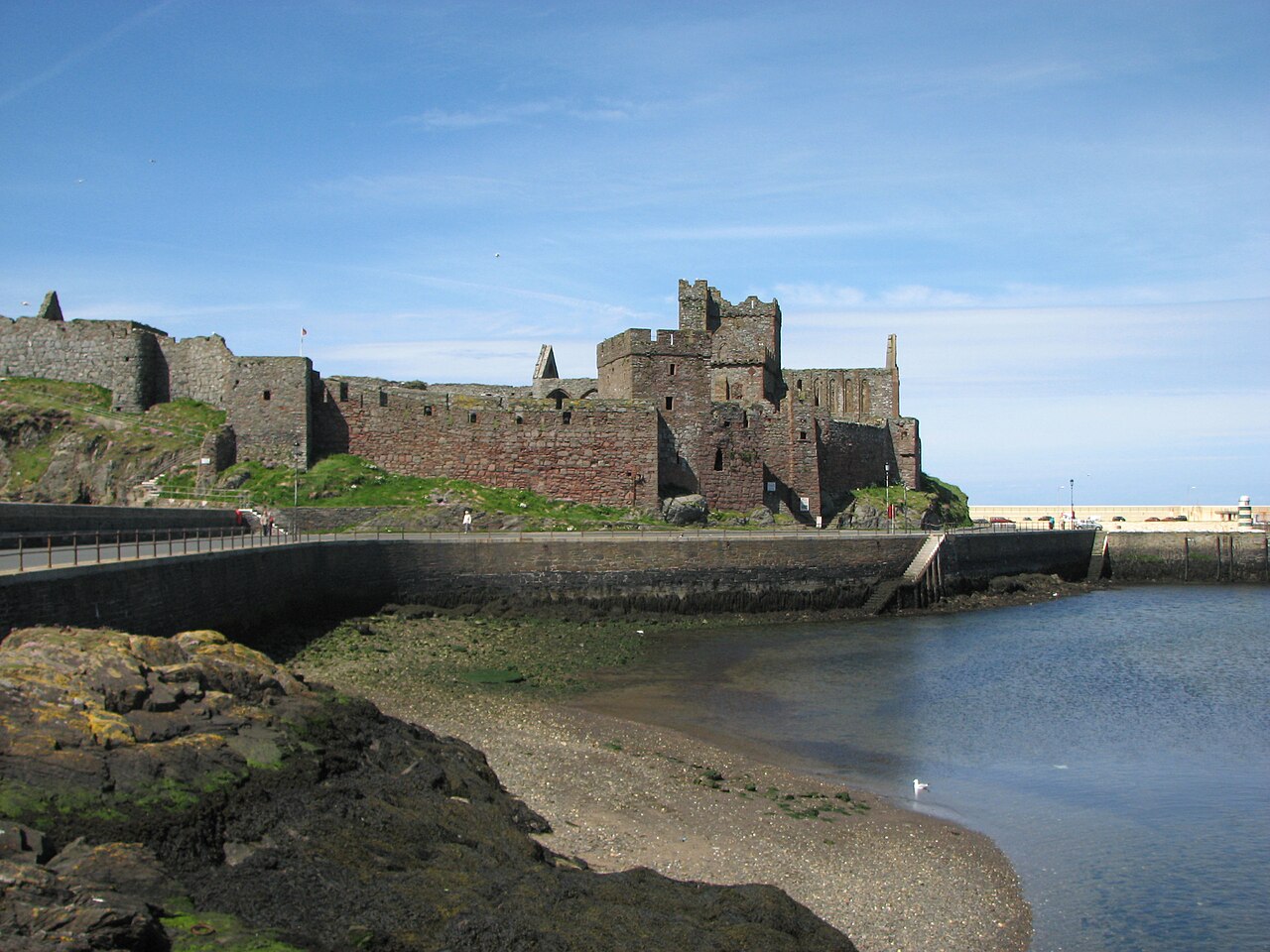
Peel Castle
Peel Castle is a historic fortress situated on St Patrick's Isle, connected to the town of Peel on the Isle of Man by a narrow causeway. Originally established in the 11th century by Viking settlers under King Magnus Barefoot, the castle occupies a site with a long history of religious and military significance. The island was home to an earlier Celtic monastery with stone buildings, some of which were incorporated into the castle's later structures.
The earliest Viking fortifications on St Patrick's Isle were constructed from wood, reflecting typical Norse defensive methods of the period. However, by the early 14th century, the castle underwent significant rebuilding in stone, primarily using the abundant local red sandstone. This transformation gave Peel Castle its enduring medieval character, with substantial curtain walls and multiple towers that provided formidable defense. Among these, the prominent round tower originally belonged to the Celtic monastery but was later adapted with battlements to serve defensive purposes.
Architectural evolution and features
Peel Castle's architecture reflects a blend of Viking military design and later medieval fortification techniques. The castle's outer walls remain largely intact, enclosing a complex of ruined buildings within. These include remnants of religious structures, residential quarters, and defensive installations. The castle was continuously modified over centuries, with notable additions as late as the 19th century, when new defensive positions were constructed to adapt to evolving military technology.
Defensive elements
The castle's defensive system includes thick red sandstone curtain walls, battlements, and several towers strategically placed to cover approaches from land and sea. The causeway connecting the isle to Peel town was a vital access point easily defensible from the castle. The castle's location on a tidal island added natural protection, limiting enemy movements during high tide.
Religious significance
Following the Viking period, Peel Castle became an important ecclesiastical center as the seat of the diocese of Sodor and Man. The presence of the cathedral within the castle grounds underscores its dual role as both a fortress and a religious site. This ecclesiastical use continued until the 18th century, after which the castle was largely abandoned but remained a fortified site.
Archaeological discoveries
Excavations conducted between 1982 and 1987 revealed extensive archaeological remains that shed light on the castle's Viking origins and medieval history. Among the most remarkable finds was the 10th-century grave of the "Pagan Lady", which contained a finely crafted Viking necklace and a hoard of silver coins dating to around 1030. These discoveries provide valuable insights into the cultural and economic connections of the Viking settlers on the Isle of Man.
The excavations also uncovered the foundations of the original wooden Viking fortifications established by King Magnus Barefoot, confirming historical accounts of the castle's early construction phase.
Legends and cultural heritage
Peel Castle is associated with local folklore, most famously the legend of the Moddey Dhoo, or "Black Dog" ghost. This spectral hound is said to have haunted the castle's corridors, adding a layer of mystique to the site and attracting visitors interested in paranormal tales and Isle of Man folklore.
Visiting Peel Castle today
Today, Peel Castle is open to visitors, particularly during the summer months when the weather permits easier access via the causeway. The castle's well-preserved outer walls and ruins provide a tangible connection to the island's Viking heritage and medieval past. Visitors can explore the remains of the cathedral, towers, and defensive walls, gaining insight into the complex history of this unique tidal fortress.
The castle's location on St Patrick's Isle offers scenic views of Peel harbour and the surrounding coastline, enhancing the visitor experience with natural beauty alongside historical intrigue.
Frequently asked questions (FAQ)
- How do I get to Peel Castle?
- Peel Castle is located on St Patrick's Isle, accessible by a causeway from the town of Peel on the Isle of Man. The causeway is walkable during low tide, providing easy access to the castle.
- What is the historical significance of Peel Castle?
- Peel Castle was originally built by Vikings in the 11th century and later served as the seat of the diocese of Sodor and Man. Its layered history includes Viking, medieval, and ecclesiastical roles.
- Can I visit the castle year-round?
- The castle is generally open to visitors during the summer months when weather conditions are favorable. Access may be limited or restricted during winter due to tides and weather.
- What notable archaeological finds have been discovered at Peel Castle?
- Excavations revealed the 10th-century grave of the Pagan Lady, Viking jewelry, and a cache of silver coins dating to about 1030, highlighting the site's Viking heritage.
- Is Peel Castle suitable for families and children?
- Yes, Peel Castle offers an engaging historical experience suitable for families. The ruins and surrounding natural scenery provide opportunities for exploration and learning.
Information
Loading map...
Visitor reviews
No reviews yet. Been here? Write the first review and help other travelers!
Write the first reviewVisited this castle? Share your experience
Your review helps other travelers and adds first-hand knowledge to our encyclopedia.