Castle Rushen
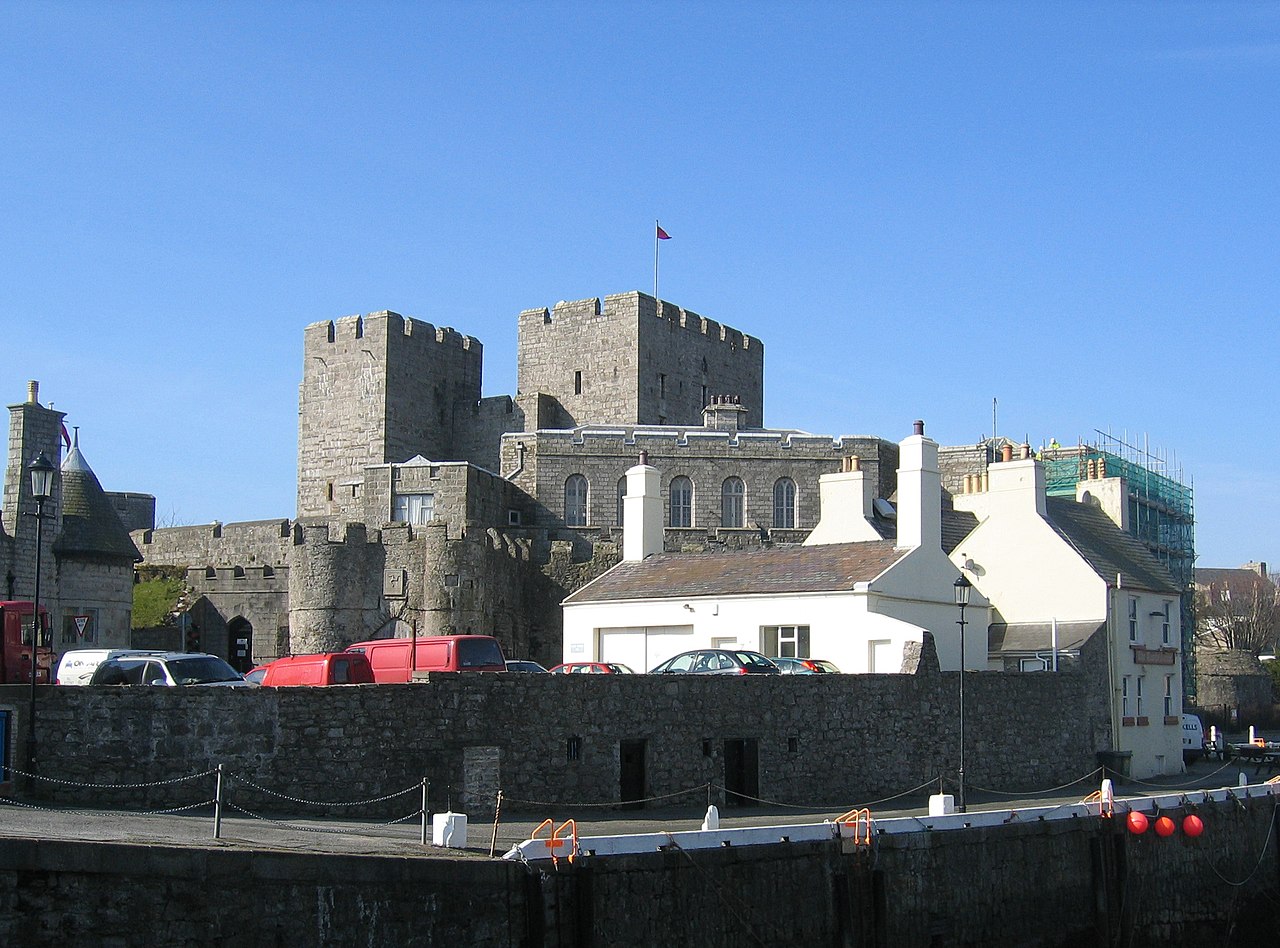
Castle Rushen stands prominently in Castletown, the historic capital of the Isle of Man. It is widely regarded as one of the best-preserved medieval castles in the British Isles, notable for its enduring role as a court house, museum, and educational centre. The castle's origins trace back to the late 12th century and early 13th century, during the reigns of the Kings of Mann and the Isles, although the exact date of its initial construction remains uncertain.
The original structure of Castle Rushen consisted of a central square stone keep, strategically situated to guard the entrance to the Silver Burn, a vital waterway. Over the centuries, the castle underwent continuous development and expansion under successive rulers from the 13th to the 16th century. By 1313, the keep was fortified with additional towers to the west and south, enhancing its defensive capabilities. The 14th century saw the addition of a prominent east tower, imposing gatehouses, and a robust curtain wall, which together formed a formidable defensive complex.
Architectural features and defensive design
The castle's limestone walls dominate the surrounding landscape, reflecting its historical importance as a seat of power. The curtain wall encloses a large courtyard and integrates multiple towers that provided vantage points for surveillance and defense. The gatehouses controlled access and were designed to withstand sieges, incorporating features such as murder holes and portcullises. The central keep served as the last line of defense and housed the lord's chambers and administrative offices.
Castle Rushen's design exemplifies the high medieval military architecture typical of the British Isles, combining both defensive strength and residential functionality. The castle's location near the coast and its control over the Silver Burn made it a strategic asset for controlling trade and military movements on the island.
Historical context and ownership
Throughout its history, Castle Rushen changed hands multiple times amid the complex political struggles involving the Kings of Mann, the Norwegian crown, and later the English monarchy. In the late 13th century, the English king Edward I Longshanks asserted his claim over the Isle of Man, stating it had long belonged to the English crown. This claim was solidified through military and political means, with Castle Rushen serving as the administrative and military center of English authority on the island.
During the 18th century, the castle's military importance declined, and it gradually fell into disrepair. By the end of the century, it was repurposed as a prison, a function it retained well into the 19th century. Despite its use as a penal institution, the castle's condition worsened until the early 20th century.
Restoration and modern use
The restoration of Castle Rushen began under the supervision of George Somerset, 3rd Baron Raglan, the Lieutenant Governor of the Isle of Man, around the turn of the 20th century. This effort aimed to preserve the castle's historic fabric and adapt it for public use. Following the completion of the nearby Victoria Road Prison in 1891, Castle Rushen ceased to function as a prison and was eventually transferred from the British Crown to the Isle of Man Government in 1929.
Today, Castle Rushen is managed by Manx National Heritage and operates as a museum dedicated to the history of the Kings and Lords of Mann. Visitors can explore most of the castle's rooms during the open season from March to October. The museum features detailed exhibits, including a working medieval kitchen where authentic period food is prepared on special occasions. Regular reenactments bring medieval life to the fore, with a focus on educating local children about their heritage.
Archaeological excavations conducted in the 1980s uncovered numerous artifacts, which are displayed within the castle and used as educational tools. These finds provide valuable insights into the castle's construction phases, daily life, and the broader history of the Isle of Man.
Cultural significance and visitor experience
Castle Rushen remains a key cultural landmark on the Isle of Man, symbolizing the island's medieval past and its complex political history. The castle's architecture offers a tangible connection to the high medieval period, illustrating the evolution of military and residential design over several centuries. Its preservation as a museum allows visitors to engage deeply with the historical narrative of the region.
The castle's location in Castletown provides easy access for tourists, and its well-maintained grounds and informative signage enhance the visitor experience. Educational programs and interactive displays contribute to a comprehensive understanding of the castle's role in the island's history.
Frequently asked questions (FAQ)
- What is the best time to visit Castle Rushen?
- The best time to visit Castle Rushen is during the open season from March to October, when most rooms and exhibitions are accessible to the public.
- Can I see medieval reenactments at Castle Rushen?
- Yes, Castle Rushen regularly hosts medieval reenactments and special events, including demonstrations in the working medieval kitchen, which offer an immersive historical experience.
- Is Castle Rushen wheelchair accessible?
- While some areas of Castle Rushen are accessible to wheelchair users, the historic nature of the castle means that certain sections with stairs and uneven surfaces may be challenging. Visitors are advised to check accessibility details in advance.
- How do I get to Castle Rushen in Castletown?
- Castle Rushen is located in the center of Castletown on the Isle of Man. It is easily reachable by local bus services, car, or on foot from nearby accommodations.
- What can I learn about at Castle Rushen museum?
- The museum at Castle Rushen offers extensive exhibits on the history of the Kings and Lords of Mann, medieval life, archaeological finds, and the castle's architectural development over the centuries.
Information
Opening hours
March to October, daily 10:00-17:00
Ticket prices
£8 adult, £4 child
Current owner
Manx National Heritage
Loading map...
Visitor reviews
No reviews yet. Been here? Write the first review and help other travelers!
Write the first reviewVisited this castle? Share your experience
Your review helps other travelers and adds first-hand knowledge to our encyclopedia.