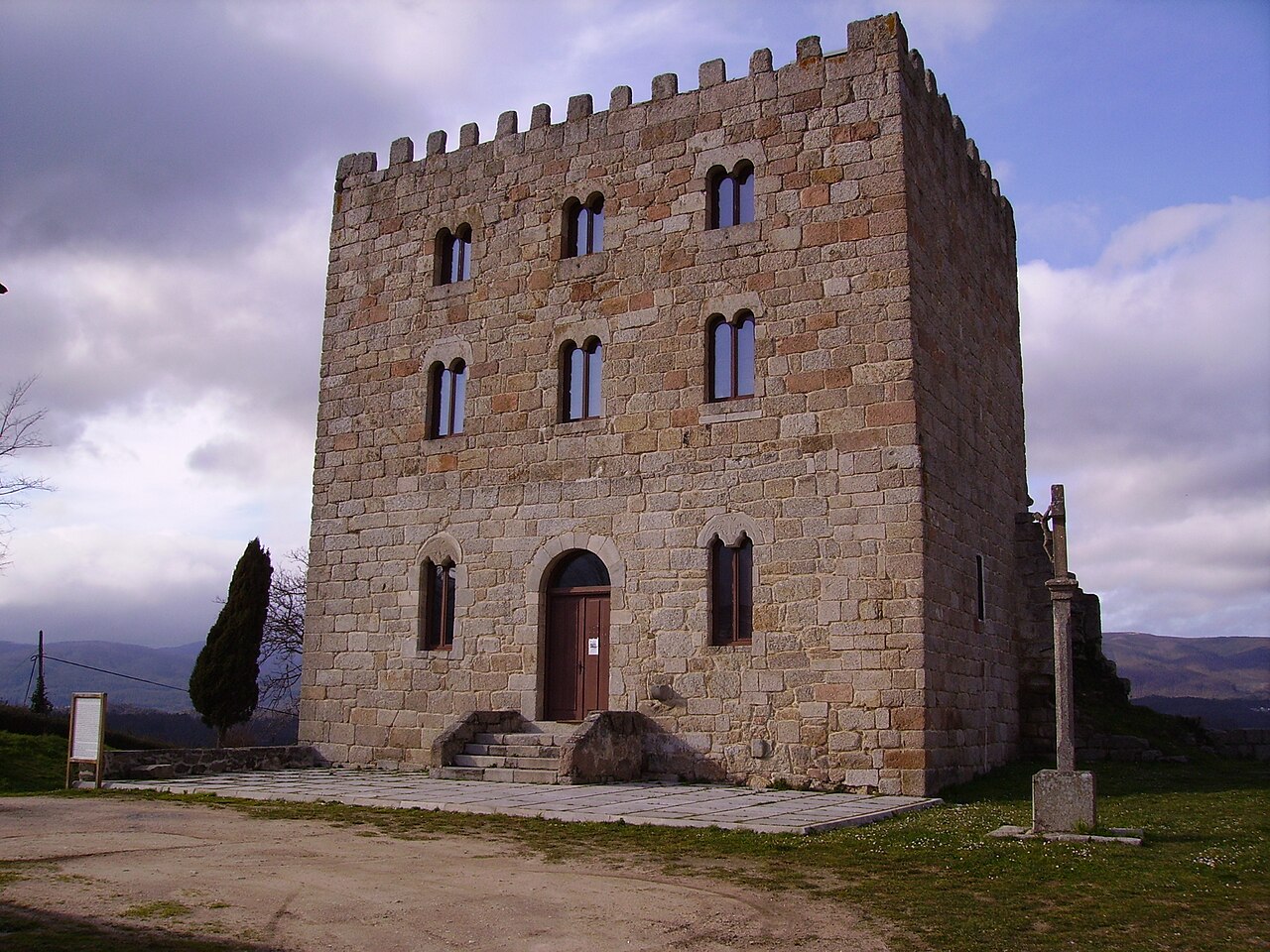
Pazo de Tovar Castle

Pazo de tovar castle in santo adrao de lourenzá, spain
Santo Adrao de Lourenzá, Galicia, Spain
High Medieval (11th–13th c.)
Well Preserved

Pazo de Tovar Castle is a notable example of medieval architecture located in Santo Adrao de Lourenzá, Spain. The castle's origins date back to the late 13th century when the original tower was constructed. This tower served as a defensive stronghold typical of the high medieval period, reflecting the military and residential needs of the time.

Historical development and architectural evolution

The initial tower, built in the 13th century, was primarily designed for defense. It features thick stone walls and narrow windows, characteristic of medieval fortifications intended to withstand sieges and attacks. This structure formed the nucleus of what would later become the full castle complex.

In the early 16th century, around the 1500s, Don Antonio de Tovar undertook significant expansions, transforming the tower into a more comfortable and representative residential castle. This phase introduced Renaissance architectural elements, reflecting the shift from purely defensive purposes to a noble residence. These additions included larger windows, more refined stonework, and the creation of living quarters suitable for aristocratic life.

Architectural features and layout

The castle combines the austere medieval tower with Renaissance enhancements. The original tower remains a dominant feature, with its imposing height and robust construction. Surrounding the tower, the residential buildings exhibit Renaissance style with symmetrical layouts, decorative stone details, and spacious interiors.

The castle's layout includes a central courtyard, which was typical for residences of this period, providing light and air to the surrounding rooms. Defensive features such as battlements and thick walls are still visible, though the emphasis on comfort and status is evident in the design.

Construction materials and techniques

The construction primarily uses local stone, carefully cut and assembled to provide strength and durability. The masonry techniques reflect the transition from medieval fortress building to Renaissance palatial architecture, with an emphasis on both functionality and aesthetics.

Cultural significance and current use

Today, Pazo de Tovar Castle serves as a cultural venue hosting exhibitions and events. This adaptive reuse helps preserve the castle while making it accessible to the public. The castle stands as a witness to the region's historical evolution from medieval fortification to Renaissance noble residence.

The castle's preservation allows visitors to appreciate its architectural layers and understand the historical context of northern Spain during the medieval and Renaissance periods.

Visiting information

Visitors to Pazo de Tovar Castle can explore the castle's interior spaces and exhibitions, which often focus on local history and art. The castle's location in Santo Adrao de Lourenzá offers a scenic setting typical of Galicia's landscape.

While specific visiting hours and ticket prices may vary, the castle is an important cultural landmark in the region, contributing to local tourism and education.

Frequently asked questions (FAQ)

When was Pazo de Tovar Castle originally built?
The original tower of Pazo de Tovar Castle was constructed in the late 13th century, marking its origins in the high medieval period.
Who expanded Pazo de Tovar Castle into a residential castle?
Don Antonio de Tovar expanded the castle in the early 1500s, adding Renaissance residential features around the original medieval tower.
What architectural styles are visible at Pazo de Tovar Castle?
The castle exhibits a blend of high medieval defensive architecture and Renaissance residential design, reflecting its historical development.
Is Pazo de Tovar Castle open to the public?
Yes, the castle hosts exhibitions and cultural events, making it accessible to visitors interested in history and art.
Where is Pazo de Tovar Castle located?
It is located in Santo Adrao de Lourenzá, in the Galicia region of northern Spain, set on a hill providing strategic views.

Information

Hill Castle

Current owner

Municipality

Sources & official resources

Verify the information above using these authoritative references.

Loading map...

Visitor reviews

No reviews yet. Been here? Write the first review and help other travelers!

Write the first review

Visited this castle? Share your experience

Your review helps other travelers and adds first-hand knowledge to our encyclopedia.

Write a review

(5/5)

0/2000 characters

Your review will be visible after admin approval

Nearby castles

12.6 km

Castillo da Frouxeira

Foz, Spain

Castillo da Frouxeira stands as a poignant symbol of medieval fortification and regional conflict in the northwestern Spanish region of Galicia. Perched atop the Pico da Frouxeira, a rugged hill rising between 427 and 500 meters above sea level, this hill castle commanded sweeping views over the Valadouro valley and the Foz estuary. Its strategic location made it a formidable defensive site during the turbulent late 15th century, a period marked by the consolidation of the Spanish crown under the Catholic Monarchs and regional noble power struggles. The castle's origins are rooted in the medieval Christian civilization that dominated Galicia during the late medieval period. Although no detailed architectural plans or records survive, its placement on a rocky peak suggests a fortress designed to leverage natural defenses, typical of hill castles of the time. The fortress likely featured robust stone walls, battlements, and lookout towers to monitor enemy movements across the surrounding valleys and estuary. Historical significance and notable events Castillo da Frouxeira is most renowned for its role during the late 15th century conflicts involving the Catholic Monarchs' efforts to unify Spain. The castle came under the control of Pero Pardo de Cela, a prominent Galician nobleman, through his marriage to Isabel de Castro, linking the fortress to influential ecclesiastical and noble lineages, including Bishop Henrique de Castro and the Count of Lemos. From early 1481 until his death in December 1483, Pero Pardo de Cela led the defense of the castle against the forces loyal to the Catholic Monarchs. The besieging army was commanded by Fernando de Acuña and included troops under Luis de Mudarra. The castle's natural fortifications and elevated position made direct assault costly and largely unsuccessful, inflicting significant casualties on the attackers. Despite the fortress's strong defenses, the siege ultimately ended in betrayal. According to contemporary ballads and local oral tradition, Roi Cofano do Valedouro, a local figure, betrayed the defenders, allowing the besieging forces to capture the castle. Following its fall, the fortress was systematically destroyed, leaving only ruins that survive today. Architectural features and site remains Today, Castillo da Frouxeira exists solely as ruins atop Pico da Frouxeira. The destruction was so thorough that no intact sections of the original stonework remain in situ. The castle's precise architectural layout, construction materials, and decorative elements remain unknown due to the lack of surviving documentation and archaeological excavation. The site’s natural topography provided significant defensive advantages, with steep rocky slopes and commanding views over the adjacent valleys and estuary. This positioning was typical of hill castles designed to maximize natural defenses alongside man-made fortifications. Despite the absence of physical remains, the castle’s legacy endures in local culture and literature. The dramatic siege and betrayal inspired numerous poems, songs, and theatrical works, including the lament known as the "Pranto da Frouxeira" and the play "O Mariscal" by Ramón Cabanillas and Antón Villar Ponte. These works celebrate the castle's historical and cultural significance, embedding it deeply in Galician heritage. Cultural heritage and preservation The ruins of Castillo da Frouxeira are protected under Spanish cultural heritage laws, recognizing the site’s importance as a historical and archaeological landmark. Although no significant archaeological artifacts such as tools or pottery have been documented, the site continues to attract interest from historians, archaeologists, and visitors intrigued by its dramatic past. Local oral traditions and ballads preserve the memory of the castle’s fierce defense and tragic fall, adding a layer of legendary narrative to the physical remains. The site remains a poignant reminder of the complex political and military struggles that shaped Galicia during the late medieval period and the broader history of Spain’s unification. Visiting castillo da frouxeira While the castle is now a ruin, its location atop Pico da Frouxeira offers visitors a unique opportunity to explore a site of significant historical importance set within a dramatic natural landscape. The vantage points provide panoramic views of the surrounding valleys and estuary, allowing visitors to appreciate the strategic importance of the castle’s original placement. Visitors interested in medieval history, military architecture, and Galician cultural heritage will find the site evocative despite the absence of standing structures. The castle’s story, preserved in literature and local tradition, enriches the experience of exploring the ruins and the surrounding landscape.

Late Medieval (14th–15th c.)
Details
14.7 km
Castrodouro Castle — Spain castle

Castrodouro Castle

Alfoz, Spain

Castrodouro Castle is a 14th-century hill castle located in Alfoz, Galicia, Spain. This small but historically significant fortress was once the property of the noble family of Pardo de Cela, a prominent figure in Galician history during the Late Medieval period. Though much of the original structure has not survived, the castle's keep remains intact, offering valuable insight into medieval defensive architecture in the region. Historical background and ownership The castle's origins trace back to the 14th century, a period marked by feudal conflicts and territorial disputes in Galicia. It served primarily as a fortified residence for the Pardo de Cela family, who were influential local lords. The family played a notable role in the political and military affairs of the region, particularly during the turbulent times of the late Middle Ages. The Pardo de Cela family is remembered for their resistance against the centralizing forces of the Catholic Monarchs in the late 15th century. Castrodouro Castle was part of their defensive network, strategically positioned on a hill to oversee the surrounding lands and control access routes. Architectural features and structure Castrodouro Castle exemplifies the typical characteristics of a hill castle from the Late Medieval period. The most prominent surviving element is its keep, a strong stone tower that would have served as both a last refuge during attacks and a symbol of lordly power. The keep's construction features thick stone walls designed to withstand sieges and attacks. It likely included narrow windows or arrow slits for defense, as well as internal chambers for living quarters and storage. Although the rest of the castle's walls and ancillary buildings have not survived, historical records suggest it once included a courtyard and additional defensive walls. The castle's hilltop location provided a natural advantage, allowing defenders to spot approaching enemies from a distance and making direct assaults more difficult. This strategic siting is typical of medieval fortifications built to control important routes and protect noble estates. Castrodouro Castle in the context of Galician medieval fortifications Within Galicia, Castrodouro Castle is an example of the smaller-scale noble fortresses that dotted the landscape during the Middle Ages. Unlike the grand royal castles or large citadels, these hill castles served local lords and were integral to the feudal system. The castle's preservation, especially of its keep, provides valuable information about construction techniques and defensive strategies used in the region during the 14th century. It also reflects the political fragmentation and local autonomy characteristic of Galicia before its integration into the centralized Spanish kingdom. Current condition and cultural significance Today, Castrodouro Castle is classified as partially preserved, with the keep standing as the main visible remnant. The site attracts visitors interested in medieval history and architecture, as well as those exploring the cultural heritage of Galicia. The castle is a symbol of the region's feudal past and the legacy of the Pardo de Cela family. Efforts to maintain and study the site contribute to understanding Galicia's historical landscape and medieval military architecture. Visiting Castrodouro Castle While the castle is relatively small and less well-known than other Spanish fortresses, it offers a unique glimpse into the medieval history of Galicia. Visitors can explore the exterior of the keep and enjoy panoramic views from the hilltop location. Its location in the municipality of Alfoz makes it accessible for those interested in cultural tourism and historical exploration within the region. The castle's modest scale and preserved features provide an intimate experience of a medieval noble stronghold.

Late Medieval (14th–15th c.)
Details
22.4 km

San Damián Fortress

Ribadeo, Spain

San Damián Fortress, located in Ribadeo, Spain, is a notable example of Renaissance military architecture from the early 17th century. Constructed during a period marked by the evolution of fortification design, the fortress reflects the strategic importance of coastal defense in northern Spain during the 17th century. Its original purpose was to protect the coastline and nearby maritime routes from potential naval threats. Historical context and construction The fortress was built in the early 1600s, a time when Spain was strengthening its coastal defenses against incursions by pirates and rival naval powers. The choice of location in Ribadeo was strategic, overseeing the estuary of the Eo River and the Cantabrian Sea, which were vital for both trade and military movements. San Damián Fortress was constructed with typical Renaissance military architectural principles, emphasizing low, thick walls capable of withstanding cannon fire, and angular bastions designed to cover all approaches with overlapping fields of fire. This design marked a shift from medieval vertical fortifications to the more modern style adapted to gunpowder artillery. Architectural features The fortress features a compact layout with bastioned walls and a roughly polygonal shape, characteristic of Renaissance fortifications. Its walls are built of stone, with bastions projecting outward to allow defenders to fire along the faces of the walls, eliminating blind spots. The main entrance was fortified with a gatehouse, and there were facilities for housing soldiers and storing munitions within the enclosure. Although the fortress was relatively small compared to other contemporary coastal fortifications, its design was efficient for its defensive role. The mid-19th century reconstruction preserved much of the original structure while adapting it for new uses. Decline and later use San Damián Fortress was abandoned in the early 18th century as military technology and strategic priorities evolved, and the threat to this part of the Spanish coast diminished. It fell into disuse and partial decay until the mid-19th century when it underwent reconstruction. This restoration aimed to stabilize the structure and repurpose it. Today, the fortress is no longer a military installation but serves as an exhibition hall, hosting cultural events and exhibitions. Its preservation allows visitors to appreciate the military architecture of the Renaissance period and the historical significance of coastal defenses in Spain. Significance and preservation San Damián Fortress stands as a well-preserved example of 17th-century Renaissance military architecture in the region of Galicia. Its survival and adaptive reuse reflect broader trends in heritage conservation, where historical military structures are integrated into community cultural life. The fortress contributes to the understanding of Spain's coastal defense systems and the architectural responses to the challenges posed by artillery warfare during the Renaissance. Its location in Ribadeo also highlights the town's historical maritime importance.

Renaissance (15th–17th c.)
Details