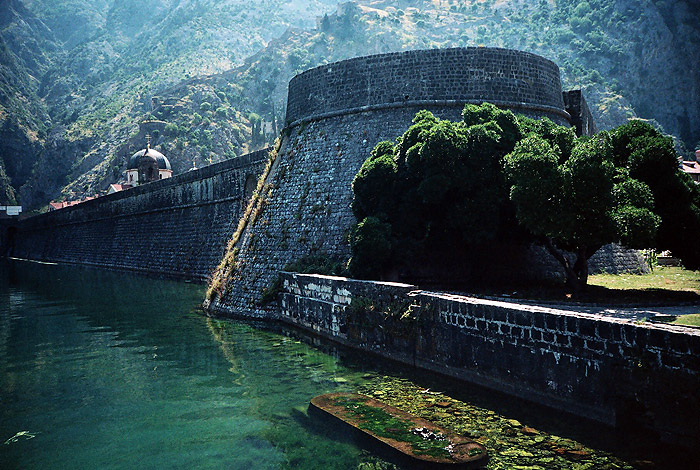
Pandurica Castle Ruins
Pandurica castle ruins stand as a testament to the rich medieval heritage of Montenegro, located just south of the town of Nikšić in a hilly area named Pandurica on the bank of the Zeta river. This ancient fortress, originally constructed in 1367 by Stracimir Balšić, the Lord of the Zeta principality, served as a crucial military and administrative stronghold in the region. Recognized today as a cultural monument of national significance, Pandurica played a vital role in controlling the mountain trails and river fords that were essential for trade and defense.
The strategic location and early history
The castle's position on the southern rim of the Nikšić valley overlooking the Zeta river was of great strategic importance during the late medieval period. The area of Pandurica was part of the Upper Zeta region within the Balšić family’s domain since 1362. The fortress was built to oversee and secure the mountain trail and the river ford, which were critical for movement and commerce between the inland and coastal areas.
In 1473, the ruler Ivan Crnojević granted Upper Zeta to his duke, Bodgan, founder and leader of the Pješivci tribe. This transfer marked a new chapter in the castle's history, as it became a border stronghold between the lands controlled by the Nikcevici family of the Pješivci tribe and the expanding Ottoman Empire, which had occupied the surrounding lands, including the town of Onogošt (modern Nikšić).
Architectural features and military significance
Pandurica castle was built primarily as a defensive fortress, designed to withstand frequent attacks by Ottoman forces. The castle's architecture reflects the military needs of the time, with robust walls and a commanding position to monitor the surrounding terrain and the vital trade route along the Zeta river. Despite repeated assaults, the castle was rebuilt each time, demonstrating its resilience and importance.
Historical records suggest significant reconstruction and fortification efforts took place between 1500 and 1600. These renovations likely enhanced the castle's defensive capabilities to better serve as a security cordon, particularly for the nearby Ostrog Monastery, founded in the 16th century in the southeastern mountains along the trail. The monastery was an important religious site, and Pandurica's protection was crucial for the safety of pilgrims and clergy.
The castle in the context of regional conflicts and trade
Throughout its history, Pandurica castle was a focal point in the turbulent borderlands between Montenegrin tribal lands and the Ottoman Empire. The castle's control over the trade route facilitated commerce, but also made it a target for Ottoman raids. The resilience of the fortress and its defenders helped maintain a degree of autonomy for the local tribes and preserved the flow of goods and people through this critical corridor.
In the late 19th century, the geopolitical landscape shifted dramatically. In 1877, the town of Nikšić was liberated from Ottoman control by forces led by Prince Nikola Petrović-Njegoš, who later became King of Montenegro. The following year, Old Herzegovina was annexed to Montenegro, a change supported by Russia. To integrate these new territories with Montenegro's heartland and capital, Podgorica, infrastructure development became a priority.
Infrastructure and legacy: the Carev Most bridge
Near Pandurica castle, a significant engineering project was undertaken to improve connectivity. The Zeta river at this location was notably wide, necessitating the construction of a lengthy and monumental bridge. Prince Nikola sought assistance from Russian Emperor Alexander III, who provided resources for building the road and the bridge, known as the Carev Most (Tsar's Bridge). This bridge, with its impressive 18 spans, remains one of Montenegro's iconic landmarks, symbolizing the region's historical ties and the modernization efforts of the late 19th century.
Current status and preservation efforts
As of recent years, the Pandurica castle ruins and the surrounding lands remain under the ownership of the Nikcevici family of the Pješivci tribe, maintaining a direct link to the castle's medieval custodians. Archaeological and restoration work is ongoing, aiming to preserve the castle's remains and uncover further insights into its historical and architectural significance.
The castle's ruins offer visitors a glimpse into Montenegro's medieval past, showcasing the defensive architecture typical of the late medieval period in the Balkans. The site’s proximity to Nikšić and the Carev Most bridge makes it an accessible destination for those interested in history, architecture, and cultural heritage.
Architectural characteristics and construction details
The castle was constructed using local stone, with thick defensive walls designed to repel invaders. Its layout was adapted to the hilly terrain, maximizing natural defenses. While much of the original structure is now in ruins, remnants of towers, curtain walls, and gatehouses can still be discerned. The castle’s design reflects typical late medieval military architecture in the region, combining functionality with strategic positioning.
Defensive elements
- Towers: The castle featured multiple towers that provided vantage points for surveillance and defense against attackers.
- Walls and battlements: Thick stone walls with battlements allowed defenders to repel sieges and monitor the surrounding landscape.
- Gatehouse: A fortified entrance controlled access to the castle, often reinforced to withstand assaults.
- Moat and river proximity: While no extensive moat remains, the castle’s location near the Zeta river added a natural defensive barrier.
Construction phases
The original construction in 1367 established the core fortress. Subsequent rebuilding and fortification during the 16th century enhanced the castle’s defenses in response to increasing Ottoman threats. These phases included repairs to damaged walls and possible additions to the fortifications to accommodate evolving military technology.
Historical figures associated with Pandurica castle
Stracimir Balšić, the initial builder, was a prominent noble of the Balšić dynasty, which ruled the Zeta principality in the 14th century. His establishment of the castle was part of broader efforts to consolidate control over the region.
Ivan Crnojević, a key Montenegrin ruler of the late 15th century, played a significant role in the castle’s history by granting the surrounding lands to his duke Bodgan, strengthening tribal governance in the area.
Prince Nikola Petrović-Njegoš, who liberated Nikšić from Ottoman rule, was instrumental in the late 19th-century infrastructural developments near the castle, including the construction of the Carev Most bridge.
Visitor information and cultural significance
Today, Pandurica castle ruins are a protected historical site, attracting visitors interested in Montenegro’s medieval history and architecture. The ongoing archaeological work enhances understanding of the site’s past, while restoration efforts aim to preserve its remains for future generations.
The castle’s cultural significance is intertwined with the history of the Pješivci tribe and the broader Montenegrin struggle against Ottoman expansion. Its role in securing trade routes and protecting religious sites like the Ostrog Monastery underscores its importance beyond mere military function.
Frequently asked questions (FAQ)
- How do I get to Pandurica Castle Ruins?
- Pandurica Castle Ruins are located near Nikšić, Montenegro. You can reach the site by car or public transportation, with local buses frequently connecting Nikšić to nearby towns. Be sure to check the latest schedules for the best travel options.
- What is the historical significance of Pandurica Castle?
- Pandurica Castle dates back to the 14th century and played a crucial role in the region's history. It served as a strategic military stronghold during various conflicts, reflecting the architectural styles and defense mechanisms of its time. Today, it stands as a testament to Montenegro's rich cultural heritage.
- When was Pandurica Castle built?
- The construction of Pandurica Castle began in the late 14th century, around 1375. It was built during a period of significant political and military activity in Montenegro, which contributed to its historical importance. The castle has undergone various renovations over the centuries, adding to its unique character.
- Can I visit Pandurica Castle Ruins year-round?
- Yes, you can visit Pandurica Castle Ruins year-round, although the best time to explore is during the spring and fall when the weather is mild. Summer months can be hot, while winter may bring snow, making access more challenging. Always check local weather conditions before planning your visit.
- Why is Pandurica Castle a popular tourist attraction?
- Pandurica Castle is popular among tourists due to its historical significance and stunning views of the surrounding landscape. Visitors are drawn to its unique architecture and the opportunity to explore the ruins, which provide insight into Montenegro's medieval past. It's an excellent spot for photography and history enthusiasts alike.
- Is it possible to take guided tours of the castle?
- Yes, guided tours of Pandurica Castle are available, offering visitors a chance to learn more about its history and architecture. Local guides provide valuable insights and anecdotes that enhance the experience. Check with local tourism offices for availability and scheduling information.
- What are the opening hours for Pandurica Castle Ruins?
- Pandurica Castle is generally open to visitors from dawn until dusk, allowing ample time to explore the ruins. However, it's recommended to verify specific opening hours ahead of your visit, especially during holidays or off-peak seasons. This ensures you make the most of your time at the site.
- Are there any ticket prices to visit Pandurica Castle Ruins?
- Access to Pandurica Castle Ruins is typically free, making it an affordable option for travelers. However, if you choose to participate in a guided tour, there may be a fee associated with that. Always check with local tourism resources for any updates on costs or special events.
- What nearby attractions should I visit while in Nikšić?
- While visiting Nikšić, consider exploring the local museums, such as the Museum of Herzegovina, and the beautiful Nikšić Lake. The city is also known for its charming parks and historical sites, which complement a trip to the castle. Enjoy the local cuisine at nearby restaurants to complete your experience.
Loading map...
Visitor reviews
No reviews yet. Been here? Write the first review and help other travelers!
Write the first reviewVisited this castle? Share your experience
Your review helps other travelers and adds first-hand knowledge to our encyclopedia.