Pancorbo Castle
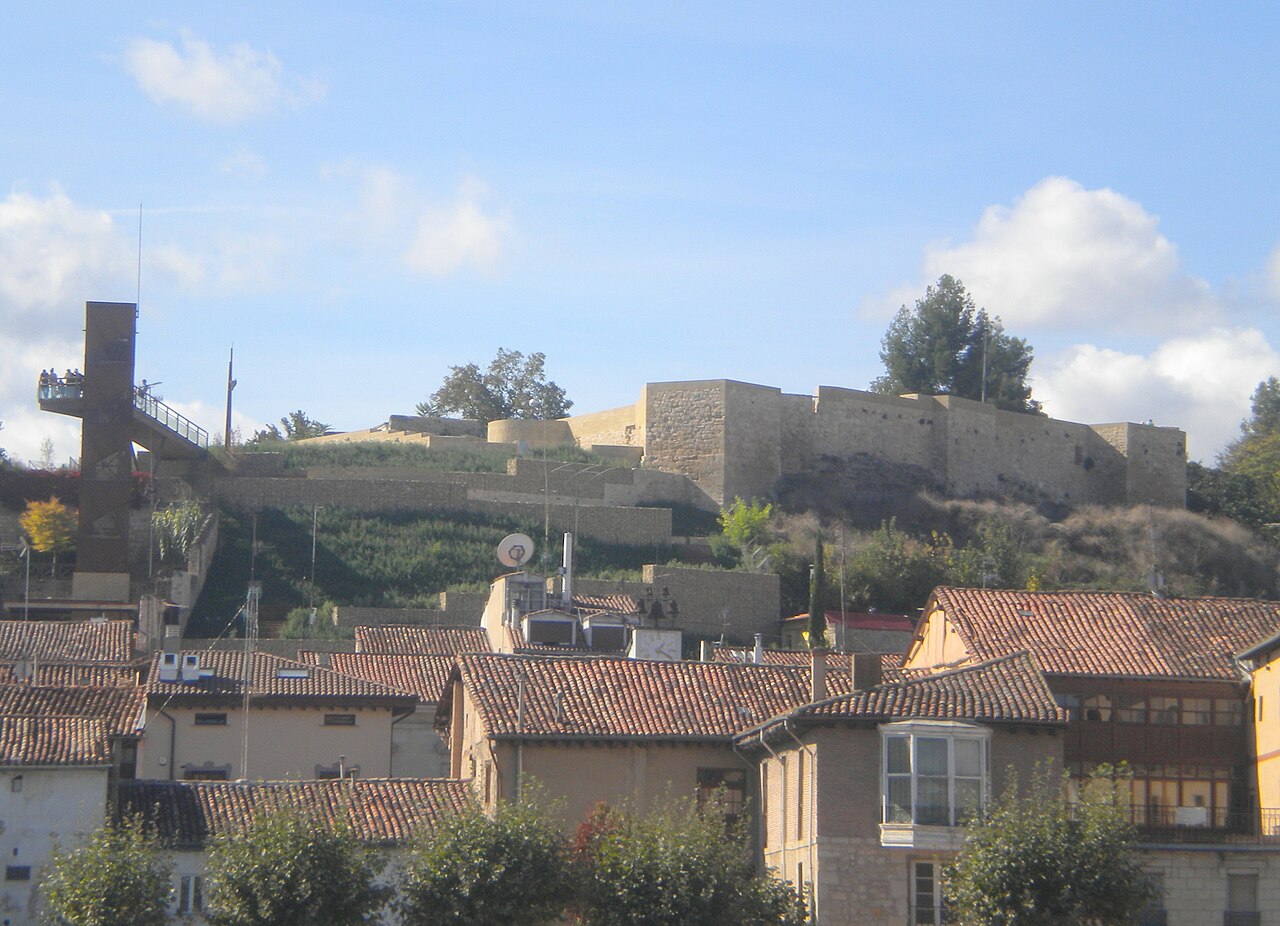
Pancorbo Castle stands as a testament to the strategic military architecture of medieval Spain, perched atop a commanding rocky ridge overlooking the Pancorbo gorge. Constructed originally in the 9th century by the Christian Count Diego Porcelos, the castle was designed to secure one of the crucial mountain passes in the region. This fortress played a pivotal role during the turbulent centuries of the Reconquista, serving as a bulwark against Muslim incursions into northern Iberia.
The castle’s origins likely trace back even further, as archaeological evidence suggests it was built atop or near earlier Roman fortifications. This continuity of military use highlights the enduring importance of the location for controlling access through the rugged terrain. The early medieval construction incorporated the natural rocky landscape, with stairways carved directly into the stone and defensive structures that blended with the environment to maximize protection.
Early medieval origins and military significance
The 9th century saw Pancorbo Castle emerge as a critical defensive site during the Christian efforts to resist Muslim advances. After the nearby fortress of Cellorigo withstood sieges, Muslim forces targeted Pancorbo in 882 and 883, underscoring its strategic value. The castle’s robust fortifications and natural position enabled it to repel these assaults, securing the mountain pass and protecting the surrounding territories.
Changing control and political dynamics
Following the assassination of Count García Sánchez of Castile in 1028, Pancorbo Castle came under the influence of the Kingdom of Navarre. King Sancho III the Great entrusted the fortress to the Fortuniones family, who acted as castellans from 1031 until 1071. This period marks the castle’s integration into the complex feudal and territorial struggles of medieval Spain.
Control of Pancorbo fluctuated between Castile and Navarre during the 12th century, reflecting the broader regional conflicts. Notably, in 1110, Bernardo Gómez held authority over the castle, and in 1129, it briefly fell under Navarrese control during the disputes involving Alfonso VII of Castile and Alfonso I of Aragon and Navarre. These shifts highlight the castle’s continued military and political importance well into the high medieval period.
Late medieval and early modern period developments
By the late 14th century, Pancorbo Castle became part of the lordship governed by the city council of Burgos. In the mid-15th century, Diego Gómez de Sarmiento, Count of Salinas, seized the fortress, maintaining control until the early 16th century. The castle’s military relevance persisted into the early modern era, as noted in a 1679 account by a French traveler accompanying Queen María Luisa of Orléans, who described the fortress’s imposing dimensions and strategic stairways carved into the rock.
Restoration efforts took place in the late 18th century, contemporaneous with repairs to the nearby Santa Engracia fortress. Despite these works, Pancorbo Castle’s active military role ended dramatically during the First Carlist War when it was deliberately set on fire on August 10, 1835. This event left the castle in ruins, marking the close of its centuries-long defensive function.
Architectural features and surviving remains
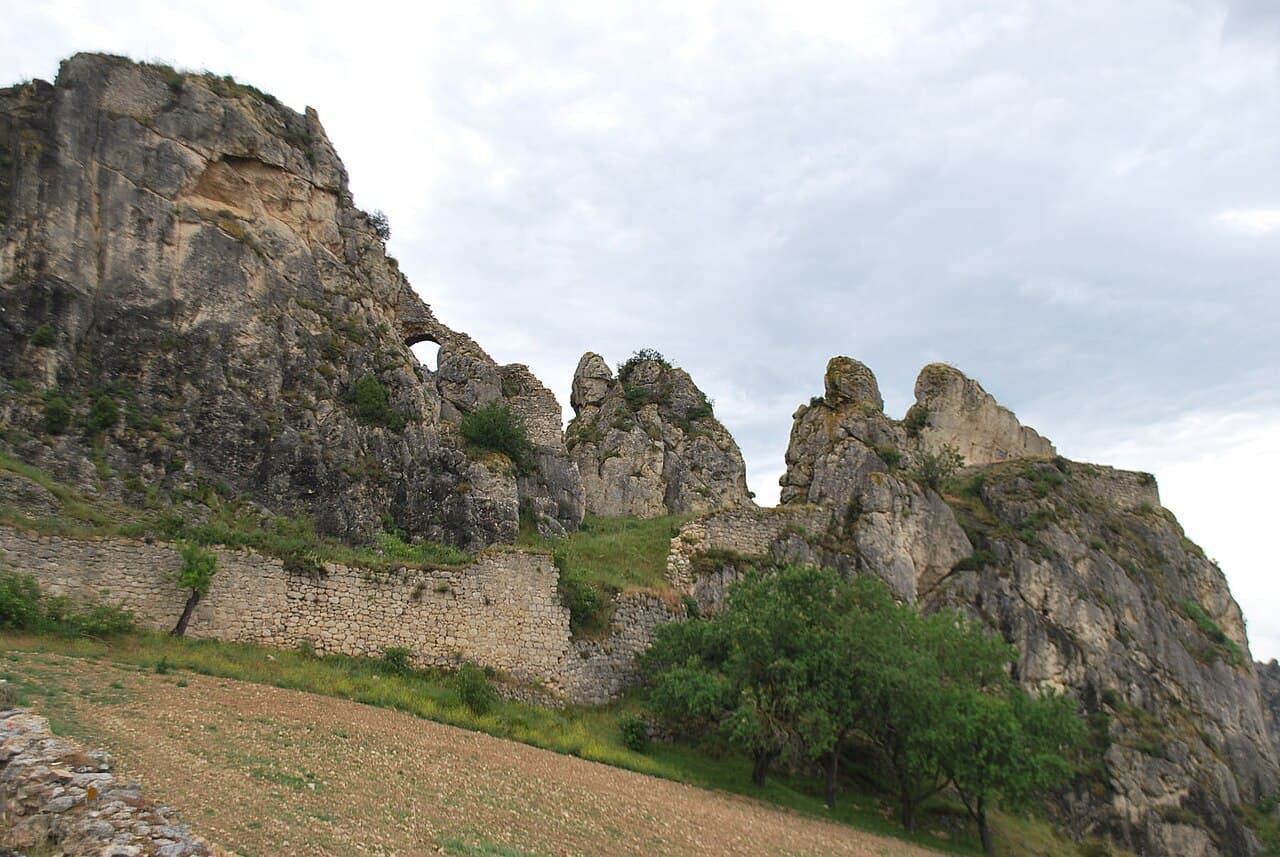
The castle’s design skillfully exploited the natural topography, with two main sections: the Santa Marta Castle (also known as La Sala) and the Engracia fortress at the ridge’s highest point. Santa Marta Castle was built upon the foundations of a former Roman structure, indicating a layered history of fortification at the site. Defensive elements included a stone bridge connecting rocky outcrops and a concealed artillery position carved into the rock, allowing defenders to fire upon attackers from a protected vantage point.
Today, Pancorbo Castle exists primarily as ruins, with visible fragments of outer walls, staircases, and doorways. Holes cut into the rock reveal where wooden stairs and other structural components were once anchored. These remains illustrate the castle’s robust construction and its complex adaptation to the rocky environment, offering valuable insights into medieval military architecture and the strategic use of natural landscapes.
Cultural and historical legacy
Pancorbo Castle’s enduring presence through centuries of conflict and political change underscores its significance in Spanish history. Its role in the Reconquista, fluctuating control between powerful kingdoms, and survival into the modern era highlight its importance as a military and cultural landmark. The castle’s ruins today serve as a poignant reminder of the region’s turbulent past and the architectural ingenuity that enabled its defense.
Visitors to the site can appreciate the castle’s commanding views over the Pancorbo gorge and the surrounding landscape, gaining a tangible connection to the medieval history of northern Spain. The castle remains a symbol of strategic resilience and historical continuity, attracting historians, architects, and tourists interested in the rich heritage of Spanish fortifications.
Frequently asked questions (FAQ)
- When was Pancorbo Castle originally built?
- Pancorbo Castle was originally constructed in the 9th century by Count Diego Porcelos to secure a strategic mountain pass.
- What role did Pancorbo Castle play during the Reconquista?
- The castle was a key defensive stronghold against Muslim incursions into northern Iberia, successfully repelling sieges in 882 and 883.
- Who controlled Pancorbo Castle during the 11th and 12th centuries?
- Control fluctuated between the Kingdoms of Navarre and Castile, with notable castellans such as the Fortuniones family and Bernardo Gómez.
- What caused the castle to fall into ruins?
- The castle was deliberately set on fire in 1835 during the First Carlist War, leading to its ruinous state today.
- Are there visible remains of the castle today?
- Yes, ruins include fragments of outer walls, staircases, doorways, and carved rock features that illustrate its medieval construction.
Photo gallery

Information
Website
Visit websiteSources & official resources
Verify the information above using these authoritative references.
Loading map...
Visitor reviews
No reviews yet. Been here? Write the first review and help other travelers!
Write the first reviewVisited this castle? Share your experience
Your review helps other travelers and adds first-hand knowledge to our encyclopedia.