Miranda de Ebro Castle
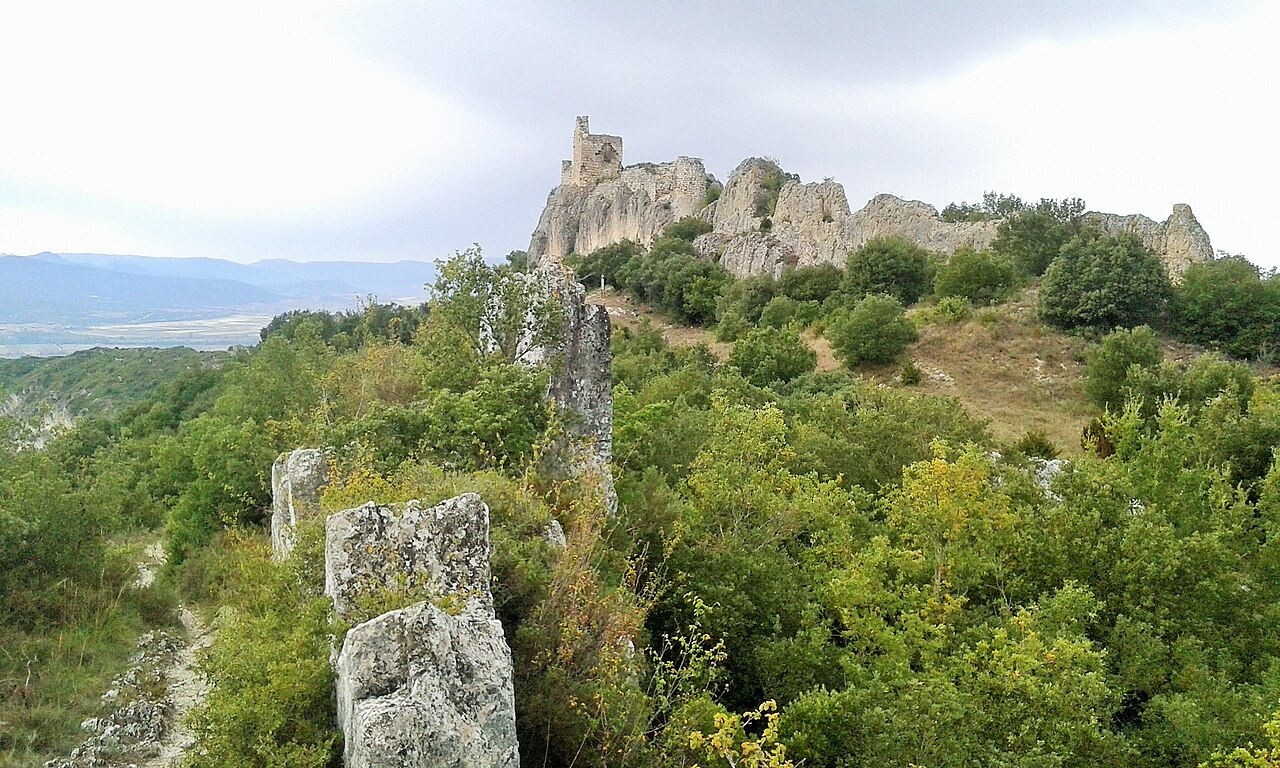
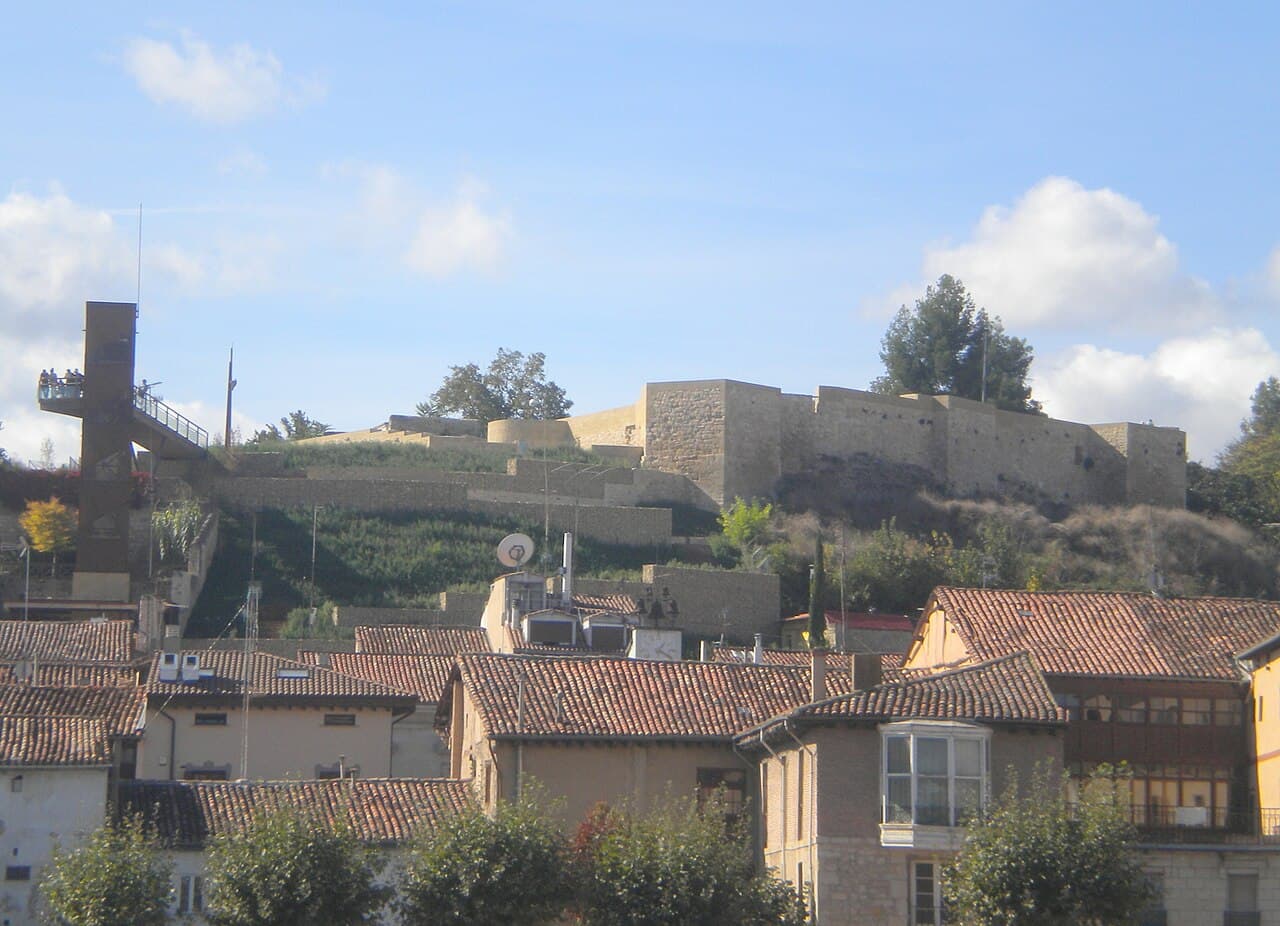
The Castle of Miranda de Ebro is a prominent late-medieval hill castle perched on Picota hill overlooking the city of Miranda de Ebro and the surrounding mountainous landscape. Its strategic location has historically afforded commanding views for defense and surveillance, underscoring its importance as a military stronghold in a border region of Spain.
The origins of the castle trace back to the mid-14th century, with the earliest documented initiative in 1358 when Count Don Tello of Castille requested land from the Bishopric of Calahorra to build a fortress atop the site of the primitive church of Santa María. Despite this early request, actual construction did not commence until 1449, when Pedro Sarmiento, Lord of Salinas, took possession of the church property. The building process was protracted, facing delays and opposition from local inhabitants, and extended into the late 15th century. The master mason Juan Guas oversaw significant phases of construction starting in 1485, contributing his expertise in stonecutting and design.
Historical significance and ownership
Throughout its history, the castle was closely tied to the Sarmiento family and later shared ownership with the Dukes of Híjar. Its position near contested borders meant it was frequently involved in military conflicts and underwent numerous modifications to adapt to evolving warfare technologies. The castle endured considerable damage during the Peninsular War (War of Spanish Independence) and subsequent Carlist Wars, which left it in a ruined state by the 19th century.
A particularly notable event occurred on September 5, 1808, when King Joseph Bonaparte signed a decree within the castle authorizing the use of French currency in Spain. This act highlights the castle's role during the turbulent Napoleonic era and its strategic importance to occupying forces.
Architectural features and layout
The castle's plan is roughly trapezoidal with four or five corners, reflecting multiple construction phases and adaptations. Archaeological studies have revealed that the fortress incorporated elements of the Italian style of fortification from the 16th century, including distinctive bastions or ravelins designed to withstand artillery fire. These bastioned defenses represent a significant evolution from earlier medieval military architecture.
Prominent surviving structures include the King's Battery and Queen's Battery towers on the northern side, which likely served as artillery platforms and lookout points. A round tower at the southwestern edge, partially obscured by vegetation, is believed to have been crenellated and formed part of the castle's defensive perimeter.
The main entrance was protected by a barbican, a fortified outwork consisting of a series of entrance halls designed to slow and expose attackers. Access involved a zig-zag path ascending the hill, enhancing defensive capabilities. The gate complex included two openings: a larger one for carts and a smaller pedestrian door, both defended by a surrounding moat. Additional moats fortified the western side, facing the rest of Picota hill.
Construction materials demonstrate careful engineering choices. The castle's external walls were built from finely cut ashlar masonry stone for strength and durability, while internal sections used rubble masonry with irregular stones and mortar. Excavations have uncovered medieval graves and remnants of the original Romanesque church of Santa María, providing insight into the site's ecclesiastical origins.
Decline, dismantling, and preservation efforts
By the early 20th century, the castle had fallen into disrepair. In 1903, the city council ordered its dismantling, repurposing stones for the construction of a now non-existent bullring. Large portions of the ruins were buried under earth to level the site, and in 1913, water tanks were installed on the castle's footprint, further obscuring the remains.
The castle was declared a protected cultural heritage site under Spain's Bien de Interés Cultural status in 1949 and reaffirmed in 1985. Archaeological excavations beginning in 2006, in collaboration with the University of Burgos, uncovered evidence of an 8th-century settlement possibly linked to early Miranda, as well as the 16th-century fortress remains with its bastioned defenses.
Between 2009 and 2013, restoration and excavation efforts stabilized existing walls, recovered ancient pathways, and improved visitor access. The site reopened in July 2013 as a cultural and historical landmark. Further discoveries in 2019 revealed a previously unknown chamber near the former prison, shedding new light on the castle's internal layout.
Modern visitor experience and accessibility
Today, the castle's remains include visible sections of northern and eastern walls, the King's and Queen's Batteries, and the southwestern round tower. An external elevator connects the fortress to the nearby Botanical Garden terraces and historic city center, complemented by ramps and a second elevator to ensure accessibility for visitors with mobility challenges.
The site is illuminated at night and equipped with interpretive signage and educational facilities. The visitor interpretation center (CIMA) located in the old town serves as the main orientation point, offering historical context and guiding tours. The castle grounds provide a tangible connection to centuries of military, political, and architectural history in this border region of Spain.
Frequently asked questions (FAQ)
- What is the historical significance of Miranda de Ebro Castle?
- Miranda de Ebro Castle, built in the late 15th century, served as a strategic military stronghold during various conflicts in Spanish history. Its location allowed for the control of the surrounding territory, making it a pivotal point during the Wars of the Spanish Succession and other regional skirmishes.
- When was Miranda de Ebro Castle constructed?
- The construction of Miranda de Ebro Castle began in 1452 and was completed in the 16th century. The castle has undergone several renovations over the centuries, reflecting various architectural styles and the historical events it has witnessed.
- Can I visit Miranda de Ebro Castle?
- Yes, visitors can explore Miranda de Ebro Castle and enjoy its rich history and stunning views of the surrounding area. Guided tours are often available, providing insights into its architectural features and historical significance.
- What are the opening hours of Miranda de Ebro Castle?
- Miranda de Ebro Castle is typically open to visitors from Tuesday to Sunday, with specific hours that may vary by season. It is advisable to check the official website or contact local tourism offices for the most current opening times before planning your visit.
- Is it possible to access Miranda de Ebro Castle with mobility challenges?
- While efforts have been made to improve accessibility at Miranda de Ebro Castle, some areas may still pose challenges for visitors with mobility issues due to its historical architecture. It is recommended to contact the castle administration in advance to inquire about specific accommodations.
- What is the best time to visit Miranda de Ebro Castle?
- The best time to visit Miranda de Ebro Castle is during the spring and fall months when the weather is mild and the tourist crowds are smaller. This allows for a more enjoyable experience while exploring the castle and its surroundings.
- Are there any nearby attractions to visit along with Miranda de Ebro Castle?
- Yes, visitors to Miranda de Ebro Castle can also explore the charming town of Miranda de Ebro, which features beautiful parks, local eateries, and historical sites. Additionally, the nearby Ebro River offers opportunities for scenic walks and recreational activities.
- What are the ticket prices for visiting Miranda de Ebro Castle?
- Ticket prices for Miranda de Ebro Castle vary, but they are generally affordable, making it accessible for families and individual visitors. Discounts may be available for students, seniors, and groups, so be sure to check for current pricing before your visit.
Photo gallery

Information
Website
Visit websiteSources & official resources
Verify the information above using these authoritative references.
Loading map...
Visitor reviews
No reviews yet. Been here? Write the first review and help other travelers!
Write the first reviewVisited this castle? Share your experience
Your review helps other travelers and adds first-hand knowledge to our encyclopedia.