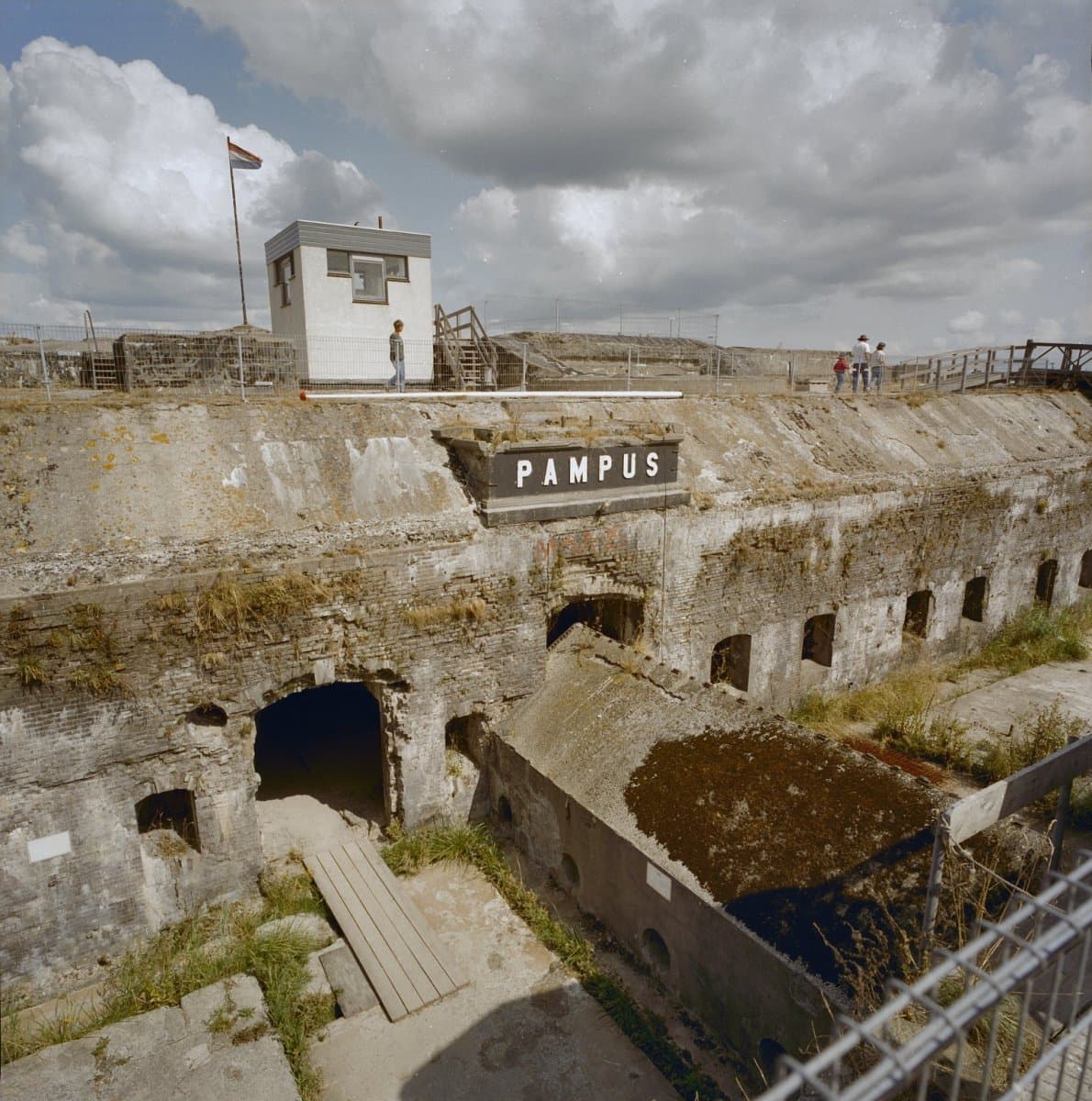
Pampus is a remarkable artificial island and late 19th-century bastioned fortress located in the IJmeer near Amsterdam, Netherlands. Constructed in the 19th century, this sea fort was a key component of the Defence Line of Amsterdam (Stelling van Amsterdam), a ring of fortifications designed to protect the city and its vital harbor from naval attacks. Today, Pampus belongs to the municipality of Gooise Meren and is open to visitors, offering a unique glimpse into the military architecture and coastal defense strategies of the modern period.
Historical context and strategic importance
The construction of Pampus was part of a broader defensive effort initiated in the late 19th century to secure Amsterdam against potential threats from the sea. The fort was strategically positioned in the IJmeer, a lake connected to the North Sea, guarding the entrance to IJ Bay and the harbor of Amsterdam. Alongside the artillery battery on the nearby lighthouse island near Durgerdam and the battery at the Diemer seawall, Pampus formed a crucial defensive triangle.
This network of fortifications was integrated into the Defence Line of Amsterdam, a 135-kilometer ring of fortresses and waterworks. The line was designed to flood surrounding polders in times of war, creating an impassable barrier for enemy forces. The construction and operational use of Pampus illustrate the military engineering advances of the modern period, particularly in adapting traditional bastioned fortress designs to coastal and naval defense.
Architectural features and design
Pampus exemplifies the characteristics of a bastioned fortress, a style that evolved from Renaissance military architecture, adapted here to a maritime environment. The fort was built on an artificial island, which itself was an engineering feat, created by reclaiming land and constructing robust foundations capable of withstanding the harsh conditions of the lake.
The fortress features thick masonry walls arranged in a bastioned layout, allowing defenders to cover all approaches with overlapping fields of fire. The design includes ramparts, gun emplacements, and casemates for artillery, as well as underground chambers for ammunition storage and accommodations for the garrison. The fort's layout was optimized for defense against naval bombardment and amphibious assault.
Notably, the fort's construction incorporated modern materials and techniques of the 19th century, including the use of concrete and iron reinforcements, reflecting the transition from traditional masonry fortifications to more resilient structures suited for the era's artillery technology.
Role in the defence line and military history
During its operational period, Pampus served as a critical node in the Defence Line of Amsterdam. Its artillery batteries could control naval traffic entering the IJ Bay, preventing hostile fleets from reaching Amsterdam's harbor. The fort was never engaged in battle, but its presence was a significant deterrent.
Following advances in military technology and changes in warfare tactics in the 20th century, the strategic importance of Pampus declined. However, it remains an important historical monument illustrating the evolution of coastal defense systems during the modern period.
Conservation and public access
Today, Pampus is preserved as part of the UNESCO World Heritage Site encompassing the entire Defence Line of Amsterdam. The fort is accessible to visitors by boat, offering guided tours that explore its architectural features, historical significance, and the broader context of Amsterdam's defensive network.
Visitors can explore the bastioned walls, gun emplacements, and underground passages, gaining insight into the life of the garrison and the military strategies employed. The site also serves as an educational resource on the 19th-century military engineering and the adaptation of fortifications to maritime environments.
Relation to the defence line of amsterdam
The Defence Line of Amsterdam is a unique example of a ring fortress system combining water management and military architecture. Pampus was one of the 42 forts forming this defensive ring, which was designed to work in concert with controlled flooding of the surrounding lands. This innovative approach to defense reflects Dutch expertise in water engineering and military planning.
In 1996, UNESCO recognized the Defence Line of Amsterdam as a World Heritage Site, highlighting its significance as a cultural landscape and a masterpiece of hydraulic engineering and military architecture. Pampus stands out among these forts for its maritime location and its role in protecting the crucial access point to Amsterdam's harbor.
Frequently asked questions (FAQ)
- How do I get to Castle Pampus?
- Castle Pampus is located near the town of Muiden in the Netherlands. You can reach it by taking a ferry from Muiden, which provides a scenic journey across the IJmeer. The ferry operates regularly, making it a convenient option for visitors.
- What is the historical significance of Castle Pampus?
- Castle Pampus was built in the late 19th century as a defense fortification and played a crucial role in protecting Amsterdam from naval threats. Its unique design combines both military and architectural elements, reflecting the strategic importance of the location. Today, it stands as a symbol of Dutch history and military architecture.
- When was Castle Pampus built?
- Construction of Castle Pampus began in 1887 and was completed in 1897. It was part of the Defense Line of Amsterdam, a UNESCO World Heritage Site. The castle showcases the military innovations of its time and represents the Dutch commitment to fortification.
- Can I visit Castle Pampus year-round?
- Yes, Castle Pampus is open to visitors throughout the year, but opening hours may vary depending on the season. It's advisable to check the official website for the latest information on visiting hours and any special events. Be sure to plan your trip according to the season for the best experience.
- Why is Castle Pampus a popular attraction?
- Castle Pampus is popular for its rich history, unique architecture, and beautiful surroundings. Visitors enjoy exploring the castle, learning about its historical significance, and taking in the stunning views of the IJmeer. Additionally, the ferry ride to the castle adds an extra layer of adventure to the visit.
- Is it possible to take guided tours at Castle Pampus?
- Yes, guided tours are available at Castle Pampus, providing visitors with in-depth knowledge about its history and architecture. These tours are a great way to enhance your experience and gain insights from knowledgeable guides. It's recommended to book in advance, especially during peak tourist seasons.
- What are the ticket prices for Castle Pampus?
- Ticket prices for Castle Pampus vary depending on age and whether you choose a guided tour. Discounts are often available for children, seniors, and groups. For the most accurate pricing, please check the official website before your visit.
- What is the best time to visit Castle Pampus?
- The best time to visit Castle Pampus is during the spring and summer months when the weather is pleasant, and the surrounding scenery is at its finest. During these seasons, the ferry service runs frequently, and you can enjoy outdoor activities. However, autumn also offers beautiful foliage, making it a lovely time for a visit.
- Are there any nearby attractions to Castle Pampus?
- Yes, there are several attractions near Castle Pampus, including the picturesque town of Muiden and the nearby Muiderslot Castle. Visitors can enjoy walking along the waterfront, exploring local shops, and dining at quaint cafes. These additional sites make for a full day of exploration in the area.
Photo gallery

Information
Loading map...
Visitor reviews
No reviews yet. Been here? Write the first review and help other travelers!
Write the first reviewVisited this castle? Share your experience
Your review helps other travelers and adds first-hand knowledge to our encyclopedia.