Pallavicini Mansion, Ópusztaszer — Hungary castle

Pallavicini Mansion, Ópusztaszer

Pallavicini Mansion in Ópusztaszer, Hungary
Ópusztaszer, Hungary
Post-Renaissance (17th–18th c.)
Well Preserved

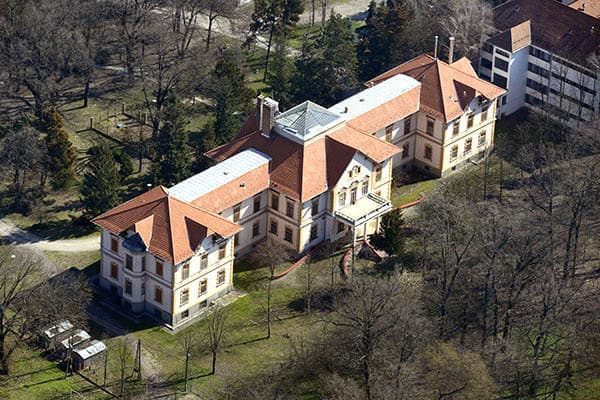
The Pallavicini Mansion in Ópusztaszer, Hungary, is a notable example of a hill castle that reflects the architectural and cultural heritage of the 19th century. Though not a medieval fortress in the traditional sense, this mansion exhibits many characteristics associated with aristocratic residences built on elevated terrain, combining defensive features with residential grandeur.

Constructed in the 19th century, the Pallavicini Mansion served as a country estate for the Pallavicini family, a noble lineage influential in Hungarian history. The mansion's location on a hill provided strategic views over the surrounding landscape, typical of hill castles, which were often chosen for their natural defensive advantages and commanding presence.

Architectural features and style

The mansion exemplifies the historicist architectural style prevalent in the 19th century, incorporating elements of neo-Renaissance and neo-Gothic design. The building's structure includes a prominent central block flanked by wings, with ornate facades featuring decorative stonework, pointed arch windows, and steeply pitched roofs. These details reflect the era's romanticized revival of medieval architectural motifs adapted for residential use.

The Pallavicini Mansion is characterized by its symmetrical layout and the use of local materials, which blend harmoniously with the natural surroundings. Large windows and spacious interiors emphasize comfort and status, while exterior features such as terraces and balconies offer panoramic views of the landscape.

Historical significance and ownership

The Pallavicini family was among the prominent Hungarian aristocrats who played significant roles in the political and cultural development of the region. The mansion functioned not only as a residence but also as a symbol of their social standing and influence during the Austro-Hungarian Empire period.

Throughout its history, the mansion has witnessed various uses and ownership changes. It has been preserved as a cultural monument, reflecting the lifestyle and architectural preferences of the Hungarian nobility in the 19th century.

Surrounding landscape and estate grounds

The mansion is set within extensive landscaped gardens and parkland, characteristic of noble estates of its time. The grounds include tree-lined avenues, ornamental flower beds, and possibly auxiliary buildings such as stables or servant quarters, which supported the estate's operation.

The elevated position of the mansion offers commanding views of the surrounding plains, enhancing its status as a hill castle and providing a strategic vantage point historically valued for both defense and prestige.

Current condition and visitor information

The Pallavicini Mansion is well preserved and maintained as a heritage site. It may be accessible to visitors interested in historic architecture and Hungarian noble estates, although specific visiting hours and ticketing information should be confirmed locally.

Its preservation allows for appreciation of 19th-century aristocratic architecture and provides insight into the cultural history of Hungary's noble families.

Frequently asked questions (FAQ)

What is the historical significance of Pallavicini Mansion?
Pallavicini Mansion, located in Ópusztaszer, Hungary, is a notable example of 19th-century architecture and reflects the grandeur of the Pallavicini family. The mansion is not only a historical landmark but also serves as a cultural hub, showcasing the rich heritage of Hungary through various exhibits and events.
When was Pallavicini Mansion built?
The Pallavicini Mansion was constructed in the late 19th century, specifically between 1883 and 1886. It was designed in a neo-Renaissance style, highlighting the aesthetic preferences of its time and the wealth of the Pallavicini family.
What are the opening hours for Pallavicini Mansion?
Pallavicini Mansion is open to visitors from Tuesday to Sunday, typically from 10 AM to 5 PM. It's advisable to check the official website for any seasonal changes or special holiday hours before planning your visit.
How do I purchase tickets for Pallavicini Mansion?
Tickets for Pallavicini Mansion can be purchased at the entrance or online through the official website. Prices vary for adults, children, and special groups, so it's best to review the ticketing information beforehand to ensure a smooth visit.
Is Pallavicini Mansion accessible for visitors with disabilities?
Yes, Pallavicini Mansion is designed to be accessible for visitors with disabilities. There are ramps and designated areas to ensure everyone can enjoy the mansion's beauty and historical significance comfortably.
When is the best time to visit Pallavicini Mansion?
The best time to visit Pallavicini Mansion is during the spring and early autumn months when the weather is pleasant, and the gardens are in full bloom. Additionally, these seasons often feature various cultural events that enhance the visitor experience.
Can I take photographs inside Pallavicini Mansion?
Yes, photography is generally allowed inside Pallavicini Mansion, but visitors should be mindful of any specific restrictions in certain exhibition areas. Always check with staff if you are unsure about photography policies during your visit.
What nearby attractions can I explore after visiting Pallavicini Mansion?
After exploring Pallavicini Mansion, visitors can enjoy the Ópusztaszer National Historical Heritage Park, which offers a glimpse into Hungary's history and culture. The park features various exhibitions, a traditional village, and beautiful natural scenery, making it a great addition to your itinerary.

Photo gallery

Pallavicini Mansion, Ópusztaszer
Click to view

Photo by CivertanS at Hungarian Wikipedia•CC BY-SA 3.0

1 photo • Click any image to view in full screen

Information

Hill Castle

Loading map...

Visitor reviews

No reviews yet. Been here? Write the first review and help other travelers!

Write the first review

Visited this castle? Share your experience

Your review helps other travelers and adds first-hand knowledge to our encyclopedia.
Write a review

(5/5)

0/2000 characters

Your review will be visible after admin approval

Nearby castles

50.1 km
Boncompagni Mansion — Hungary castle

Boncompagni Mansion

, Hungary

The Boncompagni Mansion is a historic hill castle located in Hungary, notable for its architectural heritage and historical significance. Although specific details about its precise location within Hungary and its full historical background remain limited, the mansion reflects the characteristics of noble residences built on elevated terrain for strategic and aesthetic purposes. Architectural features and style The mansion is classified as a hill castle, indicating its construction on elevated ground, which was a common defensive strategy in medieval and post-medieval castle architecture. This positioning not only provided a vantage point for surveillance but also enhanced the estate's prestige. While detailed architectural descriptions are scarce, hill castles like Boncompagni Mansion typically feature fortified walls, towers, and a central residential building. The mansion likely includes elements such as courtyards, battlements, and possibly a gatehouse, which were typical in noble residences of the period. Historical context and ownership The name "Boncompagni" is associated with an Italian noble family, which may indicate historical ties or ownership by this lineage or a branch thereof. The Boncompagni family has roots in Italy, with notable figures in ecclesiastical and noble circles during the Renaissance and later periods. Their presence in Hungary, if confirmed, would reflect the interconnected nature of European nobility and their estates. Due to limited records, the exact period of construction and the mansion's role in Hungarian history remain unclear. However, hill castles generally date from the High Medieval to Renaissance periods, suggesting the mansion could have origins in these eras. Preservation and current condition The current condition of the Boncompagni Mansion is not well documented. Many historic hill castles in Hungary have undergone various states of preservation, ranging from well-preserved to ruins. Without specific information, it is difficult to ascertain whether the mansion is accessible to the public or maintained as a cultural heritage site. Significance and cultural heritage As a hill castle bearing the Boncompagni name, the mansion represents the architectural and noble heritage of Hungary, potentially linking Hungarian history to broader European aristocratic networks. Such estates often served as centers of local administration, culture, and defense, making them important for understanding regional history. Further research and archaeological investigation may reveal more about the mansion's construction techniques, historical occupants, and its role within the local community. Visiting information Due to the lack of detailed public information, potential visitors should seek local sources or heritage organizations for access details and visiting hours. Many hill castles in Hungary are part of cultural tourism routes, offering insights into medieval and Renaissance architecture and history.

Details
76.7 km
Szolnok Castle — Hungary castle

Szolnok Castle

, Hungary

Szolnok Castle held a crucial military role for centuries due to its strategic location at the confluence of the Tisza and Zagyva rivers, situated in the heart of the Great Hungarian Plain. This position made it a vital crossroads for several important trade routes, including those for salt and lumber, as well as a key passageway for armies moving between Buda and Transylvania. During the turbulent 16th century, as the Ottoman Empire advanced into Hungary, Szolnok Castle, along with Eger Fortress, was one of the few fortifications defending the core of Upper Hungary and the country’s heartland. The early fortifications and Árpád dynasty origins The site of Szolnok Castle has been fortified since the time of the Árpád dynasty (9th to 13th centuries), initially featuring an earthwork fortification. This early fortification was typical of the period, using mounds and ditches to create defensive barriers. The location was chosen for its natural defensive advantages, being near the river junction, which provided both a water source and a natural moat-like protection. Expansion and transformation in the 16th century Following the devastating Battle of Mohács in 1526, which marked a critical defeat for the Kingdom of Hungary against the Ottomans, Szolnok’s fortifications were significantly upgraded. The initial earthworks were expanded into a Pfostenschlitzmauer — a type of wooden palisade with vertical slots for defensive purposes. This was a transitional phase before the construction of a more permanent stone fortress, reflecting the urgent need to strengthen defenses against ongoing Ottoman incursions. The stone fortress that emerged at Szolnok was designed to withstand artillery and siege warfare, which had become increasingly prevalent in the 16th century. The castle’s walls were thickened, and bastions were added to improve defensive coverage. Its position allowed control over river traffic and land routes, making it a formidable obstacle to Ottoman forces. 17th-century developments and decline Throughout the 17th century, Szolnok Castle continued to be expanded and modernized to keep pace with evolving military technology and tactics. Improvements included reinforced bastions, updated artillery placements, and enhanced living quarters for the garrison. The castle was part of a network of fortresses that formed a defensive line protecting Hungary’s interior from Ottoman advances. However, after the Rákóczi Uprising (1703–1711), which was a major Hungarian rebellion against Habsburg rule, the strategic importance of Szolnok Castle diminished. The fortress was gradually abandoned and fell into disrepair. Its stones were quarried for local construction projects in the town of Szolnok, leading to the loss of much of the original structure. Present condition and archaeological significance Today, Szolnok Castle exists only as archaeological ruins. The site reveals traces of the original earthworks and the later stone fortifications, providing valuable insights into medieval and early modern military architecture in Hungary. Archaeological excavations have uncovered foundations, defensive ditches, and remnants of bastions, contributing to the understanding of how the castle evolved over centuries to meet changing military needs. Despite its ruined state, Szolnok Castle remains an important cultural and historical landmark. It reflects the region’s turbulent history, the shifting power struggles between Hungarian forces and the Ottoman Empire, and the architectural adaptations made in response to advances in warfare. Architectural features and military design The castle’s design evolved from simple earthworks to a more complex stone fortress with bastions and artillery platforms. The Pfostenschlitzmauer phase is particularly notable as an intermediate defensive structure, combining wooden and stone elements. The later stone walls were built thick to absorb cannon fire, and the bastions allowed defenders to cover all approaches with crossfire. The castle’s location at the river confluence was a strategic choice, providing natural defense and control over trade and military routes. The rivers also served as obstacles to besieging forces, complicating any assault on the fortress. Historical context and military importance Szolnok Castle’s military significance is closely tied to the Ottoman-Hungarian conflicts of the 16th and 17th centuries. Its role as one of the few fortresses protecting the Hungarian heartland made it a focal point during the Ottoman expansion into Central Europe. The castle witnessed numerous military campaigns and sieges, reflecting the broader struggle for control over the region. The castle’s decline after the Rákóczi Uprising corresponds with changes in military strategy and the political landscape, as the Habsburgs consolidated control over Hungary and the Ottoman threat receded. Visiting Szolnok Castle today While the castle remains are limited, the site is accessible for visitors interested in Hungary’s medieval and early modern history. Interpretive signage and archaeological displays help contextualize the ruins. The surrounding area offers scenic views of the rivers and the Great Hungarian Plain, enhancing the historical experience. Visitors can explore the remnants of the defensive ditches and foundations, gaining a sense of the castle’s scale and strategic design. The site is an important destination for those studying military architecture and Hungarian history.

Details
78.7 km
Wenckheim-kastély — Hungary castle

Wenckheim-kastély

Szabadkígyós, Hungary

Wenckheim Castle, located in Szabadkígyós, Békés County, Hungary, stands as a remarkable example of Neo-Renaissance architecture from the 19th century. Constructed between 1874 and 1879, this grand palace was commissioned by the Wenckheim noble family, a prominent aristocratic lineage influential during the Austro-Hungarian Empire. The castle exemplifies the wealth and cultural aspirations of Hungarian nobility in the late 19th century, blending historicist architectural elements with lavish interior design. Architectural design and style The castle was designed in the Neo-Renaissance style, a revivalist movement that drew inspiration from the architecture of the Italian Renaissance. This style is characterized by symmetrical layouts, classical proportions, and ornate decorative details. Wenckheim Castle features an elegant façade with richly decorated windows, pilasters, and cornices. Its balanced composition includes multiple wings arranged around a central courtyard, creating a harmonious and stately appearance. A unique architectural concept of Wenckheim Castle is reflected in its symbolic design: it was built to have 365 windows – one for each day of the year, 52 rooms – corresponding to the weeks in a year, and 4 entrances – representing the four seasons. This numerological symbolism adds a layer of cultural meaning to the building, emphasizing the connection between the structure and the passage of time. Historical context and ownership The Wenckheim family originated from Franconia and rose to prominence within the Austro-Hungarian Empire. They acquired extensive estates and built several palatial residences, with Wenckheim Castle in Szabadkígyós being among the most notable. The castle served not only as a family residence but also as a symbol of their social status and influence in Hungarian aristocracy. During its history, the castle has witnessed significant events and changes, including the political upheavals of the 20th century. Despite these challenges, Wenckheim Castle has remained well-preserved and continues to be a cultural landmark in the region. The surrounding park and natural environment Wenckheim Castle is set within a large Baroque-style park, which enhances the grandeur of the palace and provides a scenic natural environment. The park was designed with formal landscaping principles typical of the Baroque period, including geometric pathways, ornamental ponds, and carefully arranged trees and flowerbeds. Since 1954, the park has been protected as a nature reserve and is part of the Körös–Maros National Park. This status ensures the conservation of its diverse flora and fauna, making the castle grounds an important ecological as well as cultural site. Current condition and public access Today, Wenckheim Castle is restored and maintained, preserving its architectural integrity and historical character. It stands as one of the finest examples of 19th-century Hungarian aristocratic residences. The castle and its grounds attract visitors interested in history, architecture, and nature. While the castle is privately owned, parts of the estate and the surrounding park are accessible to the public during certain times of the year. Visitors can appreciate the castle’s impressive exterior, explore the park’s trails, and learn about the Wenckheim family’s legacy through guided tours and local exhibitions. Architectural features and interior highlights The interior of Wenckheim Castle is noted for its richly decorated rooms, featuring period furnishings, frescoes, and intricate woodwork. The grand halls and reception rooms showcase the luxurious lifestyle of the Wenckheim family, with elaborate ceilings, chandeliers, and ornate fireplaces. Architectural features such as the grand staircase, large windows, and spacious salons reflect the Neo-Renaissance emphasis on light, proportion, and elegance. These elements create an inviting atmosphere while demonstrating the craftsmanship of the era. Cultural significance and heritage protection Wenckheim Castle holds significant cultural value as a representation of Hungary’s aristocratic past and architectural heritage. It contributes to the understanding of the social and political history of the Austro-Hungarian Empire and the role of noble families in shaping regional identities. The castle and its park are protected under Hungarian heritage laws, ensuring their preservation for future generations. Efforts by conservationists and local authorities have helped maintain the site’s authenticity and promote it as a destination for cultural tourism.

Modern (19th–20th c.)
Details